






Georgian Writing Table Cabinet
These georgian writing table cabinet pieces combine fine cabinetry with dedicated writing surfaces, offering practical utility and period elegance for the home.
Georgian Writing Table Cabinet
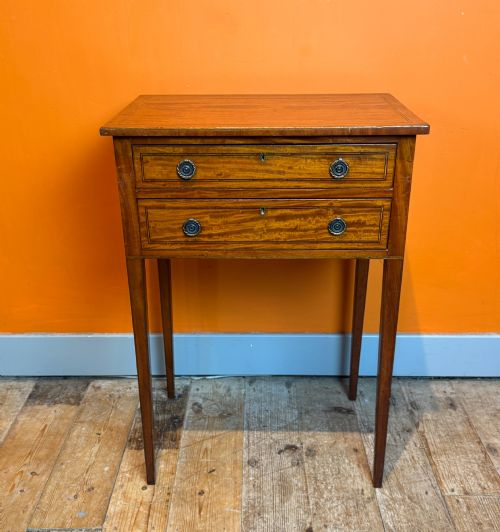
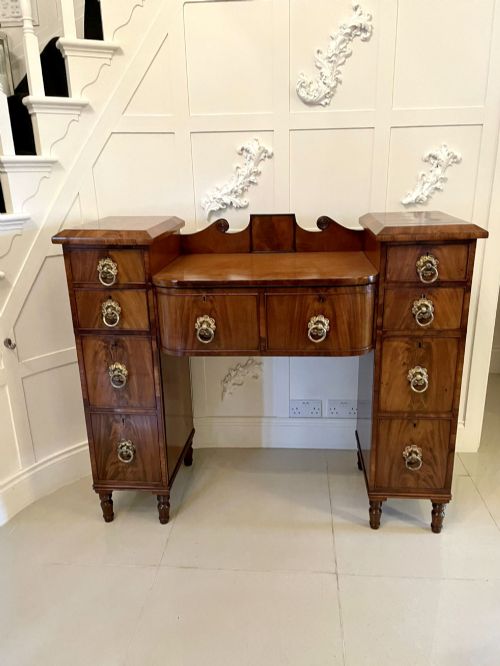
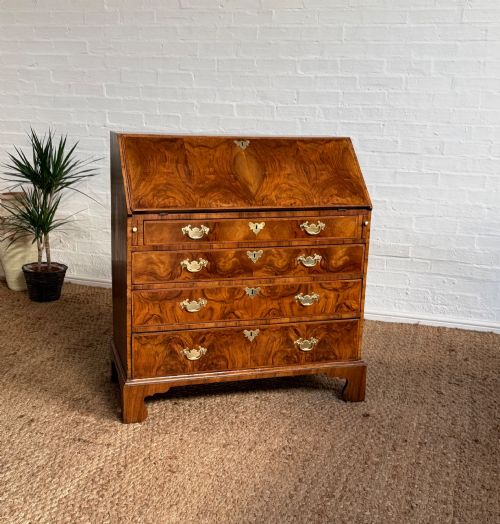
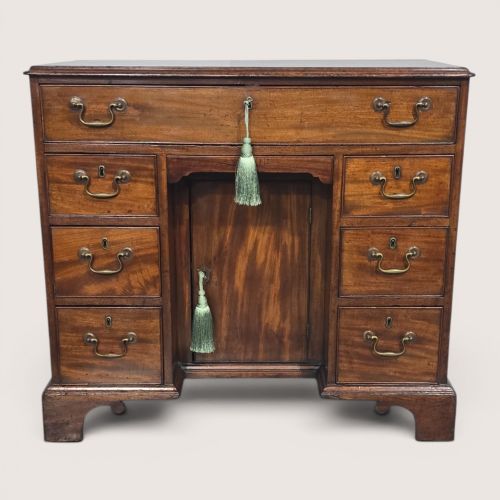
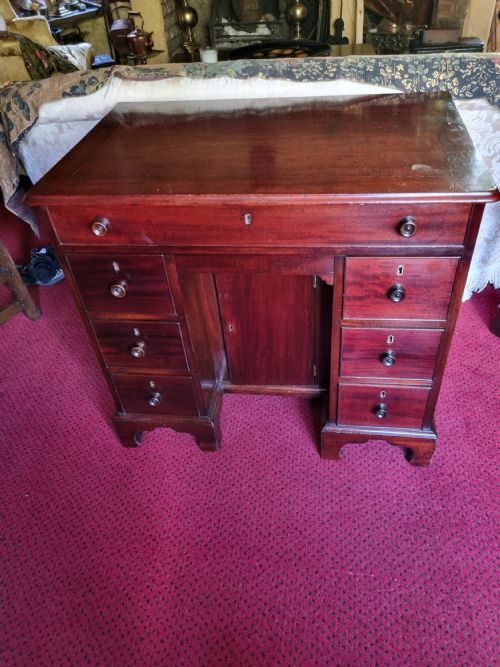
A georgian writing table cabinet encompasses versatile forms such as kneehole desks, bonheur du jours, and bureau cabinets originating from the eighteenth century and the Regency era. Buyers searching for a georgian writing table cabinet frequently encounter mahogany and satinwood pieces featuring fitted drawers, tambour doors, and leather writing surfaces.
The selection ranges from diminutive George II and George III kneehole desks to elegant Sheraton period ladies writing tables and cylinder desks. Walnut and elm examples also appear, often showcasing fine craftsmanship suited to refined domestic spaces.
Distinguishing quality in period cabinetry
The refinement of timber figure and the subtlety of satinwood inlay distinguish superior examples from standard utility items. Figured walnut and highly grained mahogany reflect careful selection by the original maker.
The integrity of internal fittings, such as secret compartments within kneehole desks and original brasses, elevates the standing of a piece. Original leather writing surfaces and intact tambour mechanisms also indicate higher craftsmanship.
Georgian Writing Table Cabinet Retail Price Guide 2026
Typical asking prices for georgian writing table cabinet among the pieces listed under this phrase on Sellingantiques today, from the lower quarter to the upper quarter. They describe what is for sale here now, not the wider market.
Listings feature eighteenth-century and Regency pieces constructed from mahogany, walnut, satinwood, and rosewood.
Shoolbred of London·John Mclean·Grendy
The Georgian Writing Table Cabinet Glossary
- Bonheur du jour
- A small, light lady's writing desk featuring a small cabinet or set of drawers on top. This form became popular during the eighteenth century.
- Kneehole desk
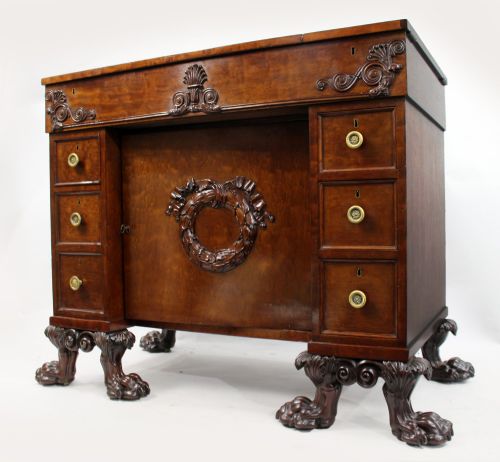
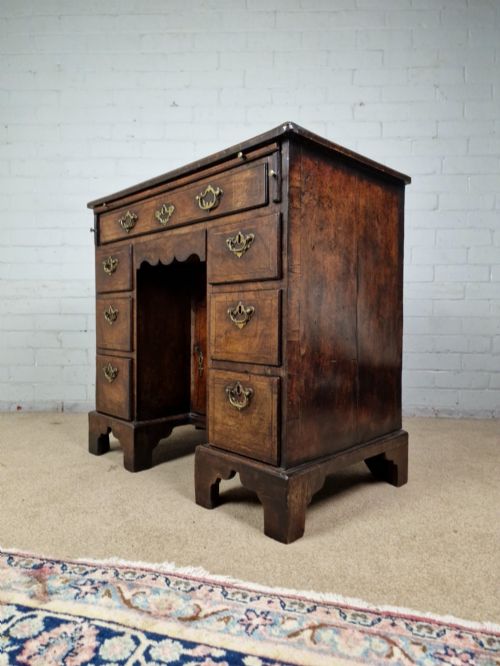
- A compact desk featuring a recessed central cupboard flanked by pedestals of small drawers. These pieces typically stand on short bracket feet.
- Tambour
- A sliding door constructed from narrow vertical strips of wood glued to a canvas backing. It allows smooth operation around curved cabinet fronts.
- Cheveret
- A small multi-tier reading or writing table often equipped with a removable book stand or small drawers above. This form frequently dates to the George III period.
- Marquetry
- Decorative veneer work formed by fitted pieces of various woods or other materials to create pictorial or geometric designs. It adorns the surfaces of finer tables and cabinets.
Georgian Writing Table Cabinet: Frequently Asked Questions
What is a bonheur du jour?
A bonheur du jour is a small, elegant ladies' writing desk featuring a super-structure of small drawers or a cabinet on the desktop. These pieces gained immense popularity in the late eighteenth century.
They were designed for light correspondence and display in private sitting rooms rather than heavy administrative work.
How do kneehole desks differ from standard desks?
Kneehole desks feature a central recessed space, often containing a small cupboard door, flanked by narrow stacks of drawers on both sides. This symmetrical arrangement provides compact storage without sacrificing legroom.
They frequently date from the early to mid-eighteenth century in walnut or mahogany.
Are these pieces suitable for daily modern use?
These tables and cabinets serve well for contemporary laptop use, letter writing, and general display purposes. Their compact proportions make them adaptable to various rooms in the house.
Care should be taken to protect historic leather and polished wood surfaces from moisture and excessive heat.
How do I identify a George III piece?
George III items typically exhibit classical proportions, refined mahogany or satinwood veneers, and restrained inlay work such as stringing or crossbanding. Stylistic influences often reflect Sheraton or Hepplewhite designs.
Construction details like hand-cut dovetails and period brass drop handles further confirm the era.