

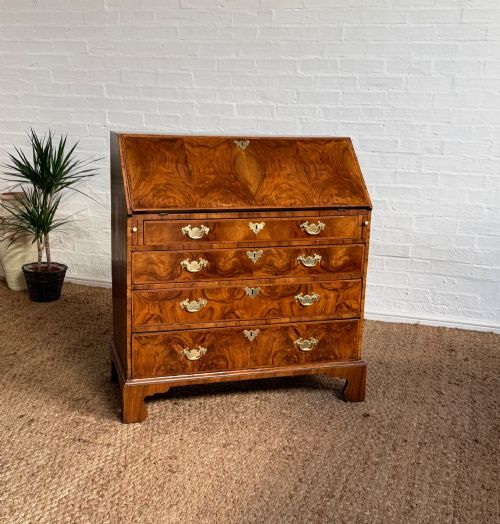
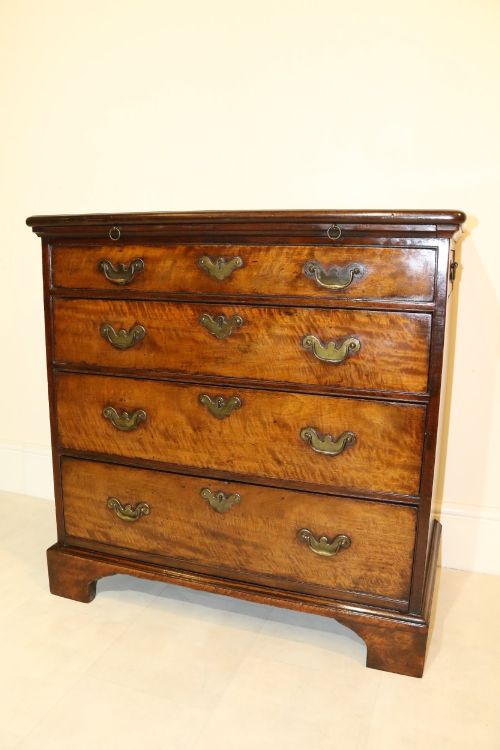
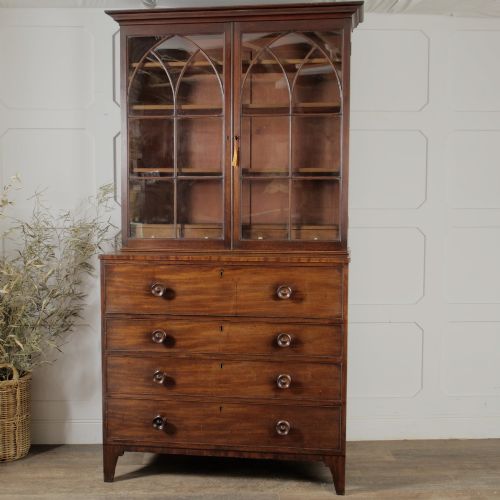
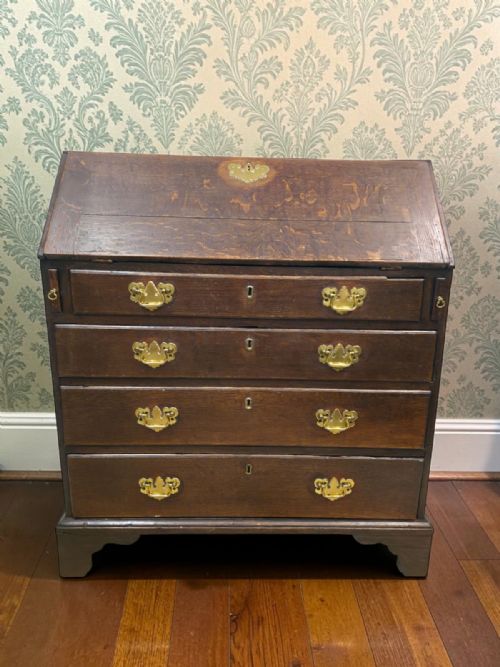
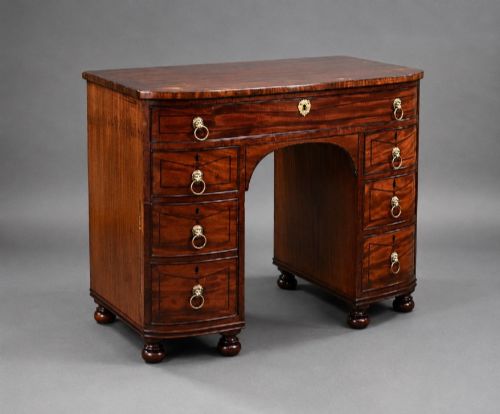

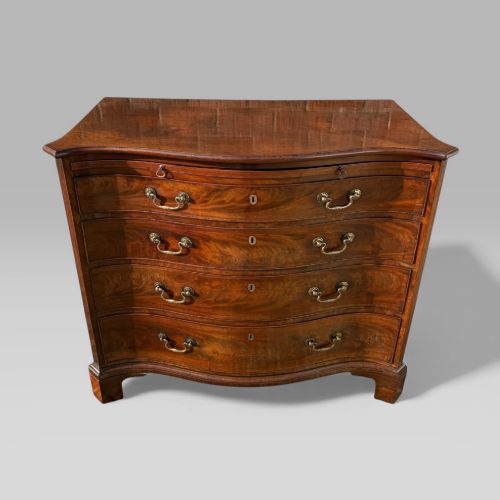
Georgian Writing Drawer Chest
A georgian writing drawer chest brings together two essential domestic functions, combining storage with a dedicated surface for correspondence.
Georgian Writing Drawer Chest
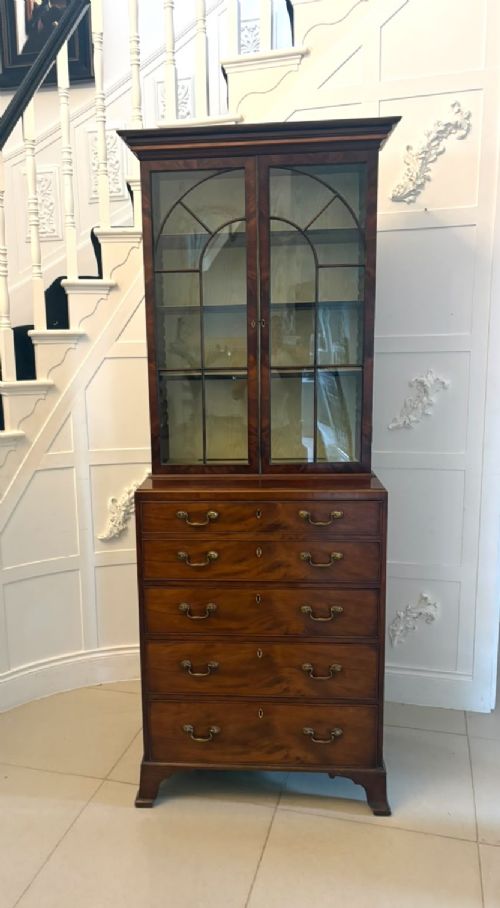
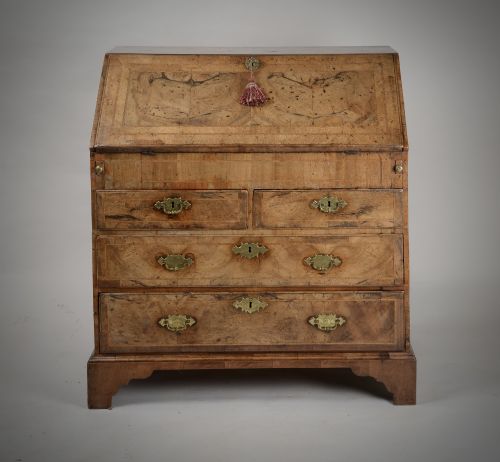
A georgian writing drawer chest encompasses forms such as bureaux, secretaire chests, and chests of drawers fitted with writing slides or fitted desks, dating primarily from the eighteenth and nineteenth centuries.
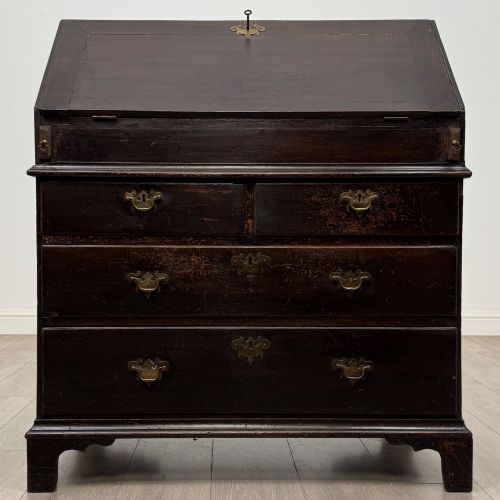
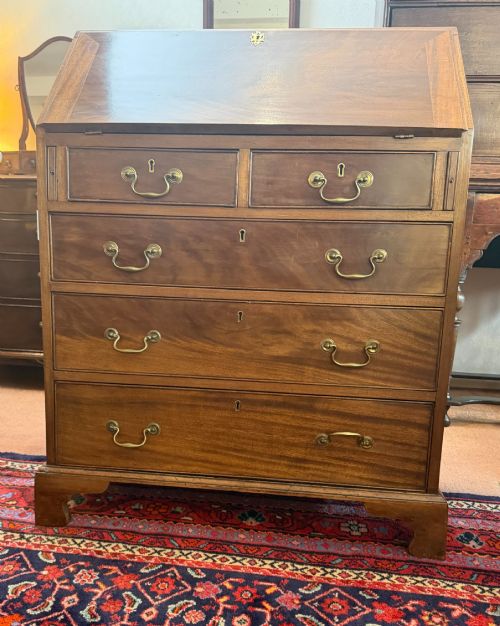
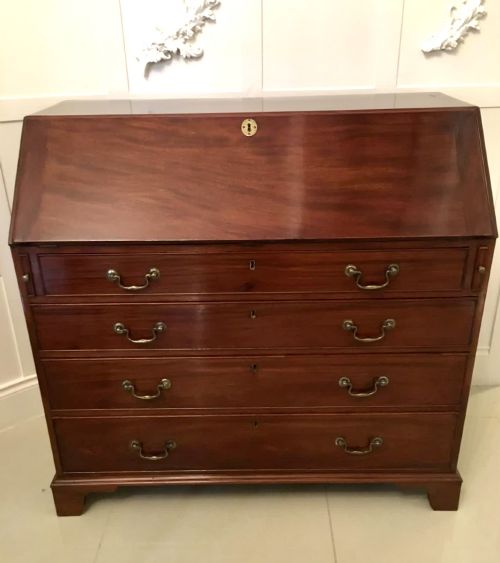
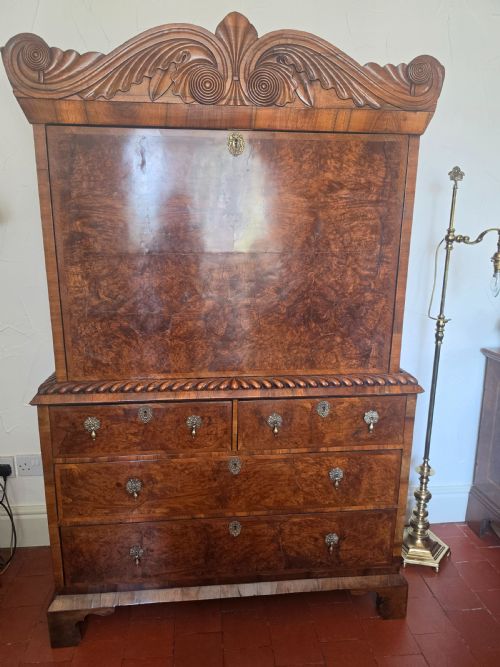
The pieces encountered most frequently on this page are mahogany and walnut bureaux featuring fall fronts or secretaire drawers that open to reveal fitted writing compartments.
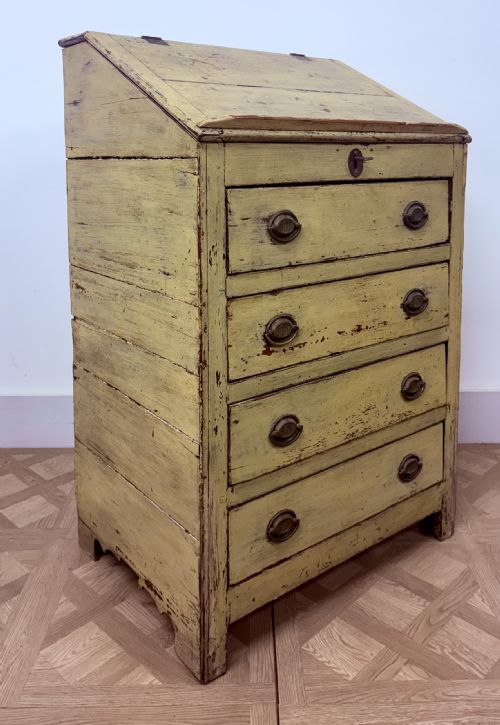
Originating in domestic settings across Britain, these pieces range from provincial oak examples to refined walnut and mahogany pieces associated with the George II, George III, and Regency periods.
Materials and Construction
Cabinet makers utilised dense hardwoods such as mahogany, oak, and walnut, often employing figured veneers to accentuate the grain on drawer fronts and fall flaps.
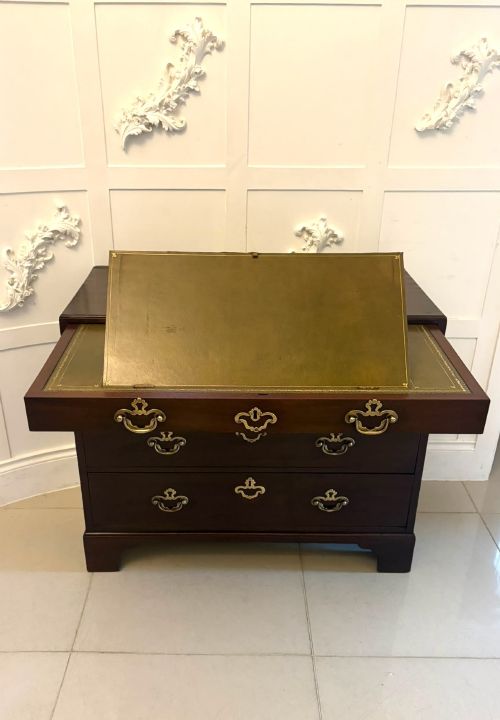
Interiors frequently incorporate specialised writing surfaces lined in leather, baize, or glass, alongside brass handles, hinges, and original ironwork.
Listings span the seventeenth through nineteenth centuries, incorporating oak, walnut, mahogany, and rosewood timbers.
Judging Quality
Quality rests in the selection of timber, such as figured walnut or rich mahogany, and the precision of the cabinet work in the fitted interior drawers and pigeonholes.
The integrity of the construction, including original brass or iron hardware and the retention of surfaces like red leather or baize, distinguishes finer examples.
The Georgian Writing Drawer Chest Glossary
- Bureau
- A desk with a sloping hinged lid that drops down to form a writing surface, above several drawers.
- Secretaire
- A piece of furniture containing a drawer or compartment that pulls down or out to serve as a writing desk.
- Fall front
- A hinged flap on a cabinet or desk that opens downward to provide a horizontal writing surface.
- Kneehole desk
- A compact desk or dressing table featuring a central recess for the user's knees, flanked by pedestals of drawers.
- Tallboy
- A tall chest of drawers consisting of one chest stacked on top of another, sometimes incorporating a writing drawer.
Georgian Writing Drawer Chest: Frequently Asked Questions
What is a secretaire chest?
A secretaire chest appears as a standard chest of drawers from the exterior, but the top drawer pulls down or out to reveal a fitted writing desk with small drawers and pigeonholes.
This design concealed private correspondence while maintaining the formal appearance of a bedroom or parlour chest.
How do I distinguish between walnut and mahogany pieces?
Walnut was predominantly utilised during the earlier eighteenth century, displaying rich figured grain patterns with warmer, golden-brown tones.
Mahogany became the favoured timber later in the Georgian period, offering a denser, darker red-brown material that took a high polish.
What was the writing slide used for?
The pull-out slide positioned above the drawers provided a temporary resting surface for a candle or a place to write brief notes without opening the main fall front.
Cabinet makers integrated these slides into dressing chests and desks to maximise utility in smaller rooms.
Are these pieces suitable for daily use?
These chests and bureaux were constructed for domestic writing and storage, making them practical for modern home offices or studies.
Care should be taken to protect antique leather and baize writing surfaces from excessive moisture and direct sunlight.