


Georgian Writing Desk Mirror
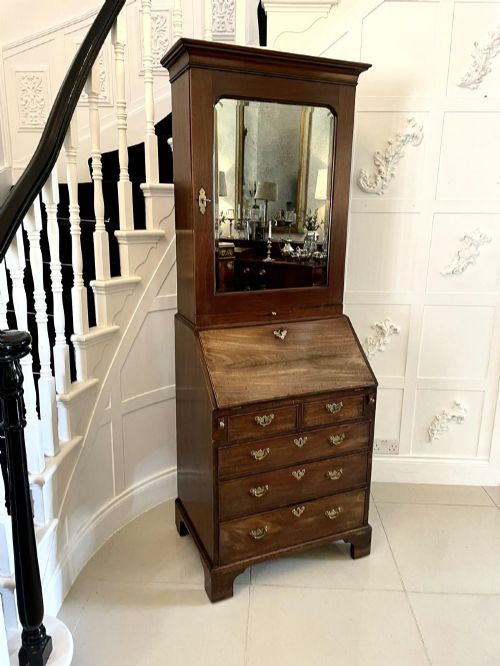
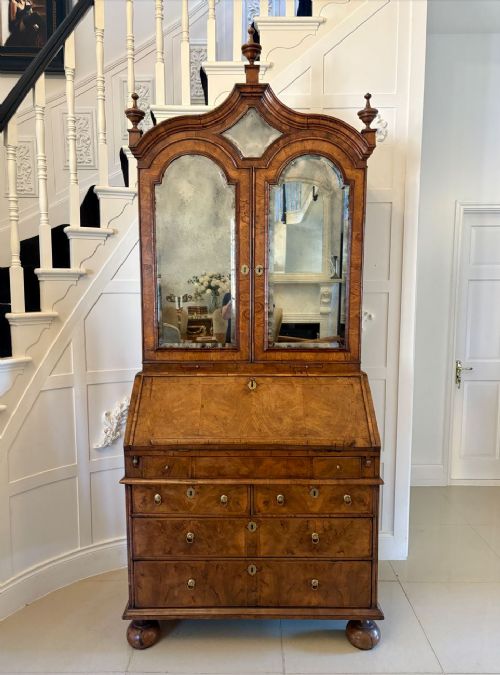
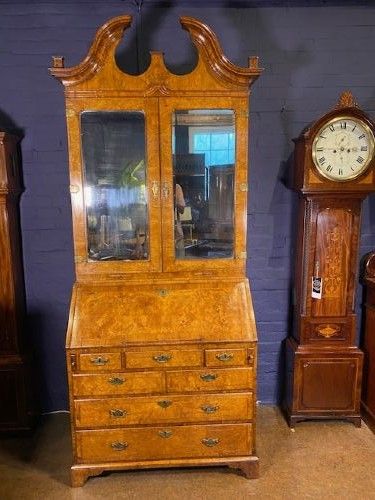
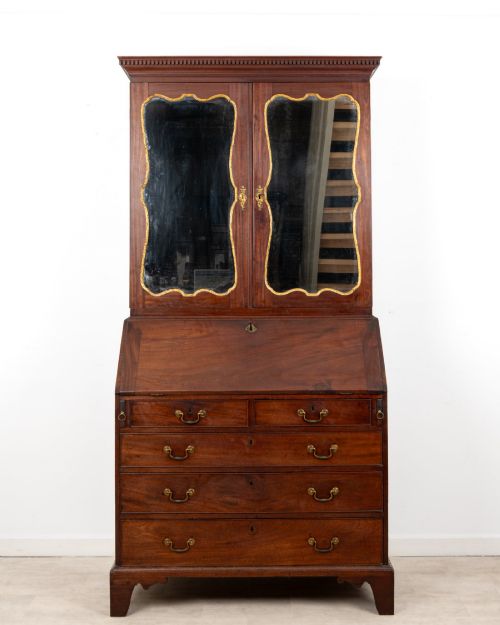
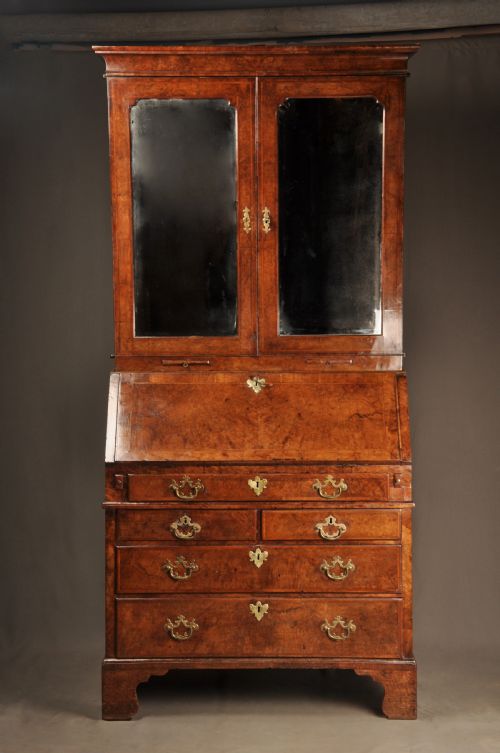
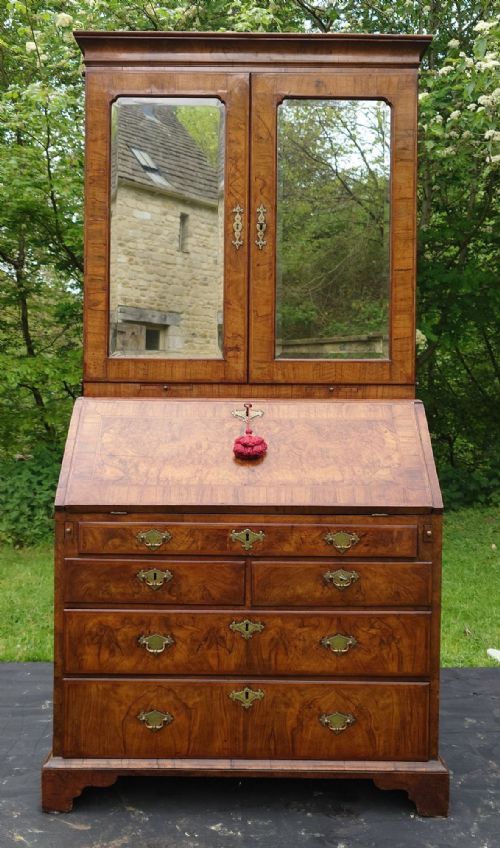
A georgian writing desk mirror combines the functional surface of a slope-front bureau with vertical storage and reflective glass.
Georgian Writing Desk Mirror
A georgian writing desk mirror typically takes the form of a bureau bookcase, secretaire cabinet, or dressing table mirror originating from the 17th, 18th, and 19th centuries. These substantial pieces combine a fitted writing compartment with upper shelving or glass panel doors, and occasionally incorporate specialised dressing or vanity mirrors.
The pieces listed here span Queen Anne, George I, George II, George III, and Chippendale styles alongside later Victorian interpretations. Bureau bookcases dominate the selection, offering drop-front desks paired with architectural double-dome or glazed upper sections.
Materials and construction
Cabinet makers utilised dense hardwoods including walnut, burr walnut, mahogany, Cuban mahogany, oak, and rosewood, frequently enhanced with featherbanding and figured veneers. Brass hardware secures drawers and interior compartments, while original mirror glass provides the reflective surfaces.
Construction techniques involve framing solid timbers and applying fine veneers over secondary woods to create decorative grain patterns. Specialised pieces incorporate complex interior mechanisms such as secret rising compartments and pigeonhole banks.
The listings span multiple centuries, capturing the shift from early walnut pieces in the 1700s to mahogany and rosewood variations.
Distinctions in craftsmanship
The calibre of a georgian writing desk mirror rests upon the selection of timber veneers and the intricacy of the interior cabinet work. Figured walnut and burr walnut with clean featherbanding indicate superior workshop production.
Proportion and retention of original elements dictate the standing of each piece. Double-dome cornices, original mirror panels, and intact fitted desk interiors elevate examples far above standard utility furniture.
The Georgian Writing Desk Mirror Glossary
- Bureau bookcase
- A dual-purpose furniture form featuring a sloping drop-front desk below an enclosed bookcase or shelving unit. This combination provides both writing space and display storage.
- Featherbanding
- A decorative inlay technique using veneer strips laid in a herringbone pattern around the borders of drawer fronts and panels. It frames the figured wood grain.
- Secretaire cabinet
- An enclosed cabinet housing a fitted pull-out writing drawer or fall-front desk compartment. These units conceal writing materials behind formal exterior doors.
- Burr walnut
- A specialised timber harvested from walnut tree growths, prized for its swirling, highly figured grain patterns. Cabinet makers reserved this material for high-status principal surfaces.
- Kneehole dressing chest
- A low dressing table featuring a central recess for the user's legs flanked by banks of small drawers. They frequently support an adjustable mirror.
Georgian Writing Desk Mirror: Frequently Asked Questions
How do I date an 18th-century bureau?
Dating relies on observing changes in timber choice, hardware, and structural construction over time. Earlier pieces often employ walnut with featherbanding, while later 18th-century examples favour mahogany.
Secondary woods, dovetailing techniques, and door configurations also provide clear chronological markers for attribution.
Are mirror panels original?
Original mirror glass frequently exhibits minor foxing, slight distortion, and hand-bevelled edges consistent with early manufacturing methods. Bevels on older glass tend to be narrower and less uniform than modern machine-cut equivalents.
Inspecting the backing and the rebates holding the glass reveals whether the mirror plate has been replaced.
How should I care for walnut veneer?
Walnut veneer requires stable indoor humidity and protection from direct sunlight to prevent timber shrinkage and veneer lifting. Regular dusting with a soft dry cloth maintains the polished surface.
Avoid liquid cleaners and silicone polishes which can penetrate hairline cracks and degrade historic finishes.