


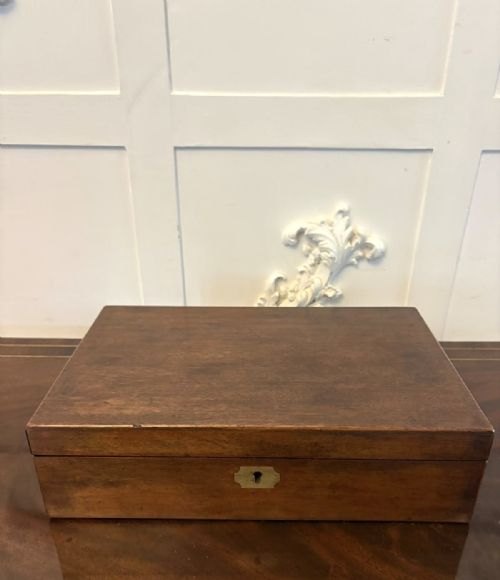


Georgian Writing Desk Box
A georgian writing desk box is a portable writing slope or container designed for correspondence, built in timber and fitted for travel or home use.
Georgian Writing Desk Box
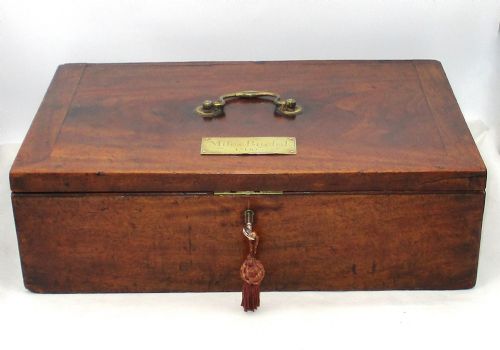
When you search for a georgian writing desk box, you encounter portable writing slopes, document chests, and stationary cabinets primarily from the eighteenth and nineteenth centuries. The majority of pieces on this page comprise mahogany, rosewood, and oak slopes designed to fold open into a slanted writing surface.
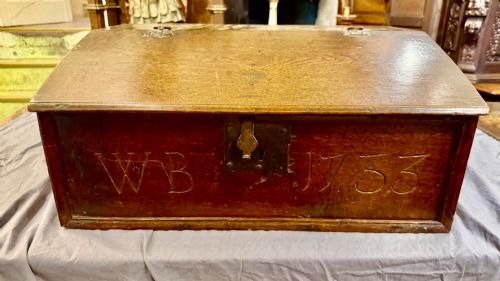
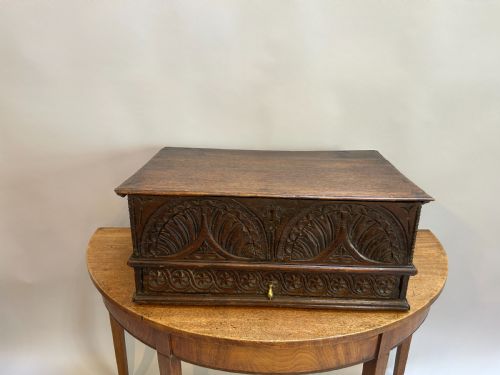
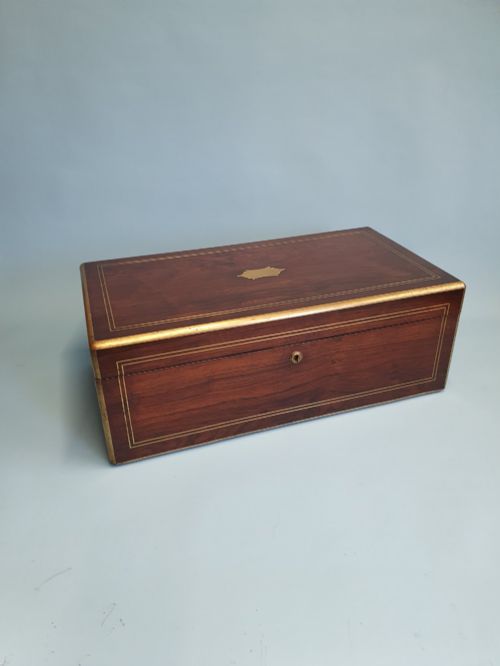
Earlier iterations appear as solid oak Bible boxes and document chests with hinged lids, whilst Georgian and Regency examples introduce folding brass-bound slopes with fitted compartments for inkwells and pens. Many incorporate campaign styling with brass mounts, reflecting the travel requirements of officers and gentlemen during the period.
Materials and construction
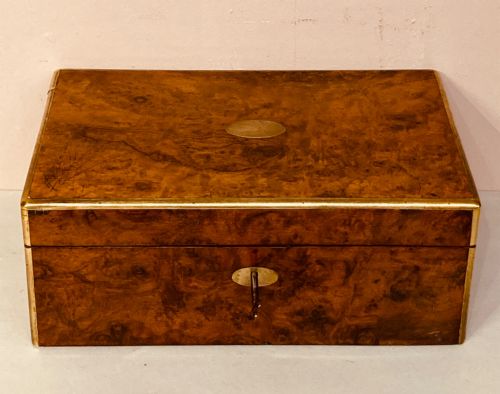
Cabinetmakers utilised dense hardwoods such as mahogany, rosewood, and oak, often selecting figured veneers like flame mahogany, burr walnut, and satinwood for exterior surfaces. Solid timbers provided structural integrity for portable boxes subjected to travel.
Brass corners, handles, and escutcheons reinforced the joints and edges of campaign boxes, whilst interior compartments utilised secondary woods and intricate joinery to conceal secret drawers and storage wells.
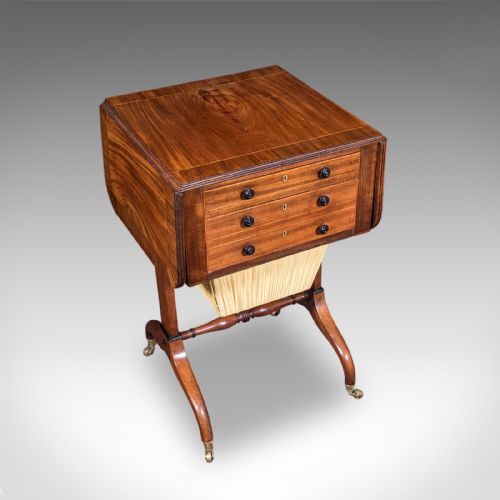
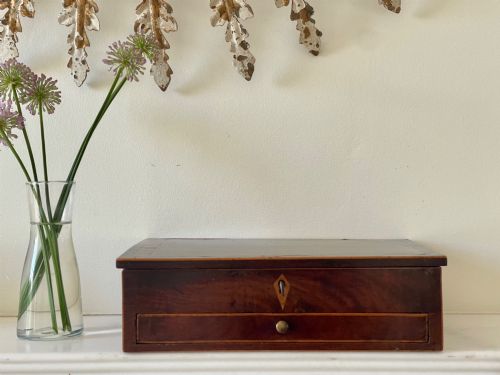
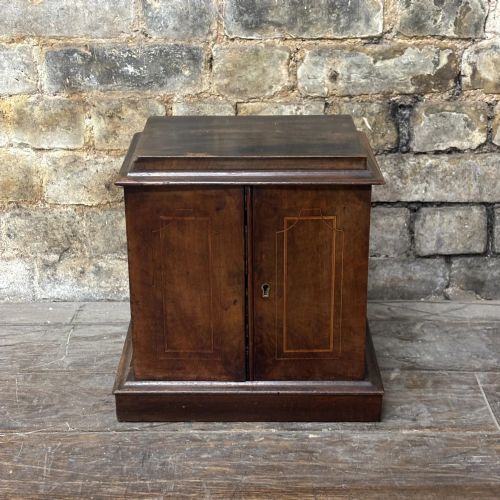
Object types recorded across the inventory include Bible boxes, document chests, campaign writing slopes, correspondence boxes, and stationery cabinets.
Judging the standard
Quality rests upon the selection of timber grain, the precision of brass inlay, and the complexity of the internal fittings. Superior boxes display book-matched veneers and tightly fitted secret drawers that operate smoothly.
The degree of original hardware, including functioning locks, fitted glass inkwells, and untouched patination on the wood surfaces, separates standard utility pieces from finer examples.
Austin, William·George Austin, Dublin·Marson & Jones Birmingham
The Georgian Writing Desk Box Glossary
- Writing slope
- A portable box with a hinged, slanted lid that folds down to provide a writing surface. It typically contains internal compartments for stationery and ink.
- Campaign box
- A piece of furniture or box reinforced with brass corners and recessed handles designed for military travel. These items needed to withstand rough transport.
- Secret drawer
- A concealed compartment hidden behind removable panels or activated by a hidden spring mechanism. Makers used these to secure valuables and private letters.
- Pounce pot
- A small shaker container used to sprinkle powdered sand or cuttlefish bone over freshly written ink to speed up drying. This prevented smudging on parchment.
- Escutcheon
- A protective brass plate surrounding a keyhole. It prevents the wood surrounding the lock from splitting through repeated use.
Georgian Writing Desk Box: Frequently Asked Questions
What is a georgian writing desk box?
A georgian writing desk box is a portable wooden container engineered to hold writing materials, featuring a sloping lid or a folding writing surface.
These pieces were used for correspondence and document storage by travellers and homeowners before the widespread availability of fixed desks.
How do I identify a campaign box?
Campaign boxes are identified by brass corner mounts, flush-fitting carrying handles, and sturdy hardwood construction designed for transport.
They often include secret drawers and compartmentalised interiors to secure inkwells and papers during travel.
What woods were used for these boxes?
Cabinetmakers constructed these boxes using dense timbers such as mahogany, rosewood, and oak, frequently applying decorative veneers like satinwood and burr walnut.
Brass and mother-of-pearl details frequently appear as inlay or reinforcement on the exterior.
How do I date an antique writing box?
Dating relies on observing the primary timber, the style of brass hardware, the construction of the interior partitions, and any maker marks present.
Earlier eighteenth-century pieces tend to be simpler oak or mahogany boxes, whilst Regency and Victorian examples show more complex brass inlay and fitted stationery sections.