
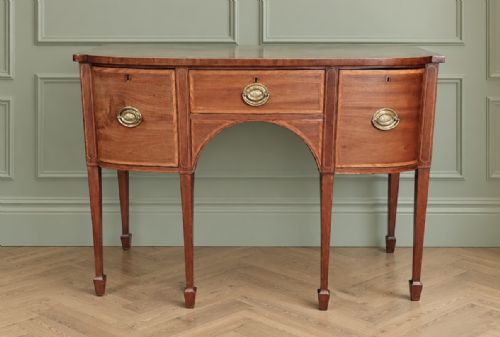
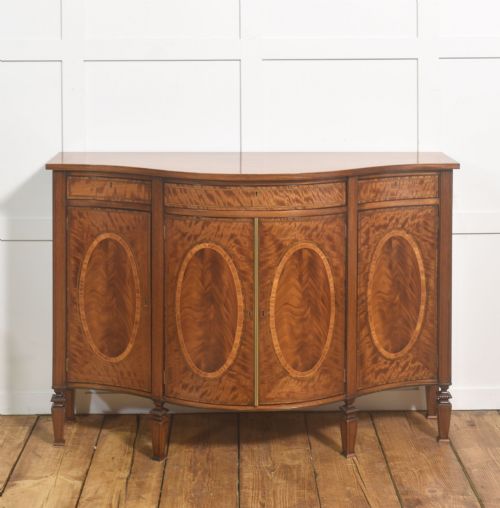
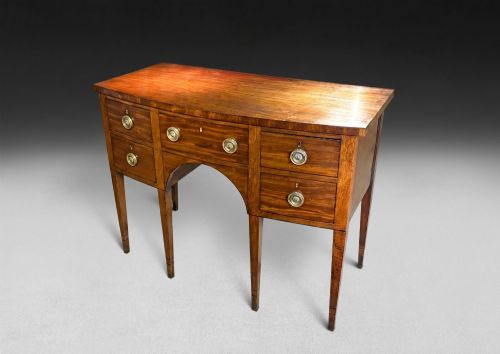
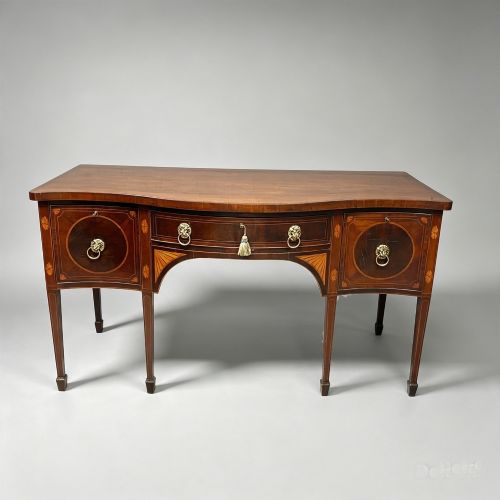
Georgian Wooden Server
A georgian wooden server brings formal dining rooms and country kitchens alike a practical surface for carving and serving.
Georgian Wooden Server
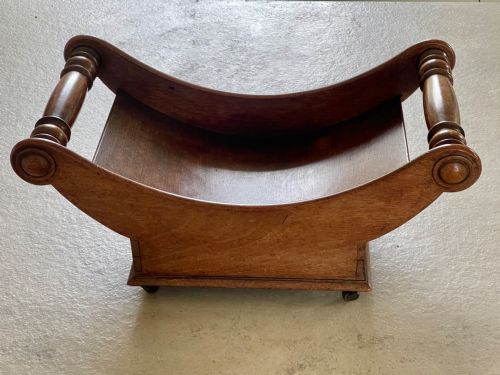
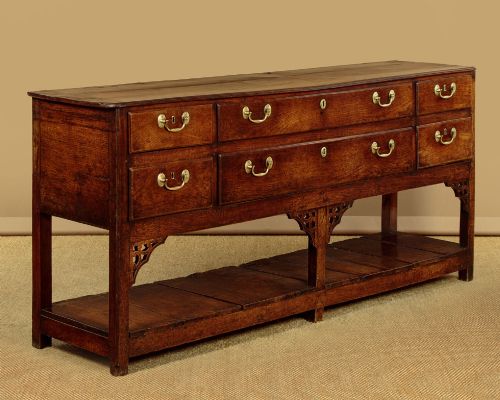
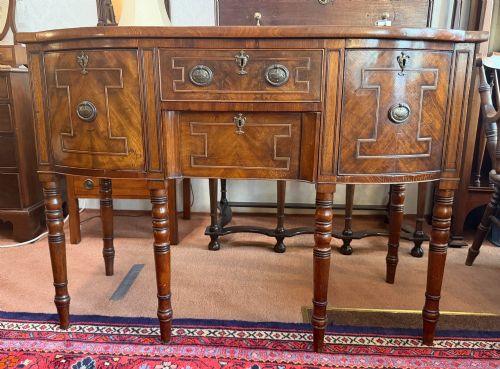
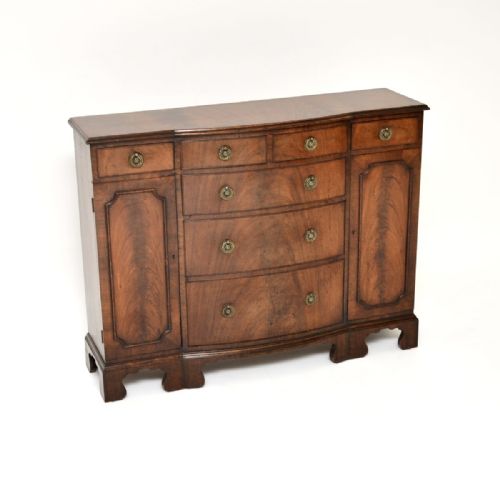
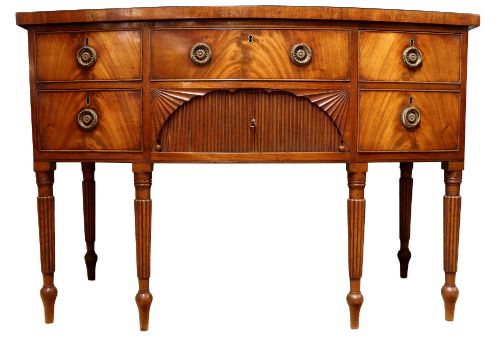
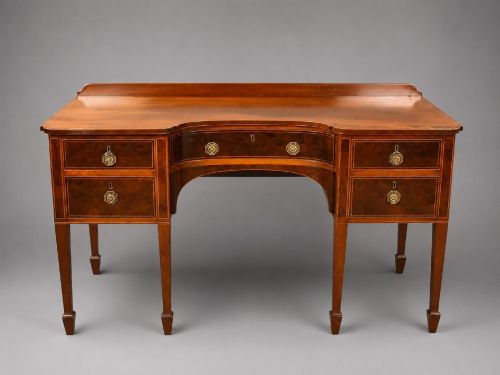
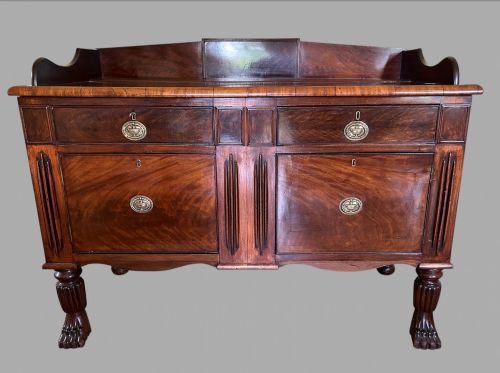
A georgian wooden server encompasses forms such as sideboards, serving tables, sideboard and dresser bases, lowboys, and console tables. These pieces span the Georgian, Regency, and 18th century periods, alongside later Victorian and Edwardian interpretations.
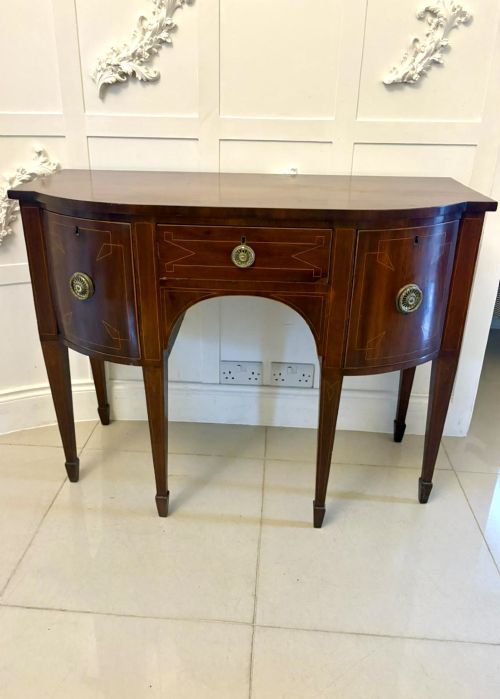
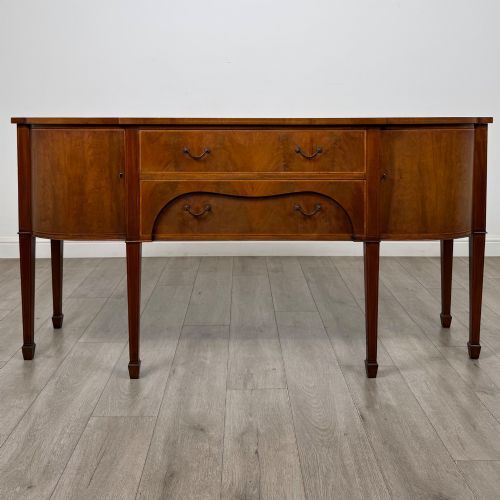
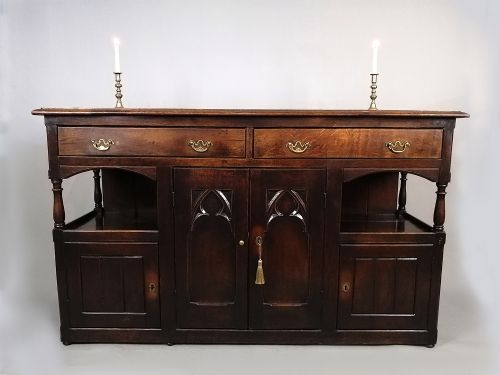
Mahogany and oak dominate the selection, appearing in forms from plain country dresser bases to finely inlaid serpentine and bow-front sideboards. Walnut, satinwood, pine, and boxwood also surface in various regional interpretations and revival pieces.
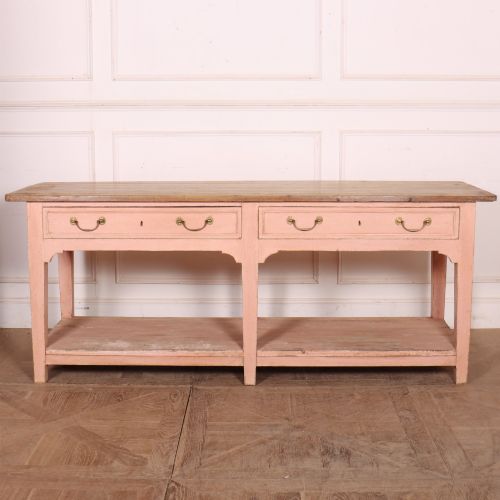
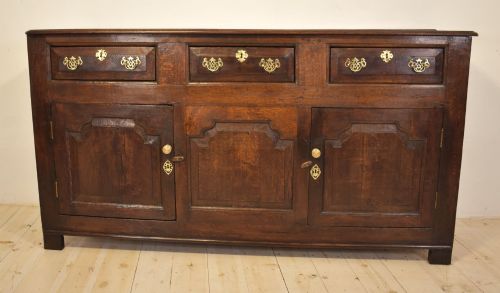
The buyer meets formal dining room sideboards with pedestals or cupboards alongside sturdy potboard dresser bases originating from farmhouse kitchens. Side tables and lowboys provide compact alternatives for smaller spaces while maintaining period character.
How they were made
Cabinet makers utilised solid timbers alongside figured veneers, applying flame mahogany and burr walnut to primary display surfaces. Inlays of boxwood and satinwood provide contrasting geometric borders and decorative fan motifs.
Construction relies on traditional joinery techniques, seen in the drawer linings, carcase frames, and coopered trays fastened with brass bands. Oak and pine serve as secondary woods for internal drawer construction and backboards.
Listings feature mahogany, oak, walnut, and satinwood across periods from the 18th century through to the Edwardian era.
What varies in quality
The selection of timber grain defines the visual impact, ranging from plain boards to highly figured flame mahogany and richly patterned burr walnut. Finer examples display meticulous matching of veneers across multiple drawers and curved fronts.
The crispness and restraint of inlay work separate standard production from master craftsmanship. Subtle stringing and well-executed crossbanding elevate the piece, whereas heavy or clumsy proportions reduce the overall harmony.
The Georgian Wooden Server Glossary
- Bow front
- A convex curved front that projects outward in a smooth arc. This shape gained popularity during the late 18th and early 19th centuries.
- Potboard
- An open lower shelf fitted between the legs of a dresser base. It was traditionally used for storing pots and heavy kitchen utensils.
- Serpentine
- A front contour characterised by a convex centre flanked by concave curves. This line requires advanced woodworking skill to execute properly.
- Lowboy
- A small table with drawers, standing on relatively tall legs. It functions as a side table or dressing table in domestic interiors.
- Inlay
- A technique where pieces of contrasting wood are fitted into depressions within a solid surface. It creates ornamental borders and patterns.
Georgian Wooden Server: Frequently Asked Questions
Where should I place a wooden server?
A server fits naturally in a dining room or hallway to provide a surface for serving food and displaying objects.
Compact versions also work well in living spaces as side tables or console tables.
How do I care for antique wood?
Keep wooden furniture away from direct heat sources and strong sunlight to prevent the timber and veneers from drying out.
Apply a traditional wax polish occasionally to nourish the surface and maintain the natural lustre.
What is the difference between a sideboard and a dresser base?
Sideboards generally feature formal designs with enclosed cupboards, drawers, and sometimes pedestals intended for dining rooms.
Dresser bases originate from country kitchens and often include open potboard shelves or banks of drawers.
How do I identify a Georgian piece?
Look for traditional timber choices like mahogany and oak combined with period joinery methods and proportions.
Stylistic cues include straight or tapering legs, bracket feet, and restrained stringing rather than heavy Victorian ornamentation.