
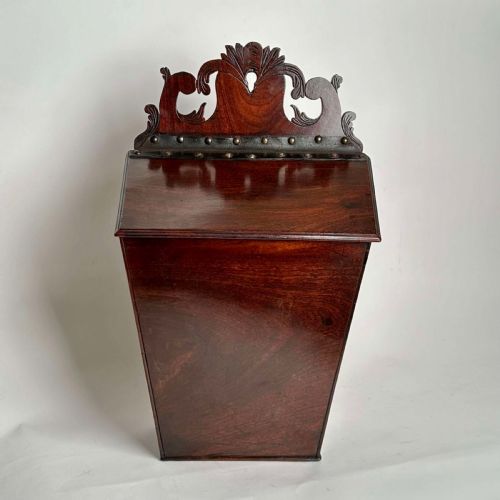


Georgian Wooden Knife Box
Georgian wooden knife box pieces are handsome timber containers designed to hold cutlery on the dining table, offering period elegance and practical storage.
Georgian Wooden Knife Box
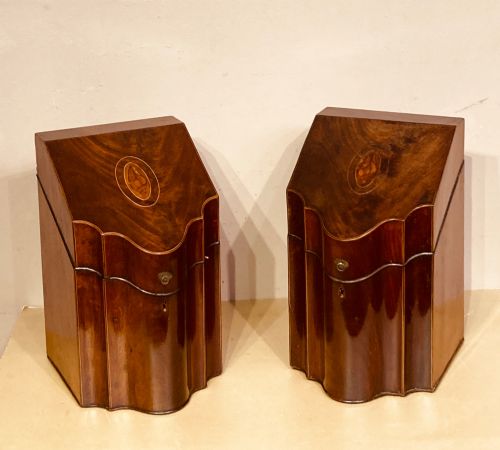
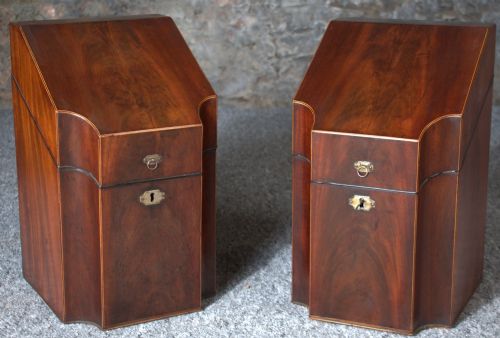
A georgian wooden knife box is a specialist dining room receptacle designed to store cutlery securely when not in use. You will most frequently encounter mahogany examples dating from the eighteenth century, often shaped with serpentine fronts or built as pairs.
The inventory includes related forms such as cutlery urns, kitchen organisers, stationery boxes, and painted pine knife trays from Welsh vernacular traditions. These objects range from standard domestic containers to large storage cabinets and fitted canteens.
How they were made
Cabinet makers utilised dense timbers such as mahogany, walnut, oak, and pine, frequently enhancing the primary wood with boxwood and varied wood inlay. Structural integrity relied on traditional joinery applied to construct sloping lids and vertical bodies.
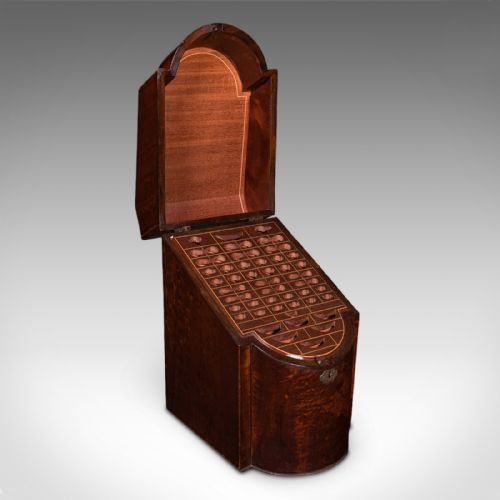
Metal components played a crucial role in daily function, with brass fittings, handles, and escutcheons providing both operational hardware and decorative contrast against the dark polished timber. Interior compartments often incorporated bone details to organise specific cutlery sets.
A few pieces stray from polite dining rooms into Welsh country kitchens, trading fine mahogany for cheerful red paint.
What varies in quality
The distinction between standard examples and finer pieces lies in the selection of figured timber and the precision of the serpentine shaping. Superior items exhibit carefully matched grain patterns and crisp execution of inlaid decorative motifs.
Hardware selection also dictates the tier of a piece, where substantial brass fittings and intact original internal fittings elevate the craftsmanship. Regional items display distinct folk art characteristics, such as painted pine surfaces, which reflect local vernacular traditions.
The Georgian Wooden Knife Box Glossary
- Serpentine front
- A furniture front characterised by a concave central section flanked by two convex curves, creating a fluid S-shape. This contour appears frequently on finer eighteenth-century cutlery containers.
- Cutlery urn
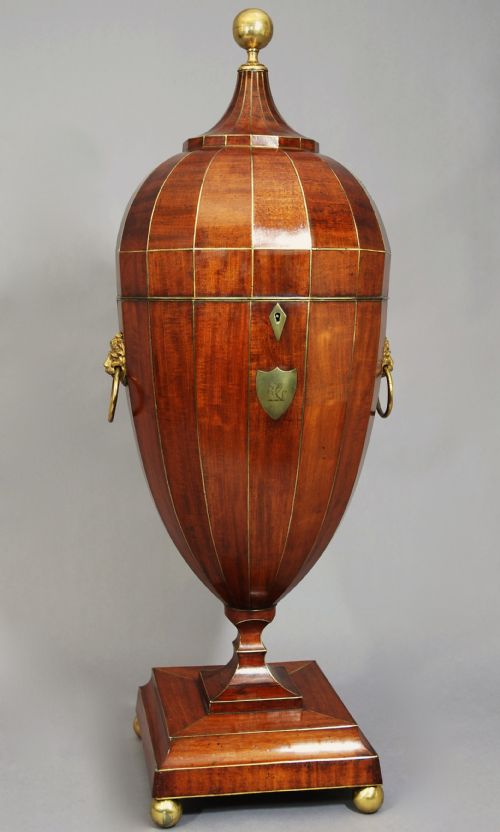
- A tall, vase-shaped wooden vessel designed to hold dining knives and forks on a sideboard. These grand pieces often feature lidded tops and delicate inlay work.
- Inlay
- A decorative technique where contrasting woods like boxwood or satinwood are inserted into recesses cut into the primary timber. It creates geometric patterns or floral motifs on the exterior surfaces.
Georgian Wooden Knife Box: Frequently Asked Questions
What were georgian wooden knife boxes used for?
These boxes stored dining knives, forks, and spoons when the table was cleared between courses.
Servants brought them out to the dining room when setting the table for meals.
Are these boxes still practical for cutlery storage?
Many retain fitted interiors that accommodate modern or antique cutlery sets securely.
Their hinged lids and internal compartments protect silver and steel from daily wear.
How do I identify a genuine period piece?
Examine the timber selection, construction methods, and the presence of period brass hardware.
Eighteenth-century examples typically utilise dense mahogany with hand-cut dovetails and traditional joinery.
Why are some knife boxes found as pairs?
Dining rooms of the period frequently utilised symmetrical sideboards decorated with matching accessories.
Two identical urns or sloping boxes balanced the visual weight of large dining furniture.
What is the difference between a box and an urn?
Sloping boxes feature a slanted lid that lifts from the front to reveal internal blade slots.
Urns stand vertically on pedestals with removable top sections concealing the stored cutlery inside.