
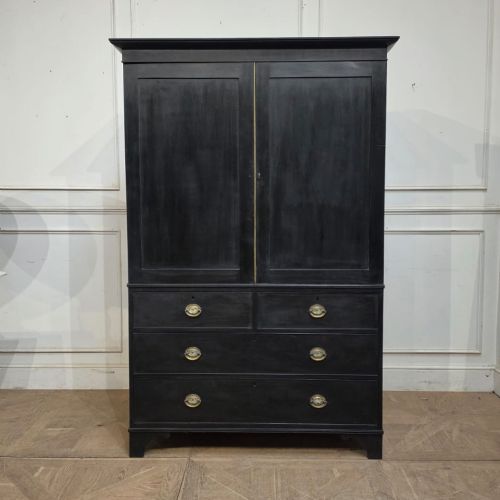
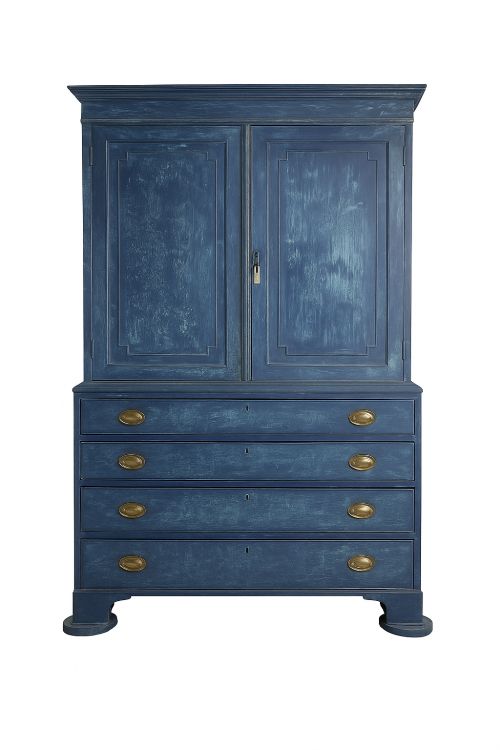
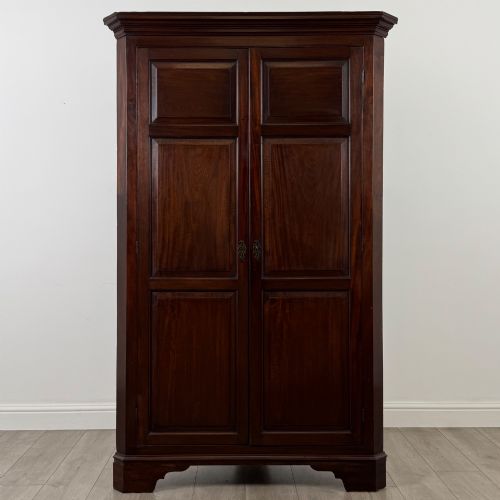
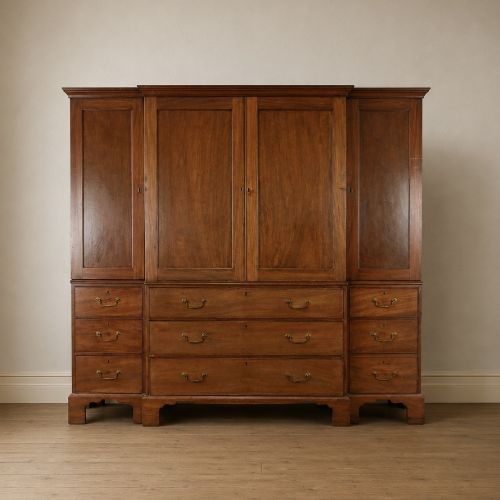
Georgian Wooden Armoire
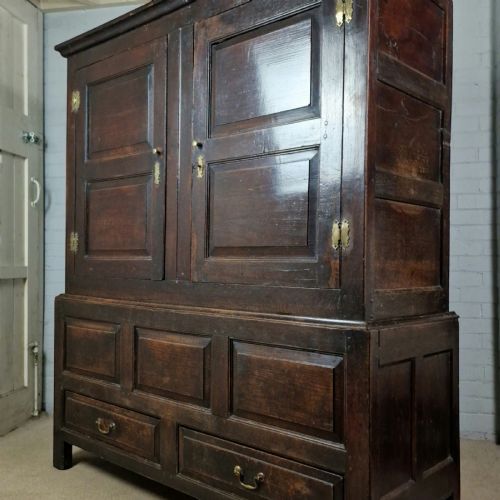
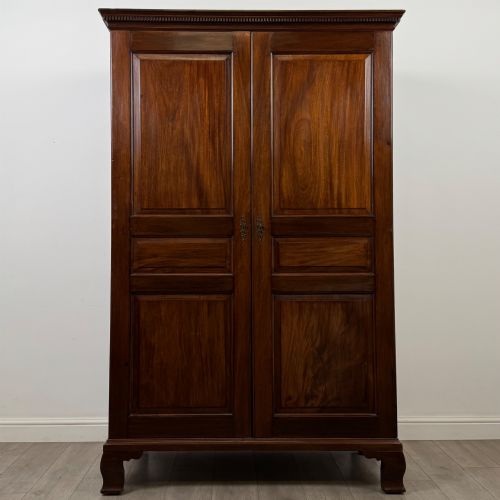
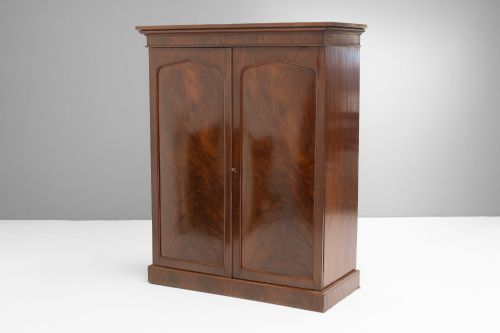
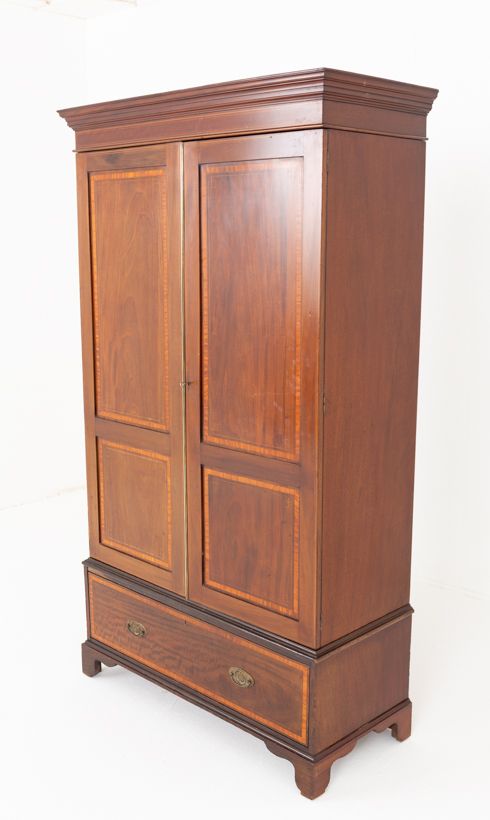
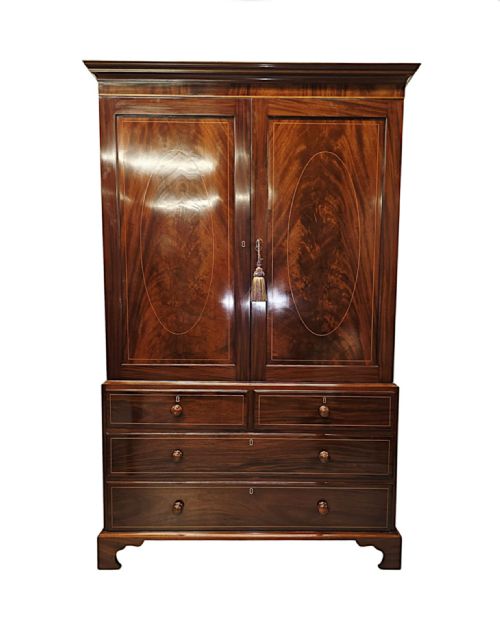
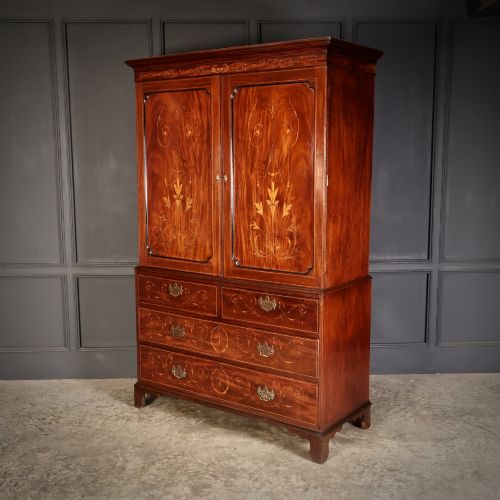
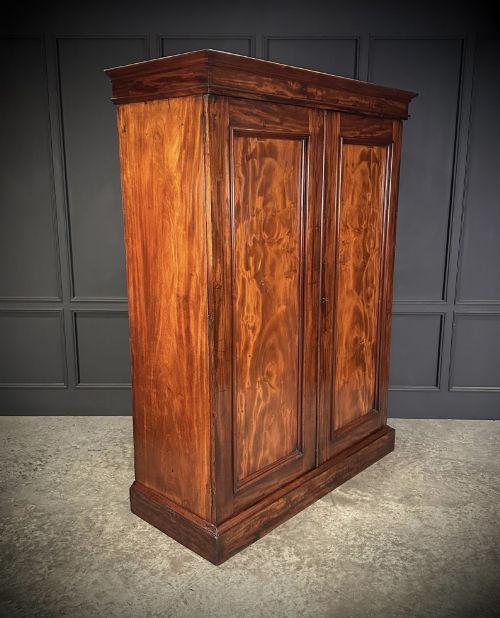
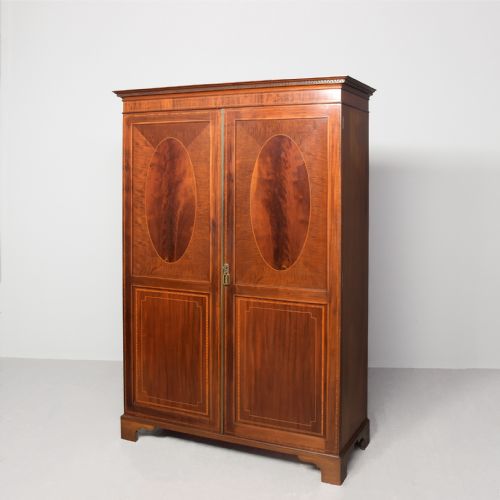
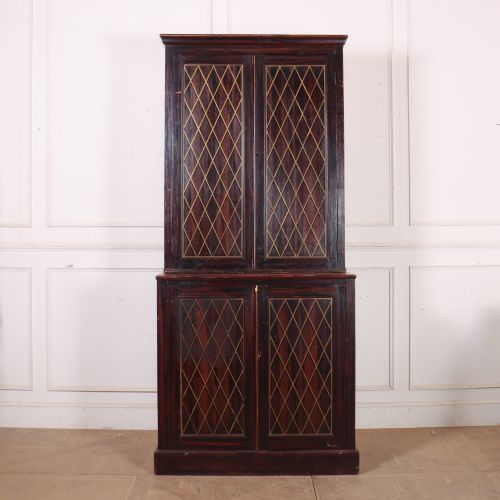
A georgian wooden armoire brings substantial storage and deep timber grain to a room, most often taking the form of a tall mahogany linen press or wardrobe.
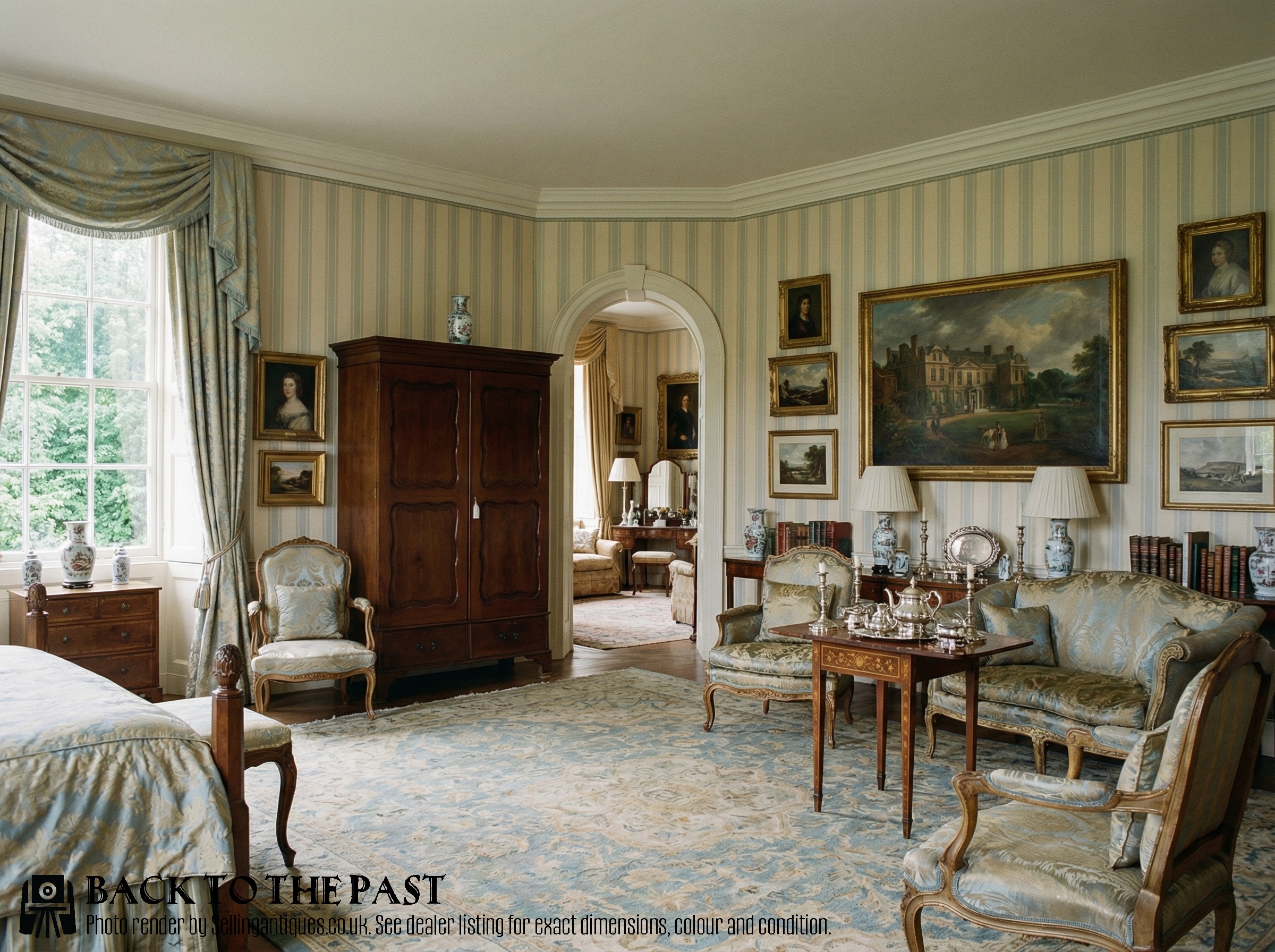
Georgian Wooden Armoire
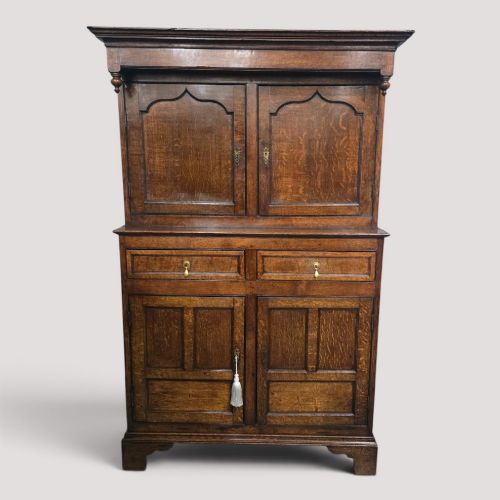
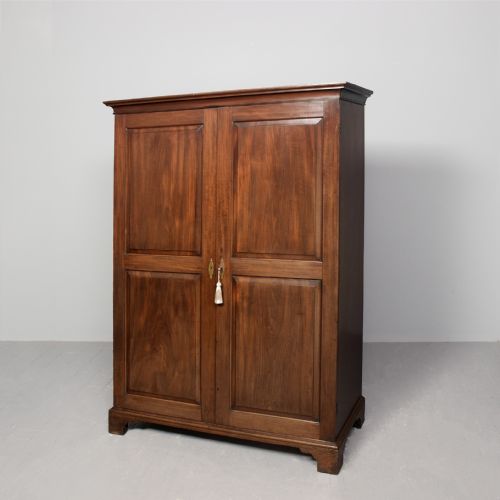
When you search for a georgian wooden armoire, you find large case pieces designed for household storage, though cabinetmakers of the period typically termed these items wardrobes, linen presses, or cupboards rather than armoires.
The selection here draws heavily from the eighteenth and nineteenth centuries, spanning Georgian, George III, and Regency periods alongside later revivals.
Mahogany and oak dominate the selection, appearing in both simple country builds and polished town pieces with panelled doors and fitted interiors.
How they were made
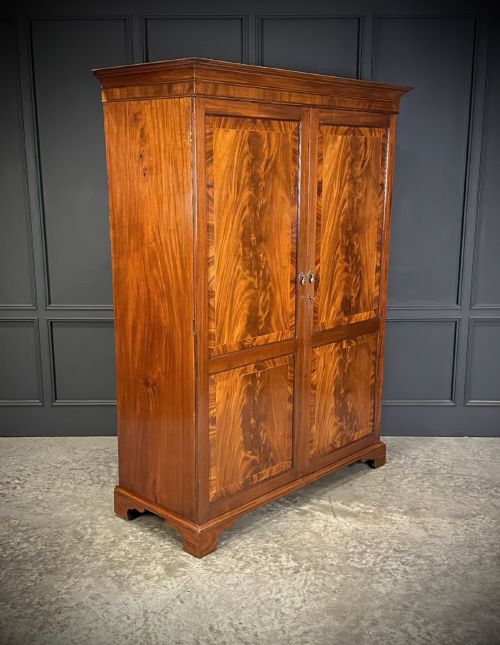
Cabinetmakers constructed these carcases primarily using solid mahogany or oak, frequently applying flame mahogany veneer or satinwood and boxwood inlay to primary surfaces.
Iron and brass hardware such as blacksmith locks, hinges, and drawer pulls secure the heavy doors and drawers.
Pine frequently serves as a secondary timber for internal shelving and drawer linings within the larger case structures.
Several pine wardrobes carry notes inviting the next owner to paint or wax them, proving that even centuries-old furniture faces ongoing interior design updates.
What varies in quality
The grade of timber dictates much of the visual weight, separating plain boards from richly figured flame mahogany or intricate marquetry inlay.
Construction methods show distinction in the handling of panel work, drawer dovetailing, and the retention of original brass and iron fittings.
Proportion and scale separate simpler country workshop pieces from ambitious breakfront and George III urban commissions.
The Georgian Wooden Armoire Glossary
- Linen Press
- A dual-purpose piece featuring sliding trays or shelves in the upper section for linens, with deeper drawers situated below. These units provide substantial vertical storage capacity.
- Breakfront
- A cabinet design where the central section projects forward from the flanking wings. This architectural layout creates depth and shadow across the front elevation.
- Marquetry
- Decorative veneer work arranged in geometric or floral patterns using various coloured woods. Craftsmen applied these precise patterns to door panels and friezes.
- Flame Mahogany
- Timber cut from the branch junction of the mahogany tree, producing a distinctive flickering flame pattern. Cabinetmakers reserved this prized veneer for prominent exterior surfaces.
- Knockdown
- A piece engineered with pegged or bolted joints allowing the main carcase to be disassembled for transport. This practical design facilitated movement through narrow domestic stairwells.
Georgian Wooden Armoire: Frequently Asked Questions
What is a georgian wooden armoire used for?
These large timber pieces serve primarily for hanging garments and storing folded textiles within deep internal compartments.
Historically, households relied on them to keep linens clean and organised before modern fitted closets became standard.
How do I date a wooden linen press?
Dating relies on examining the secondary timbers, construction joints, hardware, and external styling details such as bracket feet or cornices.
George III examples often display crisper cockbeading and finer string inlay compared to later nineteenth-century interpretations.
Are these wardrobes easy to dismantle?
Certain examples are built as knockdown units designed to separate into modular panels and sections for easier transport.
Solid oak and larger breakfront configurations generally remain fixed and require careful measurement of doorways before delivery.
How do I care for antique mahogany wood?
Maintain the timber by applying natural beeswax periodically and avoiding direct placement near heat sources or strong sunlight.
Consistent indoor humidity prevents the dry splitting of panels and preserves the depth of the polished surface.