

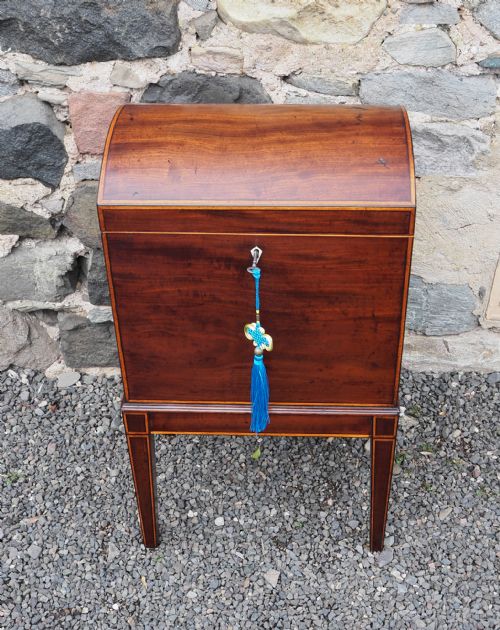
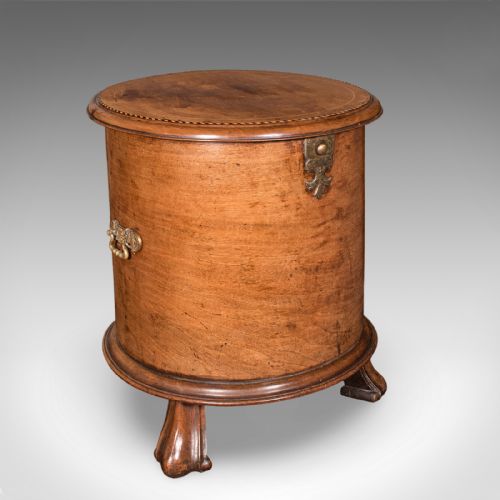

Georgian Wine Cooler Stand
A georgian wine cooler stand is a sturdy, timber-framed vessel designed to chill bottles at table or hold plants.
Georgian Wine Cooler Stand
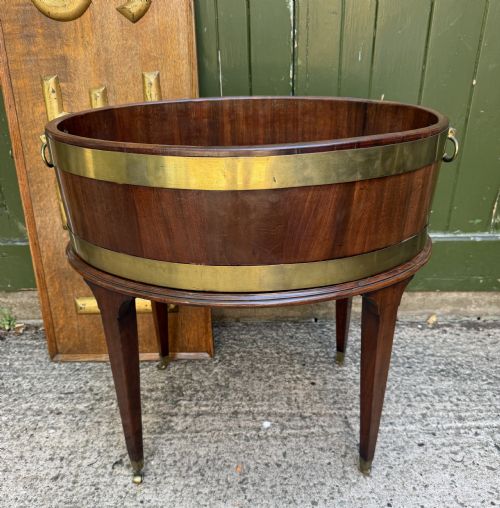
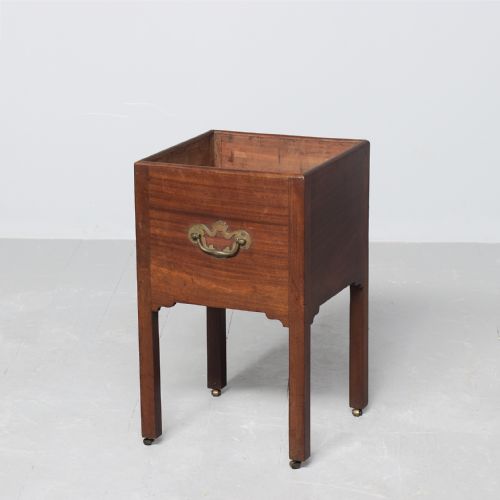
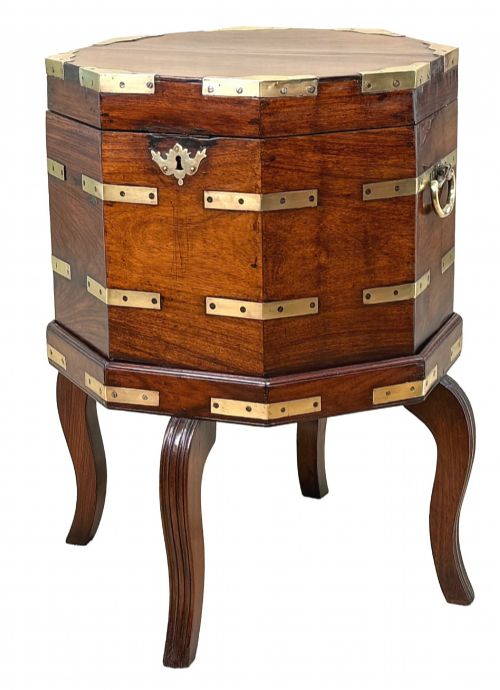
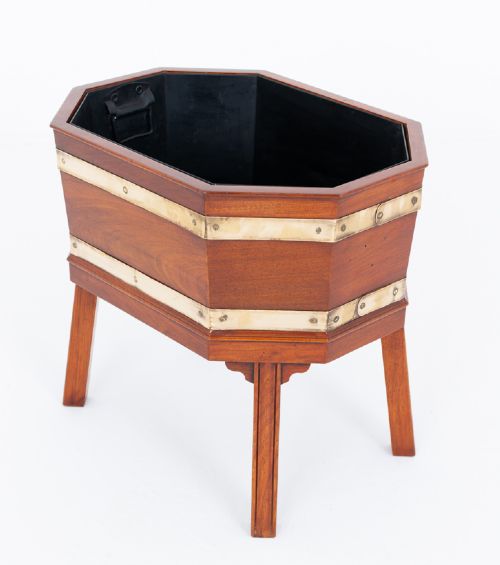
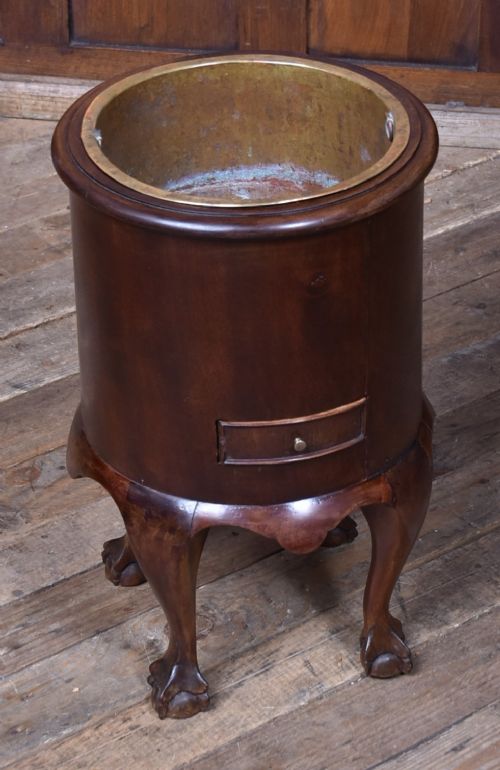
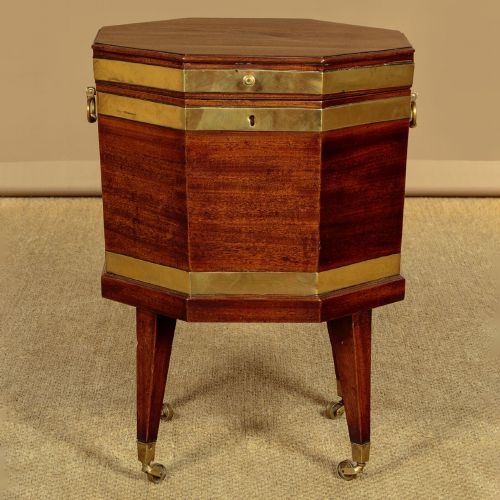
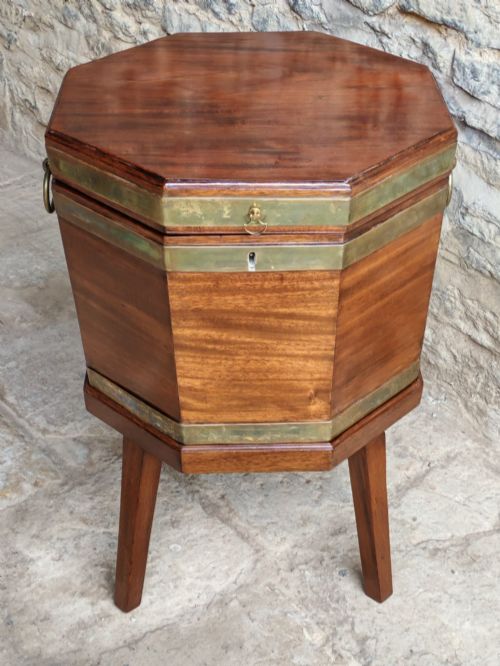
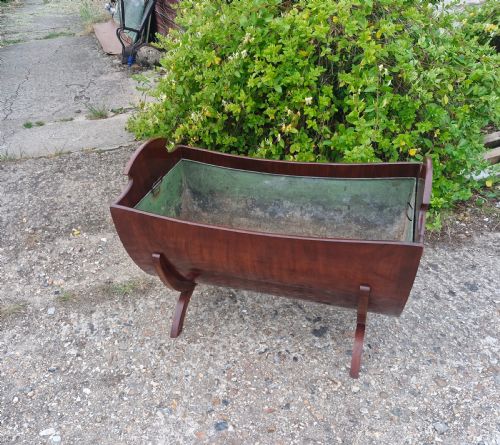
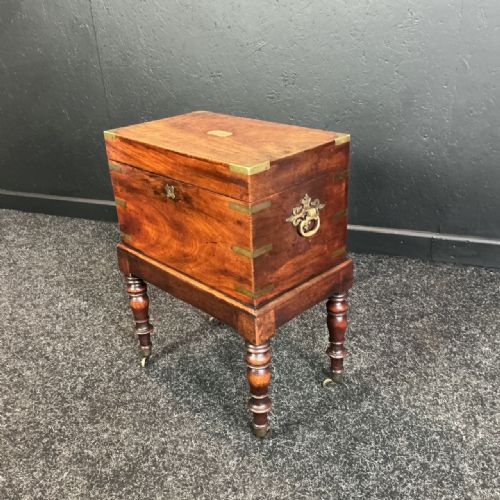
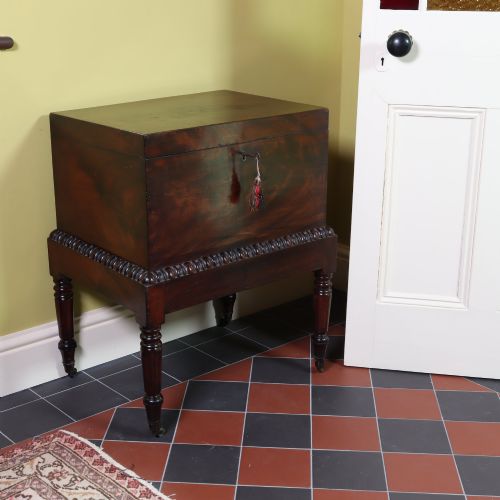
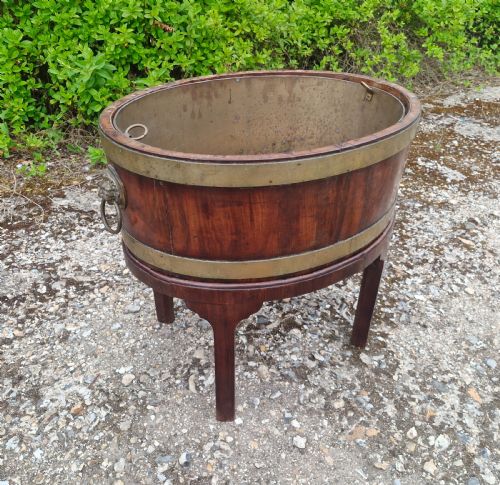
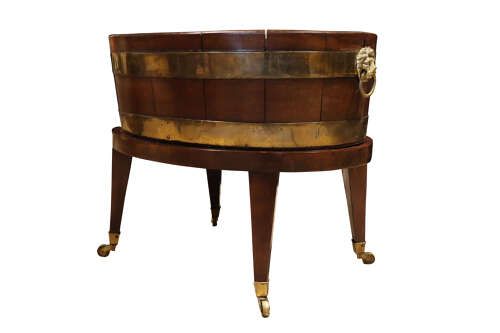
A georgian wine cooler stand typically takes the form of an oval, octagonal or rectangular vessel designed to hold ice and bottles during dining. The listings on this page span the Georgian, Regency and Victorian eras, alongside later interpretations.
Many examples sit upon dedicated stands, while others function as freestanding cellarettes or low floor-standing boxes. Makers often incorporated brass banding and carry handles to facilitate movement around large country houses.
The materials vary from standard native timbers to exotic imports, reflecting the changing tastes of collectors across the eighteenth and nineteenth centuries. Alongside traditional wine storage, many survivors now serve double duty as jardinières or log baskets.
Materials and construction
The primary construction relies heavily on solid mahogany, augmented by walnut, satinwood, padouk and boxwood inlay. Cabinetmakers utilised traditional coopered techniques for the curved staves of oval and octagonal bodies, binding the heavy timber hulls with thick brass hoops to prevent splitting from moisture.
Several heavy vessels include metal or zinc linings originally meant to hold melting ice for the port.
Assessing quality
The distinction between ordinary and exceptional pieces lies in the choice of timber figure, such as flame mahogany, and the precision of the cooperage. Superior examples retain their original stands, intact metal linings and well-fitted brass banding that sits flush against the wood.
Patina and proportion dictate value in this field, where crisp inlay work and carefully carved legs elevate a utility piece into high furniture. Lesser items often show clumsy timber replacement, missing metal liners or poorly executed later adaptations.
Gillows
The Georgian Wine Cooler Stand Glossary
- Cellarette
- A lockable container used for storing wine bottles near the dining table. They often featured internal divisions to keep bottles separated.
- Coopered
- Built using curved wooden staves joined side by side, much like the construction of a traditional wooden barrel or cask.
- Jardiniere
- An ornamental stand or pot, typically ceramic or timber-lined, used for displaying indoor plants or flowers.
- Patina
- The deep surface sheen and colour developed by aged timber through decades of handling, polishing and exposure to light.
- Band
- A flat metal strip, usually brass, secured around the exterior of the wooden vessel to add structural strength and visual contrast.
Georgian Wine Cooler Stand: Frequently Asked Questions
What is a georgian wine cooler stand used for?
These vessels were originally filled with ice to chill wine bottles and decanters during long Georgian dining sessions.
Today, many owners repurpose them as plant stands, decorative jardinières or luxury log baskets for the fireplace.
How do I tell a cellarette from a wine cooler?
The terms are often used interchangeably in the trade, though cellarettes traditionally possessed lockable lids to secure expensive vintages.
Wine coolers frequently stayed open at the top for easy access during a meal, whereas cellarettes acted as mobile cellars.
Did all wine coolers come with stands?
Many of the earlier Georgian examples sat directly on the floor or on low frames, while others rested on dedicated, often detachable, four-legged stands.
Pieces built with integral stands emerged more frequently by the end of the eighteenth century and into the Regency period.
How should I care for the timber?
Keep these items away from direct heat sources and strong sunlight to prevent the timber from drying out and cracking.
Apply a microcrystalline wax occasionally to protect the surface sheen, avoiding silicone-based polishes that damage antique finishes.