


Georgian Wheel Engraved Glassware
Georgian wheel engraved glassware brings functional elegance to the table through hand-cut motifs on lead crystal.
Georgian Wheel Engraved Glassware
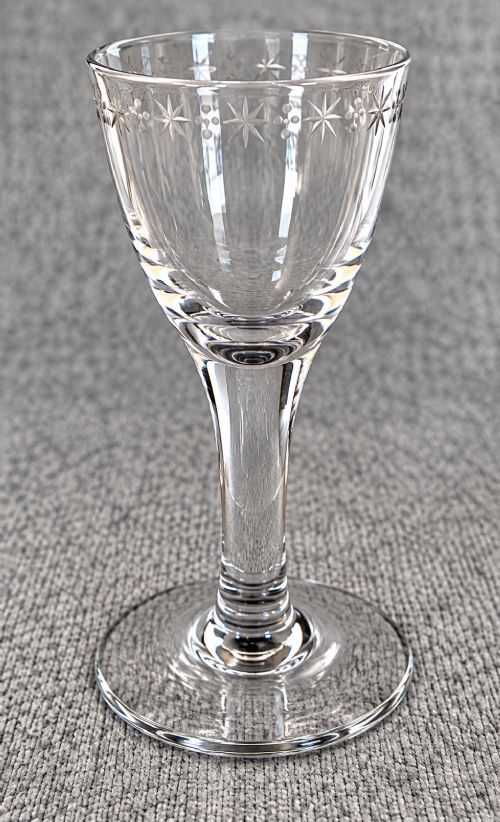
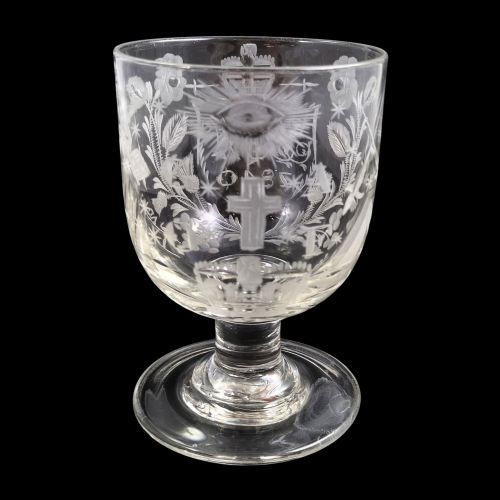
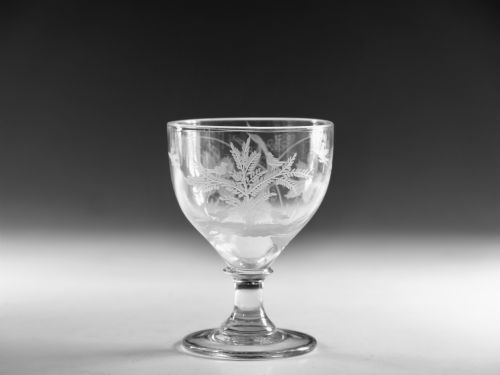
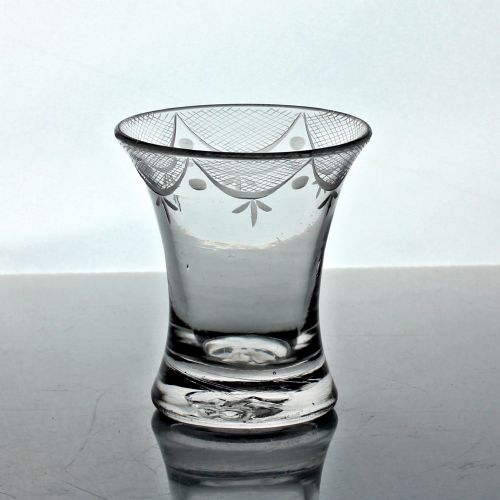
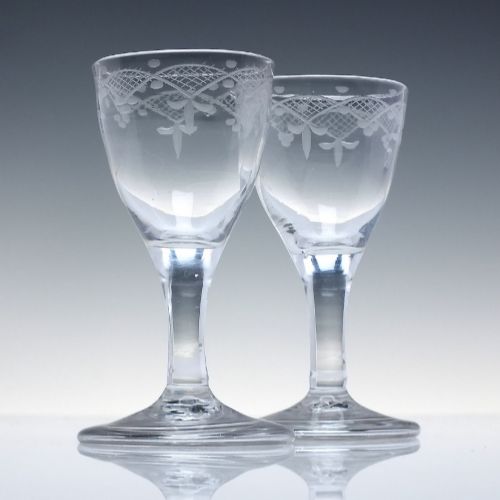
When you search for Georgian wheel engraved glassware, you encounter drinking vessels, decanters, and vases produced across the eighteenth and early nineteenth centuries. The pieces on this page span dram glasses, rummers, wine glasses, and serving bottles, reflecting the domestic habits of the era.
Most items you meet here date from the mid-eighteenth century to the early nineteenth century, featuring clear lead glass and hand-blown forms. The selection ranges from small dram and firing glasses to substantial serving rummers and beer decanters.
Materials and manufacture
Maker operations relied on lead glass and clear lead crystal, shaped through hand-blowing techniques that yielded tactile variations in the vessel walls. Folded feet and facet stems appear frequently among the surviving pieces.
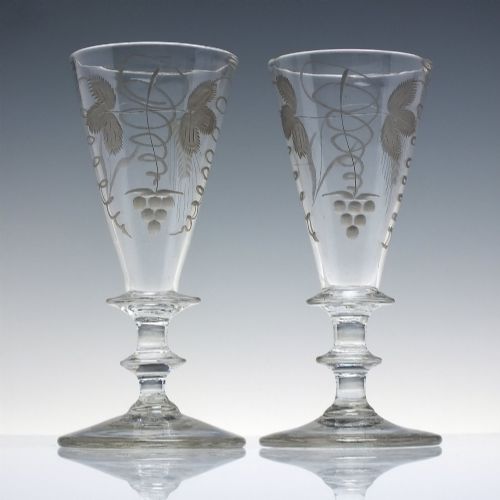
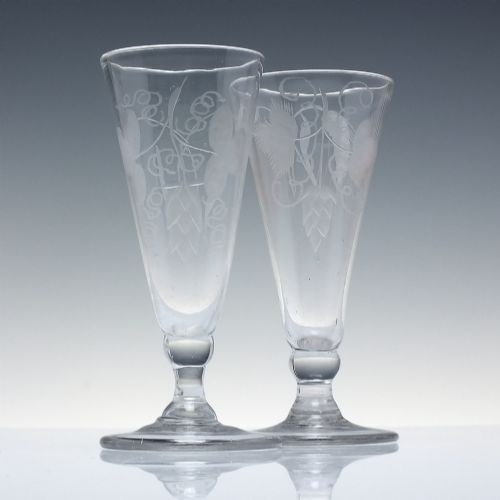
Engraving was applied using rotating wheels of various sizes to cut decorative motifs such as hops, barley, and swags directly into the glass surface. This method created crisp lines and shallow depressions distinct from acid etching.
Firing glasses were made with exceptionally thick bases so drinkers could bang them on the table without smashing the foot.
Assessing quality and character
Quality rests in the clarity of the metal and the precision of the wheel work, where deft cuts create sharp detail rather than blurred edges. The weight of the lead glass and the proportion of the stem to the bowl also indicate standard.
Naivety in the engraving introduces individual character, distinguishing workshop output from rigid mass production. The presence of tool marks and minor bubbles in hand-blown glass confirms period manufacture.
The Georgian Wheel Engraved Glassware Glossary
- Rummer
- A large drinking glass popular for ale, wine, or spirits during the eighteenth and nineteenth centuries. These sturdy vessels often feature engraved botanical motifs like hops and barley.
- Dram glass
- A small drinking vessel designed for a single measure of spirits. They frequently appear with folded feet for added rim stability.
- Firing glass
- A heavy-based drinking vessel used for toasting in lodges and clubs, named for the sharp bang made when slammed on a table. The thick foot absorbs the impact.
- Lead glass
- A heavy glass composition containing lead oxide that increases brilliance and weight. It provides the ideal medium for wheel engraving.
- Folded foot
- A base formed by turning the outer edge of the glass back underneath itself. This technique strengthens the rim of the foot against chipping.
Georgian Wheel Engraved Glassware: Frequently Asked Questions
What is georgian wheel engraved glassware?
These pieces are drinking vessels, decanters, and vases produced in Britain during the eighteenth and early nineteenth centuries using lead glass.
Craftsmen used small rotating wheels to cut decorative motifs directly into the surface of the hand-blown vessels.
How were these glasses used?
People used them for serving and consuming wine, beer, ale, rum, and drams of spirits at the table or during social gatherings.
Larger rummers and serving bottles held beverages for sharing, while smaller dram and firing glasses served individual portions.
How can I tell the period?
Dating relies on observing the form, the weight and clarity of the metal, and the style of the stem or foot. Specific motifs and manufacturing techniques like folded feet also point to particular decades.