


Georgian Whatnot Stand
A georgian whatnot stand provides tiered open shelving for books and display, offering practical elegance for period interiors.
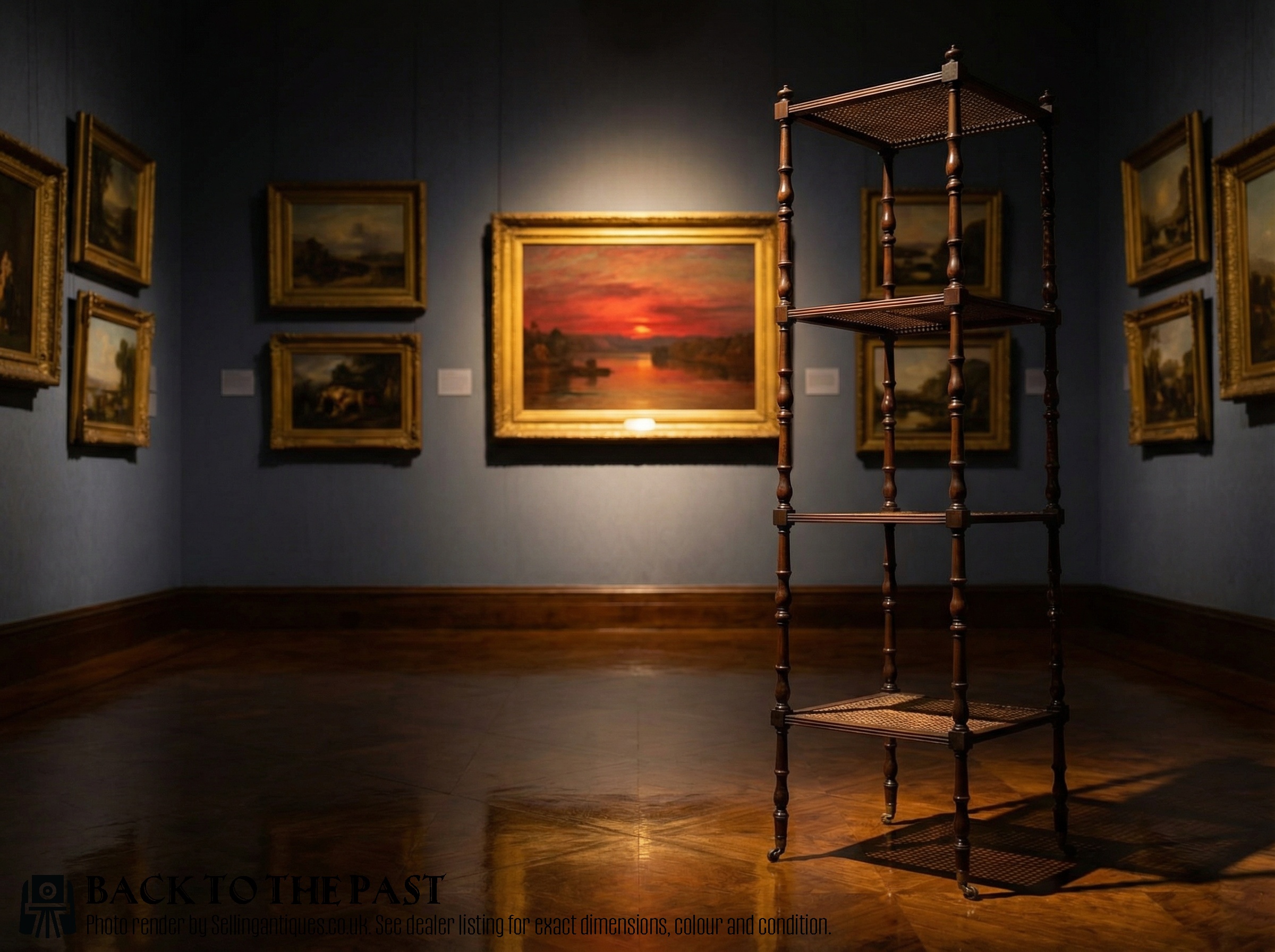
Georgian Whatnot Stand
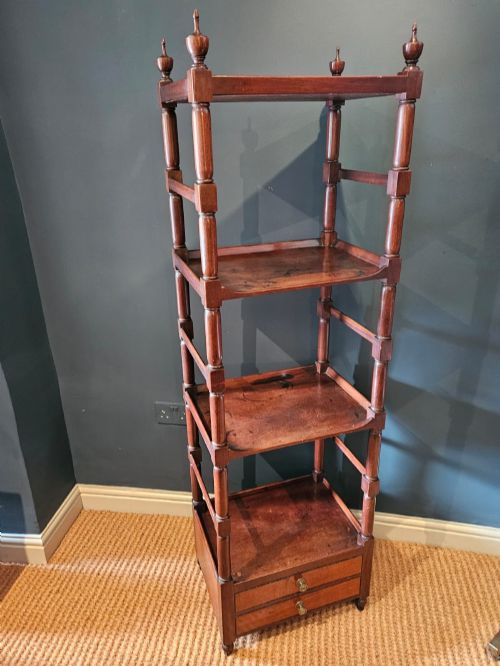
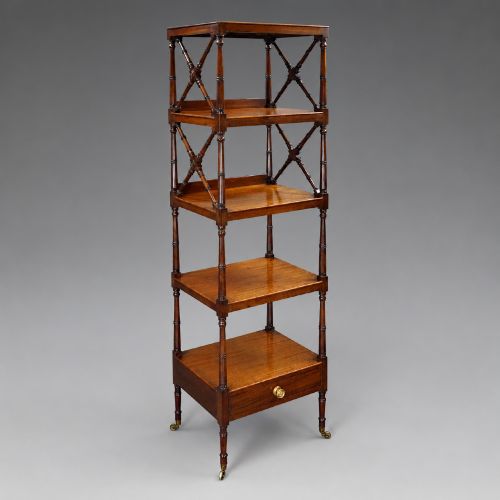
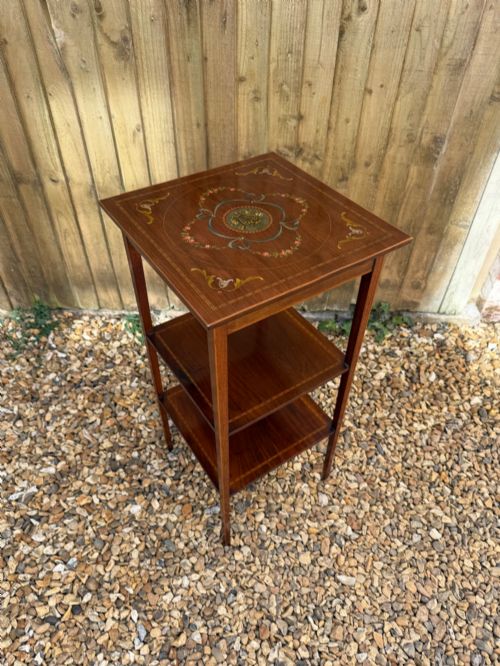
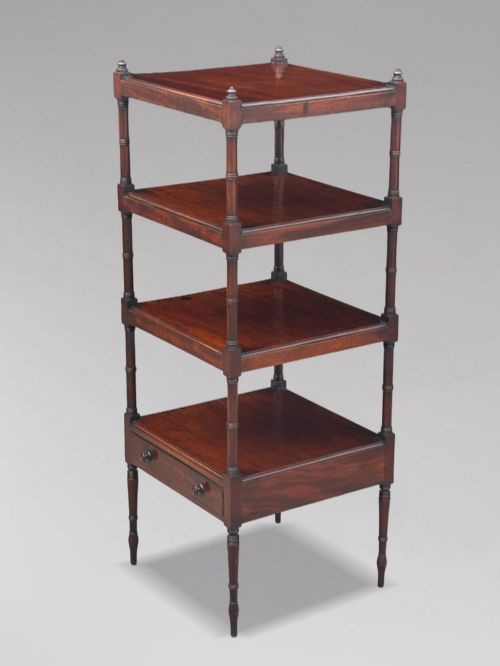
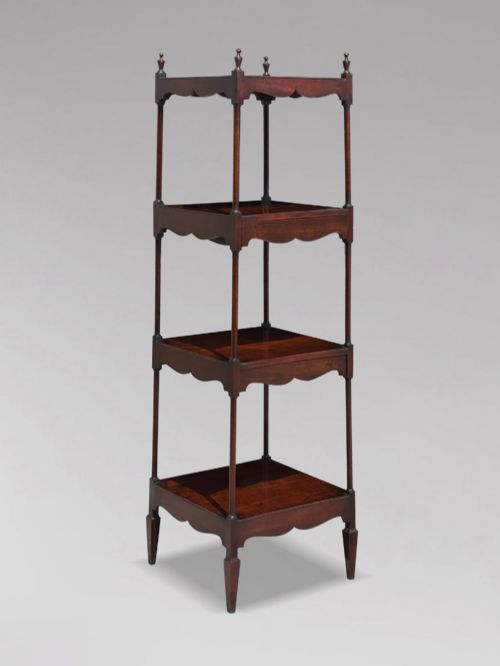
When you search for a georgian whatnot stand, you encounter multi-tiered open furniture designed for display and storage in domestic rooms. The pieces recorded here span the Georgian, Regency, and Victorian periods, with George III and George IV iterations appearing frequently alongside later revivals.
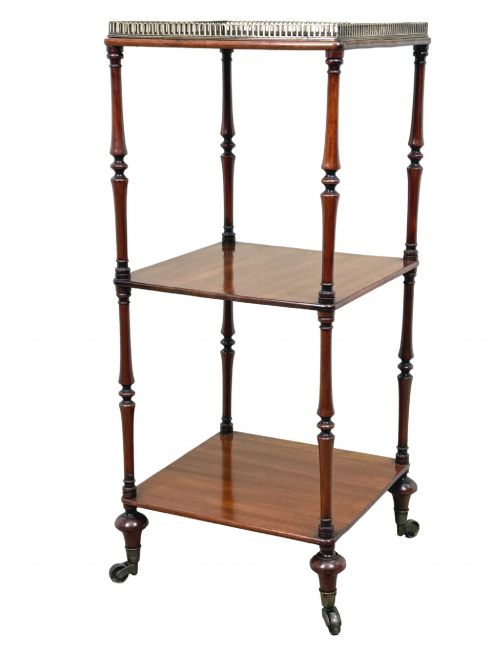
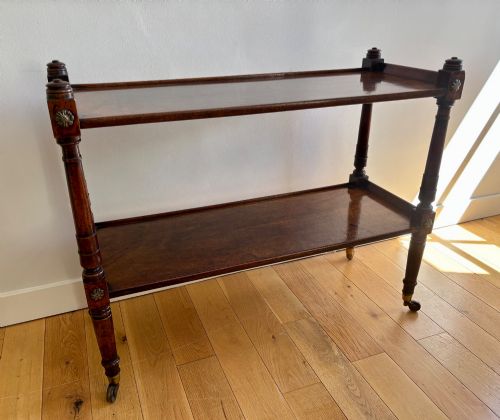
The primary forms on this page include three and four-tier open shelf units, music stands with adjustable elements, dumb waiters, and specialised corner or bow-fronted designs. Mahogany dominates the surviving examples, supported by rosewood, oak, and occasional painted finishes.
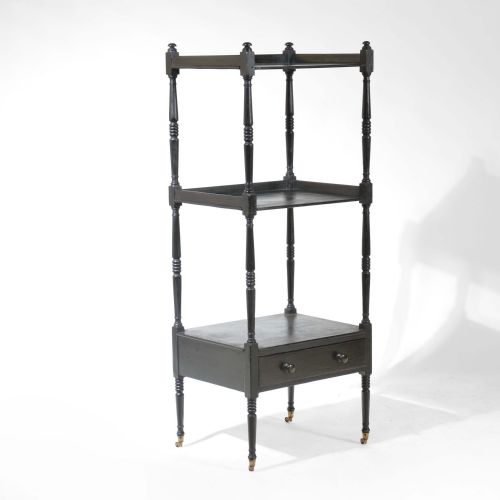
Makers and workshops of the late eighteenth and early nineteenth centuries constructed these stands with graduated open shelves supported by turned columns or uprights, often incorporating a small drawer or cupboard base. Compact scales and pairs of matched stands also feature among the items handled.
Materials and Construction
Cabinetmakers constructed these stands predominantly in solid and veneered mahogany, alongside alternative timbers such as rosewood, birdseye maple, and oak. Workshops utilised brass for castors, gallery rails, and drop handles, while boxwood inlay provided fine decorative line details on select surfaces.
Joinery techniques relied on neatly turned upright pillars supporting stacked tiers, frequently joined by pegged or tenoned joints. Ebonised finishes and painted decoration appear on specific pieces from the nineteenth and twentieth centuries to mimic more exotic woods or suit changing decorative tastes.
Mahogany is the predominant timber across these listings, accompanied by rosewood, oak, and birdseye maple.
Judging Quality
The refinement of the turning on the upright columns and the choice of timber figure separate standard productions from superior examples. Dense, well-figured mahogany with deep natural patina indicates careful selection by the original maker.
Proportion and utility dictate distinction, with smaller scales, unusual tiered configurations, and integrated cupboards or music stands commanding greater interest. Original brass castors and intact gallery rails preserve the integrity of the design.
Gillows
The Georgian Whatnot Stand Glossary
- Whatnot
- An open set of shelves used for displaying ornaments, books, or writing materials. These pieces typically feature three or four tiers supported by slender corner posts.
- Etagere
- A piece of furniture consisting of a set of open shelves for displaying small objects or ornaments. The term is frequently used interchangeably with whatnot in period listings.
- Canterbury
- A low stand with partitioned vertical sections designed for holding sheet music or books. Certain variations incorporate open shelving above the lower basket.
- Dumb Waiter
- A tiered serving stand fitted with revolving or stationary shelves used in dining rooms. Examples often share structural characteristics with standard open shelf units.
- A-frame
- A structural profile where the upright supports taper inward toward the top. This configuration provides stability and a distinct visual silhouette on corner and freestanding stands.
Georgian Whatnot Stand: Frequently Asked Questions
What is a georgian whatnot stand used for?
These tiered stands served primarily for holding books, decorative ornaments, and writing materials in principal rooms. Their open shelving allowed household items to remain visible and accessible.
Over time, owners adapted them for various domestic uses, including bedside placement, music storage, and serving functions in dining spaces.
How do I identify a georgian whatnot stand?
Look for stacked open tiers supported by slender turned columns, typically constructed in mahogany with period joinery. Many examples incorporate a small drawer or enclosed cupboard at the base.
Proportions tend to be compact, and details such as brass castors or subtle boxwood inlay help distinguish genuine period pieces from later revivals.
Where were these stands placed in a home?
Period interiors accommodated these open shelf units in drawing rooms, libraries, and parlours where display space was required. Corner versions fitted neatly into unused wall junctions.
Smaller compact variants also functioned effectively beside seating furniture or against bedroom walls for holding night essentials.
Are pairs of these stands common?
Matched pairs appear occasionally in surviving records, usually commissioned for symmetrical placement on either side of a fireplace or window. Single freestanding units remain much more common.
Finding an authentic pair requires close comparison of timber grain, shelf dimensions, and turning details to confirm they originated together.