
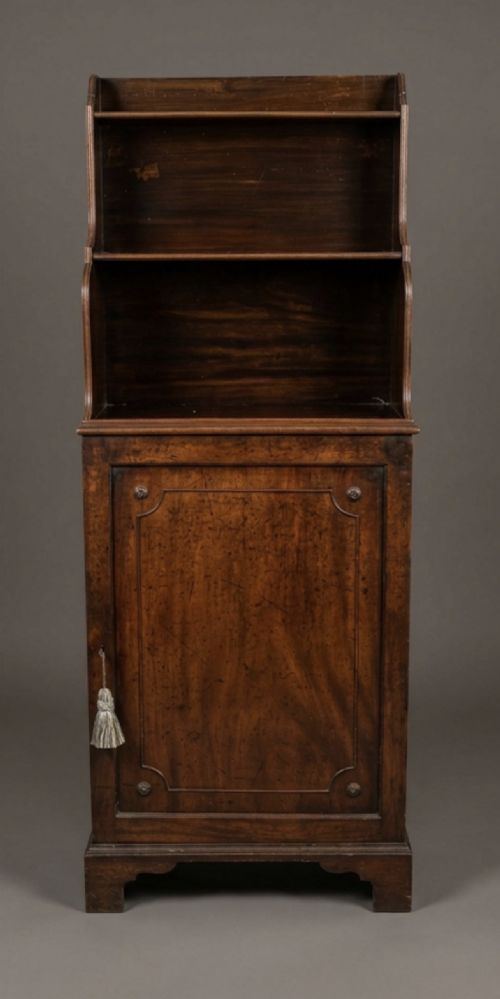
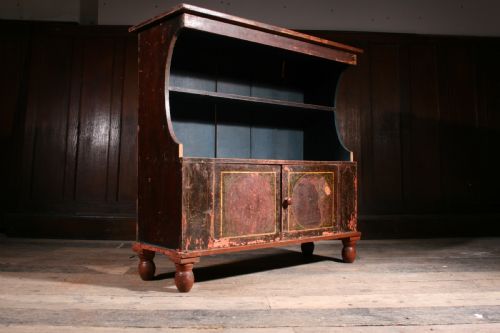
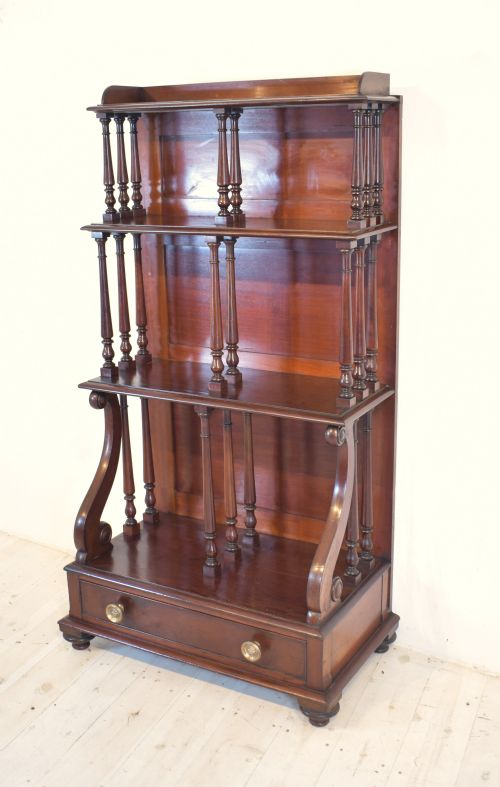


Georgian Waterfall Shelf
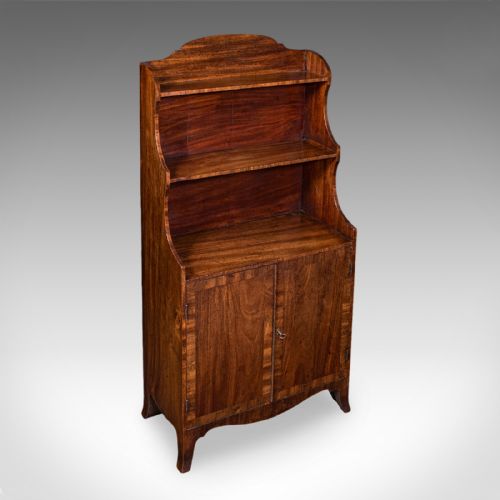
These georgian waterfall shelf pieces offer tiered open storage that steps back gracefully from bottom to top, bringing elegance and practical display to any room.
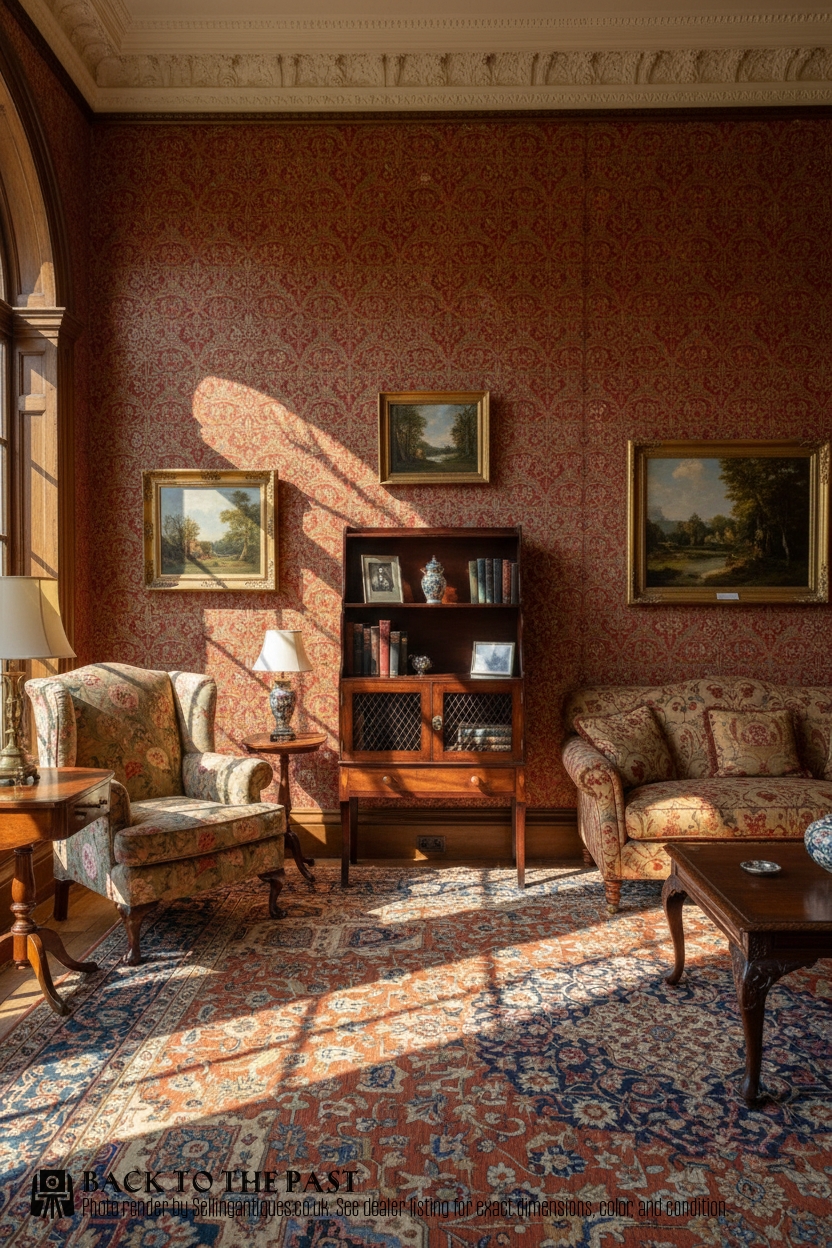
Georgian Waterfall Shelf
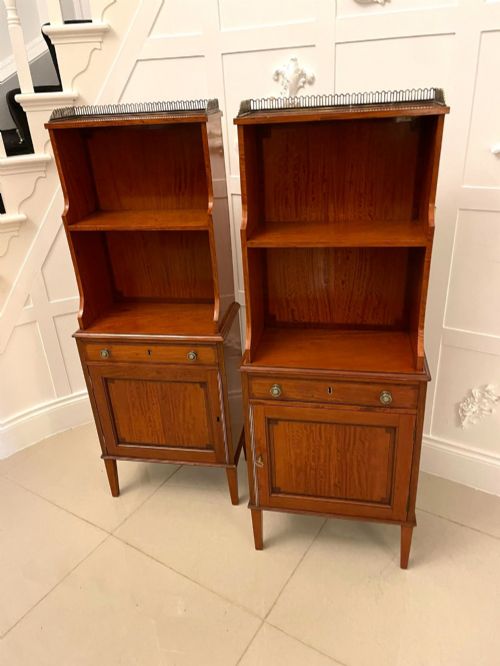
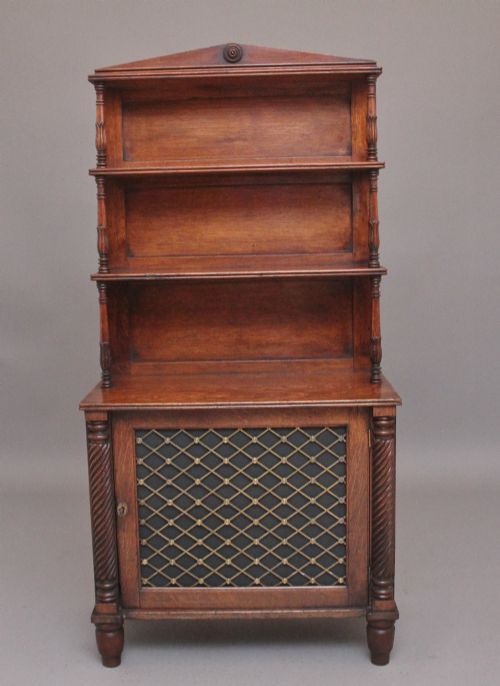
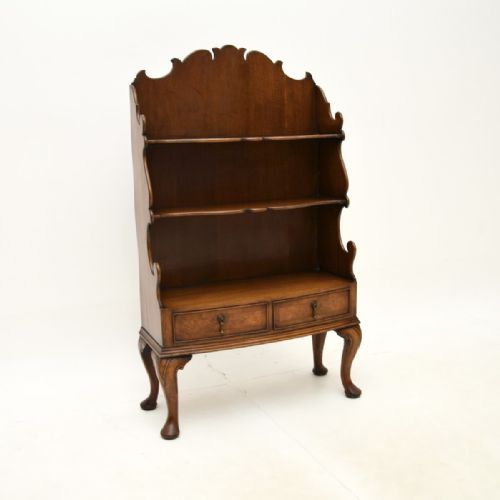
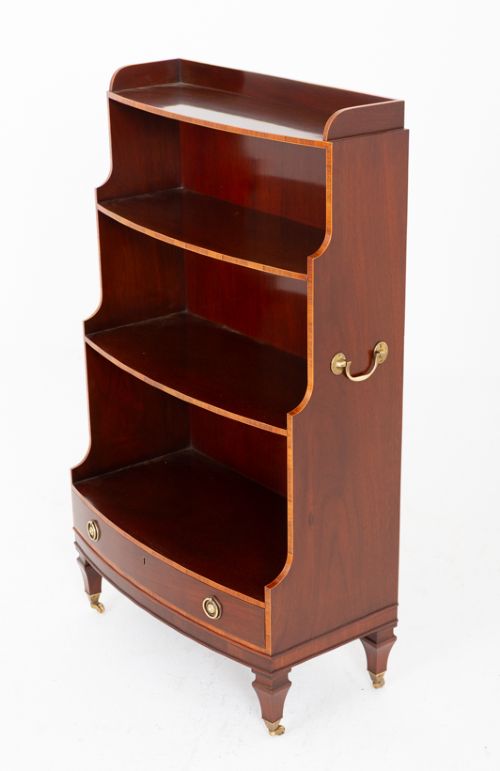
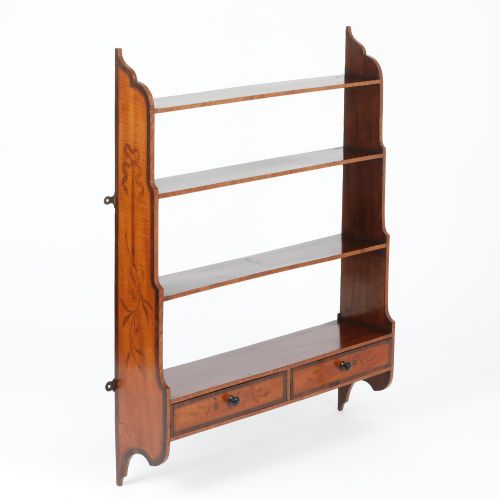
A georgian waterfall shelf provides graduated open shelving arranged in tiers that recede from the lower tier to the upper ledge. These pieces appear in both freestanding formats and wall-hanging variations.
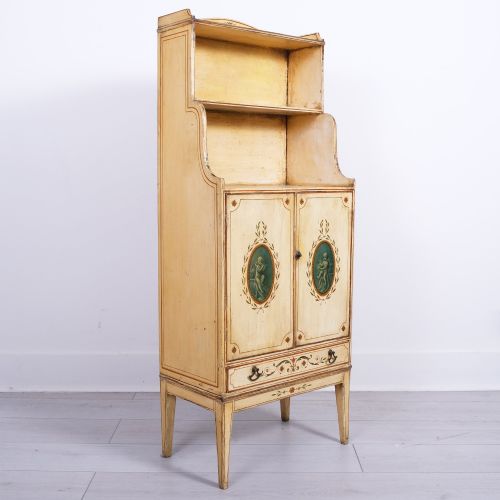
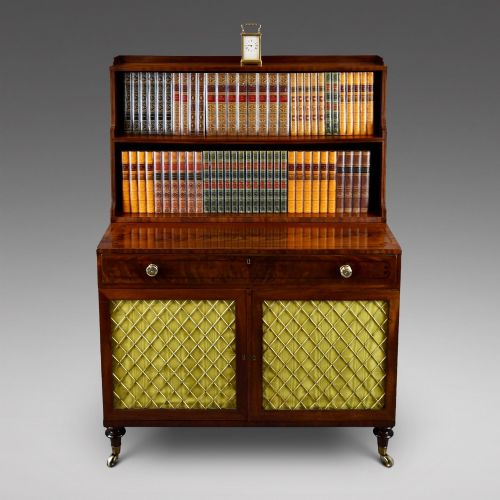
The listings show examples originating across the Georgian, Regency, and George III periods, alongside later nineteenth and early twentieth-century interpretations. Many incorporate lower cupboards, cabinets, or small drawer bases beneath the open tiers.
Makers utilised these cascading tiers for books, display objects, and sheet music. The form balances height with compact floor footprints, suiting both larger libraries and modest parlours.
What Varies in Quality
Graduation proportions and timber selection dictate the visual balance of the tiered levels. Finely figured veneers and crisp cross-banding distinguish higher-grade cabinet work from simpler utilitarian examples.
The integration of lower cabinetry, such as cupboards or chiffonier bases, alters the complexity and scale of the piece. Joinery precision in the stepped side panels defines the structural integrity of the cascading tiers.
Listings feature mahogany, flame mahogany, satinwood, rosewood, oak, yew wood, and painted timber across Georgian, Regency, and early twentieth-century periods.
Gillows
The Georgian Waterfall Shelf Glossary
- Waterfall bookcase
- A set of open shelves stepped back in tiers from bottom to top. This arrangement allows smaller items to sit on upper levels while larger volumes rest below.
- Cross-banding
- A strip of veneer laid perpendicular to the grain of the primary surface. This technique frames the panels of shelves and cabinet doors.
- Stringing
- Thin inlay lines of contrasting wood set into the surface of the timber. Cabinet makers used this linear detail to edge shelves and panels.
- Flame mahogany
- Mahogany veneer exhibiting a distinctive flickering flame-like grain pattern. Furniture makers selected this timber for prominent display surfaces.
- Open gallery
- A low pierced railing around the top shelf to keep items secure. This feature appears on several freestanding tiered bookcases.
Georgian Waterfall Shelf: Frequently Asked Questions
What is a waterfall shelf?
A waterfall shelf is a set of graduated open shelves where each tier steps back from the one below it. This configuration creates a cascading effect that holds books or decorative objects while occupying minimal depth.
Such pieces range from simple wall-hanging shelves to substantial freestanding bookcases with lower cupboards or drawers. The design became popular during the Georgian and Regency periods for displaying collections in smaller rooms.
Where were these shelves placed?
These pieces sat against drawing room walls, within libraries, or beside seating areas where easy access to books and small display items mattered. Their compact proportions made them versatile for parlours and chambers alike.
Freestanding versions anchored easily against walls, while hanging variants preserved floor space in more restricted interiors. Lower cabinet additions provided extra enclosed storage for papers or small valuables.
How do I date a waterfall shelf?
Dating relies on timber choice, secondary woods, construction methods, and stylistic details such as inlay or bracket feet. Pieces from the Georgian and Regency eras show specific joinery traits and veneer patterns distinct from later twentieth-century reproductions.
Examine the secondary timbers used inside drawers and backboards, as these often reveal the period of manufacture more accurately than external styling alone.
Are these shelves sturdy enough for books?
Most examples were built to support heavy volumes, particularly those made from solid mahogany, rosewood, or oak with strong vertical uprights. The graduated depth naturally places heavier books on the deeper lower shelves.
Freestanding variants distribute weight securely to the floor, while wall-hung versions depend entirely on correct wall fixings for their load capacity.