
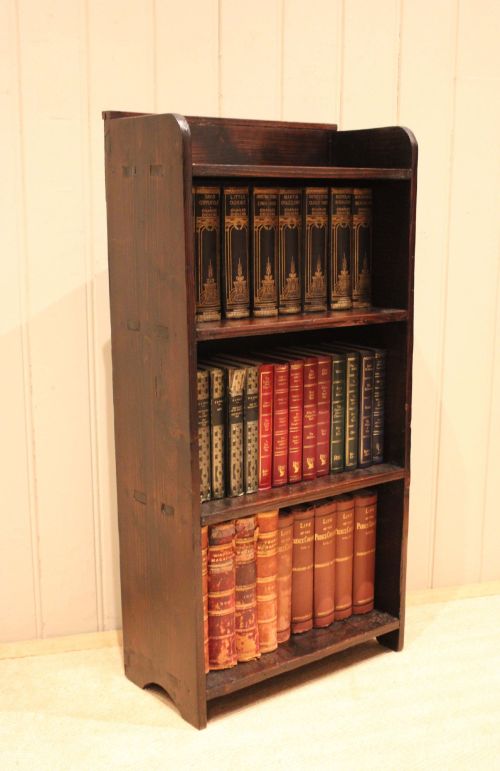
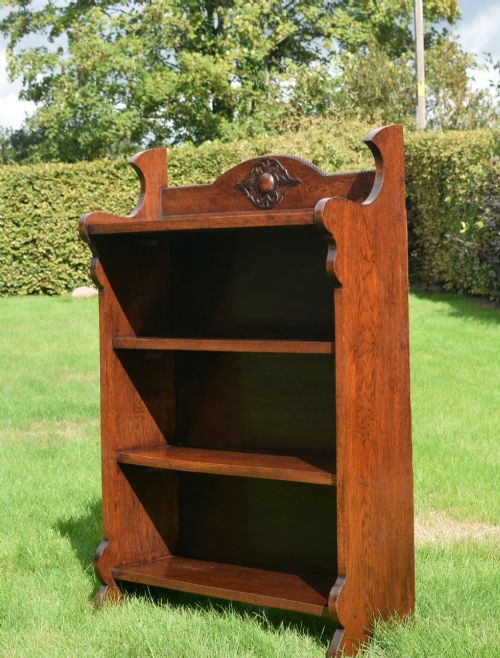
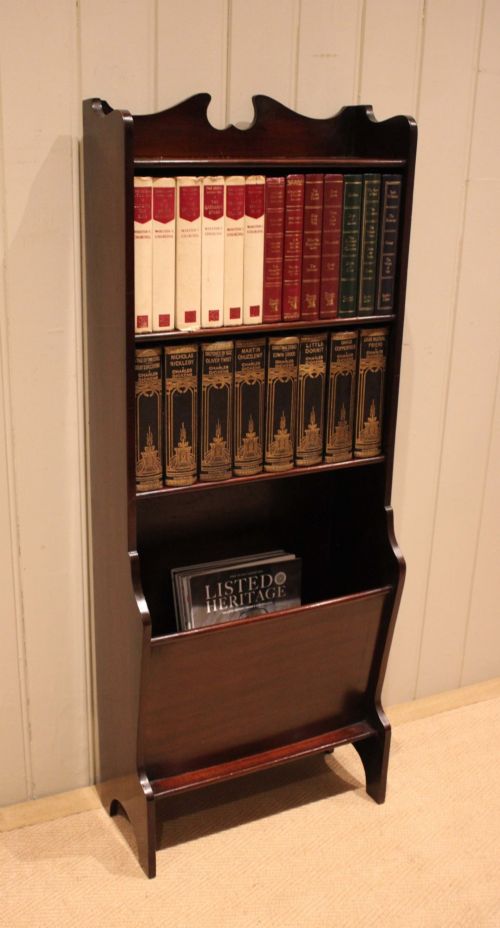
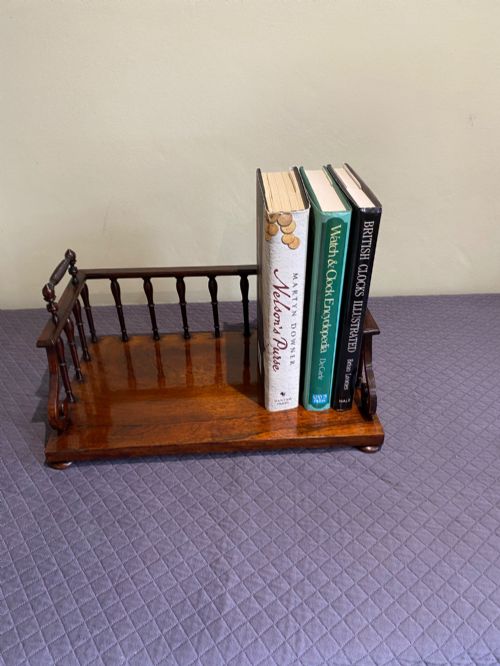
Antique Wood Bookstand
An antique wood bookstand brings order to shelves and desks, offering a practical way to keep cherished volumes close at hand.
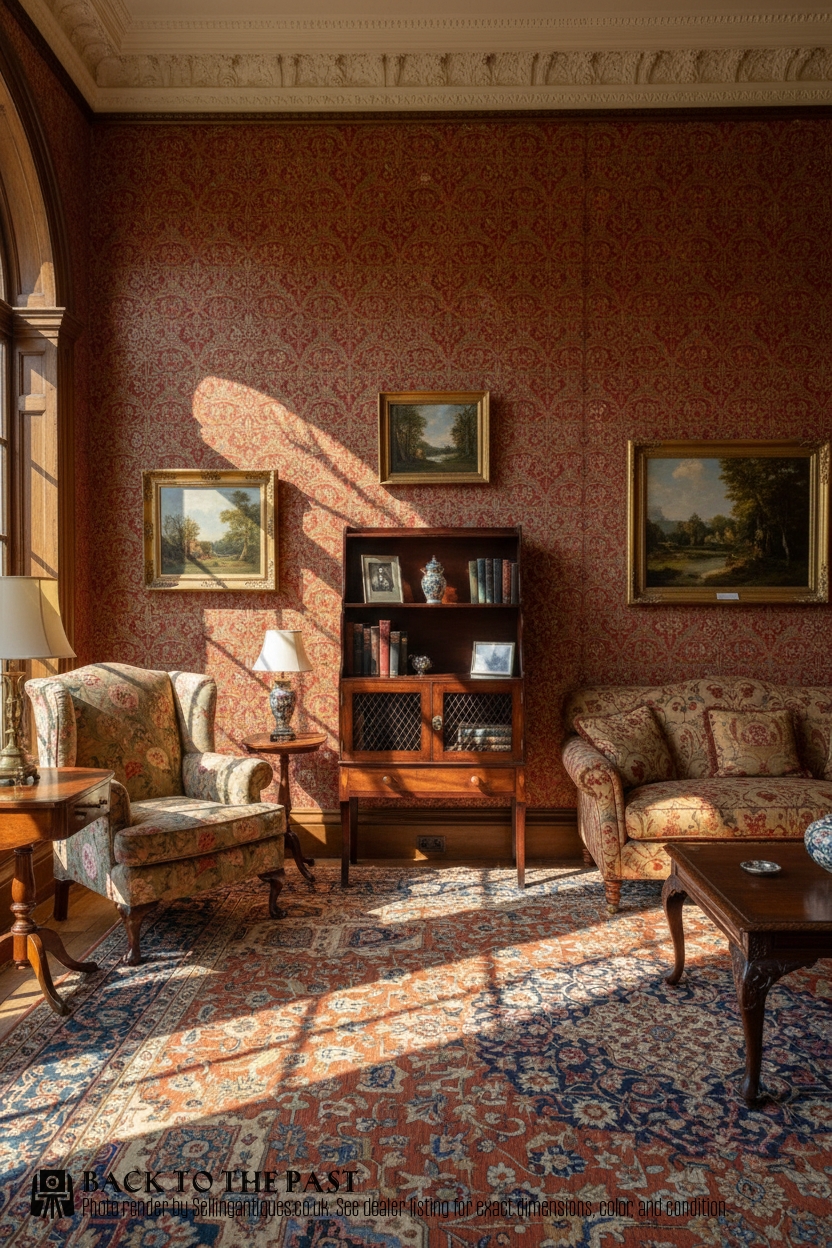
Antique Wood Bookstand
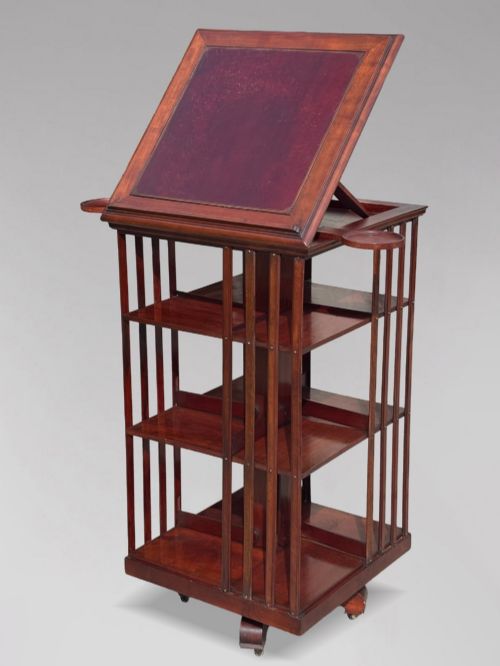
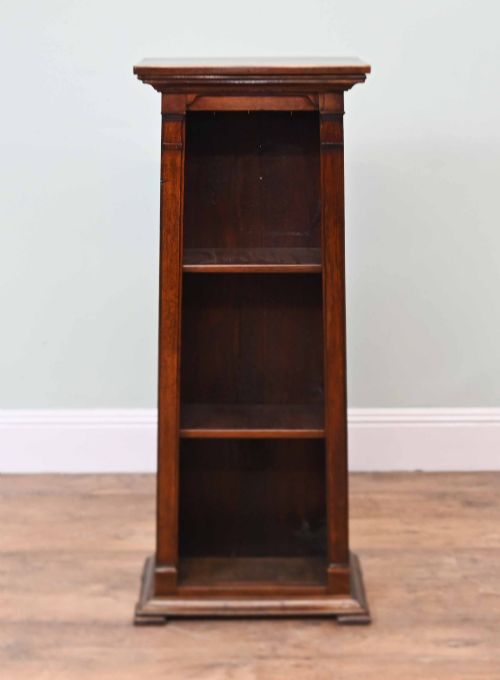
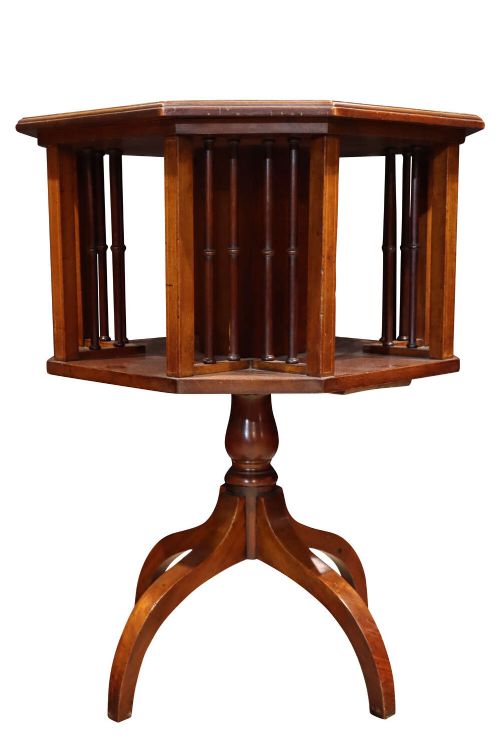
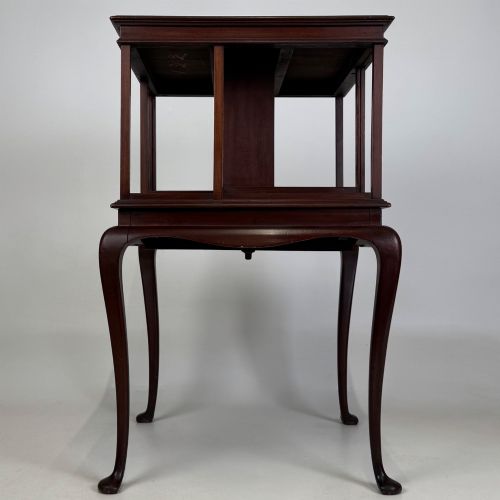
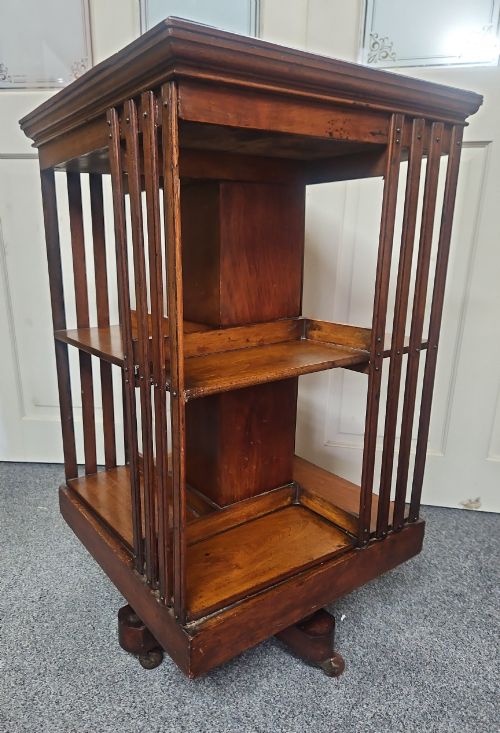
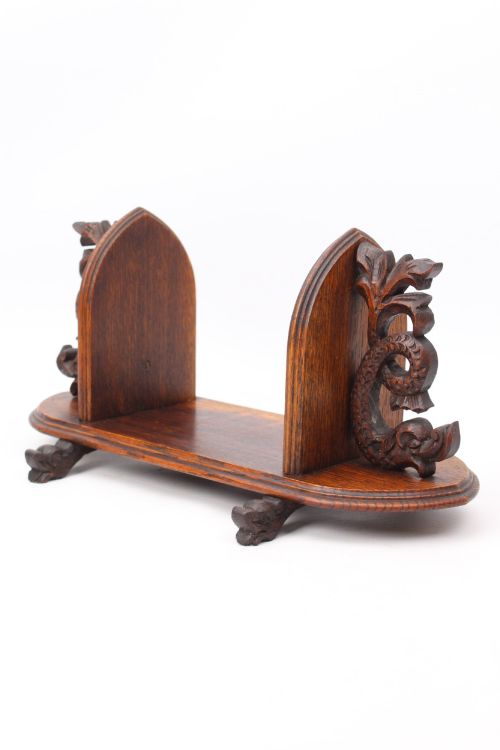
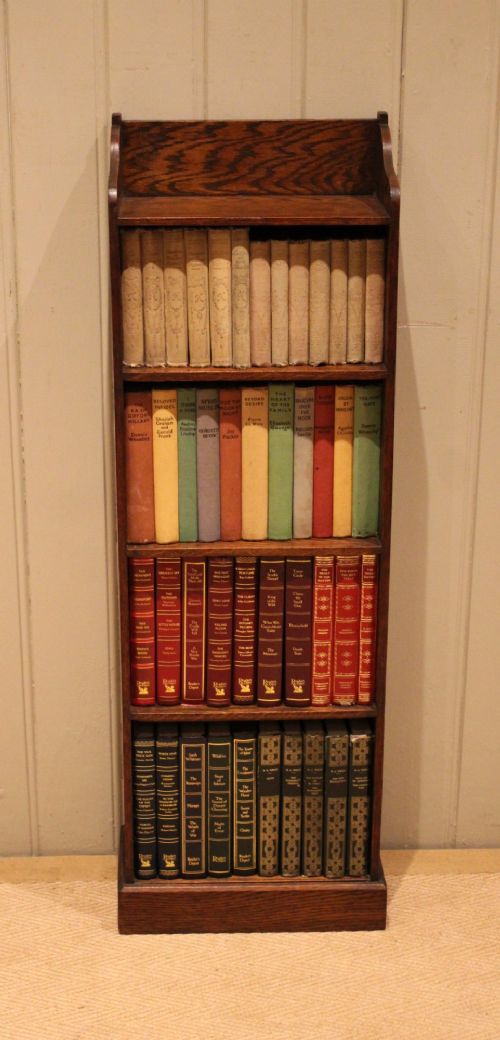
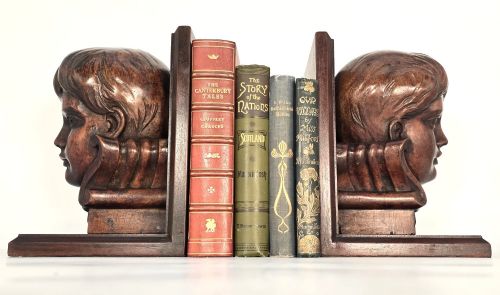
An antique wood bookstand covers a range of useful desk accessories, extending book slides, and revolving bookcases designed for domestic studies and libraries.
The pieces appearing on this page date principally from the nineteenth and early twentieth centuries, spanning the Regency, Victorian, and Edwardian periods.
Mahogany and oak form the backbone of the selection, accompanied by rosewood, walnut, and rarer timbers like coromandel and satinwood.
Materials and construction
Cabinet makers utilised solid woods and rich veneers, often pairing mahogany and rosewood with brass hinges, mounts, and extending mechanisms.
Carving, inlay, and Tunbridge ware surface decoration appear on desk pieces and revolving stands, reflecting the prevailing aesthetic tastes of the Victorian and Edwardian eras.
Standard and craftsmanship
Quality rests in the crispness of the timber grain, the smooth movement of revolving platforms or extending slides, and the integrity of the joinery.
Makers who incorporated thoughtful details like brass inlay, mother of pearl, or fine fretwork produced pieces that stand apart from simpler utility items.
Gillows·Maple & Co
The Antique Wood Bookstand Glossary
- Book slide
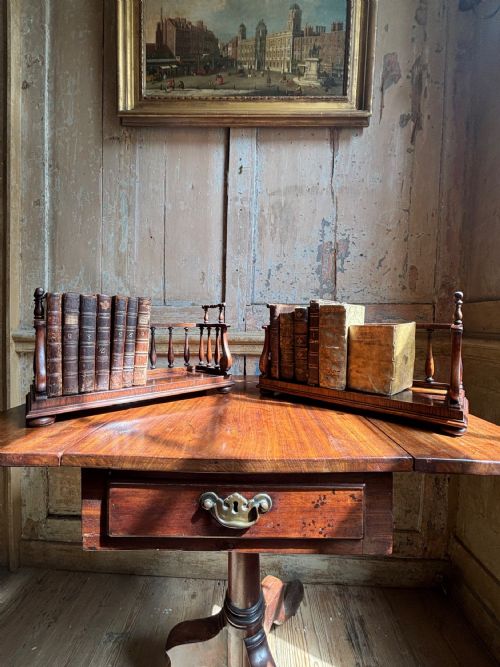
- An extending desk accessory fitted with wooden ends, designed to hold a row of books upright between adjustable panels.
- Revolving bookcase
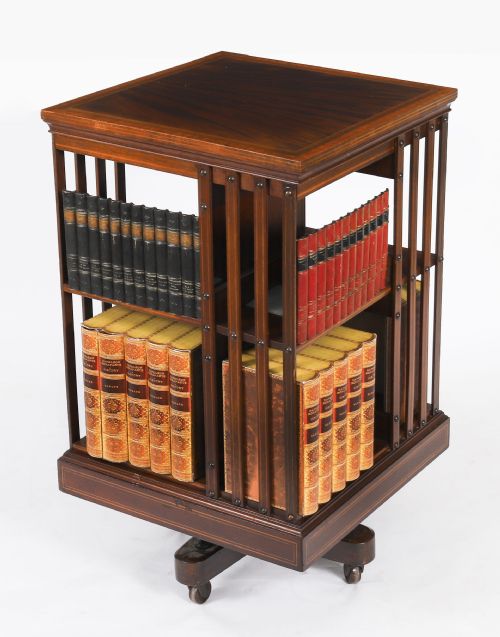
- A freestanding or table-top stand built on a rotating pivot to allow easy access to volumes from any seating position.
- Campaign table top reading stand
- A portable wooden rest created for travel, featuring folding supports and adjustable angles for holding texts.
- Tunbridge ware
- A form of decorative woodworking using thousands of tiny tinted wood mosaic blocks to form geometric or pictorial surface patterns.
- Gothic Revival
- A nineteenth-century design style drawing on medieval architectural motifs, featuring pointed arches, tracery, and heavy carved oak.
Antique Wood Bookstand: Frequently Asked Questions
How do I use an extending book slide?
Place the slide on a desk or table and pull the wooden ends outward to fit the desired number of volumes between them. The base expands while the upright ends keep the books supported securely.
These slides suit heavy reference books or daily reading material, fitting neatly across a workspace without taking up floor space.
What is a revolving bookcase used for?
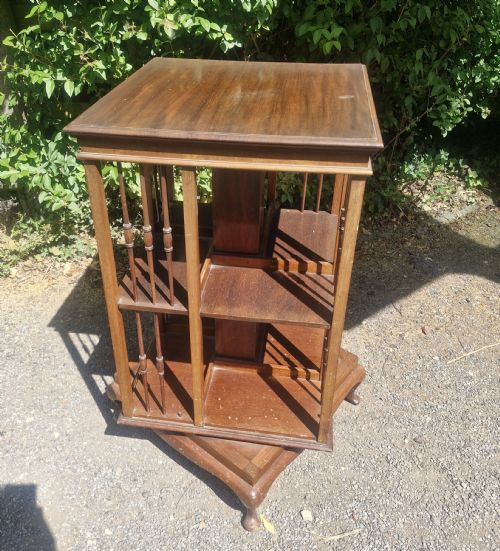
A revolving bookcase holds a collection of books within arm's reach while sitting at a desk or in an armchair. The entire structure turns smoothly on a concealed base.
Victorian and Edwardian studies utilised these compact stands to keep dictionaries, novels, and journals accessible in smaller rooms.
How do I care for antique wood surfaces?
Dust the wood regularly with a dry, soft cloth and avoid placing pieces near direct heat sources or strong sunlight. Natural beeswax applied occasionally helps nourish dry timbers.
Harsh chemical sprays should be avoided to protect the original polished finish and any delicate brass or inlay work.
How do I distinguish Victorian from Edwardian stands?
Victorian pieces frequently display heavier proportions, darker woods, and Gothic or ornate carved details. Edwardian examples often feature lighter mahogany, simpler lines, and delicate inlaid decoration.
Examining the construction methods and secondary timbers inside drawers or compartments can also help confirm the period of manufacture.