


Waterfall Book Cabinet
A waterfall book cabinet brings tiered open shelving and lower enclosed storage together, offering a compact display piece for prized volumes.
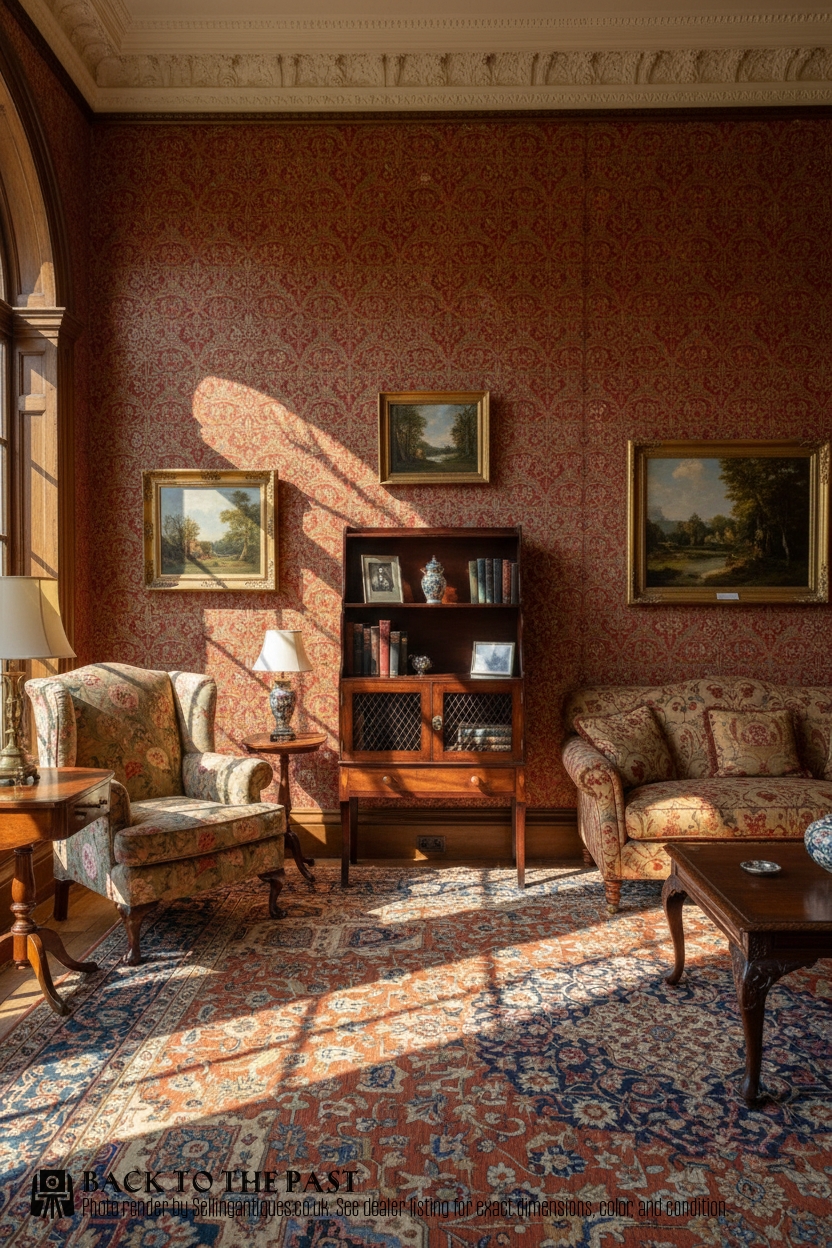
Waterfall Book Cabinet
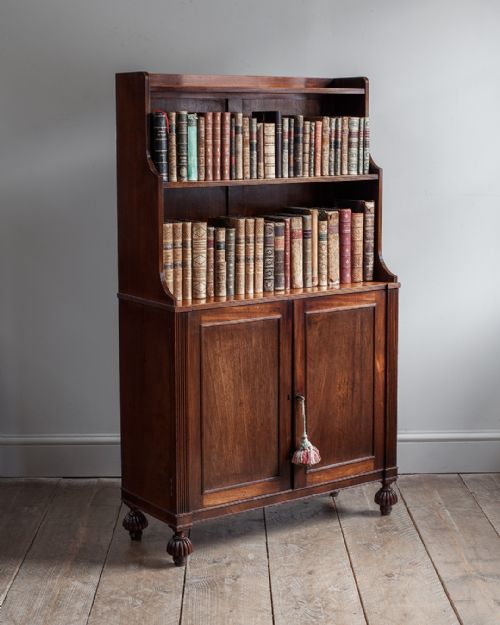
A waterfall book cabinet combines graduated open shelves stepping back towards the top with a lower cupboard or cabinet section. When you search for a waterfall book cabinet, you encounter pieces spanning the Georgian, Regency, Victorian, Edwardian, and Arts and Crafts periods. Most examples follow traditional forms in mahogany, walnut, or oak.
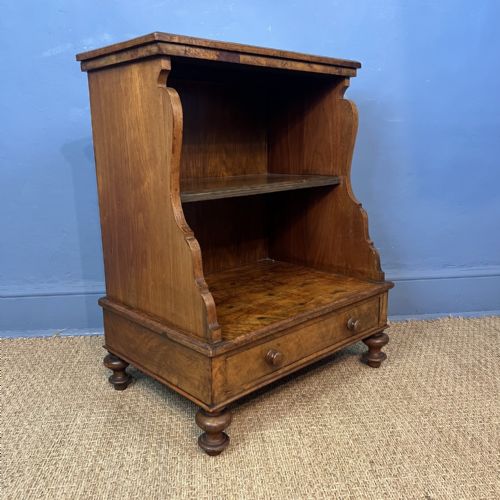
The distinctive tiered profile allows smaller volumes to sit near the top while deeper books or cabinet storage reside below. Surviving pieces range from low open bedside formats to taller multi-section stacking designs and Moorish-influenced variations. These cabinets serve both display and storage functions in smaller study or parlour spaces.
Materials and construction methods
Cabinetmakers utilised rich timber veneers including flame mahogany, burr walnut, and rosewood over solid carcases. Finer surfaces display carefully matched grain patterns across the graduated tiers and cupboard doors.
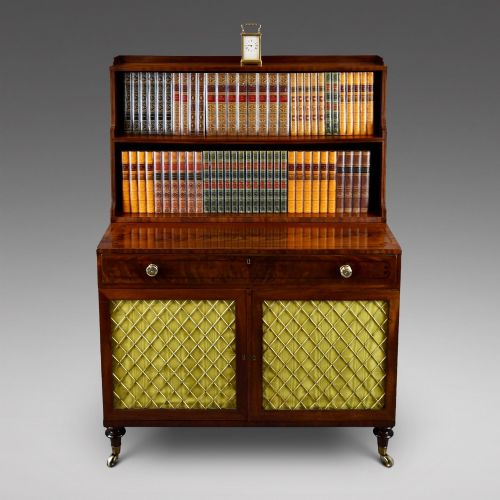
Structural additions such as brass castors appear on larger floor-standing Victorian examples to aid movement. Joinery methods include traditional dovetailed carcases and tiered shelf supports secured to panelled backs.
Listings feature mahogany, burr walnut, oak, and rosewood across Georgian, Regency, Victorian, and Arts and Crafts styles.
Assessing quality and craftsmanship
Superior execution shows in the precision of the graduated tier joints and the selection of figured timber veneers. Better workshops ensured the stepped shelves maintained structural rigidity without visible sagging over time.
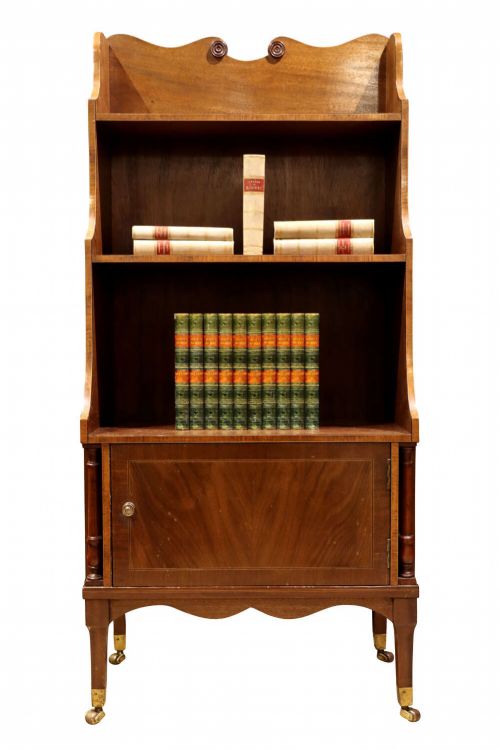
Subtle details separate standard production from high workshop output, including delicate boxwood inlay, well-turned upright supports, and original brass hardware. The integration of lower cabinet doors with matched panel grain distinguishes finer pieces.
Shapland and Petter·Gillows
The Waterfall Book Cabinet Glossary
- Waterfall bookcase
- A set of open shelves stepped back progressively from bottom to top so that each shelf is narrower than the one below it. This tiered arrangement allows easy viewing of book spines.
- Flame mahogany
- A veneer cut from the fork of a mahogany tree where the branches join the trunk. It creates a distinctive rippled flame pattern across cabinet doors and drawer fronts.
- Burr walnut
- Timber taken from a growth or burl on a walnut tree, yielding highly figured swirling grain patterns. Cabinetmakers used these veneers on high-status surfaces.
- Brass castors
- Small wheel attachments fitted to the base of heavy furniture legs to allow easier movement across carpets and wooden floors. They often appear in brass on nineteenth-century examples.
- Stacking bookcase
- A modular cabinet design featuring multiple independent graduated sections resting one upon another. Each tier typically lifts or slides open to access the books inside.
Waterfall Book Cabinet: Frequently Asked Questions
What is a waterfall book cabinet?
A waterfall book cabinet is a piece of furniture featuring stepped open shelves that graduate in depth from bottom to top, paired with a lower enclosed cabinet base. This design provides both accessible display shelving and concealed storage for household items.
Such cabinets appeared across the Georgian, Regency, and Victorian eras, evolving from simple open stands into integrated storage furniture for parlours and libraries.
Where should I place my cabinet?
These cabinets suit studies, living rooms, and bedrooms where floor space is limited yet vertical display is desired. Their tiered upper shelves keep smaller volumes or ornaments visible without dominating the room.
Keep wooden cabinets away from direct heat sources and strong sunlight to protect the polished mahogany, walnut, or rosewood surfaces from drying out.
How do I date an antique cabinet?
Dating relies upon observing the timber species, veneer types, construction methods, and stylistic cues present in the woodwork. Regency and Georgian examples often display clean lines in solid mahogany, while Victorian pieces incorporate elaborate inlay or brass castors.
Examining the backboards, drawer construction, and secondary timbers helps confirm whether a piece originates from the nineteenth century or later periods.
Are stacking waterfall cabinets different?
Stacking variants, such as those produced in oak during the Edwardian period, consist of modular graduated sections that separate for transport. These functional pieces suited offices and professional libraries where growing book collections required flexible shelving.
Standard cabinets feature fixed carcases with integrated lower cupboards, whereas stacking versions utilise distinct lifting glazed or wooden doors on each tier.