


Regency Graduated Bookshelf
A regency graduated bookshelf offers stepped shelving that organises volumes by size while bringing period elegance to a room.
Regency Graduated Bookshelf
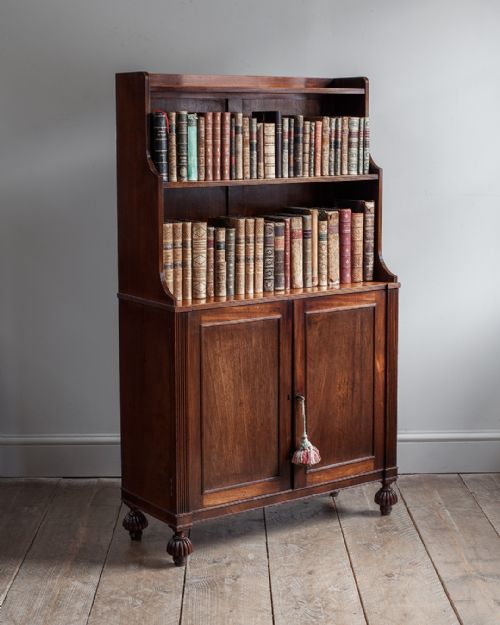
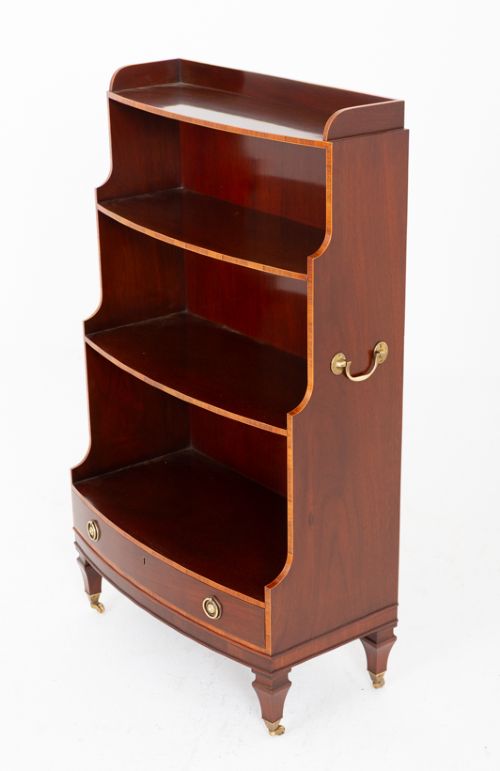
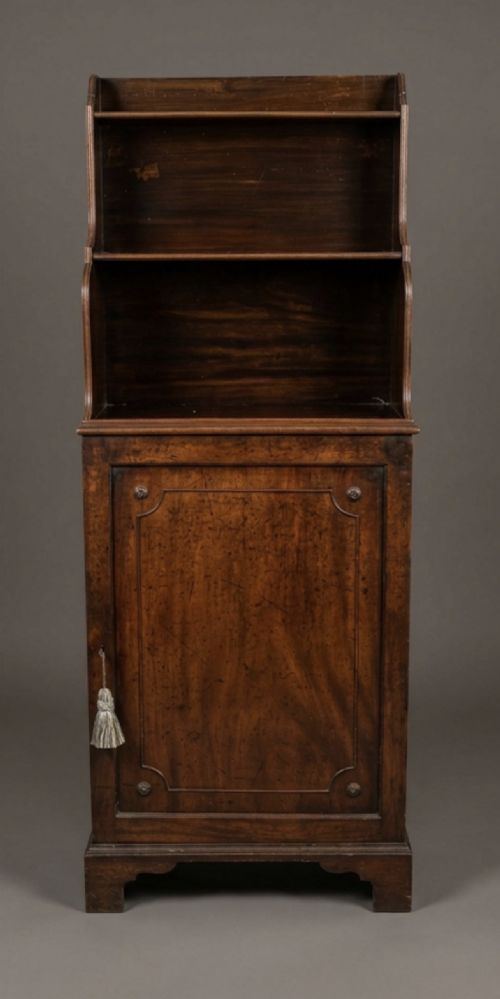
A regency graduated bookshelf presents tiered open shelves that decrease in depth from bottom to top, creating the characteristic waterfall profile. Most examples found here date from the nineteenth century or belong to later revival periods, spanning Georgian through to early twentieth century interpretations.
The form often includes lower cupboards or open dwarf shelving alongside the tiers, and some variations incorporate a canopy or gallery top. These pieces function primarily as freestanding open furniture designed to display books and decorative objects in principal rooms.
How they were made
Cabinet makers constructed these pieces principally in solid mahogany and rosewood, frequently employing fine wood veneers over secondary timbers. Workshops enhanced the surfaces with contrasting cross banding and delicate boxwood stringing to define the stepped tiers.
Detailing often included brass fittings and galleries, whilst alternative finishes featured painted wood and simulated rosewood graining. Anglo-Indian examples utilised regional timbers such as teak to achieve the traditional waterfall silhouette.
Listings feature mahogany, rosewood, and satinwood alongside painted finishes and wood veneer.
What varies in quality
The standard of timber selection and the precision of the cross banding and stringing distinguish finer pieces from simpler workshops. Superior examples display careful graduation in the tier depths and integrated structural stability across the open shelves.
Gillows
The Regency Graduated Bookshelf Glossary
- Waterfall bookcase
- A set of open bookshelves with stepped tiers that recede from bottom to top. This form became popular during the Regency era for displaying books.
- Cross banding
- A decorative border of veneer laid across the grain of the primary wood. It frames the edges of shelves and tabletops.
- Boxwood stringing
- Thin inlay lines of pale boxwood set into darker timbers to create geometric outlines. It highlights the structural lines of the cabinet.
- Simulated rosewood
- Painted or stained graining applied to a simpler timber to imitate the appearance of expensive rosewood. This technique was common during the Regency and William IV periods.
- Dwarf bookcase
- A low freestanding shelving unit designed to sit below window height. These often combine open tiers with lower enclosed cupboards.
Regency Graduated Bookshelf: Frequently Asked Questions
How do I style a regency graduated bookshelf?
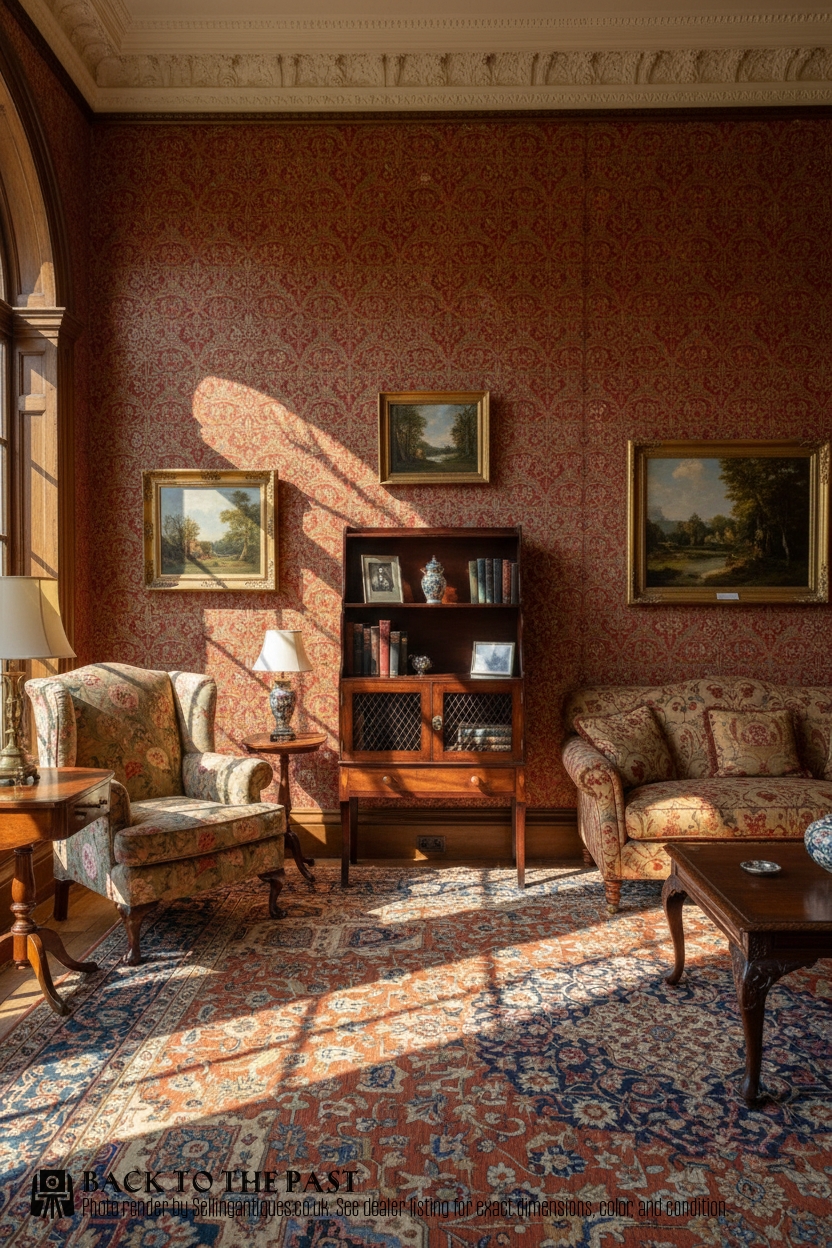
Place the piece against a flat wall in a study or sitting room where the stepped tiers can be viewed from the side. Arrange books by height to complement the natural graduation of the shelves.
Leave space between volumes for small decorative objects or framed items. Avoid overloading the upper tiers to maintain the balanced proportions of the waterfall design.
What is the difference between original and revival pieces?
Original pieces date from the Regency and Georgian eras, exhibiting period timber patination and traditional construction methods. Revival items, produced around later decades such as nineteen-twenty, copy these historical forms using period-appropriate materials.
Both types serve the same decorative and functional purpose in a modern interior. Examination of the timber and secondary woods helps determine the exact period of manufacture.
Can these shelves hold heavy books?
The open stepped tiers suit standard octavo volumes and novels, while the deeper bottom shelves accommodate larger folios. The graduation means upper shelves are shallower and naturally suited to smaller publications.
Distributing weight evenly across the timber boards prevents sagging over time. Very heavy modern reference sets are better placed on the lowest tier.