


Georgian Walnut Toilet Mirror
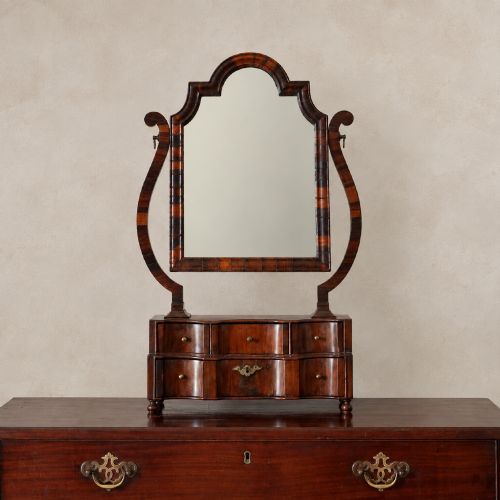
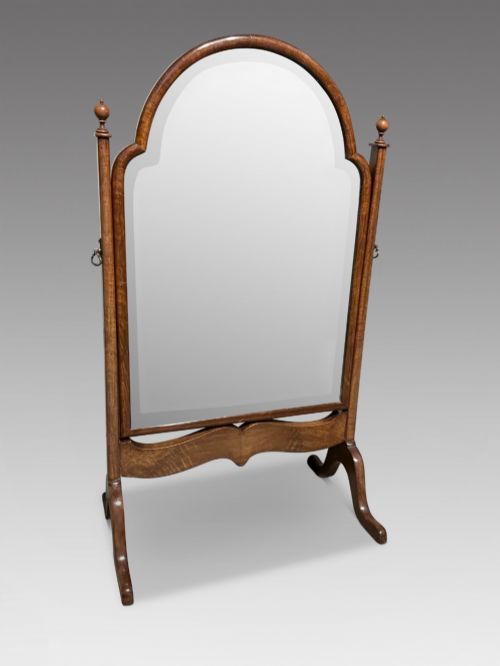
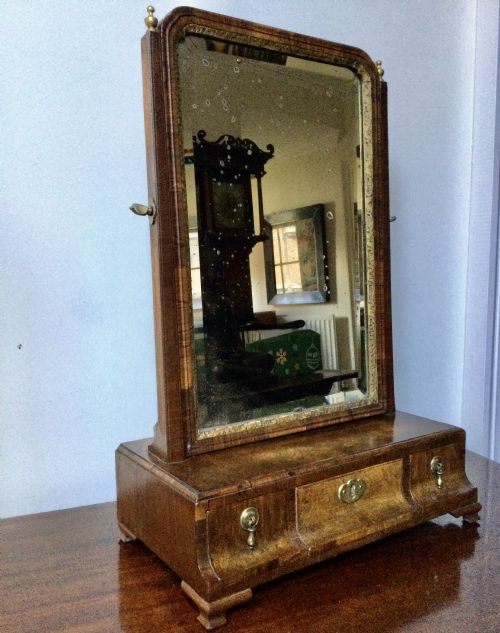
A georgian walnut toilet mirror sits upon a chest or table, offering a polished glass framed in rich timber for daily grooming.
Georgian Walnut Toilet Mirror
A georgian walnut toilet mirror brings tabletop elegance to a bedroom, designed to adjust on side arms above a small base fitted with drawers. Buyers examining this page encounter pieces ranging from early eighteenth-century Queen Anne and George II forms to later revival interpretations.
The primary forms include dressing mirrors, dressing glasses, and box mirrors, spanning the eighteenth century alongside nineteenth-century and 1920s examples. Walnut and burr walnut dominate the selection, supported by occasional instances of laburnum, giltwood, and boxwood inlay.
Materials and construction
Cabinet makers utilised solid walnut and figured burr walnut veneers applied to secondary timbers, often accentuating the surfaces with boxwood inlay. Brass swan neck handles and pivoting side screws facilitate the movement of the glass frame.
Frames incorporate glass plates held within moulded surrounds, sometimes featuring giltwood highlights or laburnum details. The base structures take the form of miniature bureau or chest-like boxes containing small drawers for trinkets.
The listings feature walnut, burr walnut, laburnum, and boxwood inlay across 18th-century, 19th-century, and 1920s periods.
Judging the range
The depth of figure in the walnut veneer and the crispness of the mouldings distinguish pieces across the selection. Finer examples display carefully matched burr walnut grains and harmonious proportions between the mirror plate and the base drawers.
Originality of the glass plate, brass hardware, and timber surfaces influences the character of each piece. Later twentieth-century revivals contrast with genuine eighteenth-century constructions through differing joinery details and wear patterns.
The Georgian Walnut Toilet Mirror Glossary
- Burr walnut
- A figured wood veneer taken from the wart or burl of a walnut tree, prized for its swirling patterns. It appears frequently on the drawer fronts and frames of better dressing mirrors.
- Dressing glass
- An alternative term for a toilet mirror or table mirror designed for personal grooming. These items sit upon chests of drawers or dedicated tables.
- Box mirror
- A form of toilet mirror featuring a box base with a stepped or fitted interior containing small compartments. The base often rests on bracket feet.
- Giltwood
- Wood that has been treated with a thin layer of gold leaf. It provides decorative accents on select frames within the collection.
Georgian Walnut Toilet Mirror: Frequently Asked Questions
What is a toilet mirror?
A toilet mirror is a small, movable looking glass mounted on a stand or table base, historically used for dressing and grooming.
These pieces sit comfortably on top of chests of drawers or dressing tables rather than hanging on a wall.
How do I date a walnut mirror?
Dating relies on examining the construction methods, timber choice, hardware style, and the bevelling or flatness of the glass.
Early eighteenth-century pieces display distinct joinery and proportions compared to Victorian or 1920s revival interpretations.
Are the mirror plates original?
Many older mirrors retain their original glass, which often exhibits light foxing, silvering loss, or minor distortions.
Replacement glass plates appear in some pieces where the centuries have necessitated restoration.
Where should I place one?
These mirrors function well on top of modern or antique chests of drawers, sideboards, or dressing tables in bedrooms and hallways.
Their compact footprints allow them to occupy tabletop spaces while offering functional reflection and storage.