
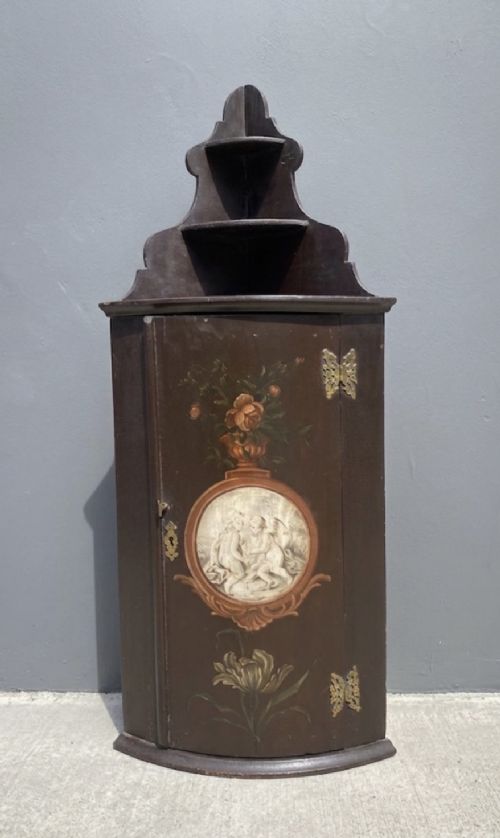


Georgian Wall Mounted Cupboard
A georgian wall mounted cupboard is a practical hanging timber piece designed to fit neatly into a room angle.
Georgian Wall Mounted Cupboard
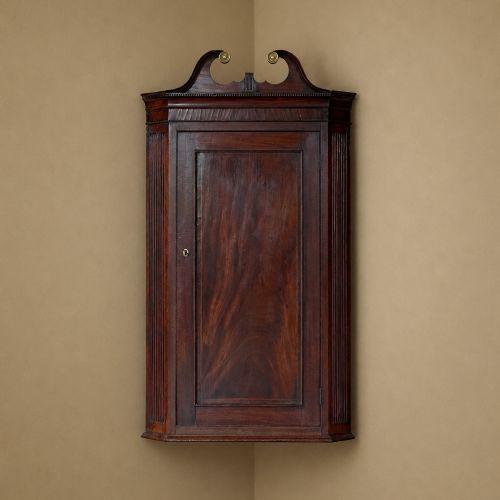
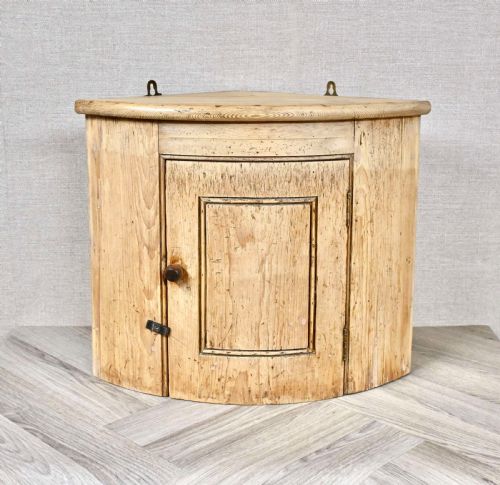
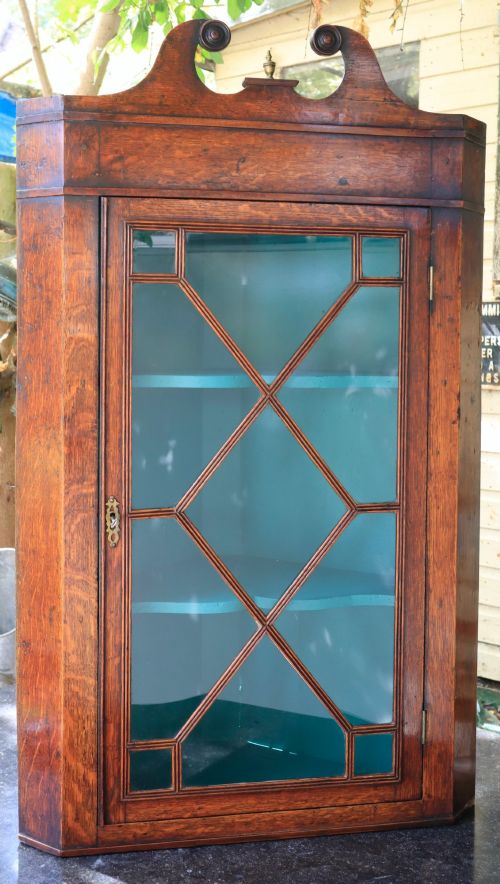
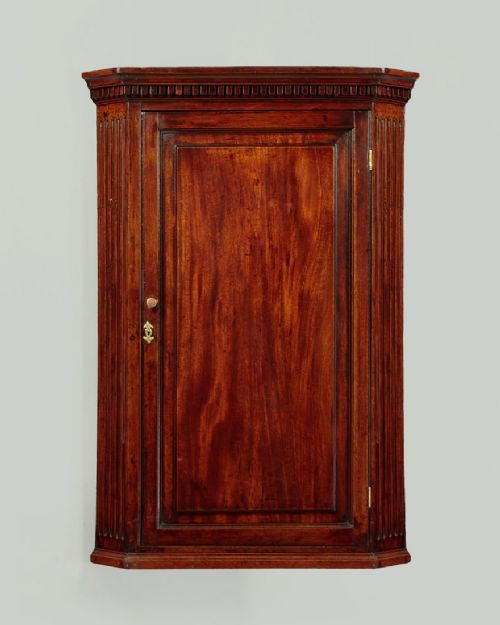
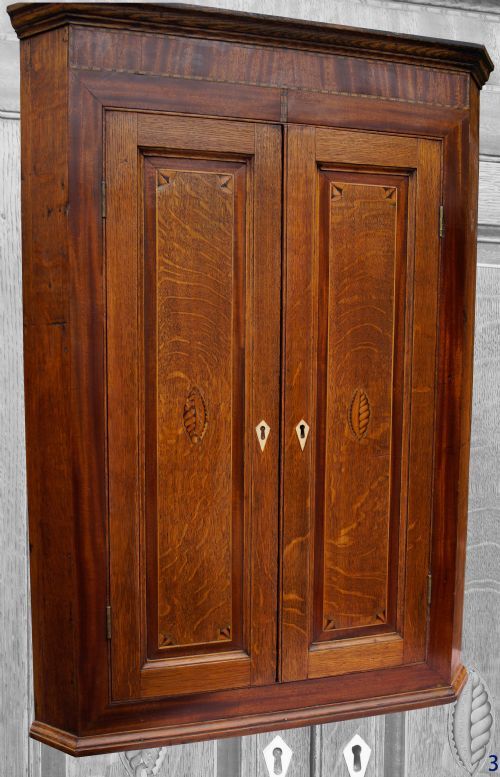
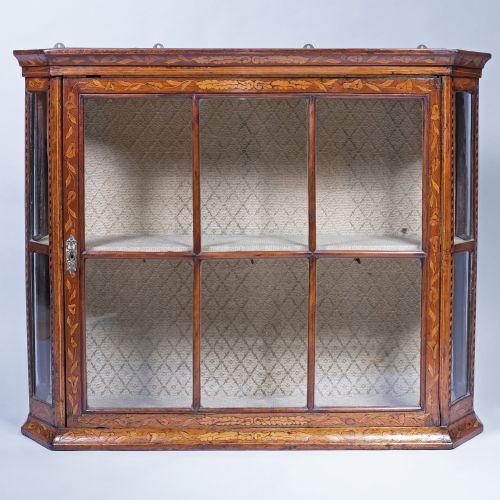
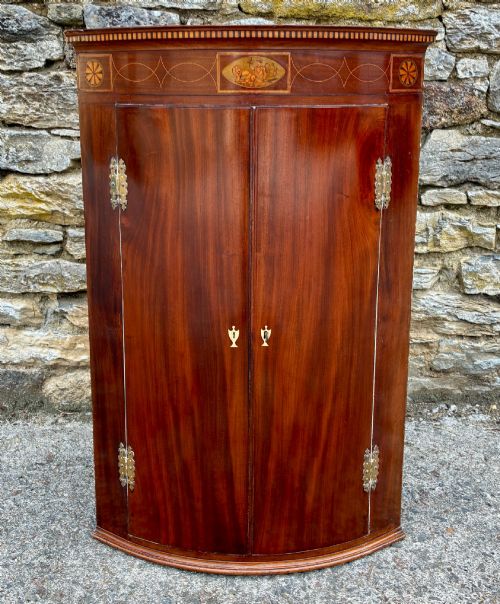
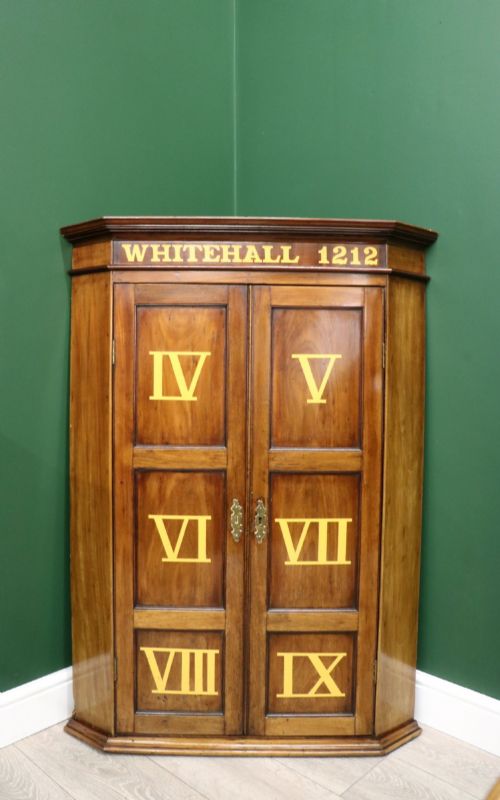
A georgian wall mounted cupboard is primarily encountered as a corner cabinet or hanging wall cabinet designed to utilise room angles efficiently. These pieces function as enclosed storage or display units and frequently feature panelled doors or glazed fronts.
Materials and construction methods
Makers constructed these cabinets using dense native timbers such as mahogany, oak, and walnut, often accentuating the grain with flame veneers or marquetry inlay. Brass fittings such as H-hinges, key escutcheons, and working locks complete the primary hardware.
Joinery methods relied on traditional tongue and groove panels, dovetail joints for internal drawers, and sturdy wall-mounting brackets built to bear the weight of solid timber. Glazed doors utilised timber framing to hold individual glass panes securely.
Listings feature oak, mahogany, walnut, and pine timber constructions alongside marquetry inlay, glass panels, and painted surfaces.
Evaluating the standard of execution
Quality separates simple utility furniture from ambitious cabinet work through the choice of timber figure and the precision of decorative inlay. Pieces displaying figured mahogany, burr walnut, or detailed marquetry demonstrate greater workshop skill than plain pine or basic oak.
The sophistication of architectural details such as broken arch pediments, dental mouldings, and finely glazed door frames distinguishes high-end examples. Original brass hardware, intact locking mechanisms, and well-preserved painted or polished surfaces also elevate the standing of a cabinet.
The Georgian Wall Mounted Cupboard Glossary
- Bow front
- A convex curved cabinet front that projects outward from the wall corners. This curved shape requires specialised timber bending or cutting techniques during construction.
- Pediment
- The decorative architectural crowning feature positioned above the upper cornice of a cabinet. Broken arch pediments provide an open triangular profile.
- Marquetry inlay
- Decorative patterns formed by fitting contrasting veneer slices into the timber surface. Common motifs include geometric lines and floral details.
- Escutcheon
- A protective metal plate surrounding the keyhole of a cabinet door or drawer. Brass escutcheons often feature hand-engraved detailing.
- Tambour front
- A sliding shutter formed from narrow vertical timber strips glued to a flexible fabric backing. This mechanism allows access in confined room spaces.
Georgian Wall Mounted Cupboard: Frequently Asked Questions
How do I hang a wall cupboard safely?
These cabinets require secure fixing directly into solid masonry or substantial internal wall studs using appropriate heavy-duty brackets. Because solid timber and glass doors add considerable weight, professional installation is strongly recommended.
Ensure the mounting hardware matches the specific weight distribution of the cabinet structure before attempting to load the interior shelves with heavy items.
What rooms suit a corner cupboard?
Corner cupboards work exceptionally well in dining rooms, studies, and hallways by turning neglected wall angles into functional storage space. Their compact footprint maximises floor area while providing accessible shelving.
Display variations with glazed doors serve well for china and glassware, while solid panelled doors conceal everyday household items efficiently.
How do I identify a George III piece?
George III pieces date from the reign spanning the late eighteenth century and typically exhibit restrained classical proportions, fine mahogany veneers, and subtle inlay work. Signature details include bracket feet, dental mouldings, and astragal glazed door frames.
Examination of internal secondary timbers, such as oak or pine drawer linings, further helps verify the period of manufacture.
Can I store heavy items inside?
The interior fixed or adjustable shelves suit standard glassware, books, and tableware rather than exceptionally heavy objects. Older timber ledges and support brackets have limits dictated by their original eighteenth or nineteenth-century construction.
Distributing weight evenly across the shelves prevents undue strain on the historic internal supports and hanging framework.