
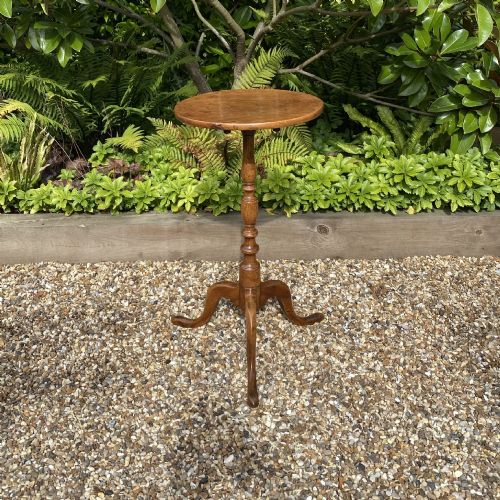
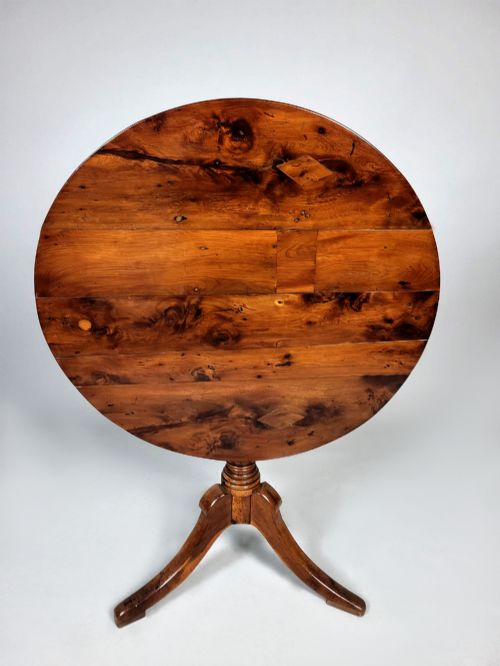
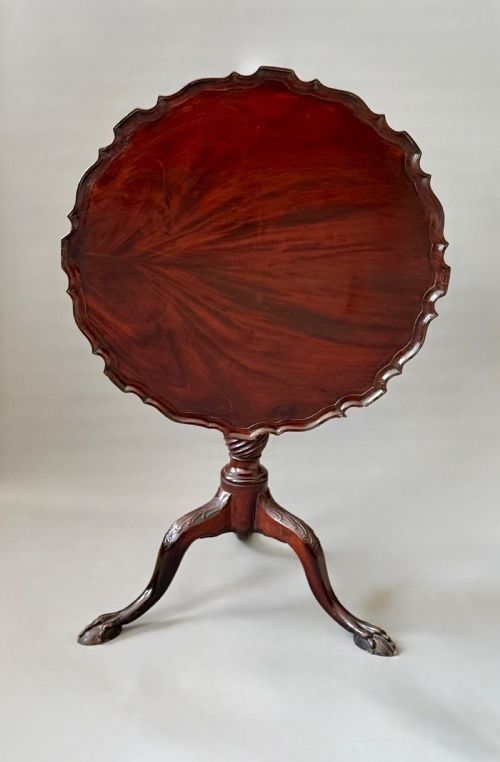
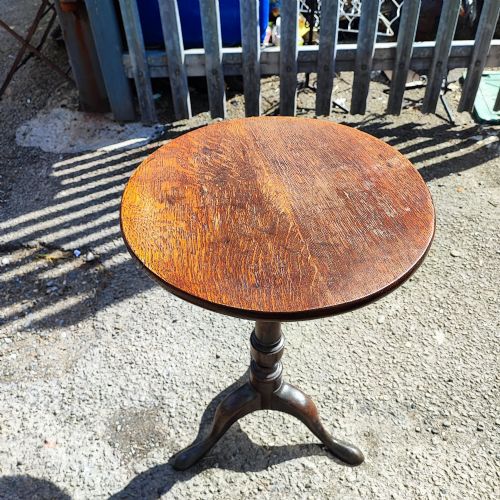
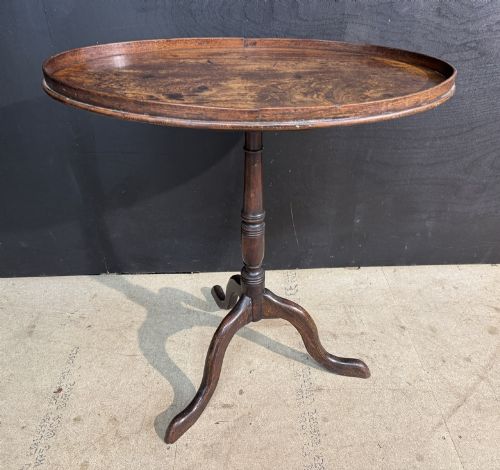
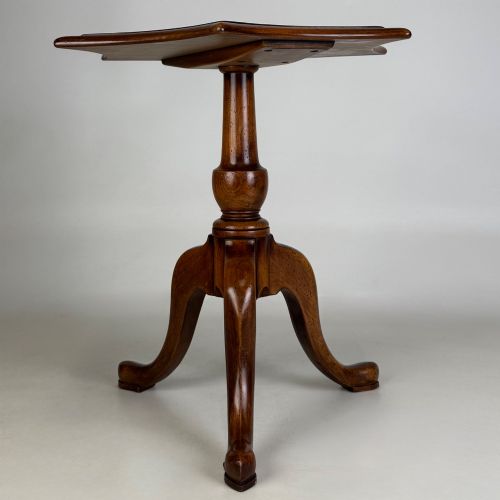
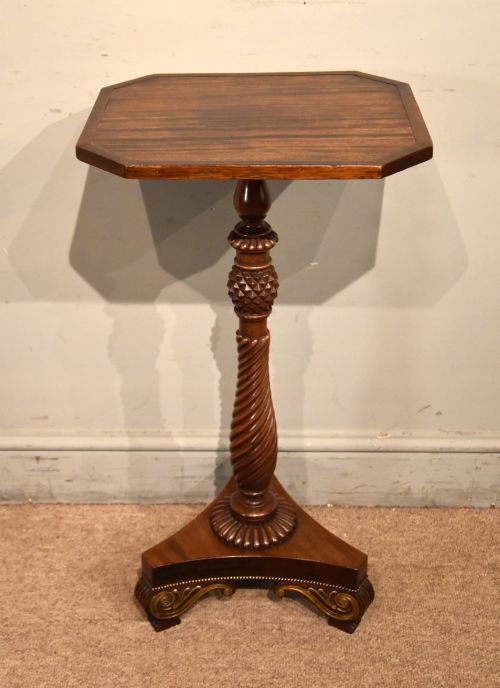
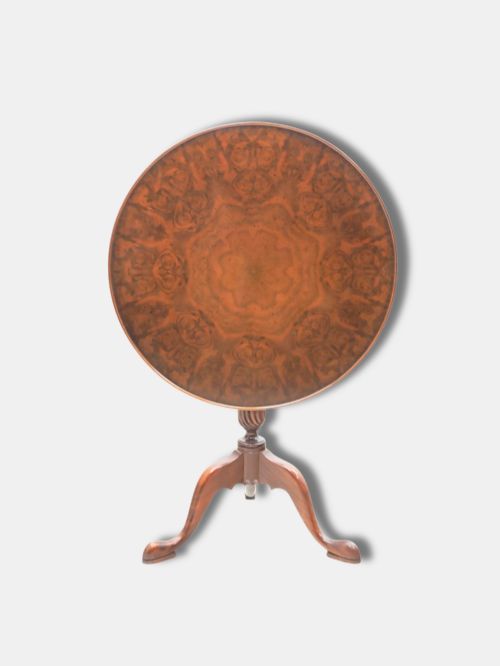
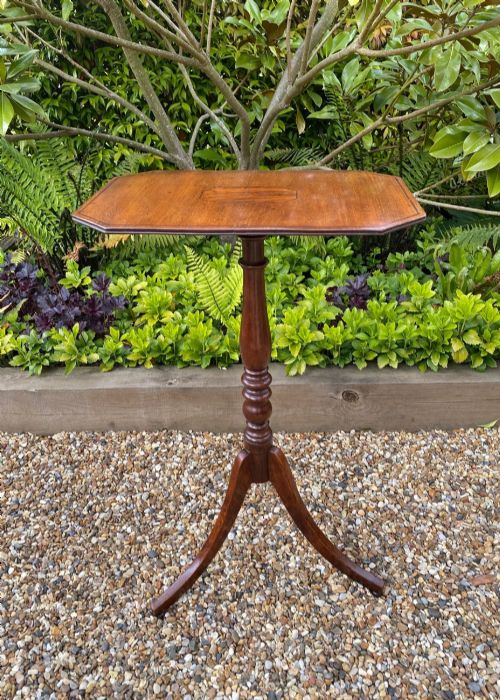
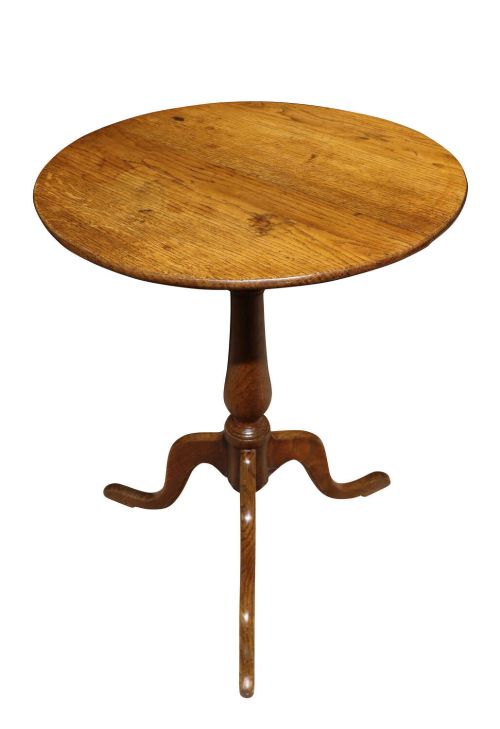
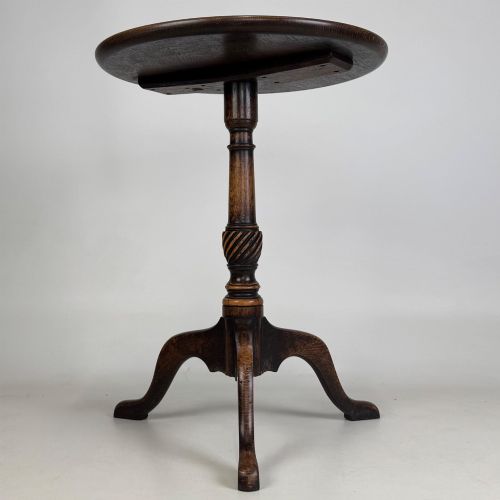
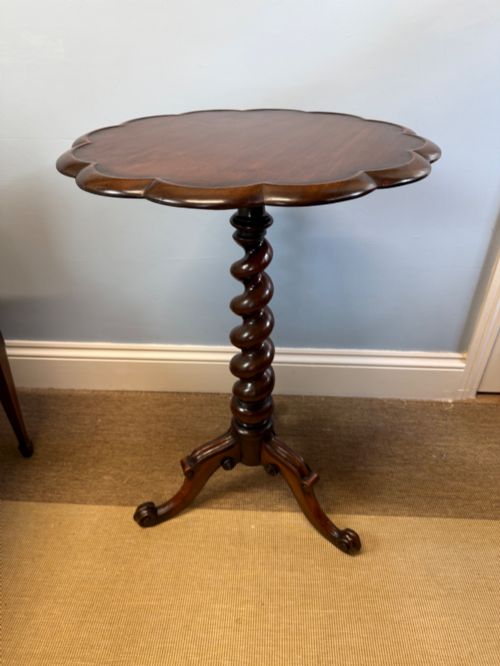
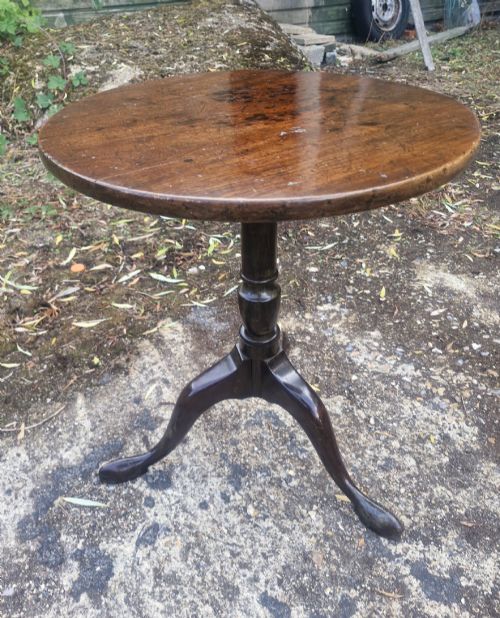
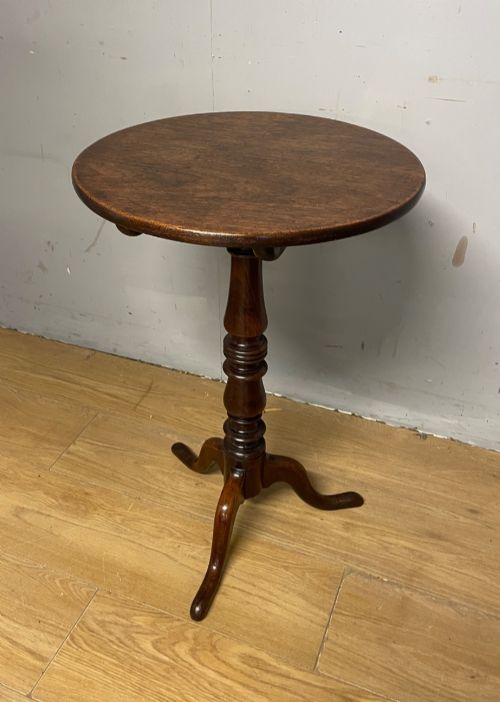
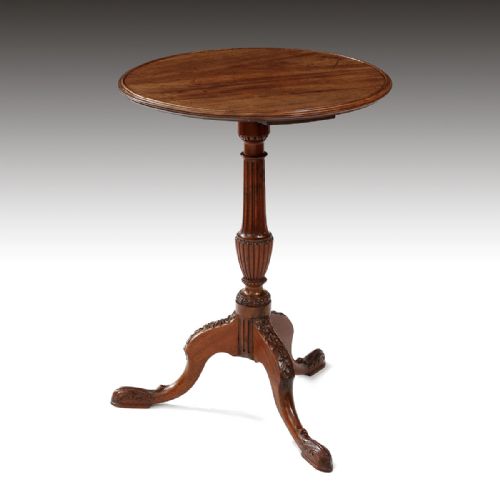
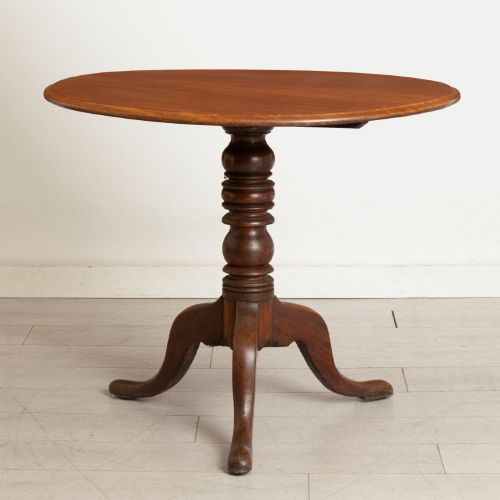
Georgian Tripod Wine Stand
A georgian tripod wine stand serves wine or displays small objects upon a slender pillar raised on three cabriole or tapered legs.
Georgian Tripod Wine Stand
A georgian tripod wine stand is typically encountered as a small occasional table designed with a circular top supported by a central pillar and three legs. The selection spans the eighteenth and nineteenth centuries, taking forms such as wine tables, candle stands, kettle stands, and occasional tables.
Most examples found here date from the Georgian and Regency periods, alongside later nineteenth century and Edwardian revivals. Makers of these pieces utilised timber like mahogany, oak, walnut, fruitwood, and burr oak to construct functional furniture for domestic interiors.
Top configurations vary significantly across the listings, ranging from plain boards to raised pie crust edges, dish tops, and tray tops. Many feature tilt-top or snap-top mechanisms that allow the surface to fold vertically when not in use.
Materials and construction
Makers constructed these stands primarily from solid hardwoods such as mahogany and oak, occasionally selecting walnut, cherry, elm, or fruitwood for provincial pieces. Wealthier workshops utilised burr walnut veneers and incorporated decorative boxwood inlay into tops and legs.
The characteristic three-legged base connects to a turned central pedestal via dovetail or bridle joints, providing stability to a slender silhouette. Tilt-top mechanisms rely on a birdcage or catch block arrangement underneath the top, allowing the surface to pivot and lock into place.
Georgian Tripod Wine Stand Retail Price Guide 2026
Typical asking prices for georgian tripod wine stand among the pieces listed under this phrase on Sellingantiques today, from the lower quarter to the upper quarter. They describe what is for sale here now, not the wider market.
Listings feature mahogany, oak, walnut, fruitwood, and burr walnut veneer across Georgian, Regency, and Edwardian periods.
Assessing quality
Quality reveals itself in the crispness of the timber carving, the choice of well-figured mahogany or burr veneers, and the proportional harmony between the top and the base. Superior examples display refined turning on the pillar and smoothly integrated legs that meet the central column with precision.
The mechanism of a snap-top or tilt-top table demonstrates the skill of the maker, operating smoothly without excessive play in the hinge. Secondary timbers used underneath and the condition of the original joints further separate standard production from finer cabinet work.
Gillow
The Georgian Tripod Wine Stand Glossary
- Tripod table
- A small occasional table supported by three legs radiating from a central pillar. These pieces were easily moved around a room for dining, drinking, or reading.
- Tilt-top table
- A table with a hinged top that can be pivoted to a vertical position. This design allowed the furniture to be stored flat against a wall when not in use.
- Pie crust rim
- A raised, decoratively carved edge shaped around the perimeter of a tabletop. The curved moulding resembles the crimped crust of a pastry pie.
- Snap-top
- A spring or catch mechanism holding a tilting tabletop horizontal. It prevents the surface from tipping accidentally during use.
- Candlestand
- A tall, narrow occasional table designed to hold a light source. They share the same three-legged pillar construction as wine tables.
Georgian Tripod Wine Stand: Frequently Asked Questions
What were georgian tripod wine stands used for?
These stands functioned as movable tables for serving wine, holding glasses, or supporting candles and small lamps beside seating during the evening.
Their lightweight construction allowed occupants to shift them easily across a room as needed for domestic convenience.
How do I tell a Georgian stand from a later copy?
Examine the timber shrinkage, the method of joint construction beneath the top, and the wear patterns on the feet. Eighteenth-century pieces exhibit hand-cut components and patination consistent with age.
Later Edwardian and twentieth-century revivals often display machine-tooled joints and timber finishes that lack the depth found on period examples.
What does a tilt-top mechanism involve?
The mechanism connects the tabletop to the central pillar via a hinge block, often called a birdcage. This lets the surface pivot upright when the table is pushed against a wall.
A wooden catch or brass peg secures the top in the horizontal position when lowered for use.
Where should I place a wine stand in a modern room?
A wine stand fits well beside an armchair or sofa as a surface for a drink or a small lamp. Its compact footprint makes it suitable for tight corners where a larger table would crowd the floor.
Avoid placing antique timber directly beside active heat sources to protect the polished surface.