

Georgian Transferware Pottery
Georgian transferware pottery brings together crisp printed scenes and practical ceramics from the late eighteenth and early nineteenth centuries.
Georgian Transferware Pottery
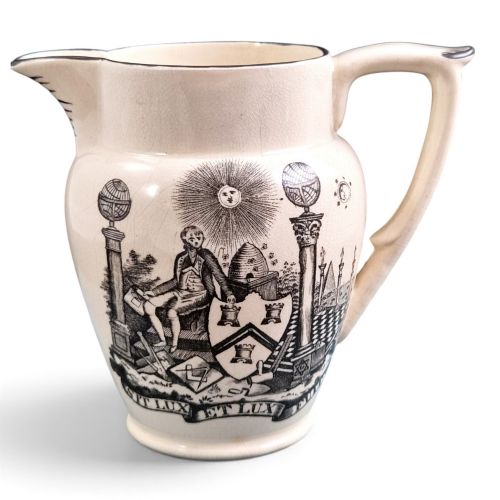
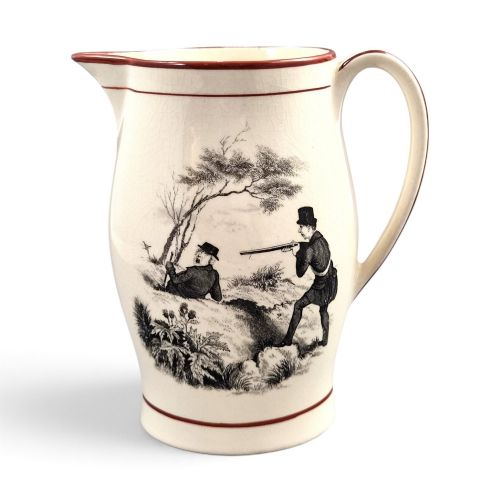
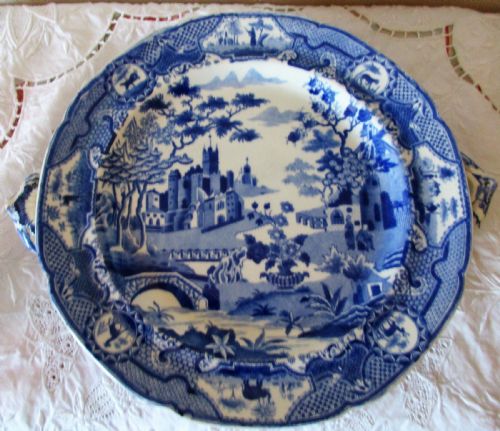
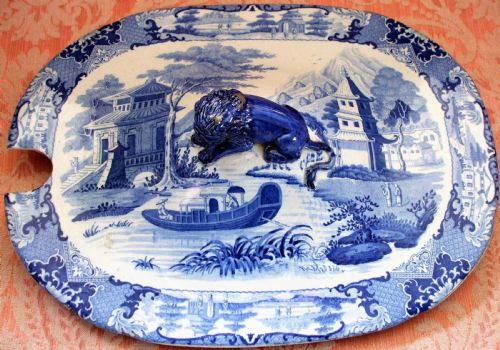
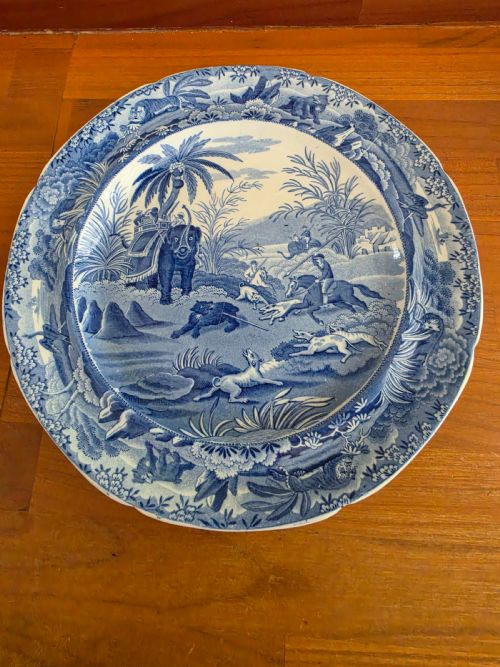
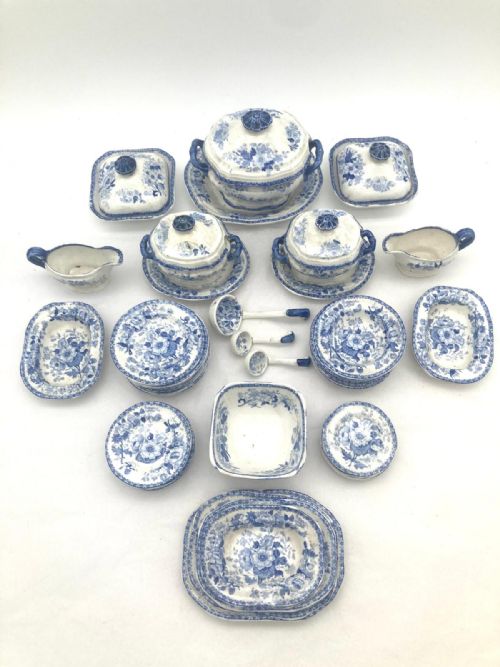
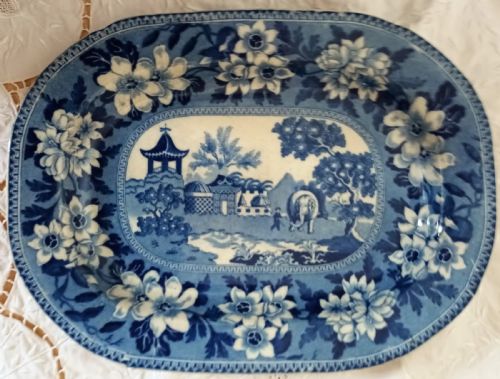
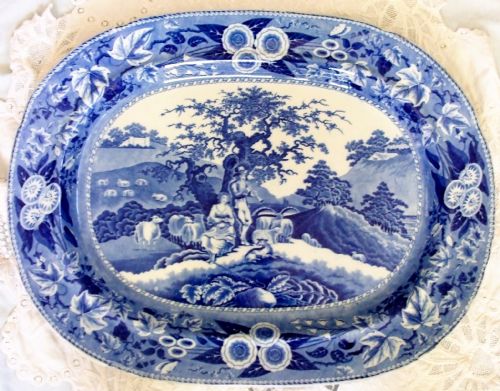
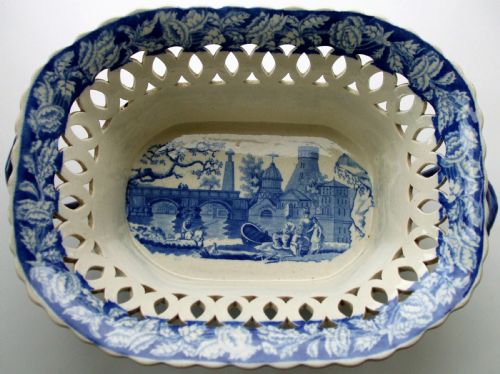
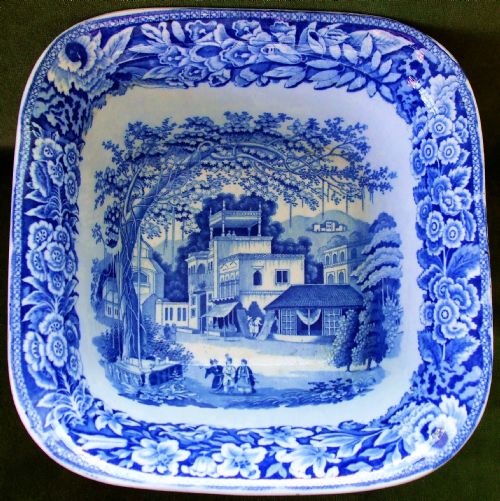
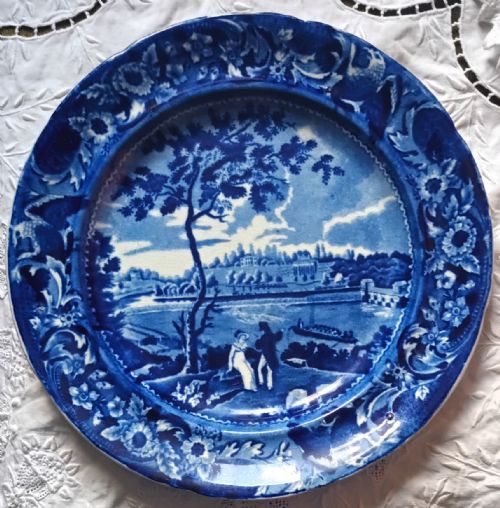
When you search for georgian transferware pottery, you find a selection of serving platters, tureens, jugs, and decorative plates created primarily in English potteries during the Georgian and Regency periods. These domestic items display complex printed scenes ranging from traditional landscape views and architectural fantasies to narrative subjects transferred directly onto the ceramic body.
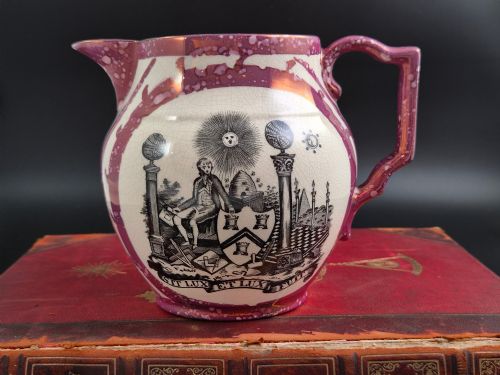
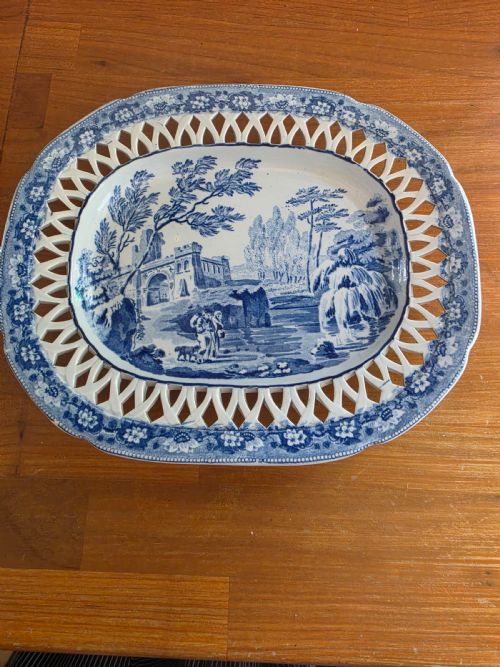
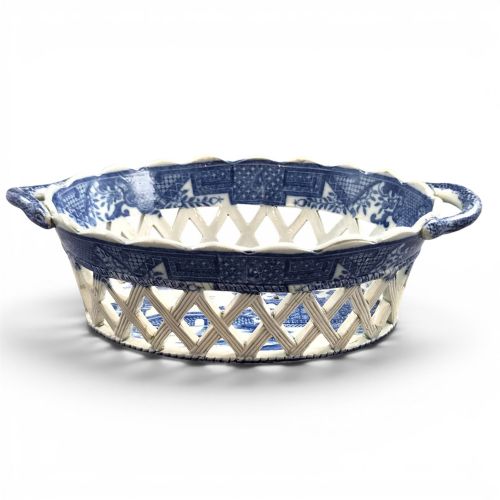
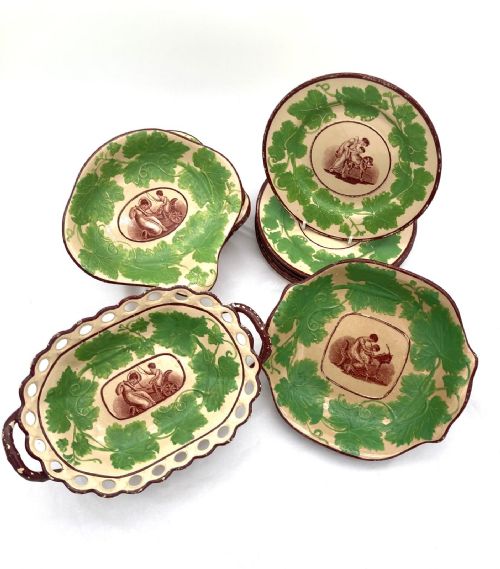
The objects on this page span several functional categories, including large meat platters, footbaths, pierced chestnut baskets, and child's services. Most examples rely on blue and white transfer printing, though variations featuring black prints or pink lustre highlights also appear across the selection.
How They Were Made
Potters utilised refined ceramic bodies such as creamware, pearlware, and early earthenware as the base for these decorated items. Artisans applied cobalt pigment or other coloured oxides through a copperplate printing process before glazing and firing the pieces in kilns.
A transparent lead glaze covered the printed surface to protect the design and impart a glossy finish to the ceramic body. Additional decorative effects, including pink splash lustre, were sometimes applied by hand over the glaze before a final low-temperature firing.
Listings feature earthenware, creamware, and pearlware bodies decorated with cobalt pigment and lead glaze.
What Varies in Quality
The clarity and sharpness of the transfer print dictate the visual success of the piece, with finer lines showing the detail of the engraved copperplate clearly. Smudging or blurring during the transfer process indicates a less precise application of the pigment onto the ceramic surface.
The complexity of the ceramic form itself influences the standard of the object, particularly in items featuring pierced borders, reticulated basketry, or moulded handles. Potteries that achieved clean geometric cuts in baskets and smooth, even surfaces on large platters demonstrated greater technical control.
Davenport·Spode·Robert Hamilton·John Rogers and Son·J. and R. Clews·J. and R. Riley·Stubbs·Ridgway·Heathcote·William Adam
The Georgian Transferware Pottery Glossary
- Transferware
- Ceramic pieces decorated by transferring a design from an engraved copper plate onto tissue paper and then onto the unglazed or bisque ceramic surface. This technique allowed factories to produce uniform pictorial patterns in large quantities.
- Pearlware
- A refined earthenware developed by Josiah Wedgwood around 1779 that featured a slightly bluish glaze to counteract the natural yellowish tint of the clay body. It served as a primary canvas for blue and white printed domestic wares.
- Creamware
- A fine-grained, cream-coloured earthenware perfected in Staffordshire during the eighteenth century and glazed with a clear lead-based liquid. It formed the lightweight body for many early printed jugs and plates.
- Lustreware
- Pottery finished with a metallic glaze that produced an iridescent or reflective sheen, often applied in pink or purple splashes around the rims of jugs. This secondary decoration enhanced standard transfer prints during the early nineteenth century.
- Reticulated
- Describes ceramics featuring an openwork or pierced lattice design, commonly found on chestnut baskets and serving dishes. The pattern required careful cutting of the clay before drying and firing.
Georgian Transferware Pottery: Frequently Asked Questions
How do I care for georgian transferware pottery?
Wash these ceramics by hand using warm water and mild soap rather than placing them in a dishwasher. Avoid harsh scrubbing brushes that might scratch the historic lead glaze.
Keep pieces away from sudden temperature changes to protect the fragile earthenware bodies from cracking. Display them securely on stable surfaces or use padded plate hangers.
Were these pieces used daily?
Many items, such as meat platters, plates, and tureens, served practical functions during dining and food preparation in domestic households. Large footbaths and chestnut baskets fulfilled specific utility roles in wealthy homes.
Other forms, including child's services and decorative bowls, functioned as display items or gifts. The survival of these pieces indicates varied levels of use over two centuries.
What colours appear on these wares?
Blue and white remains the dominant colour combination across the majority of the printed patterns on this page. This palette reflects the widespread popularity of cobalt pigment in early nineteenth-century British potteries.
Alternative palettes do appear in specific categories, including black transfer prints on creamware and pink lustre highlights combined with purple transfer decoration.
How are periods identified?
Dating relies on stylistic markers, ceramic body compositions, and recorded patterns associated with specific pottery manufacturers. Creamware and pearlware bodies generally point toward the late eighteenth and early nineteenth centuries.
Design motifs such as architectural scenes, romantic landscapes, and specific printed titles help narrow the production window. Marked pieces bearing maker names provide concrete chronological reference points.