


Georgian Transferware Jug
A georgian transferware jug brings industrial pottery and monochrome or pink-splashed print directly to the table.
Georgian Transferware Jug
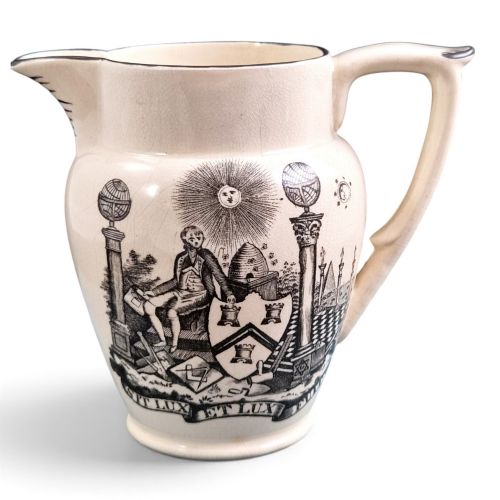
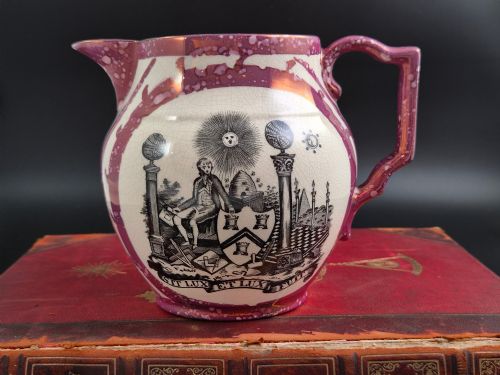
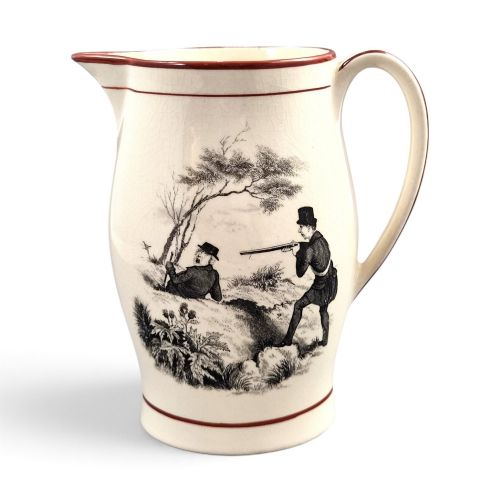
A georgian transferware jug is a ceramic vessel decorated with printed motifs applied via copper plates, characteristic of the late eighteenth and early nineteenth centuries. These pieces appear in forms such as creamware, pearlware, and earthenware, often displaying pictorial prints ranging from masonic emblems to naval scenes.
Collectors frequently encounter jugs spanning the Georgian, Regency, and early nineteenth-century periods, showing regional variations from Staffordshire potteries and Sunderland. They serve primarily as decorative jugs or pitchers, combining utility with narrative transfer decoration.
How they were made
Potters shaped these vessels from earthenware, creamware, or pearlware bodies before applying cobalt or metallic glazes to the surface. The decoration relies on transfer printing, a technique where an engraved copper plate transfers ink onto tissue paper and subsequently onto the ceramic body.
Some pieces incorporate pink splash lustre or magenta pigments, fired multiple times in kilns to fix the metallic sheens and glaze details. Mask head forms and moulded spout details indicate that potters used carved moulds alongside traditional throwing and slip-casting methods.
Listings for this phrase include earthenware, creamware, pearlware, and porcelain bodies decorated with cobalt and metallic glazes.
What varies in quality
The clarity and registration of the transfer print dictate much of the visual success, distinguishing crisp lines from blurred or smudged ink. Quality also rests in the application of the lustre, where evenness of the pink splash or metallic glaze marks superior workshop execution.
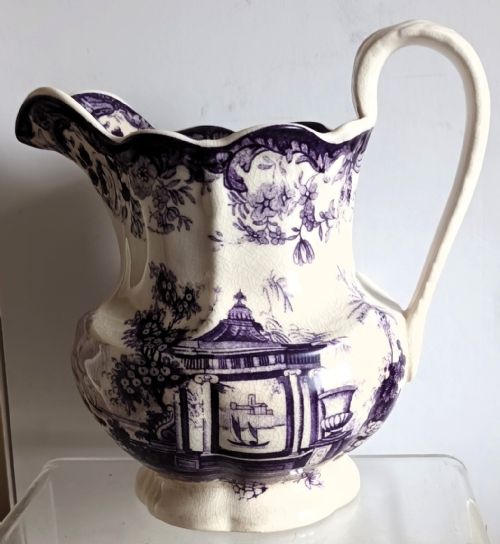
The choice of body material influences the refinement, with delicate creamware and pearlware bodies demonstrating finer potting standards than heavier utilitarian earthenware. The complexity of the subject matter, such as detailed architectural prints or multi-figure social scenes, elevates the ambition of the piece.
Caughley Coalport·Worcester
The Georgian Transferware Jug Glossary
- Transferware
- Pottery decorated by pulling an engraved design from a copper plate onto paper and pressing it onto the ceramic surface before glazing. This technique allowed potteries to produce consistent pictorial scenes on earthenware and porcelain.
- Creamware
- A refined earthenware developed in Staffordshire featuring a pale yellowish cream-coloured glaze. It gained popularity during the Georgian period for its light weight and smooth surface.
- Pearlware
- An improved earthenware body containing a small amount of cobalt in the glaze to create a bluish tint that mimicked Chinese porcelain. It was widely used for transfer-printed jugs in the late eighteenth and early nineteenth centuries.
- Lustre
- A metallic glaze applied to pottery to produce an iridescent or reflective finish. Sunderland potteries frequently utilised pink splash lustre on large jugs.
Georgian Transferware Jug: Frequently Asked Questions
What is a georgian transferware jug?
A georgian transferware jug is a ceramic vessel produced during the late eighteenth or early nineteenth century, featuring decorative designs printed from copper plates.
These pieces typically employ earthenware, creamware, or pearlware bodies decorated with scenes ranging from masonic symbols to naval subjects.
How were transfer prints applied?
Potters engraved designs onto copper plates, inked them, and transferred the impression onto thin tissue paper.
This paper was then rubbed onto the unfired or biscuit ceramic surface to leave the pattern before glazing and firing.
Where were Sunderland lustre jugs made?
Sunderland lustre jugs originated in the northeast of England, particularly around the River Wear.
Potters there specialised in distinctive pink splash lustre effects often combined with printed maritime subjects.