


Vintage Floral Earthenware Jug
These vintage floral earthenware jugs bring vibrant patterns and rich textures to any room, offering both everyday utility and traditional decorative charm.
Vintage Floral Earthenware Jug
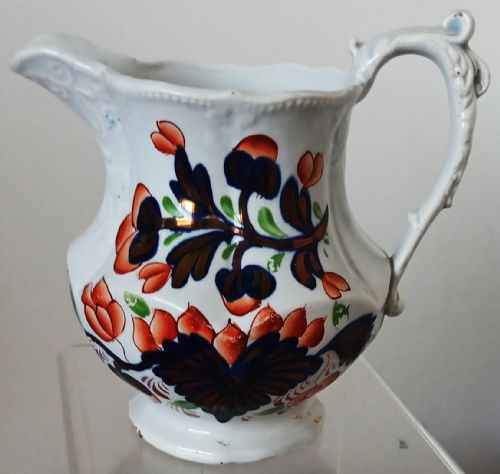
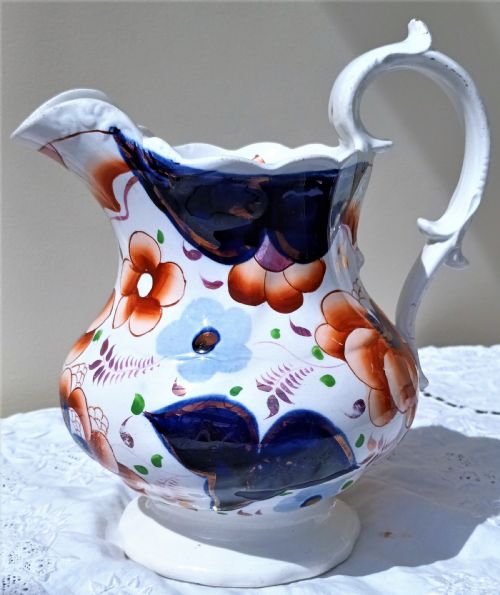
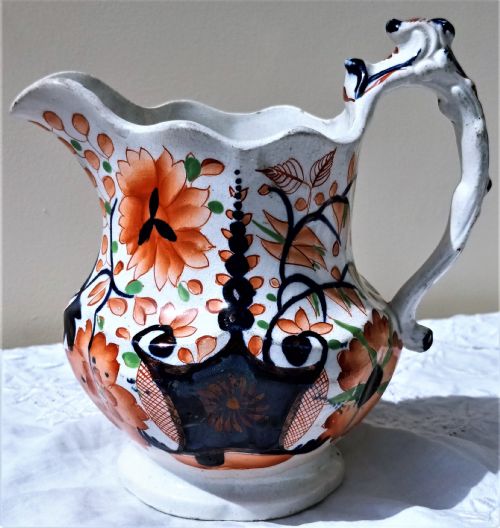
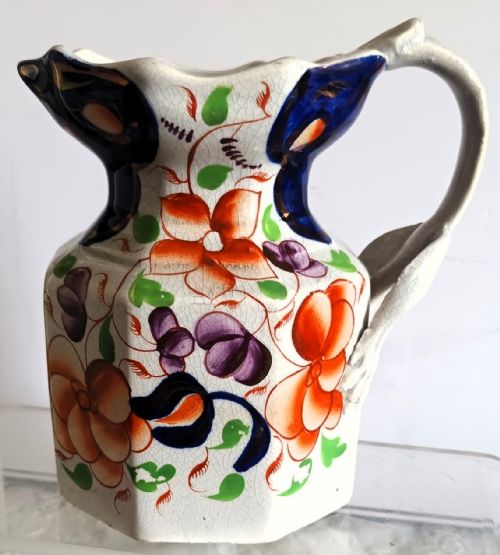
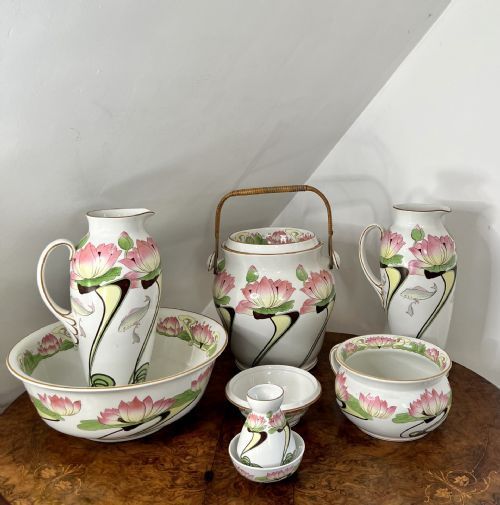
When you search for a vintage floral earthenware jug, you are looking at items that span from the Georgian period through the Victorian and Edwardian eras up to the 1930s. The selection ranges from standalone pitchers decorated with patterns like Gaudy Welsh to large washstand sets intended for nineteenth-century bedrooms.
You are most likely to meet Victorian Gaudy Welsh pottery jugs featuring named patterns such as Grape, Drape, Pagoda, Gower, Harlech, and Gwent. Alongside these standalone vessels, Edwardian jug and bowl sets appear frequently, often finished in blue and white or forming part of larger bathroom wash sets.
What varies in quality
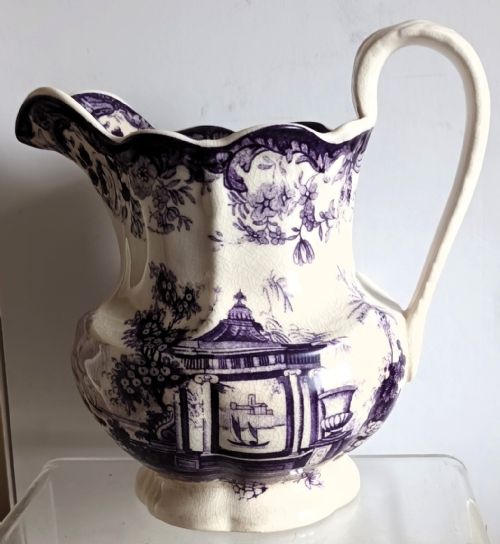
The standard of a piece depends heavily on the crispness of the transfer print and the control shown in hand-painted enamel colours. Finer examples display precise moulding, such as sharp cabbage leaf details, and smooth, even glazing without excessive bubbling or pooling.
Attribution also shifts the tier of a piece, with named makers like Mark Jones and Sons or studio potters such as Sir Edmund Elton bringing distinct craftsmanship. The complexity of the palette, from rich magenta transfers to multi-coloured tin-glazed polychrome schemes, marks out the superior examples.
The listings on this site span multiple eras, encompassing Georgian, Victorian, Edwardian, and 1930s periods through materials like earthenware, tin glaze, and copper lustre.
Mark Jones and Sons·Sir Edmund Elton·Charlotte Rhead
The Vintage Floral Earthenware Jug Glossary
- Earthenware
- A type of pottery made from clay that is fired at relatively low temperatures and remains porous unless glazed. It forms the core material for the majority of these jugs and wash sets.
- Tin Glaze
- An opaque white glaze containing tin oxide, used as a smooth background for painted colours on tin-glazed earthenware and delftware. It creates a slightly milky surface finish.
- Copper Lustre
- A metallic glaze technique that produces a coppery, reflective sheen on the surface of pottery. This finish was particularly popular on nineteenth-century earthenware pieces.
- Pearlware
- A fine-grained earthenware developed in the eighteenth century with a slightly bluish glaze that pooled in recesses to mimic Chinese porcelain. Early Staffordshire examples often use this body.
- Gaudy Welsh
- A style of colourful pottery made in Wales and Staffordshire during the nineteenth century, characterised by cobalt blue, copper lustre, and bright enamel floral motifs.
Vintage Floral Earthenware Jug: Frequently Asked Questions
How do I clean a vintage jug?
Wash these ceramic pieces gently by hand using warm water and mild soap. Avoid harsh scrubbers that can damage historic glazes and enamel details.
Pat the item dry with a soft cloth rather than leaving it to air dry, particularly if the earthenware body is exposed at the base.
Can I use these jugs for fresh flowers?
Many of these pieces function well as flower vases, provided the interior glaze remains intact and watertight. Check the interior for any hairline cracks before filling.
Permanently displaying heavy stems or water in unglazed earthenware is not recommended to prevent moisture absorption.
What is a wash set used for?
Edwardian and Victorian wash sets were originally designed for bedroom hygiene before indoor plumbing became standard. The large jug held fresh water while the matching bowl served as a basin for washing.
Today, collectors repurpose these sets as decorative floor or table displays, or use the individual jugs for floral arrangements.
How do I identify a Georgian piece?
Georgian earthenware jugs often display specific characteristics like pearlware glazes or detailed moulded elements such as cabbage leaves. Examining the weight, clay density, and painting style helps distinguish them from later Victorian wares.
Dates around the late eighteenth century can sometimes be inferred from the specific moulding techniques and transfer printing styles recorded in the evidence.