


Georgian Transferware Dish
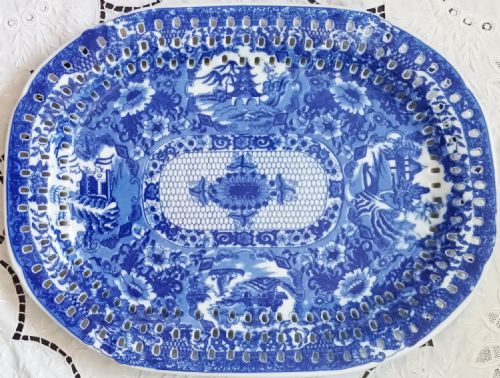
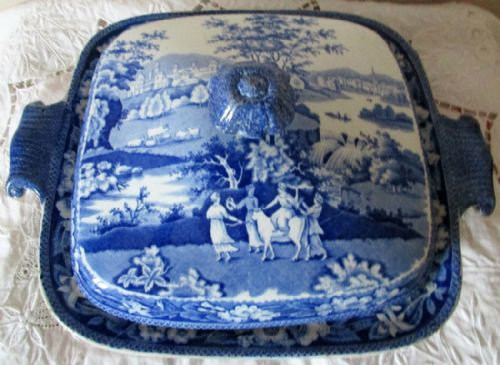
These pieces are a georgian transferware dish, bringing printed pictorial scenes and landscapes into domestic service through durable ceramics.
Georgian Transferware Dish
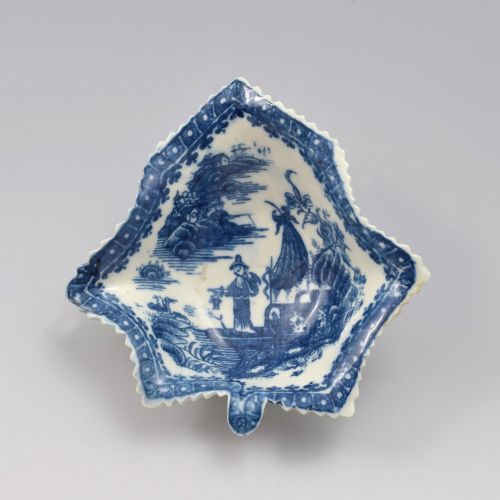
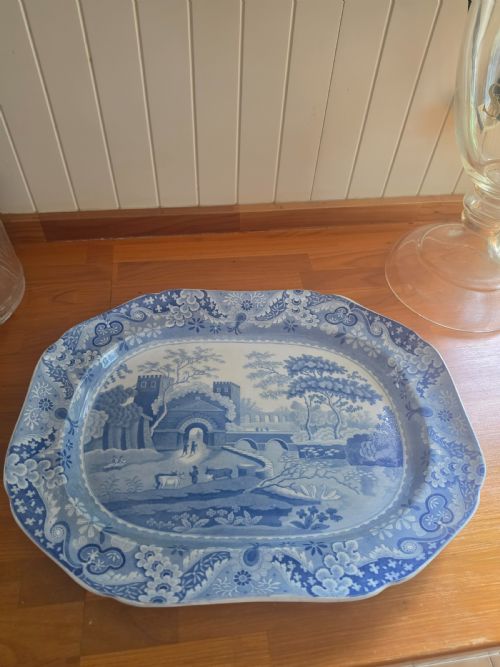
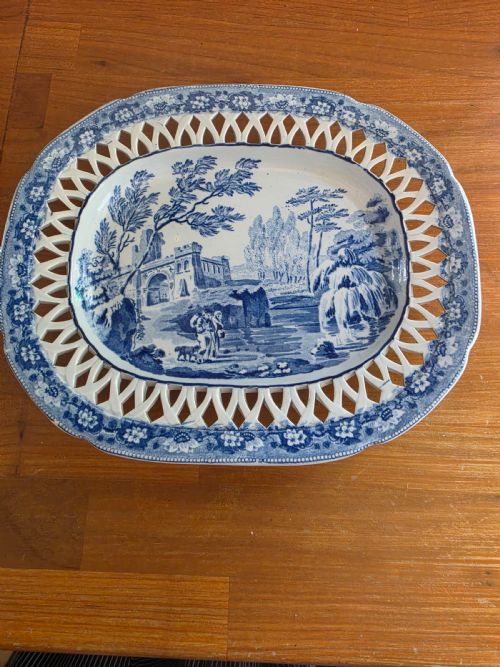
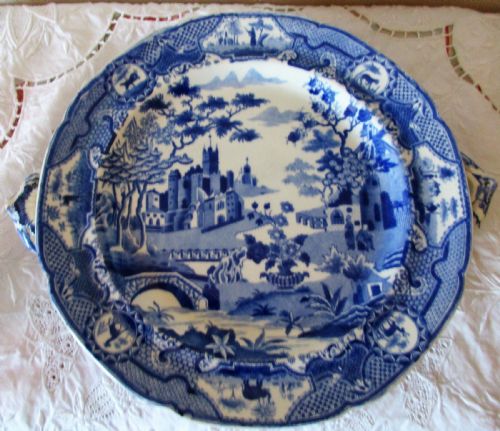
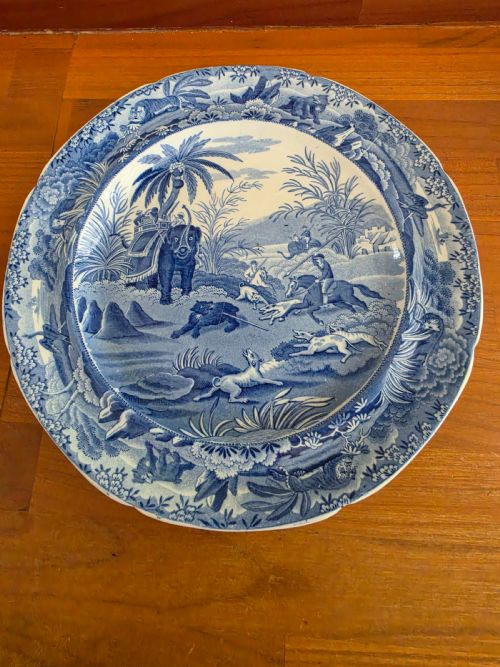
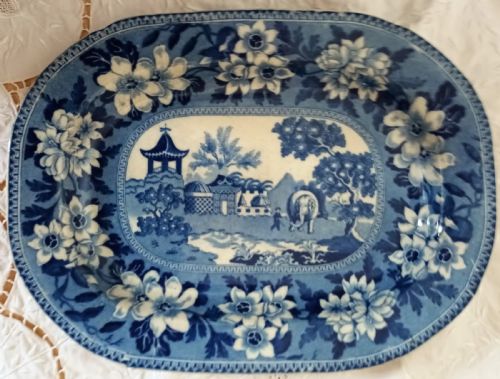
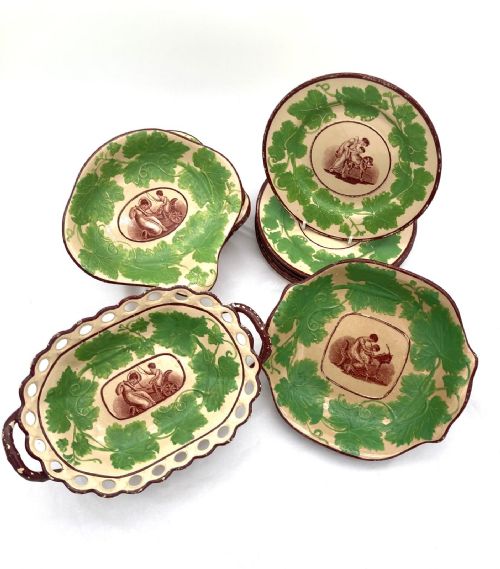
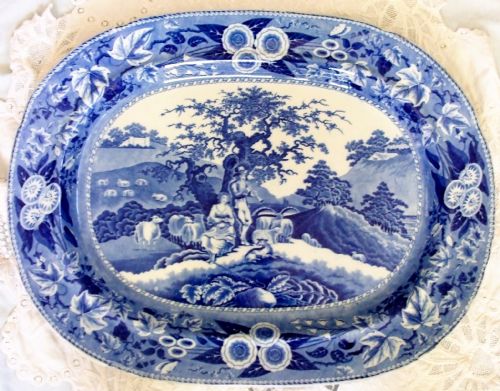
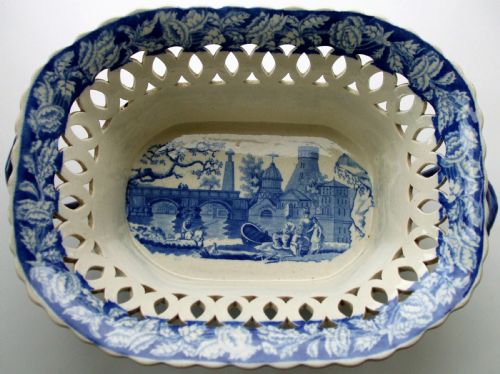
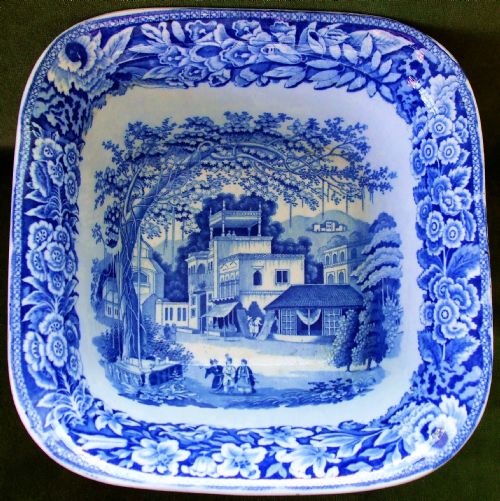
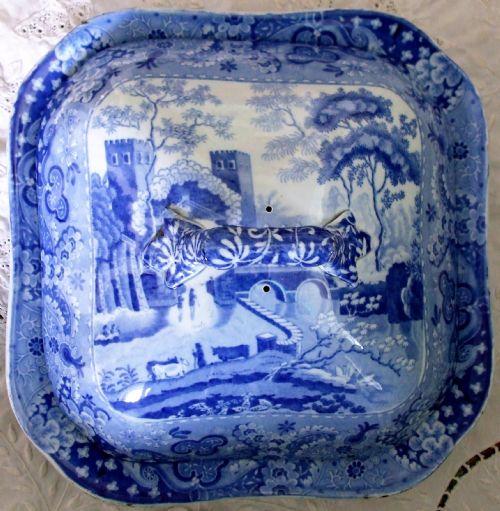
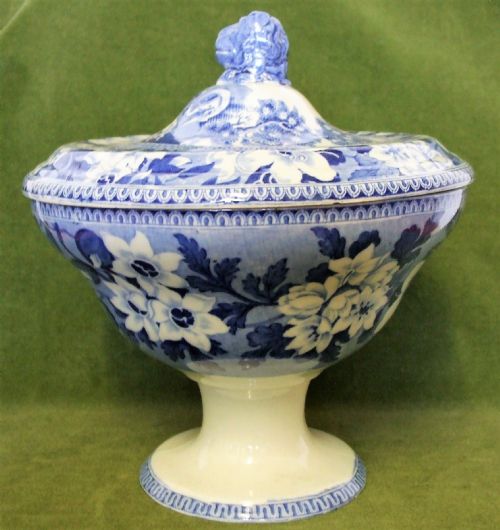
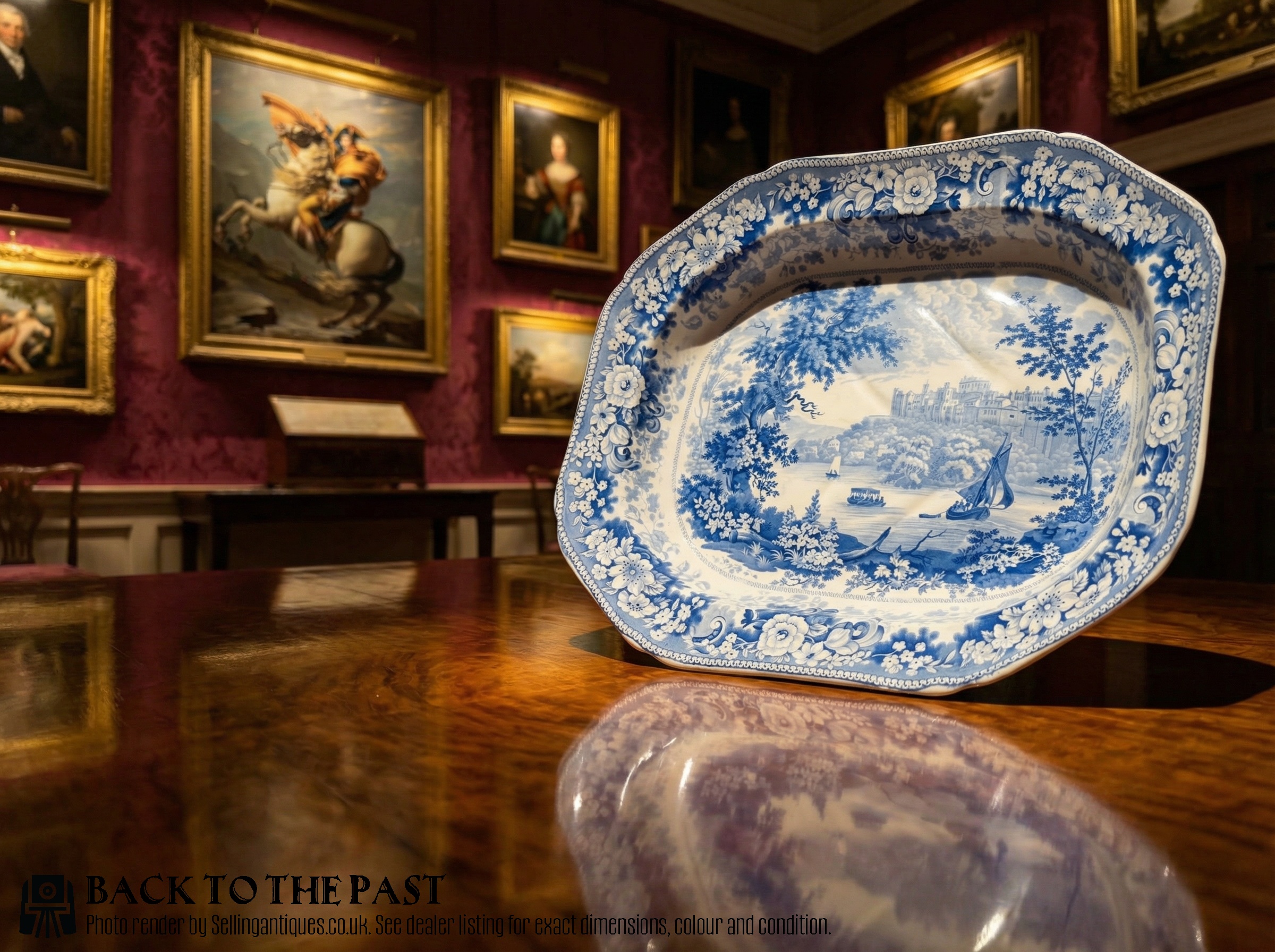
A georgian transferware dish takes many forms across this selection, appearing as serving platters, meat plates, vegetable tureens, chestnut baskets, and pickle dishes. These items record everyday and exotic subjects, from topographical views and castles to pastoral scenes and classical ruins.
The objects stem from English potteries working during the late eighteenth century, the Regency era, and the early nineteenth century. Surviving examples demonstrate how households served food alongside detailed cobalt blue imagery.
How they were made
Potters shaped bodies from earthenware, pearlware, ceramic, and soft-paste porcelain before applying cobalt pigment through engraved copper plates. This transfer paper method allowed workshops to repeat complex patterns onto curved and flat surfaces alike.
Glaze sealed the blue pigment during firing, producing the glossy protective coating seen across plates and serving dishes. Cobalt glaze and ceramic glaze gave these items their characteristic smooth sheen.
Georgian Transferware Dish Retail Price Guide 2026
Typical asking prices for georgian transferware dish among the pieces listed under this phrase on Sellingantiques today, from the lower quarter to the upper quarter. They describe what is for sale here now, not the wider market.
Animals wandering through transfer prints include cows, bears, zebras, and elephants, bringing exotic wildlife straight to the dinner table.
What varies in quality
The clarity and registration of the transferred design determine the visual success of each piece, distinguishing sharp pictorial prints from blurred impressions. Engravings with crisp lines and deep cobalt tones reflect skilled plate work in the pottery.
The weight and refinement of the ceramic body also separate standard domestic wares from ambitious display pieces. Finer potting, balanced proportions, and careful application of glaze elevate the status of a dish.
Spode·Davenport·John Rogers And Son·J And R Clews·J And R Riley·Don Pottery·Minton·Pettys And Co Leeds·William Adams·Thomas Lakin·Brameld And Co
The Georgian Transferware Dish Glossary
- Transferware
- Pottery decorated by printing a design from an engraved copper plate onto tissue paper and transferring it to the ceramic body before glazing. This technique allowed intricate pictorial scenes to be produced in quantity.
- Pearlware
- A refined earthenware developed in the late eighteenth century featuring a thin glaze with a slight bluish tint. It provided a whiter surface than standard creamware to better showcase blue printed decoration.
- Soft-paste porcelain
- A ceramic composition fired at lower temperatures than hard-paste porcelain, common in early pickle dishes and tableware. It yields a distinctive warm body beneath the glaze.
- Tureen
- A deep covered serving vessel used for soups, sauces, or vegetables at the table. These pieces often match the pattern of accompanying platters and plates.
- Pickle dish
- A small, specialised vessel shaped like leaves or geometric forms to hold condiments or small morsels. They frequently utilised porcelain bodies in early production.
Georgian Transferware Dish: Frequently Asked Questions
How are these dishes dated?
Makers mark styles, specific pictorial patterns, and ceramic bodies help establish a timeline. Pearlware and soft-paste porcelain point toward the earlier end of production.
Changes in transfer techniques and registry marks also guide dating across the Regency and early Victorian periods.
Can I use them for serving food?
Most of these ceramic pieces served functional roles at the dining table for meat, vegetables, or desserts. Historic tableware handles dry or moist foods adequately under careful conditions.
Hand washing preserves the glaze and prevents stress on the historic earthenware body.
What subjects appear on the patterns?
Designs range from British topographical castles and country houses to imaginary classical ruins and foreign street scenes. Chinoiserie motifs and narrative subjects like pastoral shepherds also occur frequently.
Topical events and maritime battles provided contemporary interest for buyers of the era.
Why is the blue colour different on some pieces?
Variations in cobalt pigment, application thickness, and firing temperatures create shades from pale lavender-blue to deep dark navy. Different potteries utilised distinct chemical mixes for their glaze.
Copper plate engraving depths also altered the amount of pigment transferred to the ceramic surface.