

Georgian Toilet Box
When handling a georgian toilet box, you hold a piece of portable craftsmanship designed to sit upon a dressing table.
Georgian Toilet Box
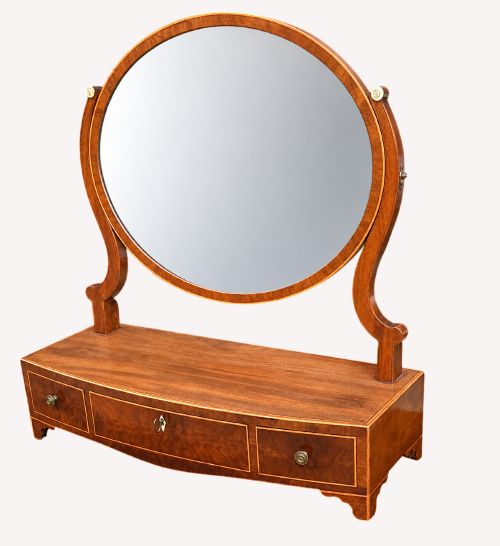
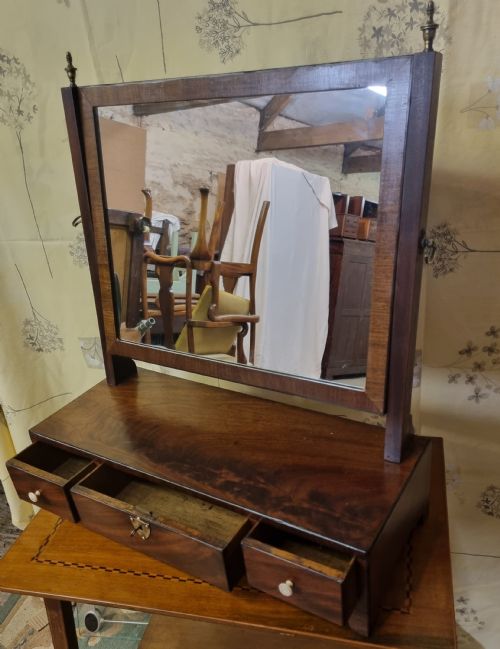
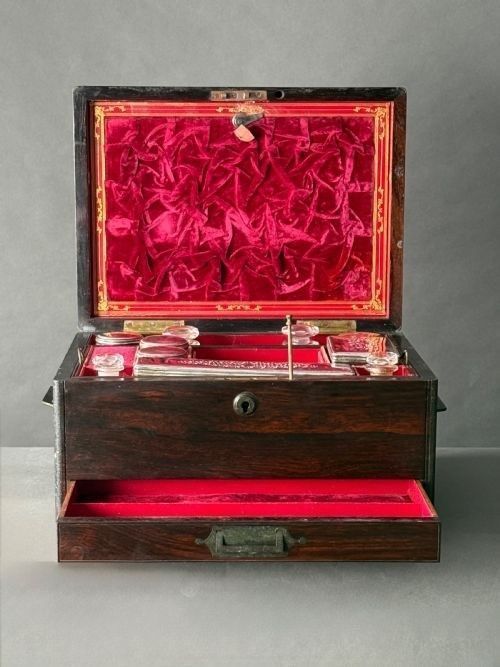
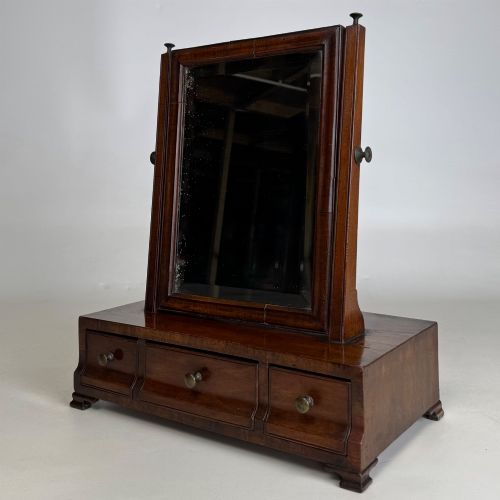
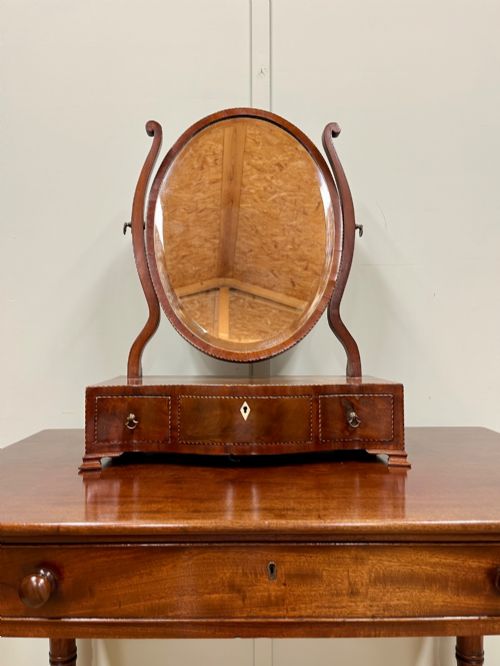
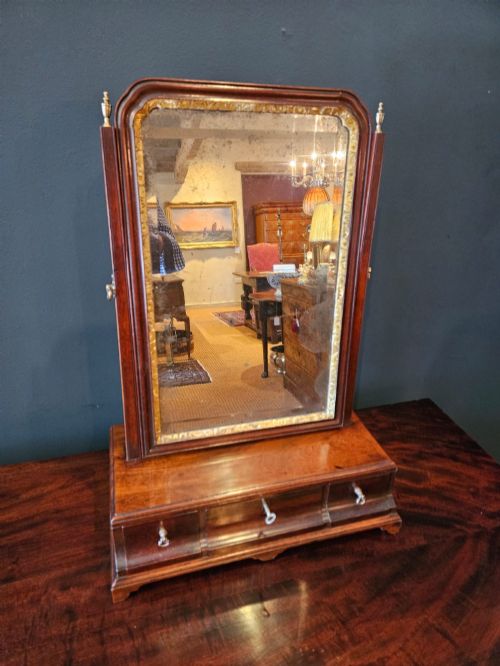
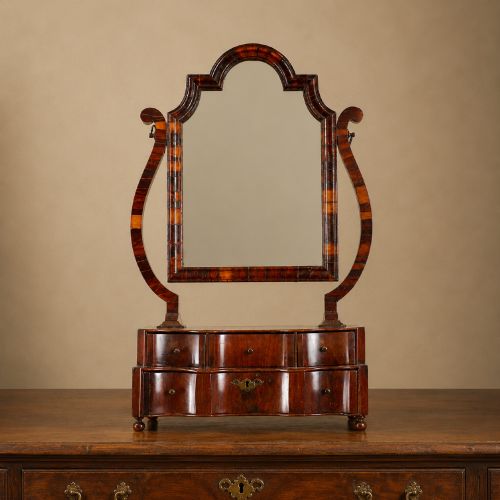
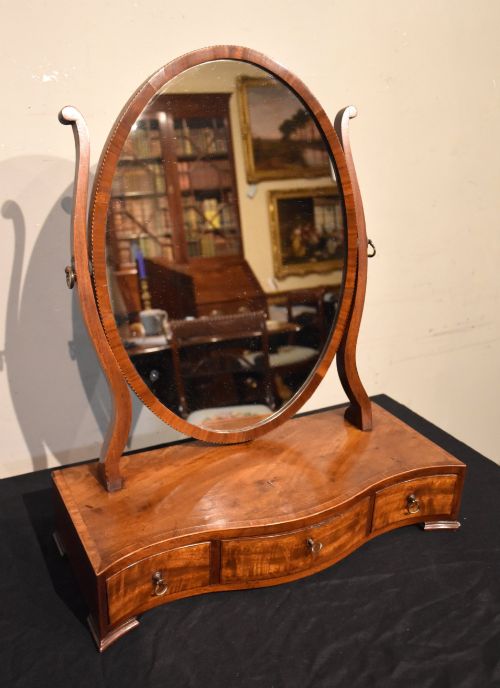
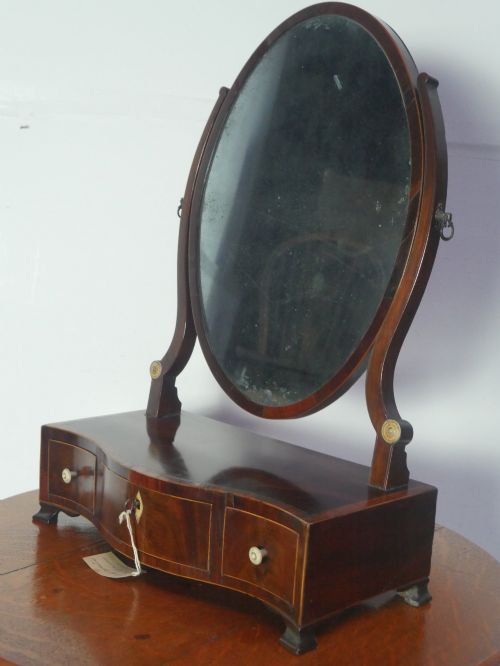
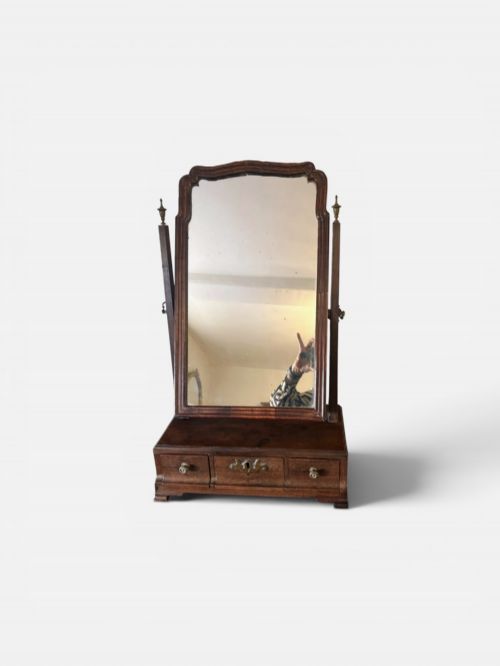
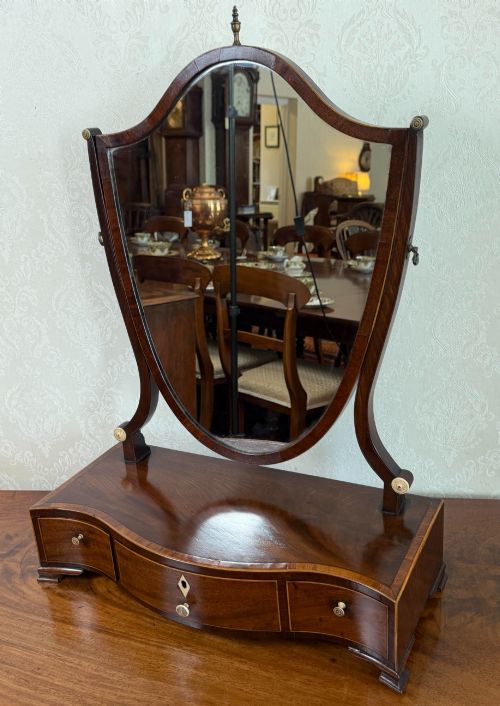
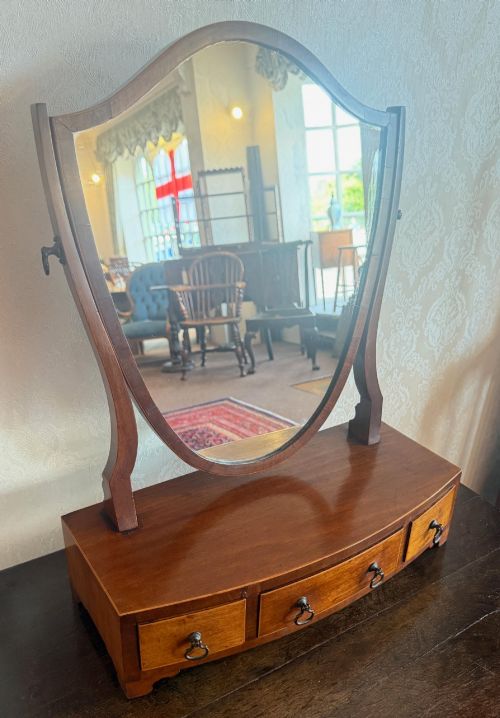
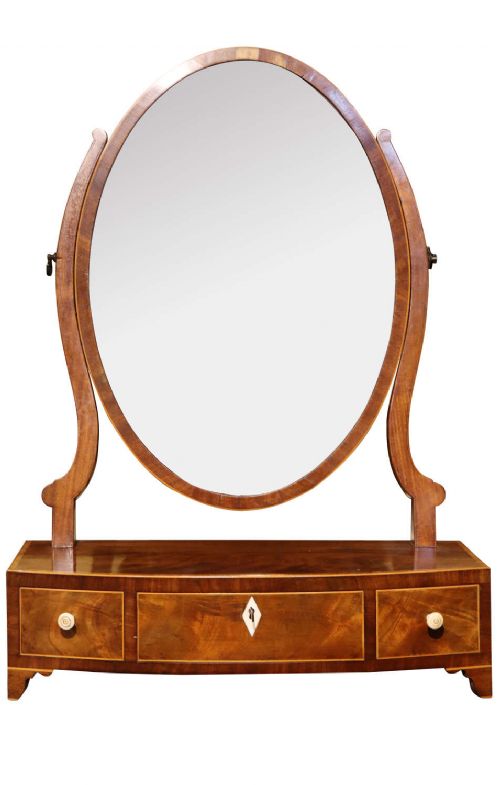
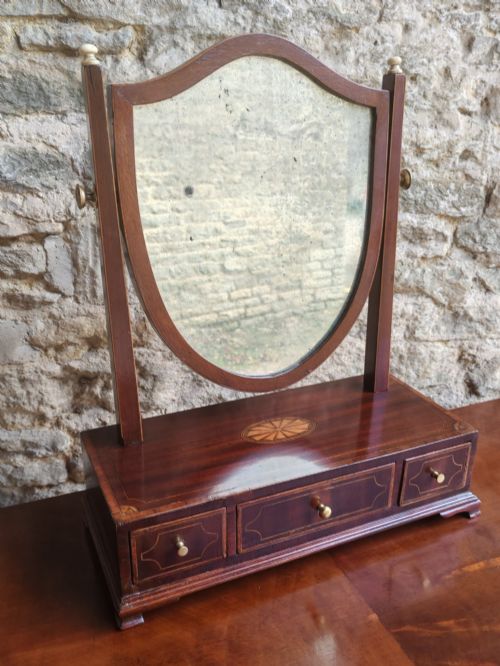
A georgian toilet box encompasses both swing dressing mirrors fitted with small drawer bases and compartmentalised vanity or shaving boxes. The pieces seen on this page span the 18th century, the Georgian period proper, and the Regency era.
Mahogany and walnut form the primary timber framework for these dressing glasses and table mirrors, frequently augmented by boxwood stringing, crossbanding, or giltwood details. Oval, shield-shaped, and serpentine fronts appear regularly among the surviving inventory.
While many examples take the form of swing mirrors atop drawer plinths, others function as fitted campaign or gentleman's vanity boxes containing internal compartments for personal grooming items.
Materials and construction
Cabinetmakers utilised dense hardwoods such as mahogany and walnut, often pairing them with secondary timbers like oak and pine for internal drawer linings and back panels. Selected veneers, harewood, and satinwood added decorative contrast through crossbanding and inlay.
Brass fittings, including delicate swing hinges, carrying handles, and small drawer knobs, provided functional and decorative accents. Glass plates, silvered by hand, were mounted securely within wooden frames supported by adjustable side arms.
Listings here feature pieces constructed from mahogany, walnut, oak, and harewood, alongside brass and glass elements.
Distinctions in quality
Superior examples demonstrate meticulous timber selection, evidenced by richly figured mahogany or burr walnut matched symmetrically across the mirror frame and drawer fronts. Subtle details such as finely cut dovetails on the base drawers and original brass hardware elevate a piece significantly.
The sophistication of the woodwork distinguishes finer items, seen in complex serpentine shaping, delicate crossbanding, and well-executed string inlay. Retaining the original mirror glass and functional pivot mechanisms also marks a higher standard of preservation.
Jonathan Douglas
The Georgian Toilet Box Glossary
- Crossbanding
- A narrow strip of veneer laid across the grain of the primary timber to form a decorative border. This technique frames drawer fronts and mirror surrounds on finer pieces.
- Serpentine
- A curved line that undulates gently, convex in the centre and concave at the sides. It appears frequently on the drawer bases of dressing mirrors.
- Shield-shaped
- A mirror plate cut into the outline of a heraldic shield. This distinct silhouette became popular during the latter half of the 18th century.
- Swing mirror
- A looking glass hung on pivots between two upright posts, allowing the user to adjust the angle. The frame typically sits directly upon a small set of storage drawers.
- Stringing
- Thin inlay lines of a contrasting wood used to outline panels and drawers. It highlights the geometric precision of cabinetwork.
Georgian Toilet Box: Frequently Asked Questions
What is a georgian toilet box?
A georgian toilet box or dressing mirror is a tabletop piece of furniture designed for personal grooming and cosmetic storage.
These items typically combine a tilting mirror with a small plinth containing one or more small drawers for trinkets, brushes, and powders.
How were these boxes used?
Users placed them upon chests of drawers or dedicated dressing tables to assist with hairstyling, shaving, and applying makeup.
The integrated compartments kept grooming accessories organised and secure when not in use.
How do I date a piece?
Dating relies on observing timber choices, construction methods, and overall silhouette styles such as Queen Anne, George II, or Regency.
Examination of secondary woods, dovetailing techniques, and hardware fixings helps narrow down the period of manufacture.
Where should I place it?
These mirrors suit dressing rooms, bedrooms, or entrance halls where their compact footprint allows them to sit comfortably on top of sideboards or chests.
Positioning them away from direct, harsh sunlight helps protect the antique wood finishes and internal veneers.