

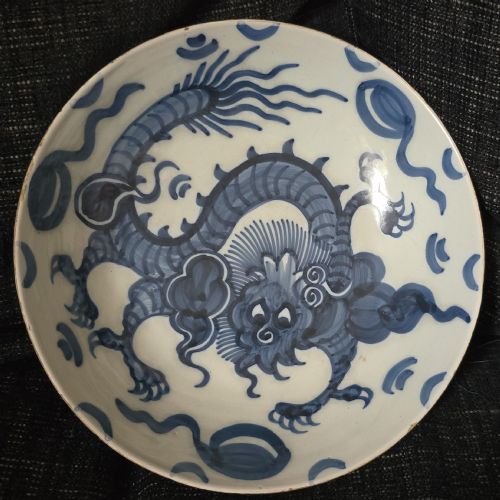
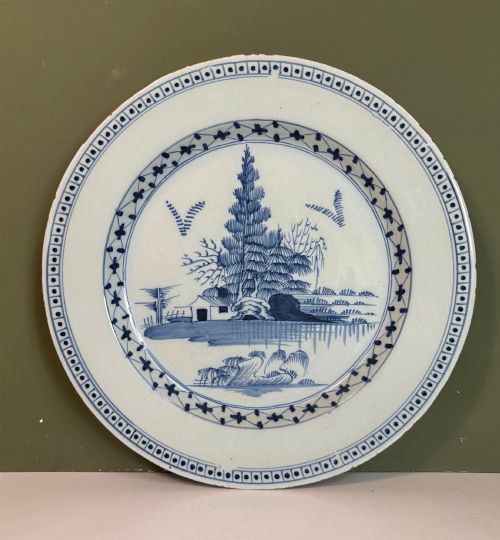
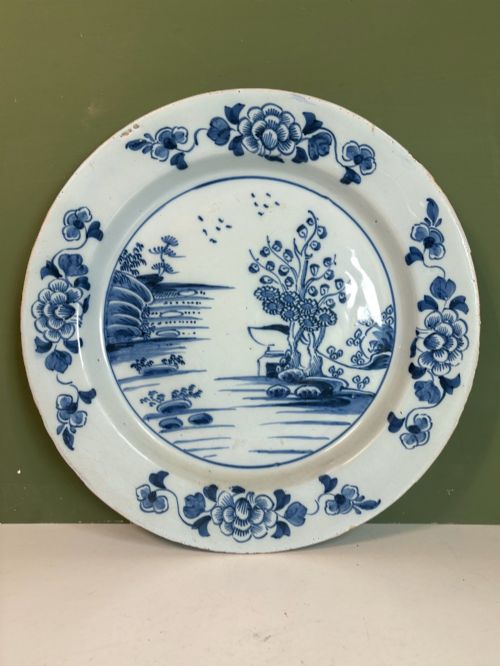
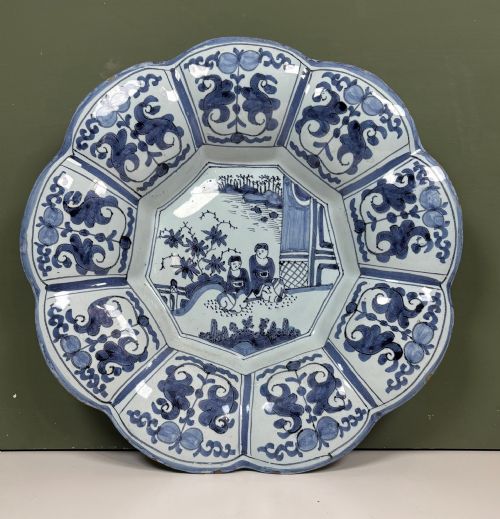




Georgian Tin Glaze Plate
A georgian tin glaze plate brings eighteenth-century earthenware into the home with hand-painted blue and white or polychrome designs.
Georgian Tin Glaze Plate
When you search for a georgian tin glaze plate, you encounter eighteenth-century ceramics produced in English and Dutch potteries. These items include chargers, dishes, and plates originating from centres such as Bristol and Lambeth during the seventeen-forties and seventeen-sixties.
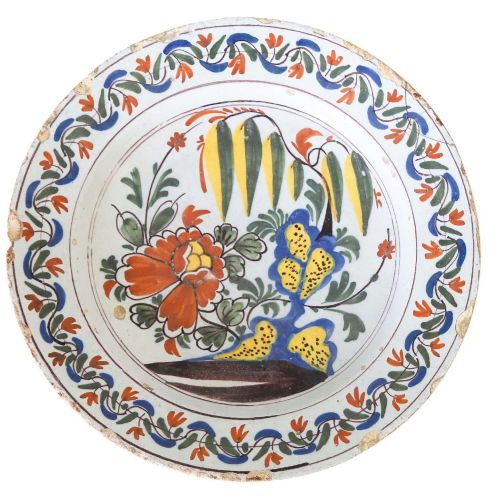
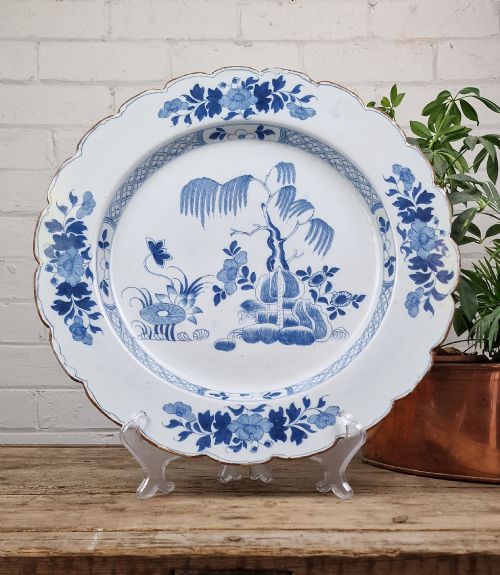
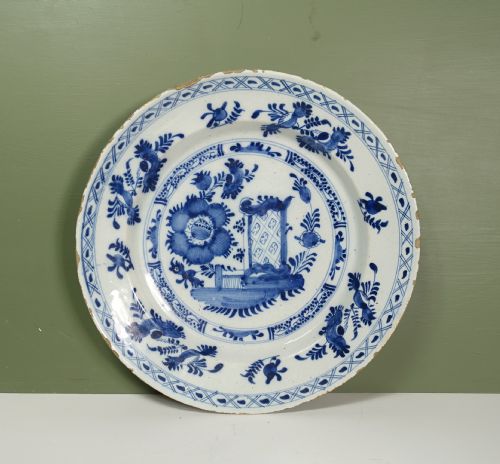
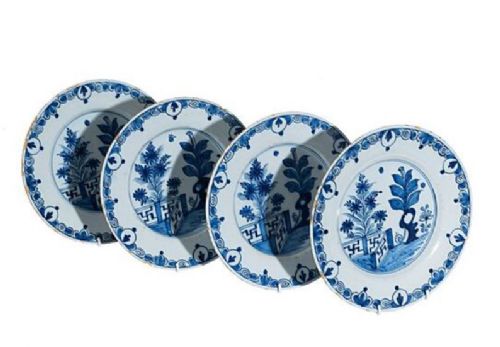
The form is dominated by chargers and plates bearing blue and white or polychrome decoration, often featuring floral or Chinoiserie motifs. A marriage plate or a large charger represents the broader scale of domestic display common in the period.
How they were made
Potters shaped earthenware bodies and coated them in tin glaze to create an opaque white surface suitable for painting. Artisans then applied cobalt pigment, cobalt oxide, or polychrome pigments directly onto the unfired glaze before firing.
The hand-painted decoration relied on swift brushwork executed by painters working within established eighteenth-century traditions. This technique resulted in varied pigment absorption across each plate or charger.
Georgian Tin Glaze Plate Retail Price Guide 2026
Typical asking prices for georgian tin glaze plate among the pieces listed under this phrase on Sellingantiques today, from the lower quarter to the upper quarter. They describe what is for sale here now, not the wider market.
Listings feature earthenware materials combined with cobalt pigment and tin glaze across the eighteenth century.
What varies in quality
The distinction between standard domestic items and finer examples rests on the control of the brush and the clarity of the painted motif. Controlled polychrome work and well-balanced Chinoiserie compositions demonstrate greater skill than simpler blue and white applications.
The regularity of the earthenware body and the smoothness of the tin glaze also determine the character of the piece. Superior examples maintain a stable glaze surface that preserves the integrity of the painted design.
Bristol·Lambeth
The Georgian Tin Glaze Plate Glossary
- Tin Glaze
- An opaque white ceramic glaze containing tin oxide, which provides the characteristic background for eighteenth-century painted earthenware. It allows pigments to bond directly with the surface during firing.
- Delftware
- Earthenware coated with a tin glaze and decorated with metal oxides, produced in English and Dutch workshops. The term encompasses both blue and white and polychrome domestic wares.
- Charger
- A large decorative plate intended for wall hanging or display on a sideboard rather than daily dining. These substantial dishes often showcase the most ambitious painting.
- Chinoiserie
- European interpretations of Chinese artistic motifs, frequently adapted by eighteenth-century painters on tin-glazed plates and chargers. This style incorporates imaginary landscapes and figures.
- Polychrome
- Decoration employing multiple colours, typically applied alongside cobalt pigment on tin-glazed earthenware. This palette often includes yellows, reds, and greens.
Georgian Tin Glaze Plate: Frequently Asked Questions
How were tin glaze plates used?
These pieces served both practical dining functions and decorative display in eighteenth-century households. Larger chargers were frequently hung on walls or shown on dresser shelves.
Smaller plates handled everyday dining before being retired as decorative objects. Their tin-glazed surfaces made them unsuited to heavy modern use.
Are these plates English or Dutch?
The listings include both English and Dutch production from the eighteenth century. English centres such as Bristol and Lambeth produced distinct delftware alongside Dutch imports.
Design motifs and glaze characteristics often help distinguish the regional origins of individual chargers and plates.
How do I care for a tin glaze plate?
Display these earthenware items away from moisture and extreme temperature fluctuations to protect the glaze. Hand washing with mild soap is necessary if cleaning becomes essential.
Avoid abrasive materials that might scratch the tin glaze surface. Wall mounting requires specialist fixings designed for heavy chargers.
What does polychrome mean on these plates?
Polychrome decoration involves the use of multiple pigments beyond standard blue and white. Painters applied various colours to create floral scenes and Chinoiserie compositions.
This technique required careful firing to ensure the different pigments adhered to the tin glaze.