
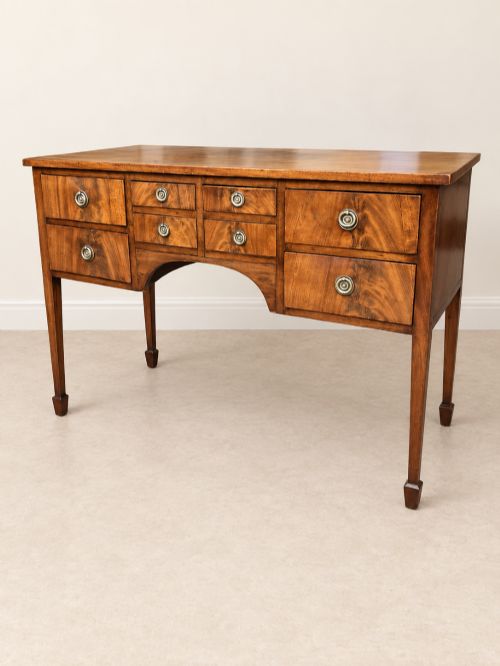
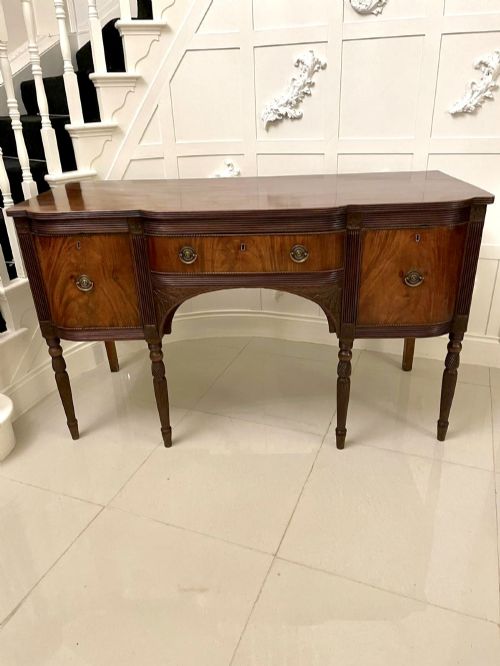
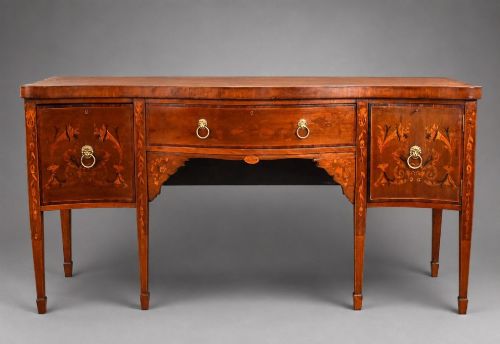
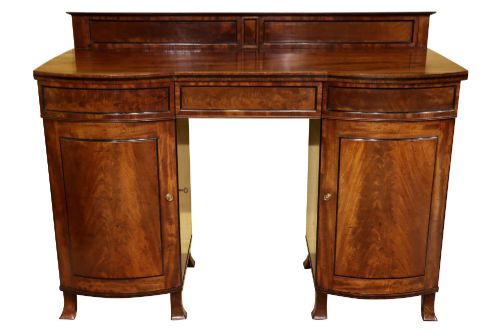
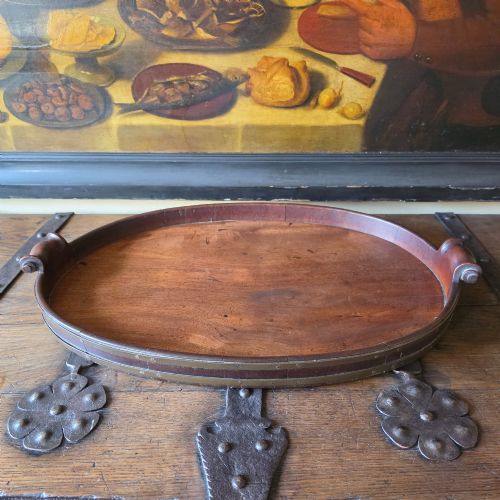
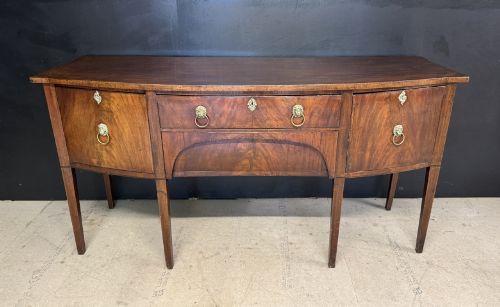
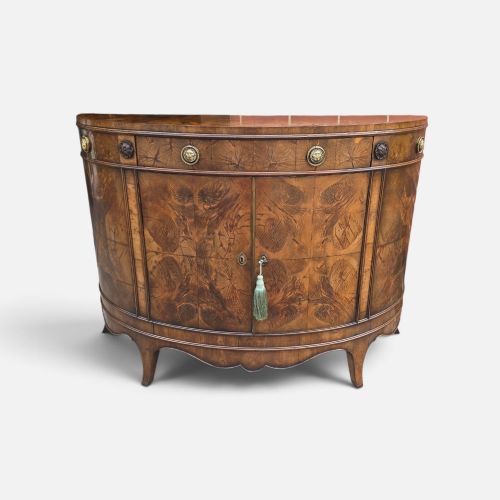
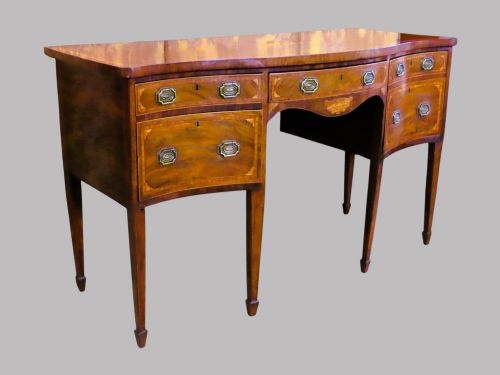
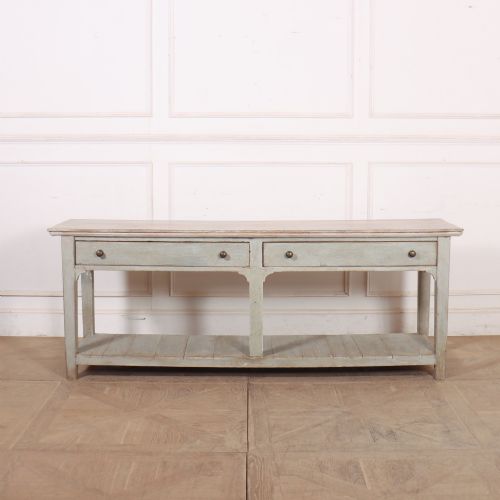


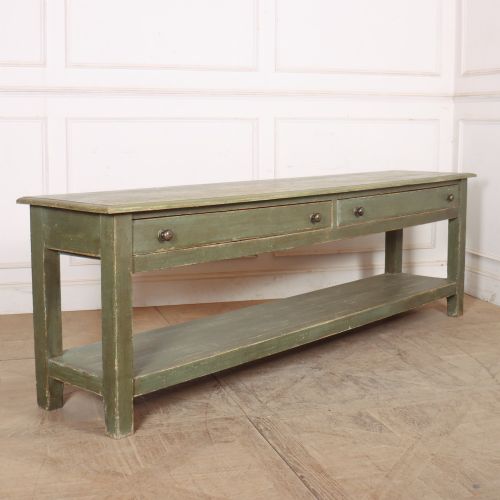
Georgian Timber Sideboard
A georgian timber sideboard brings warmth and architectural presence to a dining room, offering deep drawers and cupboards for service.
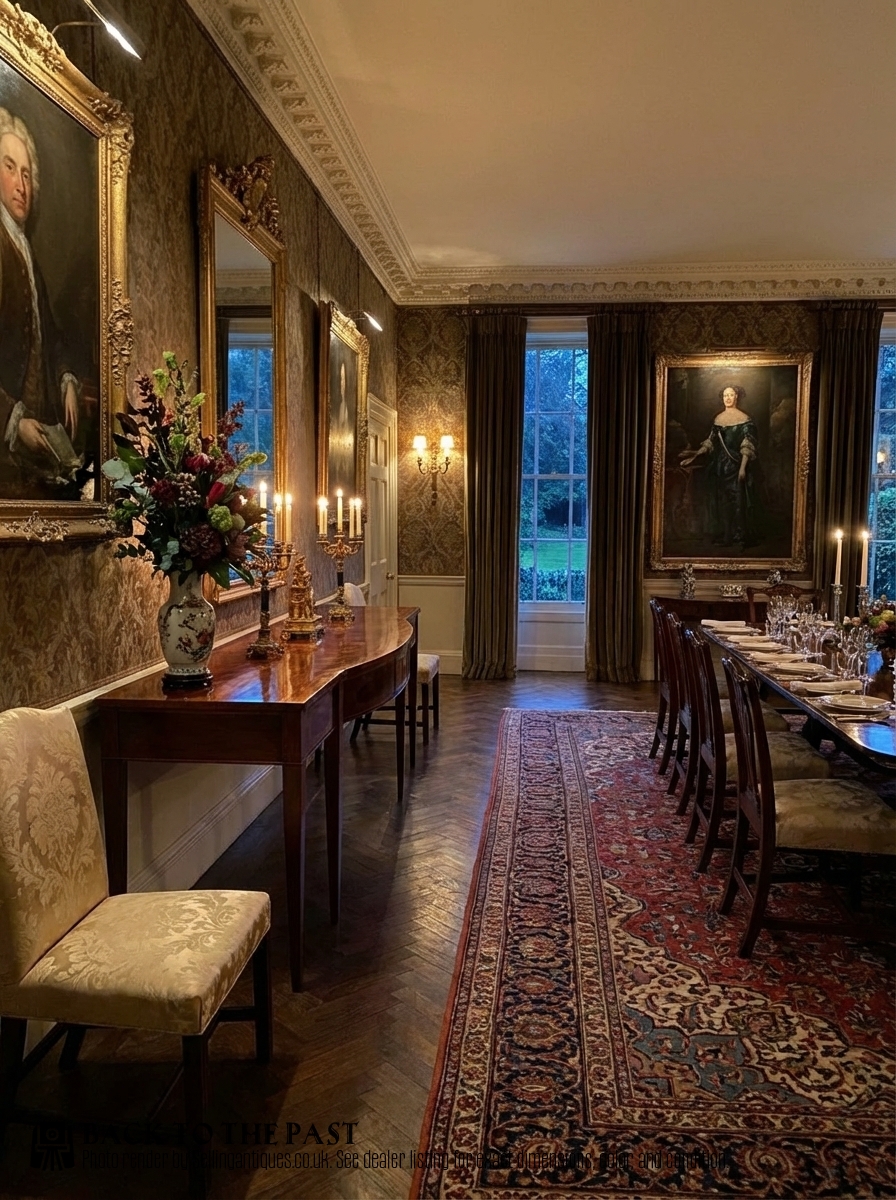
Georgian Timber Sideboard
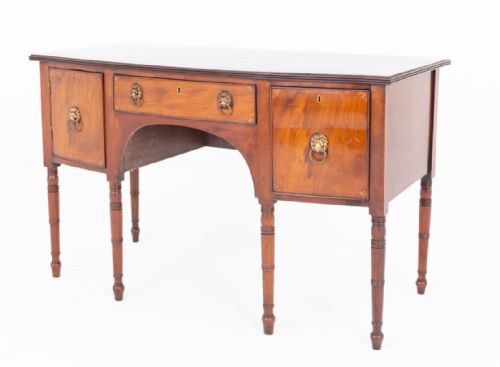
A georgian timber sideboard encompasses serving tables, pedestal designs, and breakfront or bow-front furniture built for dining rooms. The pieces appearing here span the eighteenth and nineteenth centuries, alongside revival interpretations from later decades.
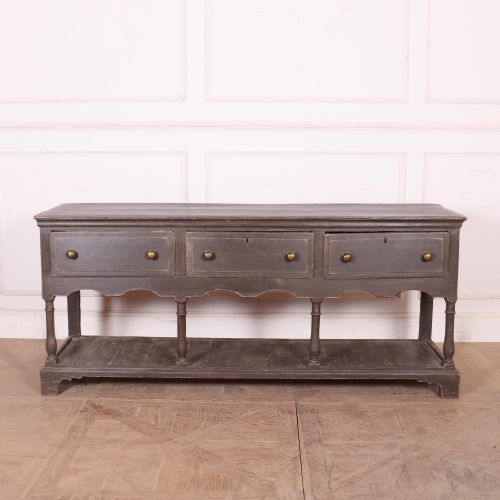
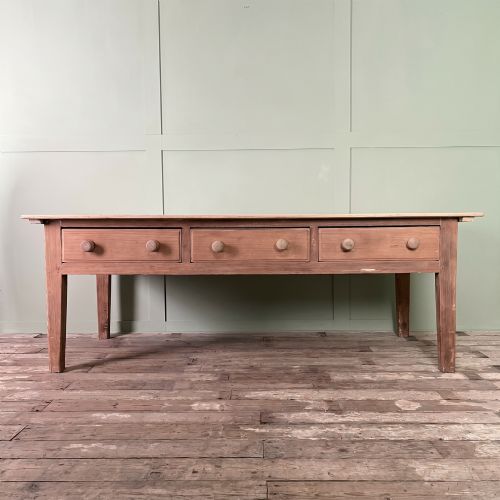
Buyers commonly encounter mahogany construction with serpentine or bow fronts, alongside country alternatives in oak, elm, and painted pine. These forms developed from simple serving tables into complex storage units with central drawers flanked by deep compartments.
Materials and construction methods
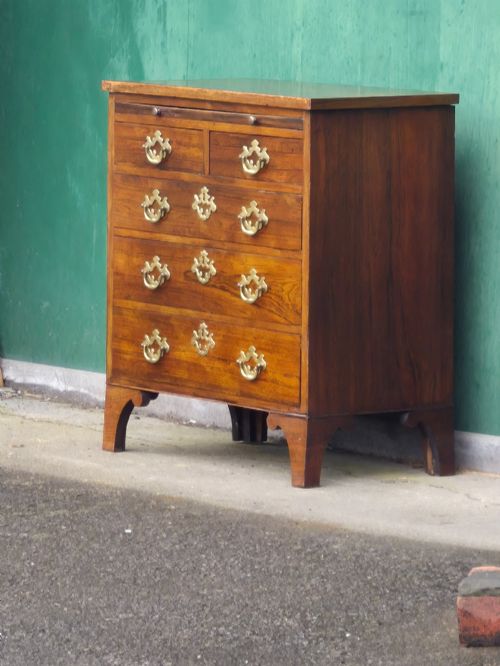
Cabinetmakers utilised solid timbers alongside veneers, applying flame mahogany, burr elm, and satinwood over secondary woods like pine. Surfaces often display boxwood stringing, brass hardware, and hand-applied paint finishes.
Joinery techniques relied on traditional dovetailing for drawer construction and pegged frames for regional dresser bases. The juxtaposition of figured veneers against contrasting stringing defined the decorative grammar of the period.
Listings feature 18th century, 19th century, and Edwardian periods alongside regional styles like English Country and Welsh oak.
Distinguishing quality in timber sideboards
Quality rests in the selection of timber veneers and the crispness of inlay work, where boxwood stringing flows smoothly along curved serpentine or bow fronts. Superior examples maintain original brass handles and timber linings without extensive replacement.
Proportion and scale dictate the visual success of the piece, with finer items showing balanced drawer arrangements and clean architectural lines. The integrity of the secondary woods and the depth of the polish reveal the standard of workshop execution.
Gillow·The Woodworkers Ltd Kilkenny
The Georgian Timber Sideboard Glossary
- Serpentine front
- A convex central section flanked by concave curves, creating a fluid S-shape across the front of the sideboard. This profile requires high skill from the cabinetmaker.
- Breakfront
- A cabinet design where the central section projects forward from the flanking wings. It adds architectural depth to large dining room furniture.
- Stringing
- Thin inlaid lines of contrasting wood, such as boxwood, used to outline drawers and borders. It highlights the geometric form of the timber.
- Potboard
- An open lower shelf on a dresser or serving table, traditionally used for storing pots and heavy kitchen equipment. It appears frequently in country vernacular pieces.
- Pedestal sideboard
- A form featuring distinct side cabinets or pedestals flanking a central table section. This layout originated in neoclassical dining room design.
Georgian Timber Sideboard: Frequently Asked Questions
How do I spot a true georgian timber sideboard?
Examine the timber selection and construction methods inside the drawers, looking for hand-cut dovetails and solid secondary woods like oak or pine. Eighteenth-century pieces generally show timber shrinkage and tool marks consistent with period workshops rather than modern machinery.
Check the overall proportions and the integration of any inlay or veneer work. Regional pieces often use local timbers like elm or sycamore, while formal urban examples favour figured mahogany with boxwood stringing.
Where should I place a sideboard in my home?
A dining room or large hallway provides the traditional setting, offering functional surface space and storage for tableware, linens, or glassware. Measure the depth of the room carefully, especially with serpentine or bow-front models that project further than flat fronts.
Keep the piece away from direct heat sources and strong sunlight to protect vulnerable mahogany veneers and burr timbers from drying out or fading. Allow sufficient clearance around doors and drawers to use the storage compartments fully.
What is the difference between a sideboard and a serving table?
Serving tables generally present an open frame with legs and minimal drawer storage, functioning primarily as a surface for food and dish placement during meals. Sideboards incorporate enclosed cupboards and deep drawers directly beneath the top surface for comprehensive dining storage.
Many formal dining rooms transitioned from simple serving tables to fitted sideboards with pedestals or cabinets as dining customs evolved through the Georgian period.
How should I clean antique timber surfaces?
Dust the wood regularly with a soft, dry cloth to prevent particle accumulation in the grain and carved details. Avoid modern silicone sprays or heavy liquid polishes that can penetrate old finishes and attract dirt over time.
Apply a microcrystalline wax occasionally to nourish the timber and protect the patina. Test any maintenance product on a hidden area first to ensure it suits the historic polish.