

Georgian Tilt Table
When you search for a georgian tilt table, you are looking at practical engineering designed to save space in period rooms.
Georgian Tilt Table
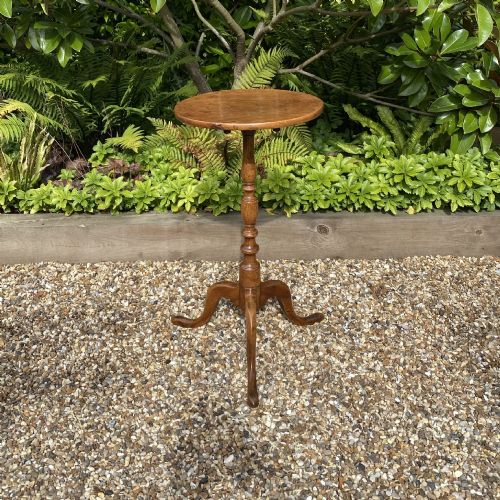
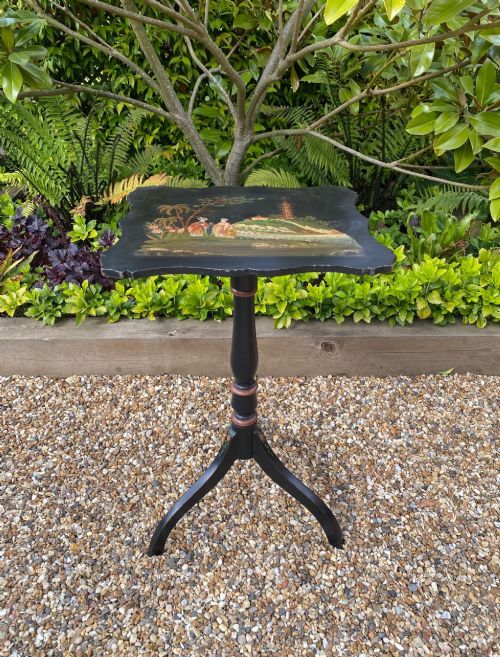
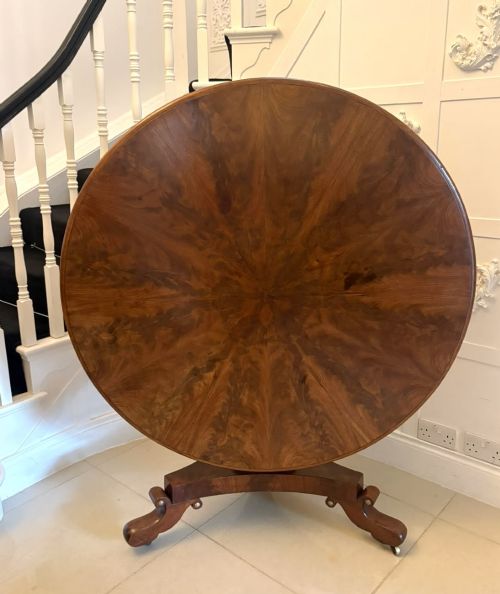
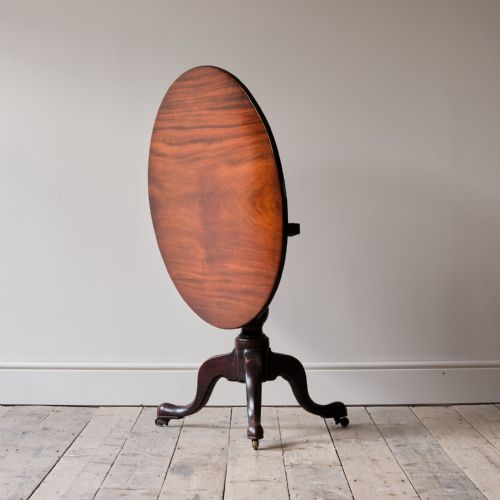
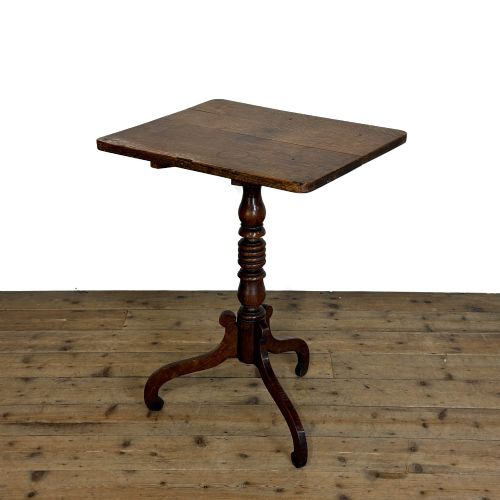
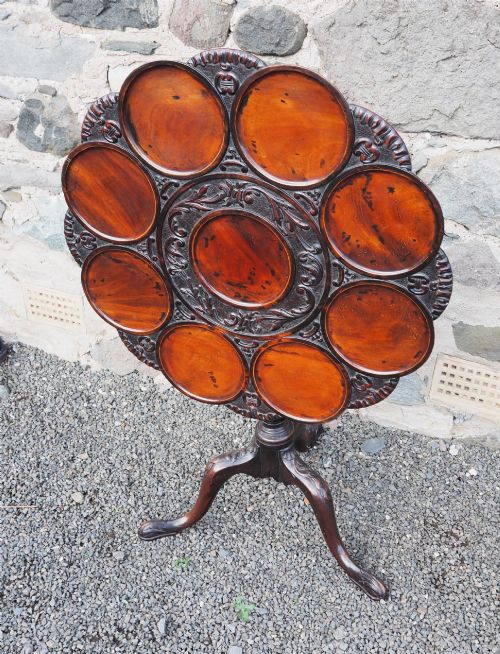
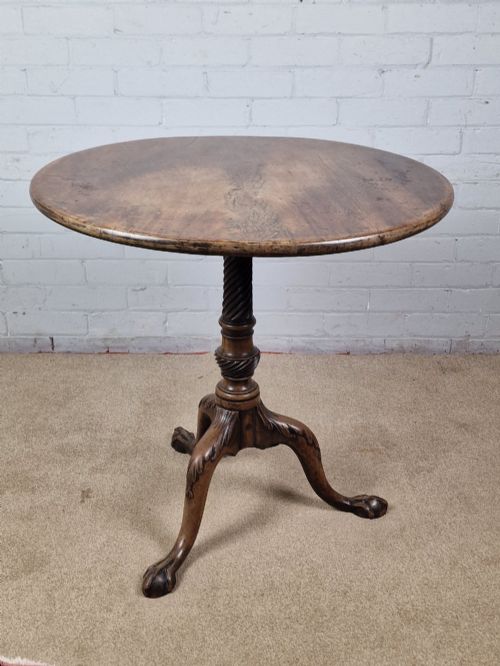
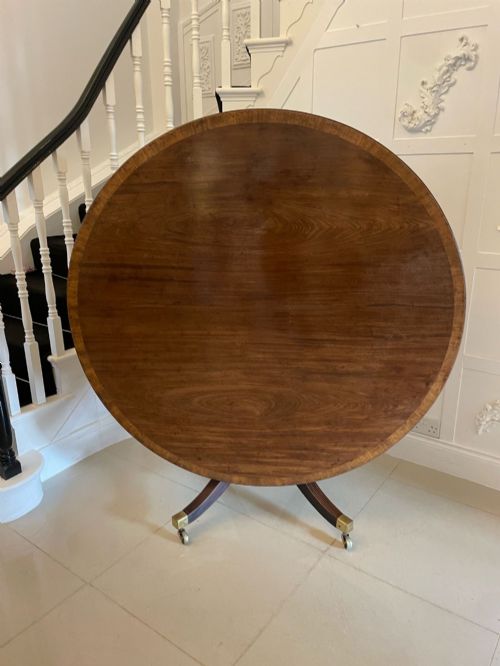
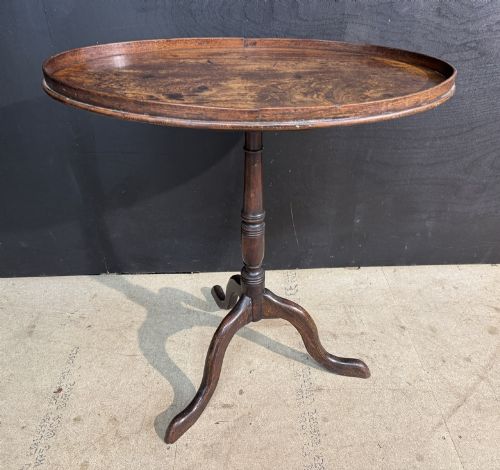
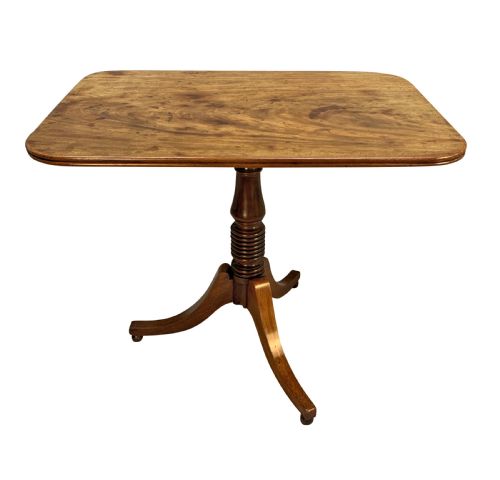
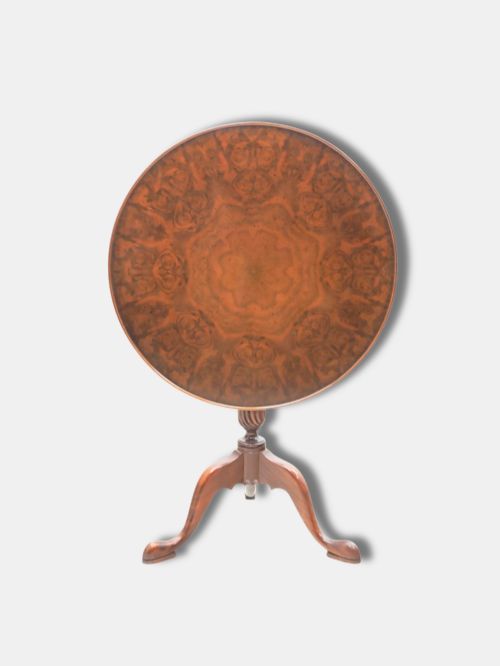
A georgian tilt table is a versatile piece of antique furniture engineered with a hinged top that folds flat when not in use, allowing it to stand neatly against a wall. The examples on this page span the Georgian, Regency, and Victorian eras, taking forms ranging from small wine and occasional tables to large breakfast and dining tables.
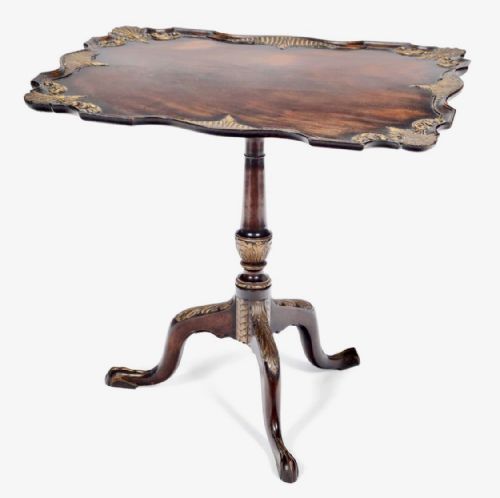
Makers of these tables utilised ingenious mechanisms such as the birdcage catch, which allowed the top to both tilt and rotate independently. Whether found as a plain oak country piece or a carved mahogany supper table from the George III period, each item reflects the domestic habits of eighteenth and nineteenth-century households.
Materials and Construction
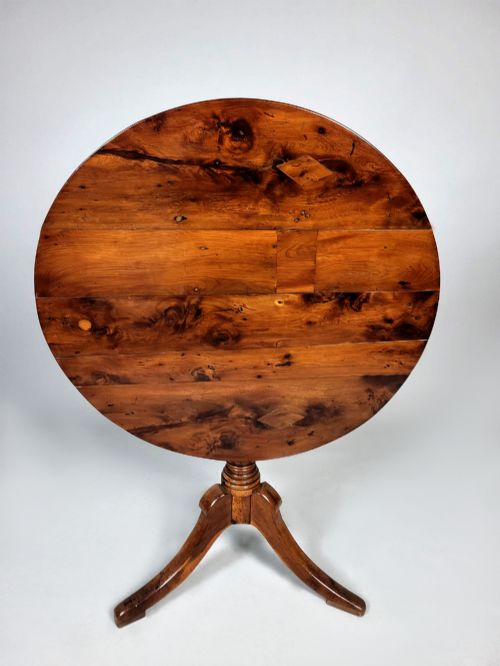
Timber selection dictated both the utility and appearance of a georgian tilt table, with dense hardwoods like mahogany and oak chosen for their stability under structural stress. Cabinetmakers frequently turned solid planks for the circular tops and shaped slender legs to terminate in pad, spade, or claw-and-ball feet.
The tilting mechanism relied on precise joinery, typically incorporating a wooden block or a brass catch that locked the tabletop securely into the horizontal position. Tripod bases required expert dovetailing or tenoning where the legs met the central pedestal to ensure the table remained stable on uneven floors.
Some tables include hidden birdcage mechanisms that let you spin the top like a wheel while you ponder your tea.
Judging Quality
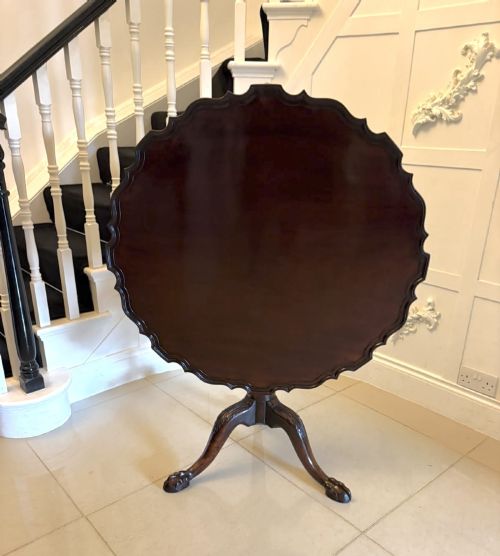
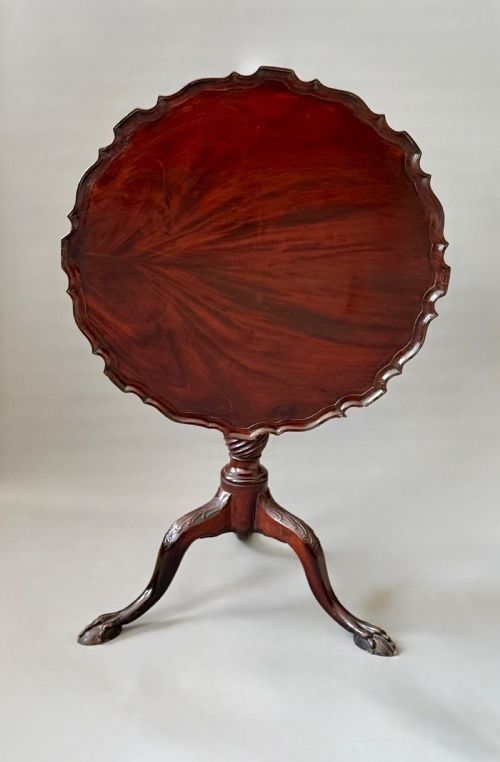
Quality in a georgian tilt table rests primarily on the choice of timber and the crispness of the carving on the pedestal and legs. Finer examples display figured mahogany with rich patina, or intricate details like pie-crust edges and carved acanthus leaves, whereas utilitarian pieces remain plain and functional.
The integrity of the mechanism also determines the standing of a piece, with original brass catches and uncompromised birdcage pivots commanding greater respect. Smooth rotation, tight joints without excessive modern reinforcement, and balanced proportions reveal the skill of the original workshop.
Gillow
The Georgian Tilt Table Glossary
- Tilt-top
- A tabletop mounted on a hinge mechanism that allows the surface to be folded into a vertical position for storage.
- Tripod base
- A support structure consisting of a central pillar resting on three spreading legs, commonly used on small tables.
- Birdcage
- A revolving wooden framework beneath the tabletop that enables the surface to both tilt and turn.
- Pie-crust edge
- A decorative raised moulding carved around the perimeter of a circular tabletop in a series of subtle undulations.
- Snap top
- An alternative term for a tilt table utilising a spring catch to lock the folding surface horizontally.
Georgian Tilt Table: Frequently Asked Questions
What was a georgian tilt table used for?
These tables served flexible domestic roles in sitting rooms, libraries, and bedrooms during the eighteenth and nineteenth centuries. Because the tops folded away, residents could clear floor space when the furniture was not actively needed for dining or writing.
Smaller formats held tea equipment, candles, or books beside seating areas, while larger pedestal versions accommodated breakfast or supper dishes. Their portability made them central items for daily domestic life in period interiors.
How do I spot an original tilt mechanism?
Original mechanisms rely on traditional timber blocks, peg pivots, or early brass catches fitted neatly beneath the block. Look for wear patterns and tool marks that match the estimated age of the surrounding wood rather than modern replacement screws.
Many tables retain a birdcage structure that permits rotation alongside the tilt action. Inspecting the underside reveals how the pivot interacts with the central pillar and whether the components share the same age and timber species.
Where should I place a tilt table at home?
These pieces suit tight corners, empty hallway spaces, or beside armchairs where a small surface is useful. Leaving the top tilted against a wall displays the decorative underside and grain of the timber as a deliberate design feature.
They pair well with traditional interiors and add character to modern rooms through their warm wood tones and slender tripod silhouettes. Ensure they rest on level flooring to maintain stability on the three-legged base.
How do I distinguish George III from Victorian tables?
George III pieces generally exhibit lighter proportions, restrained carving, and rich mahogany or oak patination developed over centuries. The legs on earlier tripod tables often transition smoothly into pad or pointed feet with subtle shaping.
Victorian iterations tend to be heavier in the pillar turnings and frequently employ darker rosewood, walnut, or heavy oak with bolder, more robust detailing. Examining the secondary timbers and construction methods underneath usually clarifies the manufacturing period.