
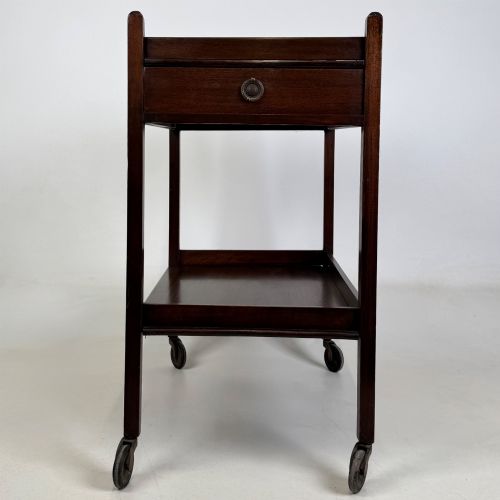
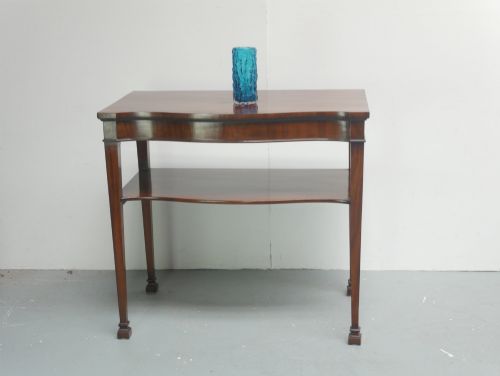
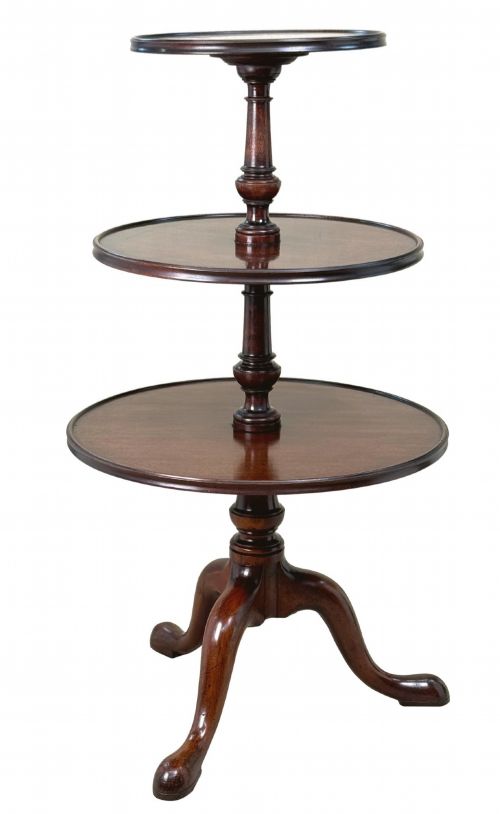
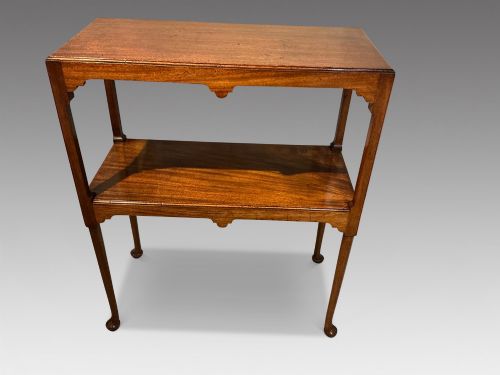
Georgian Tier Side Table
A georgian tier side table brings functional multi-level surfaces and rich timber grain directly into a room.
Georgian Tier Side Table
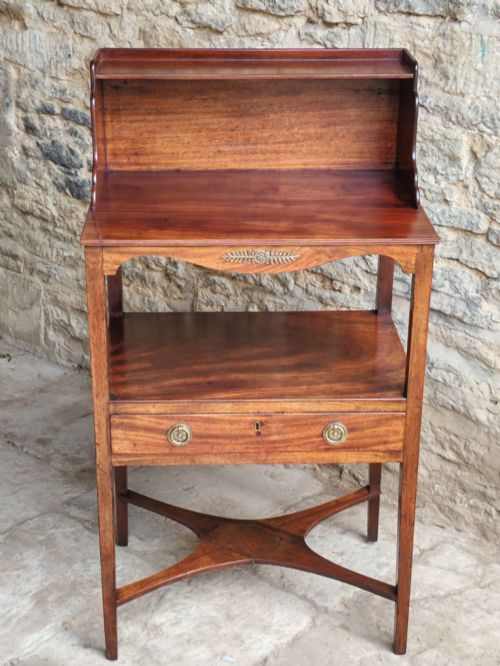
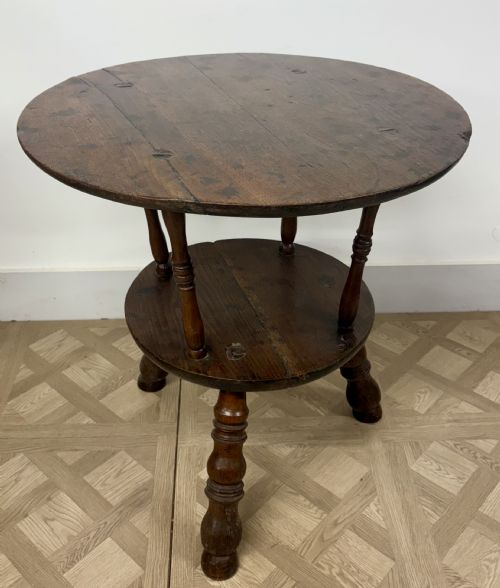
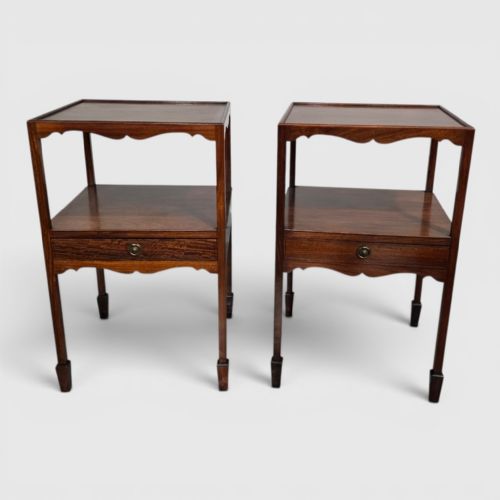
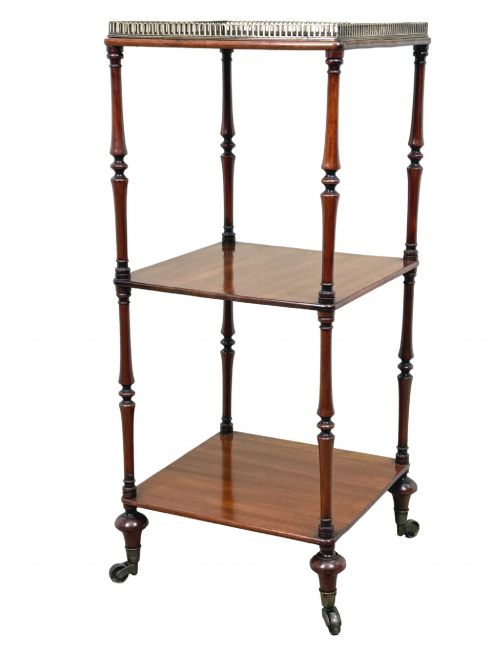
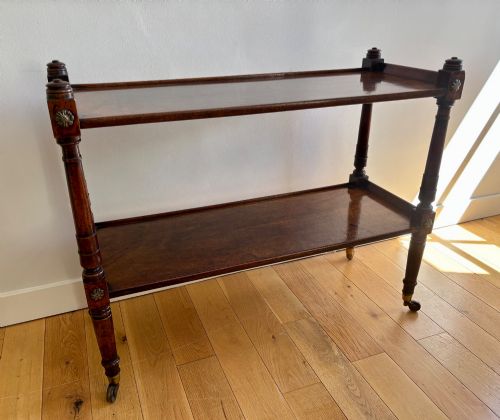
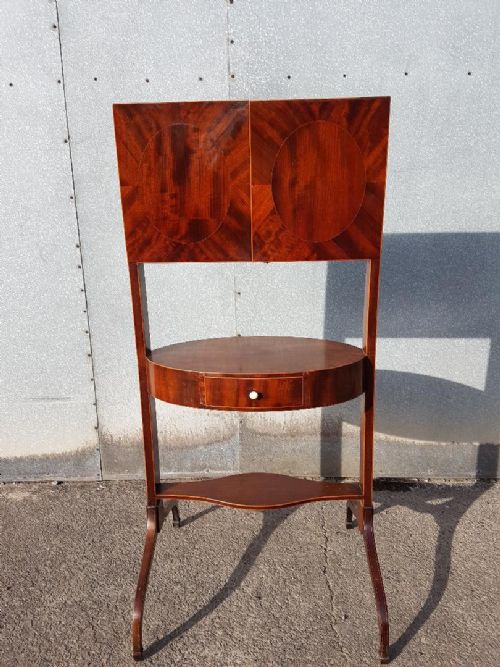
A georgian tier side table encompasses tiered functional furniture such as dumb waiters, whatnots, etageres and bedside tables spanning the Georgian, Regency and Victorian periods.
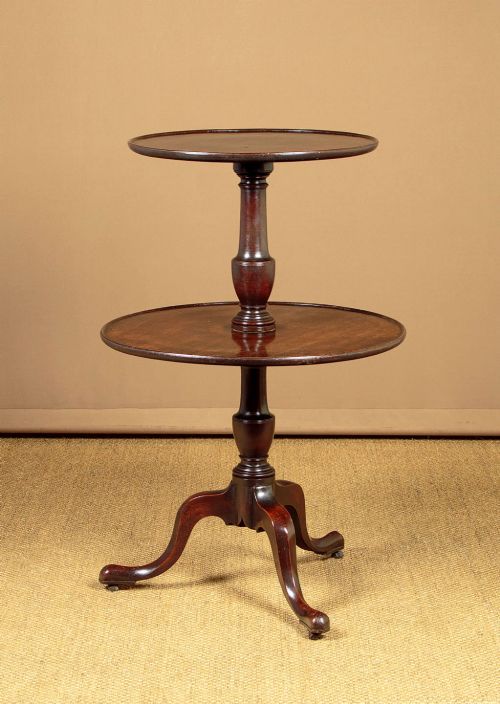
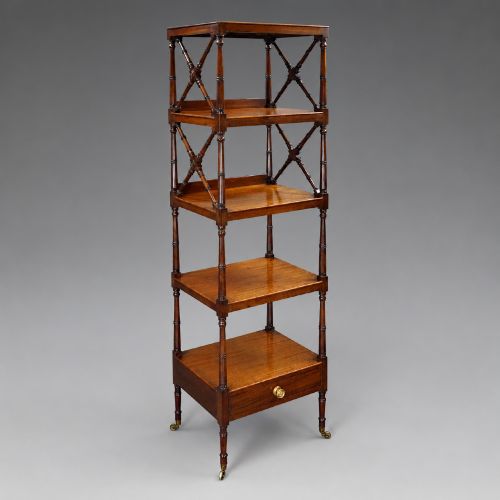
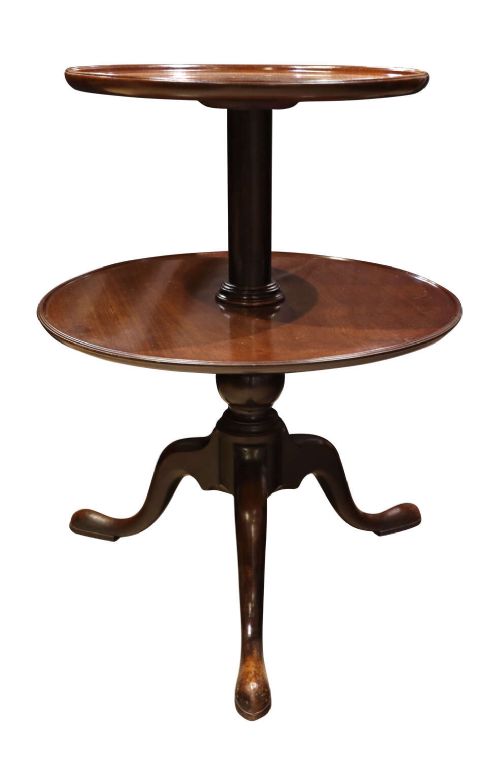
The most common examples on this page are mahogany two-tier and three-tier dumb waiters or whatnots featuring circular trays on tripod pedestals or graduated rectangular shelves.
Makers produced these pieces to serve dining rooms, bedrooms and drawing rooms, adapting multiple tiers for holding books, tea or serving dishes.
Materials and Construction
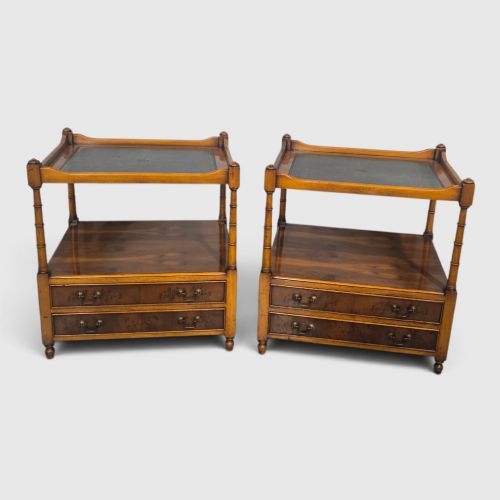
Cabinetmakers relied heavily on mahogany, often selecting fiddleback or plain varieties, alongside secondary woods like oak, pine and occasionally rosewood, yew or birdseye maple.
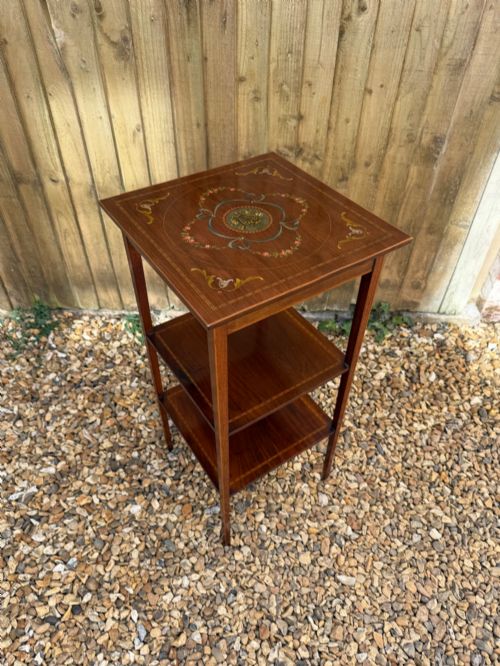
Construction involved turned pedestals, tripod legs, brass castors, boxwood inlay and occasional painted finishes or brass drop handles.
Joinery techniques united tiered platforms with central columns or corner uprights, creating stable multi-level surfaces designed for practical mobility.
Some tables include folding tiers or birdcage mechanisms so the top can tilt vertically when not holding evening tea.
Judging Quality
Quality rests in the choice of timber figure, the sharpness of turned pedestal columns and the proportion of graduated tiers.
Pieces showing refined brass fittings, crisp boxwood inlay or original painted surfaces demonstrate superior craftsmanship compared to simpler utilitarian variants.
The Georgian Tier Side Table Glossary
- Dumb waiter
- A multi-tier freestanding serving table used in dining rooms. It allowed diners to access extra plates or courses without servants present.
- Whatnot
- An open set of multi-level shelves used for displaying ornaments or holding books. These pieces typically stand in corners or beside seating.
- Étagère
- A French term for a piece of furniture with several levels of shelves. They appear frequently in mahogany and rosewood across Georgian and Regency eras.
- Tripod table
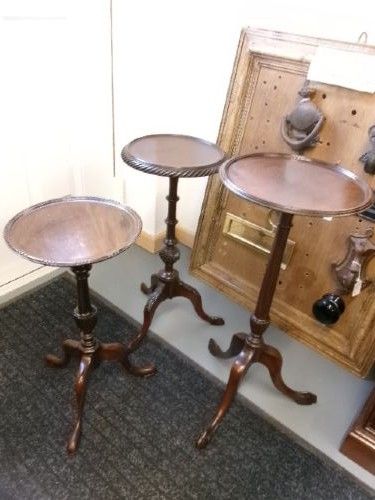
- A small table supported by three legs radiating from a central pillar. This base style provides stability on uneven older floors.
Georgian Tier Side Table: Frequently Asked Questions
What is a georgian tier side table used for?
These tables function as versatile multi-level surfaces for holding lamps, books or serving items in reception rooms and bedrooms.
Historically, multi-tier formats like dumb waiters served dining rooms by holding extra courses and tableware.
How do I identify a Georgian tier table?
Look for period timber characteristics such as solid mahogany construction, hand-turned pedestals and traditional joinery methods.
Details like brass drop handles, boxwood inlay and graduated shelf proportions also point toward eighteenth and early nineteenth-century origins.
Where should I place a multi-tier table?
Compact multi-tier tables fit well beside armchairs, sofas or beds where vertical space matters more than floor area.
Larger tripod dumb waiters suit corners of dining rooms or living spaces as standalone display points.
What is the difference between a whatnot and a dumb waiter?
Whatnots generally feature stacked rectangular shelves intended for displaying books or decorative objects in living areas.
Dumb waiters traditionally use circular revolving or fixed trays supported by a central tripod pillar for serving food and drink.