



Georgian Tiered Dessert Stand
A georgian tiered dessert stand is a practical serving piece that brings tiered height and rich timber grain to a dining room.
Georgian Tiered Dessert Stand
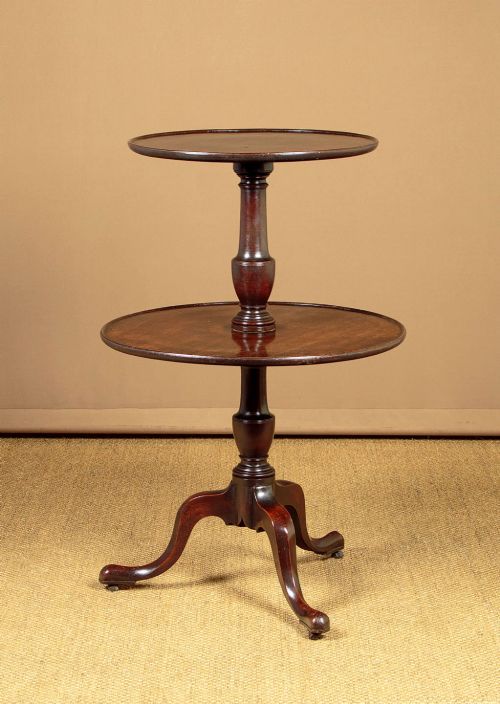
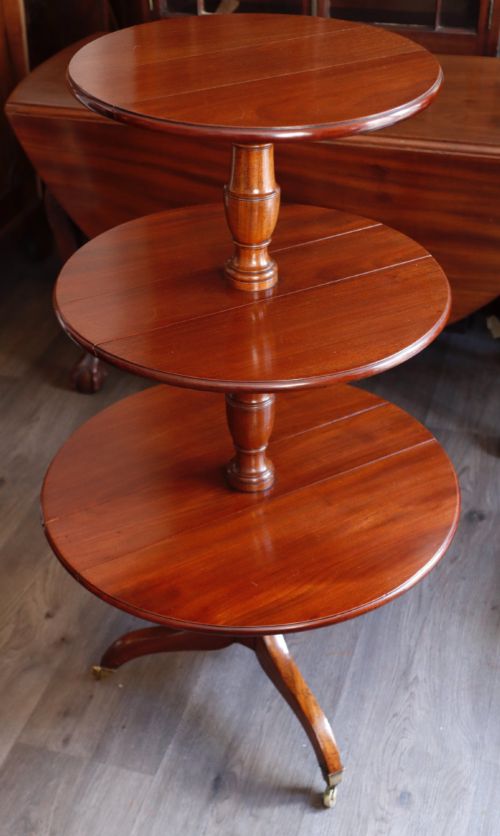
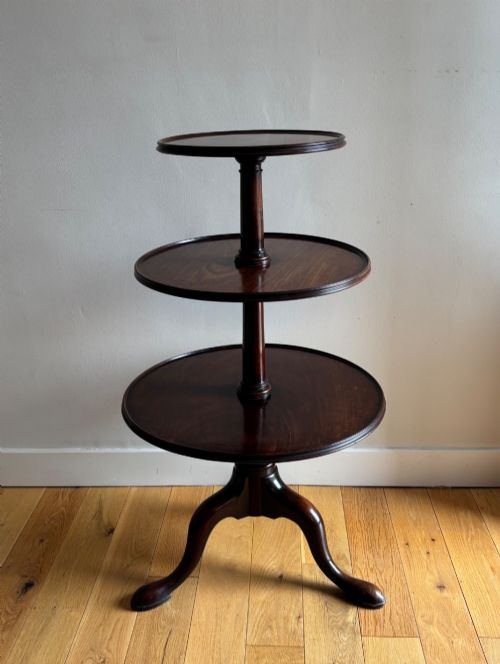
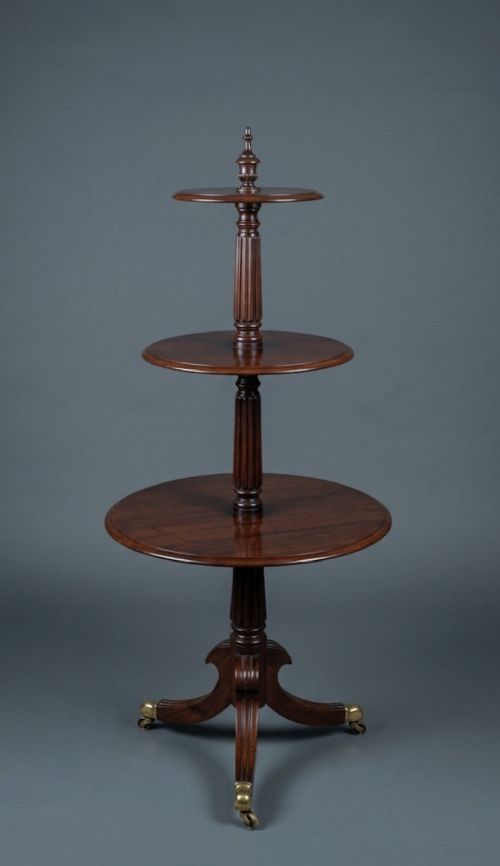
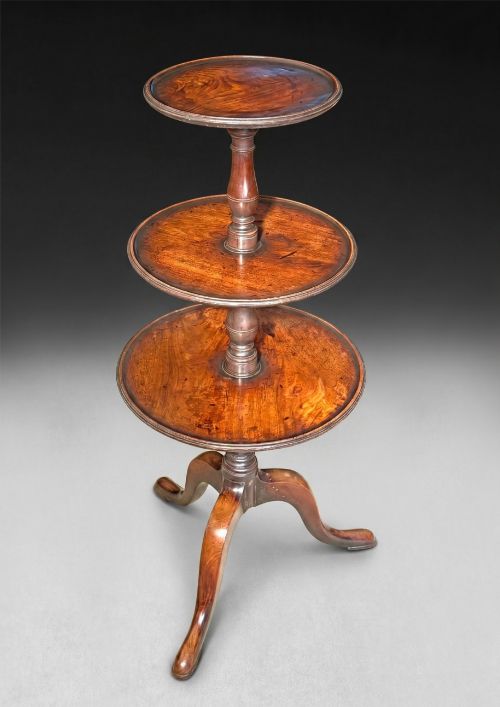
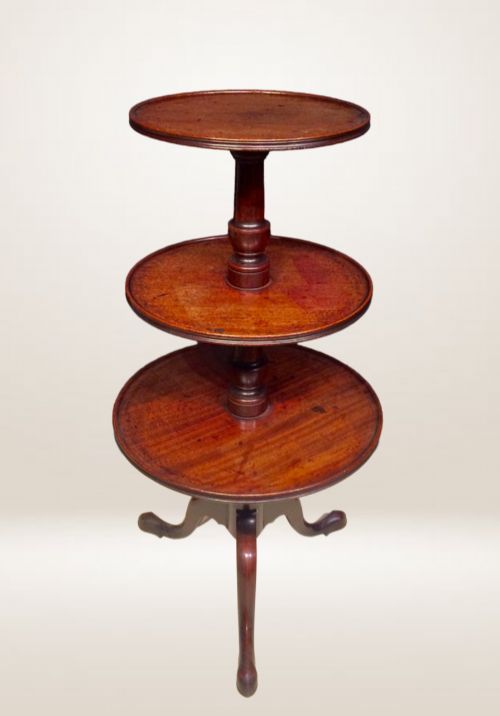
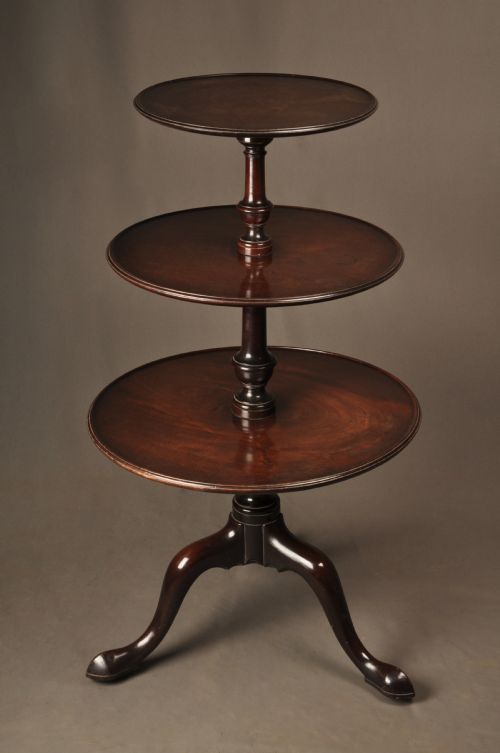
A georgian tiered dessert stand primarily takes the form of a dumb waiter, alongside related occasional tables and sweetmeat stands designed for service. The version you are most likely to meet on this page is a mahogany three-tier dumb waiter from the 18th Century or George III period, often featuring circular graduating trays.
These pieces served a distinct purpose in period dining, allowing courses and desserts to be reached without servants present in the room. They appear in styles ranging from George II and George III to Regency and William IV, with occasional examples from the 19th Century and later periods.
Beyond the standard mahogany timber, listings show variations including walnut with marquetry inlay and soft-paste porcelain shell sweetmeat stands. Forms span two tiers, three tiers, folding mechanisms, and galleried edges to keep dishes secure during use.
Materials and construction
Makers utilised solid timbers such as mahogany and walnut, frequently shaping them into circular graduated tiers supported by central turned pillars and tripod legs. Cabinetmakers applied marquetry inlay and brass elements to enrich the surfaces of these serving stands.
Folding mechanisms and revolving tiers required precise joinery so that multi-tiered stands operated smoothly during a meal. Soft-paste porcelain appeared in specialised sweetmeat stands, shaped into shell motifs decorated with enamel and gilt.
Some folding stands let you collapse the tiers flat against the central pillar when dessert service ends.
Quality and execution
The distinction between average and exceptional pieces rests in the timber selection and the crispness of the turning on the central column. Richness of grain in the mahogany and the complexity of marquetry inlay separate standard tables from finer workshops.
Stability and the smooth operation of revolving or folding tiers demonstrate the original joiner's skill. The elegance of the tripod base and the proportion between the graduating tiers dictate the overall visual balance.
Gillows
The Georgian Tiered Dessert Stand Glossary
- Dumb waiter
- A freestanding tiered table used for holding food and dishes without the aid of servants. These typically feature two or three circular trays graduating in size from top to bottom.
- Sweetmeat stand
- A small decorative stand designed to hold sweet confections, fruits, or preserves. Examples on this page include first period Worcester porcelain shaped as shells.
- Marquetry inlay
- Decorative patterns formed by fitting contrasting pieces of wood veneer into a prepared surface. This technique appears on walnut pieces to create intricate geometric or floral designs.
- Galleried edge
- A raised rim around the perimeter of a serving tray to prevent plates and glasses from sliding off. These are sometimes pierced or fret-cut from solid timber.
Georgian Tiered Dessert Stand: Frequently Asked Questions
What is a georgian tiered dessert stand?
A georgian tiered dessert stand is a piece of dining furniture, most commonly a dumb waiter or sweetmeat stand, designed to hold courses and desserts.
These pieces feature multiple graduating tiers supported by a central column and tripod legs, allowing diners to serve themselves.
How were dumb waiters used?
Dumb waiters were placed beside the dining table to hold extra dishes, wine bottles, and dessert courses during formal meals.
They allowed guests to help themselves without servants hovering, which encouraged more private conversation at the table.
How do I spot a George III stand?
George III stands typically employ solid mahogany with turned central pillars and tripod supports terminating in pad or spade feet.
They date from the late 18th century and often feature two or three circular graduating tiers, sometimes with folding mechanisms.
Are all these stands made of mahogany?
While mahogany is the primary timber seen across the majority of listings, other materials do appear.
Examples include walnut with marquetry inlay and soft-paste porcelain shell sweetmeat stands decorated with enamel and gilt.