



Vintage Wooden Dumbwaiter
These vintage wooden dumbwaiter pieces bring multi-tiered serving and display function to dining spaces, combining practical tiers with classical cabinet timbers.
Vintage Wooden Dumbwaiter
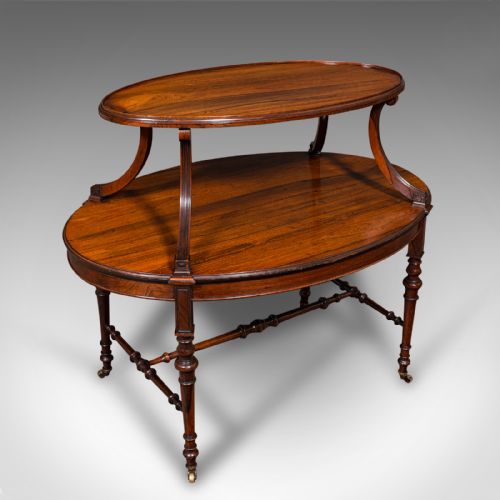
A vintage wooden dumbwaiter encompasses tiered serving stands, buffets, and revolving table top lazy susans designed for dining and display. The selection here spans Georgian, Regency, Victorian, William IV, and Edwardian eras, reaching into the early twentieth century.
Buyers will encounter multi-tiered serving pieces alongside folding cake stands and revolving tabletop accessories. Mahogany forms the predominant material, accompanied by oak, walnut, rosewood, satinwood, and padauk wood.
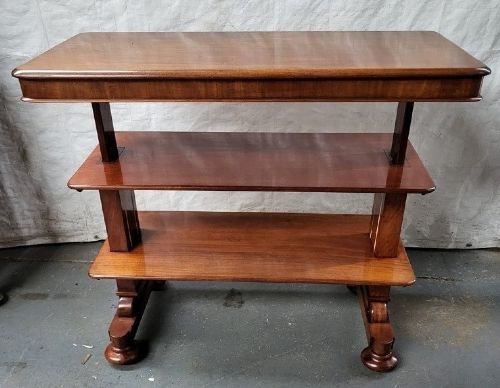
Forms range from large three-tier buffets down to compact table top round stands and serving tables. These items reflect the functional dining accessory requirements of the eighteenth, nineteenth, and early twentieth centuries.
How they were made
Cabinet makers utilised dense hardwoods including mahogany, oak, walnut, and padauk wood to construct stable multi-tiered frames and folding mechanisms. Timber selection focused on durability and rich grain patterns suitable for formal dining rooms.
Construction methods involved classical joinery and turning, seen in tiered columns, folding scissor actions, and carved ornamentation. Burmese carved padauk wood examples demonstrate intricate hand-carved detailing across multiple tiers.
Metal fittings such as brass fixtures and hinges support the movement of revolving lazy susans and folding cake stands. These brass elements integrate into the wooden structures to provide functional articulation.
A Burmese carved padauk wood buffet brings three tiers of intricate carving to the dining room.
What varies in quality
Quality separates through the selection and figure of the timber, such as rich mahogany or figured walnut, alongside the crispness of classical carving. Substantial three-tier buffets with architectural proportions represent a higher tier of craftsmanship than simpler folding stands.
The precision of moving parts, including the rotation of a lazy susans or the alignment of folding cake stand hinges, indicates the original maker's skill. Robust structural joinery across multiple tiers ensures longevity and stable daily use.
The Vintage Wooden Dumbwaiter Glossary
- Dumb Waiter
- A multi-tiered serving stand used for holding dishes and silverware near a dining table without servant assistance. These pieces typically feature two or three circular tiers supported on a central column or tripod base.
- Buffet
- A serving table or sideboard utilised for displaying food and tableware during formal meals. In these listings, buffets often incorporate multiple tiers for expanded surface area.
- Lazy Susan
- A revolving tabletop tray or round stand designed to pass condiments and dishes easily across diners. Eighteenth and nineteenth-century examples are usually turned from solid mahogany.
- Cake Stand
- A tiered folding or stationary stand intended for presenting baked goods and afternoon tea. Edwardian and nineteenth-century versions often utilise a clever folding mechanism for compact storage.
Vintage Wooden Dumbwaiter: Frequently Asked Questions
What is a wooden dumbwaiter?
A wooden dumbwaiter is a multi-tiered piece of dining furniture designed to hold plates, glasses, and serving dishes. They provide accessible surface space near the dining table.
Historically, these stands allowed diners to serve themselves without domestic staff present in the room during meals.
How were dumbwaiters used?
These stands functioned as portable serving stations during formal meals and tea gatherings. Tiers held courses, condiments, and tableware within reach of the host.
Smaller revolving versions sat directly on dining tables to rotate shared dishes among guests.
What woods were used?
Cabinet makers predominantly utilised mahogany for its strength, rich colour, and fine grain. Other pieces feature oak, walnut, rosewood, satinwood, and carved padauk wood.
Brass hardware frequently appears as supporting mounts, pivots, and folding hinges across the various forms.
How do I date a piece?
Stylistic markers help identify the period, ranging from Georgian and Regency classical lines to Victorian and Edwardian proportions. Wood choice, turning styles, and construction methods offer further chronological clues.
Earlier eighteenth and nineteenth-century examples often display heavy solid timber turnings, while later pieces introduce folding mechanisms.