



Antique Cake Tier Stand
An antique cake tier stand brings vertical symmetry and practical tiers into a room, serving as an elegant stage for afternoon tea or small displays.
Antique Cake Tier Stand
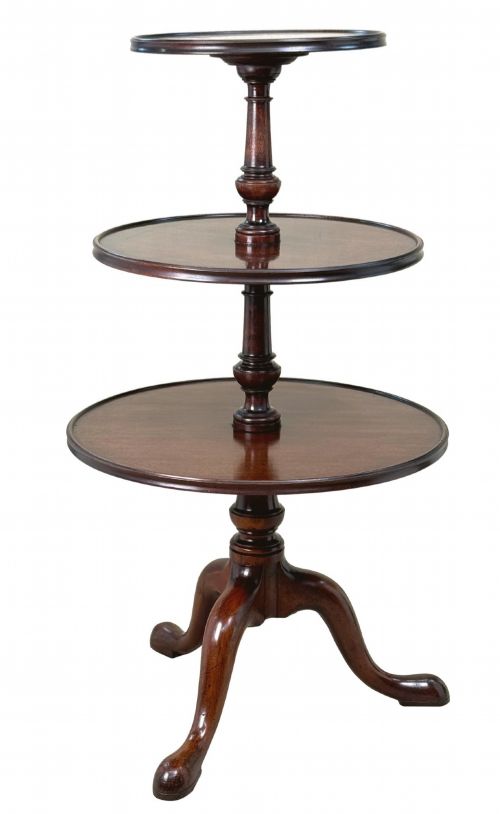
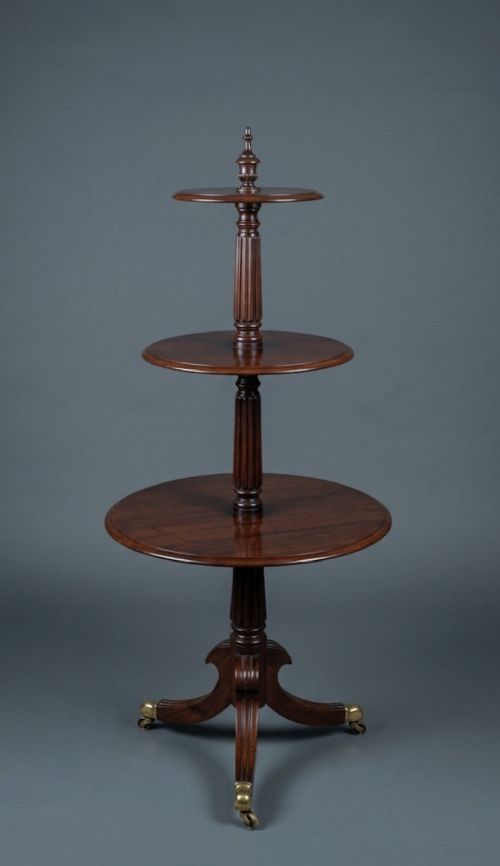
When you search for an antique cake tier stand, you encounter a variety of multi-level serving pieces designed for social gatherings and tea service. The selection spans from formal Georgian and Regency dumb waiters to practical Edwardian folding stands intended for easy storage between uses.
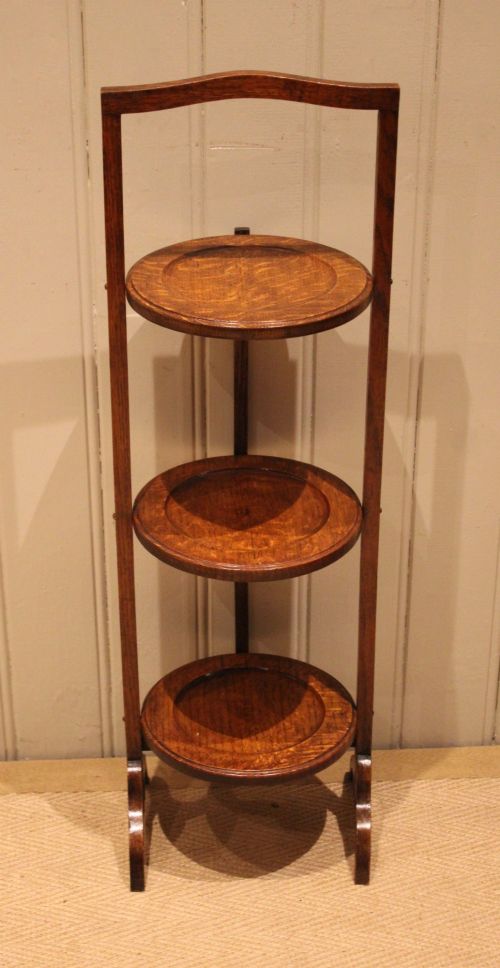
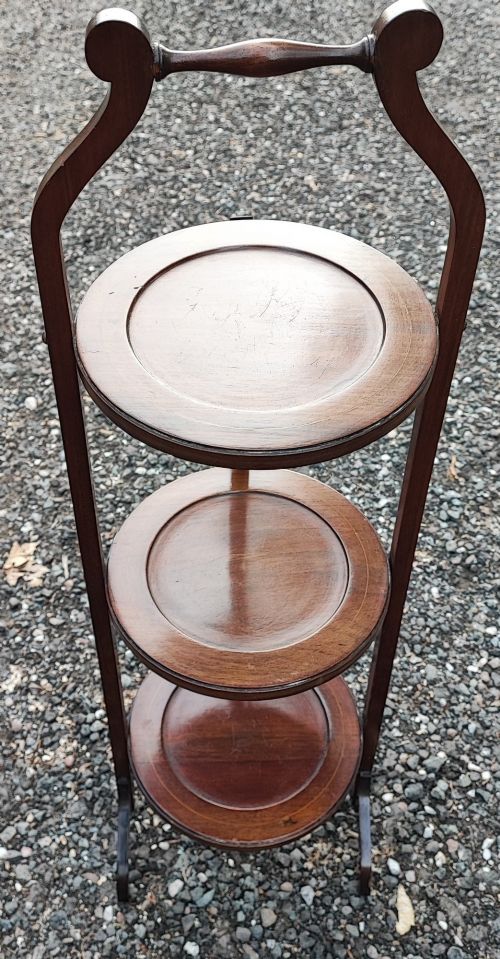
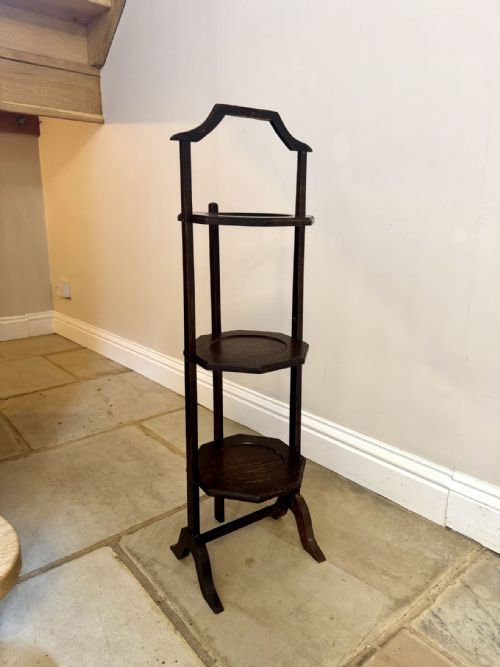
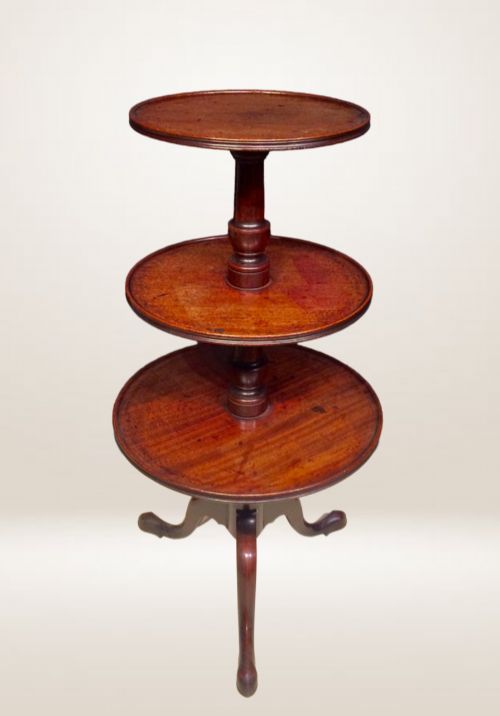
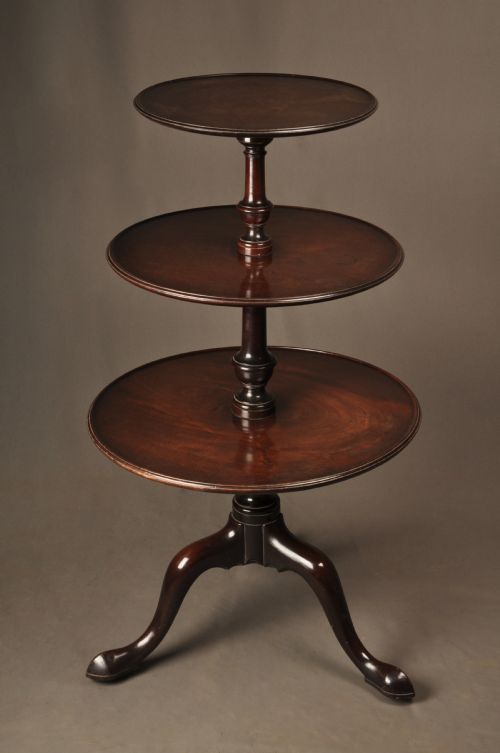
Most pieces met on this page belong to the Edwardian period, often constructed with three tiers and folding frames made for domestic utility. Alongside these, earlier styles present heavier mahogany construction with rotating tiers, designed for dining rooms rather than portable tea service.
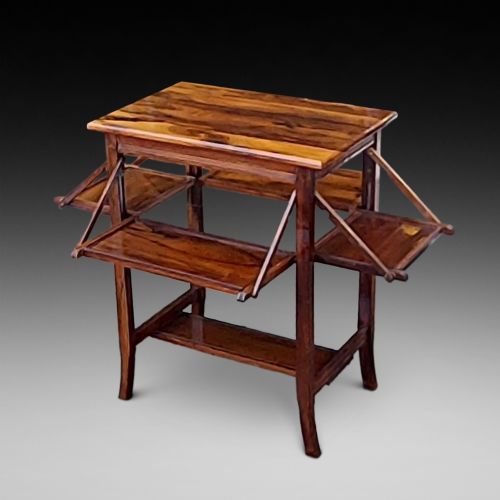
The form crosses over into related object types such as occasional tables, plant stands, and what-nots, reflecting how multi-tiered furniture served multiple domestic purposes. Oak and mahogany dominate the forms, frequently joined by brass fittings or subtle inlay work characteristic of the Sheraton Revival.
Materials and Construction
Makers relied heavily on dense hardwoods, utilising mahogany, oak, and occasionally rosewood or walnut to build stable multi-tiered frames. Timber selection dictated the structural integrity needed to support graduated shelves without losing balance.
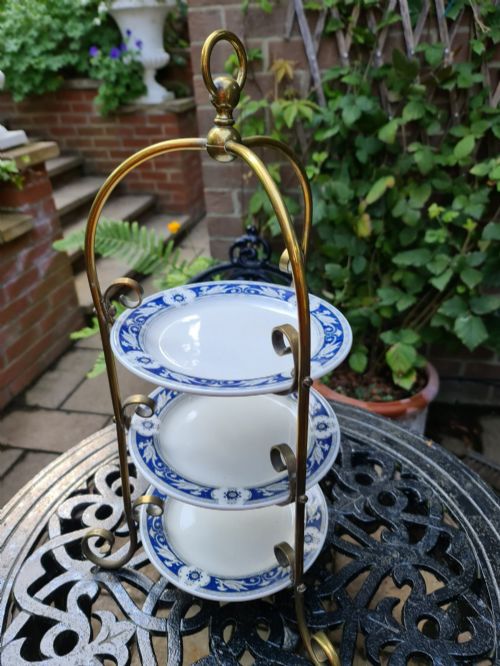
Inlaid details such as satinwood added decorative contrast to table edges and central shafts, following popular Revival styles of the late nineteenth and early twentieth centuries. Metal components, including brass hinges on folding models and cast silver plate on specialised serving tiers, provided necessary mechanical function and surface polish.
Listings feature mahogany, oak, rosewood, and sterling silver across multiple periods from the eighteenth century to the Edwardian era.
Evaluating Quality and Craftsmanship
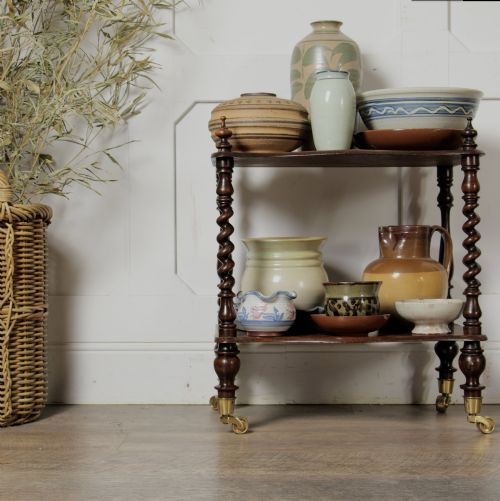
Quality rests upon the stability of the tiered joints and the precision of the turning on pedestals and barley twist columns. Superior examples maintain a level posture across every shelf, avoiding the wobble common in heavily used domestic furniture.
The fineness of inlaid timber and the integrity of folding mechanisms distinguish utilitarian pieces from workshop productions intended for formal drawing rooms. Well-executed brass work and crisp mouldings indicate a higher standard of original manufacture.
Atkin Brothers·MAXFIELD & SONS·Edwin Blyde·Walker & Hall
The Antique Cake Tier Stand Glossary
- Dumb waiter
- A multi-tiered freestanding piece of furniture used for serving food or holding plates without requiring a servant present. These typically feature graduated circular trays on a central column.
- Etagere
- A set of open shelves for displaying small objects, sharing a similar tiered vertical profile with serving stands. The form provides multiple display surfaces within a compact footprint.
- Barley twist
- A type of turned wooden column resembling a twisted rope, commonly found on Victorian and Edwardian supports. This decorative woodworking technique adds texture to vertical members.
- Satinwood inlay
- Contrasting light-coloured wood inserted into darker timber surfaces to create decorative borders or motifs. It is frequently seen on Sheraton Revival pieces.
- Reticulated
- Pierced or openwork metal decoration found on silver plated tiers, creating patterned borders along the edge of plates.
Antique Cake Tier Stand: Frequently Asked Questions
What is an antique cake tier stand used for today?
These tiered stands function well as display surfaces for plants, books, or decorative objects in modern living spaces.
They also retain their original utility for serving afternoon tea or holding small collections.
How do I identify an Edwardian folding cake stand?
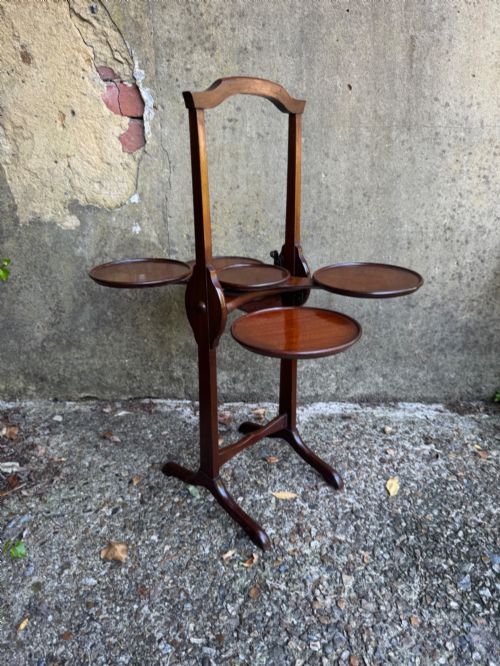
Edwardian examples typically use lightweight oak or mahogany with hinged mechanisms that allow the tiers to fold flat.
Many incorporate three graduated round shelves connected by pivoted wooden arms.
What is the difference between a dumb waiter and a cake stand?
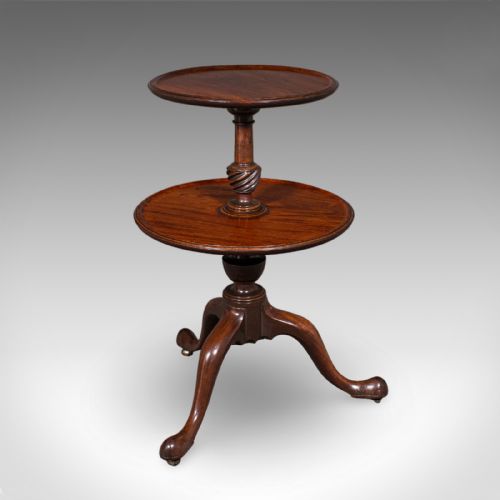
Dumb waiters originate from the Georgian and Regency periods, featuring sturdy pillar-and-tripod construction designed for heavy dining room use.
Cake stands are generally lighter Edwardian creations intended for portable tea service and occasional domestic use.
Are silver plated cake stands difficult to maintain?
Silver plated stands require periodic polishing to prevent tarnish and maintain their reflective finish on the metal plates.
Gentle cleaning protects the underlying base metal and any decorative pierced borders.
How can I tell the period of a tiered stand?
Heavy mahogany pedestals with turned columns usually point toward Georgian or Regency dining room furniture.
Lighter folding frames with satinwood inlay or barley twist supports typically indicate Edwardian or late Victorian manufacture.