


Georgian Tea Kettle Stand
A georgian tea kettle stand is a small, purposeful table designed to hold a hot water vessel safely during tea service.
Georgian Tea Kettle Stand
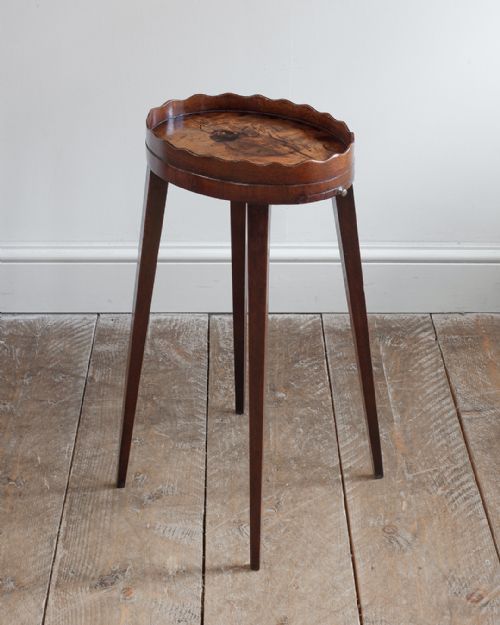
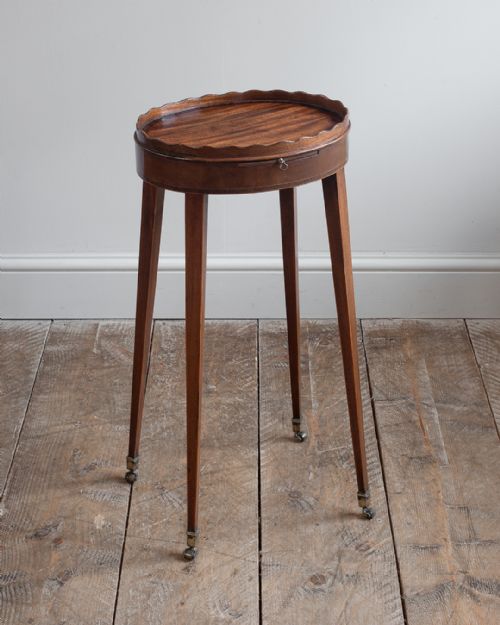
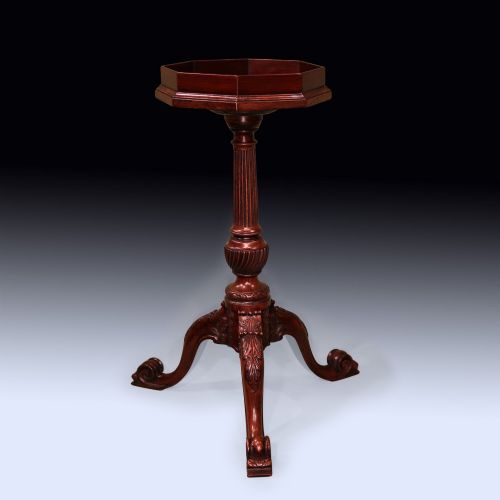
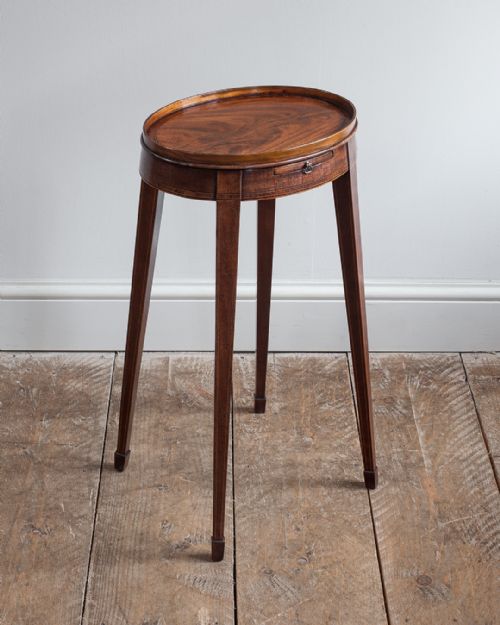
A georgian tea kettle stand brings elegance and utility together, appearing primarily in eighteenth-century and nineteenth-century forms designed for the parlour. The pieces seen here include square, oval, octagonal and tripod tables, alongside occasional side tables and wine tables used for the same purpose.
Makers of the period worked in styles ranging from George II and George III to Sheraton, Chippendale, Chinese Chippendale and Regency. Mahogany dominates the selection, accompanied by satinwood, yew wood, brass, inlay and silver plate.
Materials and Technique
Cabinetmakers utilised dense hardwoods such as mahogany and satinwood, often shaping the timber into delicate tripod bases or raised gallery tops to keep the heavy kettle secure. Inlay work and hand carving defined the finer examples, showing the decorative ambitions of Georgian and Regency workshops.
Metal vessels and stands combined copper and silver plating, particularly in Old Sheffield Plate pieces from the early nineteenth century. Wood surfaces received polished finishes that highlighted the natural grain and colour of the timber.
The listings show mahogany as the primary timber, complemented by satinwood, yew wood, brass and silver plate across eighteenth-century and nineteenth-century periods.
Judging Quality
Quality rests in the crispness of the carved details, the stability of the tripod or four-legged base, and the choice of timber figure. Plain secondary woods beneath sophisticated mahogany surfaces separate utilitarian items from grander parlour examples.
Proportion dictates the success of these small tables, where slender columns and balanced tops demonstrate the maker's skill. The integration of satinwood banding or painted decoration shifts a simple utilitarian frame into a piece of high decorative art.
The Georgian Tea Kettle Stand Glossary
- Tripod base
- A three-legged support structure commonly found on small occasional tables and kettle stands for stability on uneven floors.
- Gallery top
- A raised rim surrounding the edge of a table top designed to prevent items from sliding off.
- Old Sheffield Plate
- A composite material formed by fusing a thin layer of silver to a thicker copper base, popular in the late eighteenth and early nineteenth centuries.
- Satinwood
- A lustrous, fine-grained yellow timber utilised for decorative veneer and inlay work during the Sheraton and Regency periods.
- Wine table
- A small occasional table used during or after dining, often sharing forms with kettle stands and urn stands.
Georgian Tea Kettle Stand: Frequently Asked Questions
What was a kettle stand used for?
These small tables held heavy silver or metal kettles filled with boiling water during formal tea service. Placing the hot vessel on a dedicated stand protected fragile wooden furniture from heat damage.
They stood beside the tea table where the hostess prepared the brew for guests. Their compact size allowed servants to move them easily about the room.
How do I date a kettle stand?
Dating relies on identifying the prevailing style, such as George II, Chippendale or Sheraton, combined with timber choices like early mahogany or later satinwood. The construction methods of the underframe and joints offer further clues to the decade of manufacture.
Cabinetmakers adapted their designs across the eighteenth and nineteenth centuries, shifting from heavy carved mahogany to lighter inlaid satinwood and painted surfaces.
Are kettle stands the same as urn stands?
Kettle stands and urn stands served closely related functions in the Georgian parlour, holding heated water vessels for tea and coffee service. While terms often overlap in historic listings, urn stands sometimes feature pull-out slides for cups.
Both forms share compact proportions, raised edges, and slender legs designed to occupy minimal floor space near the tea table.
Can I use a kettle stand today?
These small tables function well as bedside stands, plant supports or lamp tables in modern rooms. Their sturdy tripod or pillar bases make them practical for everyday placement beside seating.
Care should be taken to protect antique wood surfaces from moisture and direct heat if used for plants or modern beverages.