

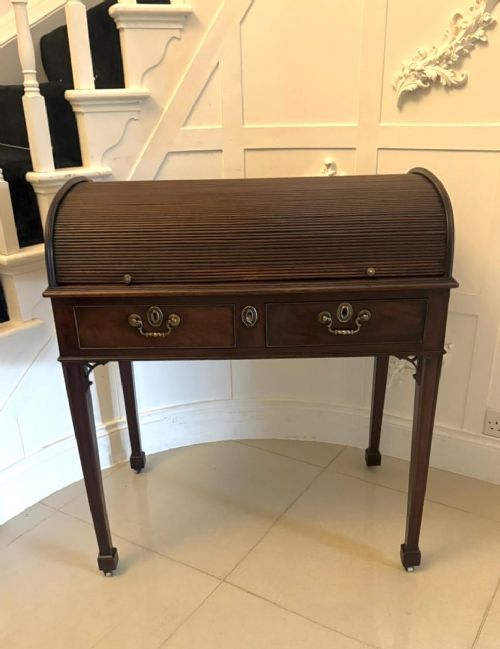
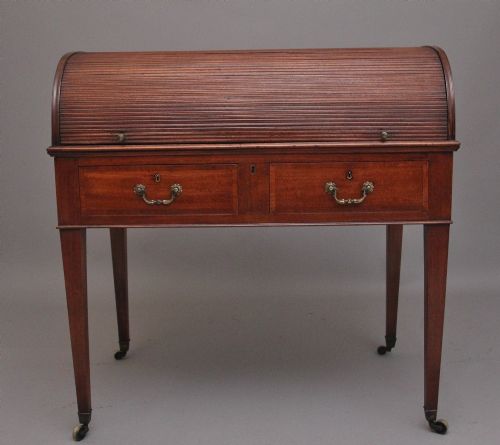
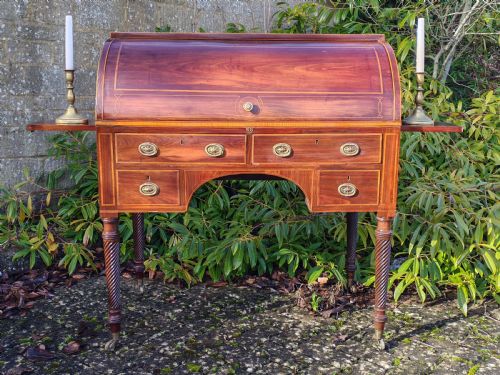


Georgian Tambour Writing Table
A georgian tambour writing table offers ingenious concealed storage alongside a pull-out writing surface, combining elegance with practical engineering.
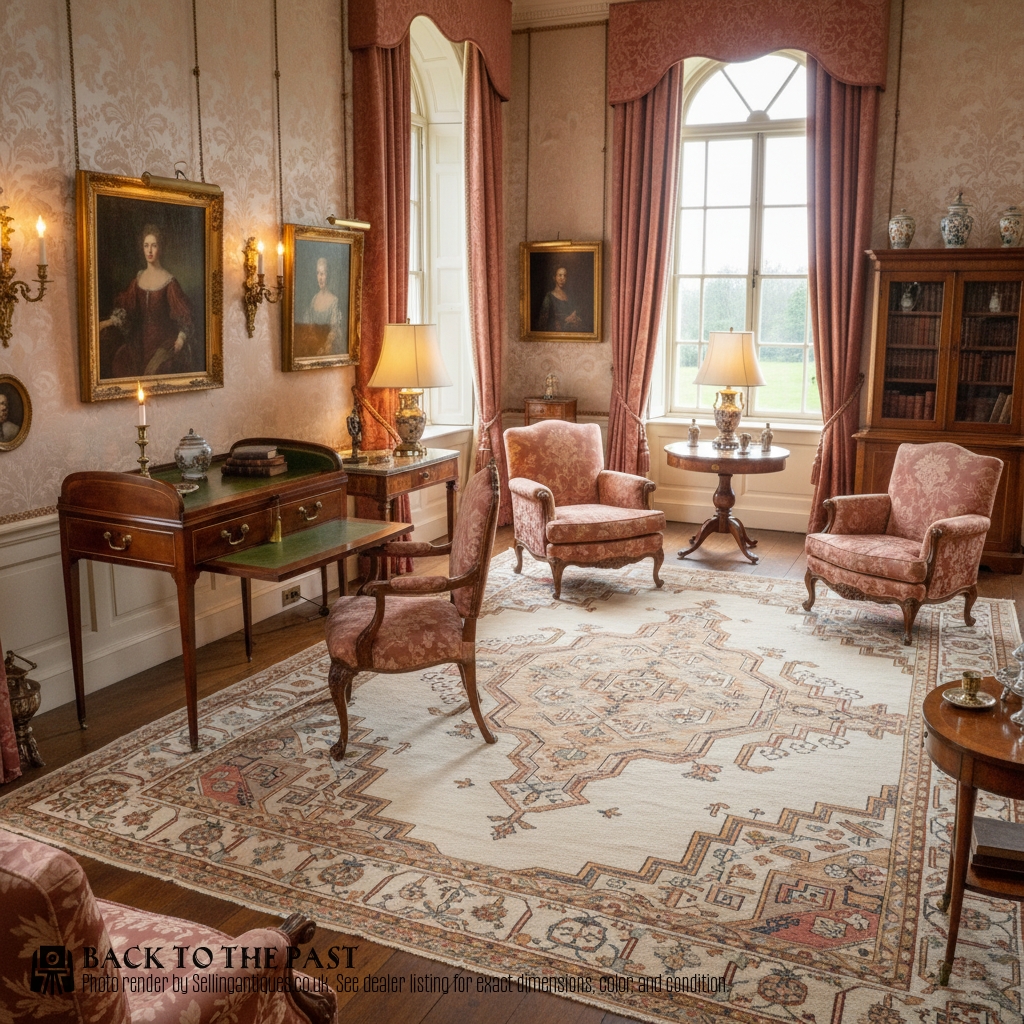
Georgian Tambour Writing Table
A georgian tambour writing table is a sophisticated piece of furniture designed for correspondence and private paperwork. These desks merge the functional requirements of a writing surface with enclosed compartments hidden behind slatted shutters.
Most examples encountered on this page originate from the Georgian, George III, and Regency periods, spanning the late 18th and early 19th centuries. They frequently manifest as mahogany desks or refined satinwood writing cabinets.
The defining mechanism is the tambour shutter, a flexible curtain made of narrow vertical strips of wood glued to canvas or leather backing. This slides smoothly around a curve to reveal pigeonholes and small drawers within the superstructure.
Materials and construction methods
Cabinetmakers constructed the primary carcase of a georgian tambour writing table using dense timbers such as mahogany and exotic woods like partridgewood or yew. These sturdy foundations ensured the stability necessary for intricate sliding mechanisms.
Surfaces were frequently embellished with contrasting stringing and satinwood inlay, utilising boxwood and other pale veneers to create geometric or neoclassical motifs. Pull-out writing slides often incorporated fitted leather writing surfaces.
The tambour mechanism itself demanded precise woodworking, as each individual slat required careful shaping to glide effortlessly within recessed wooden tracks without binding or sagging.
Georgian Tambour Writing Table Retail Price Guide 2026
Typical asking prices for georgian tambour writing table among the pieces listed under this phrase on Sellingantiques today, from the lower quarter to the upper quarter. They describe what is for sale here now, not the wider market.
Some tambour desks hide secret compartments behind miniature pigeonhole drawers, rewarding curious owners with miniature hidden vaults.
Assessing quality and craftsmanship
Quality in a georgian tambour writing table is largely determined by the smoothness of the sliding mechanism and the precision of the timber joints. Superior workshops ensured the tambour ran silently and evenly across its track without lateral wobble.
The choice of secondary timbers and the crispness of any inlay work distinguish finer examples from standard production. Richly figured mahogany veneers and delicate satinwood crossbanding indicate a high standard of cabinetmaking.
Proportion and internal arrangement also play a vital role, where neatly dovetailed small drawers and well-organised stationery compartments demonstrate the maker's attention to detail.
The Georgian Tambour Writing Table Glossary
- Tambour
- A flexible shutter formed of narrow vertical wooden strips glued to a fabric backing. This ingenious device allows the cover to slide around a tight radius to conceal desk interiors.
- Satinwood
- A lustrous, yellowish timber native to Ceylon and the West Indies, highly prized for its fine grain and golden sheen. It was frequently used for veneers and inlay in late Georgian furniture.
- Bonheur du jour
- A small, light lady's writing desk featuring a raised cabinet or tiered shelving on the upper surface. These pieces often incorporate tambour doors or small drawers.
- Stringing
- A narrow strip of contrasting wood inlaid into the surface of furniture to create delicate borders and linear decoration. It is commonly found on Sheraton and Hepplewhite pieces.
- Cylinder desk
- A writing desk featuring a rolling semi-cylindrical wooden shutter that encloses the writing area and internal compartments. Unlike tambour shutters, these operate as a single solid curved panel.
Georgian Tambour Writing Table: Frequently Asked Questions
What is a tambour desk?
A tambour desk is a form of writing furniture featuring a flexible wooden shutter that slides open to reveal pigeonholes and small drawers. This mechanism keeps correspondence secure while maintaining a compact profile.
These pieces were particularly popular during the late eighteenth and early nineteenth centuries, produced in various woods including mahogany and satinwood.
How do tambour shutters work?
Tambour shutters consist of numerous thin strips of wood glued side by side onto a canvas or leather backing. This flexible membrane runs within curved grooves cut into the sides of the desk carcase.
When pushed, the shutter follows the track smoothly around a corner to hide inside the body of the desk.
What woods were used for these desks?
Cabinetmakers primarily relied on mahogany as the structural and visible timber for these writing tables. Richly grained examples also incorporate satinwood, partridgewood, and yew.
Inlay work frequently featured boxwood and ebony to create sharp linear contrasts and neoclassical patterns.
How can I date a Georgian writing table?
Dating relies on observing stylistic markers, construction techniques, and timber choices typical of specific periods. Pieces associated with the George III and Regency eras often display characteristic inlay motifs and leg forms.
Examining internal drawer construction and secondary woods provides further clues regarding the manufacturing era.
Where were tambour desks placed?
These versatile desks were designed for principal reception rooms, libraries, or private dressing rooms. Their enclosed storage allowed owners to leave correspondence mid-task without cluttering the room.
Many smaller variants served as ladies' writing tables suitable for lighter daily duties.