


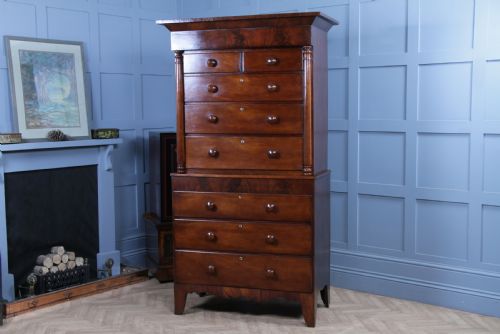
Georgian Tallboy Furniture
Georgian tallboy furniture comprises stacked drawer chests built for vertical storage in the eighteenth century and subsequent revival periods.
Georgian Tallboy Furniture
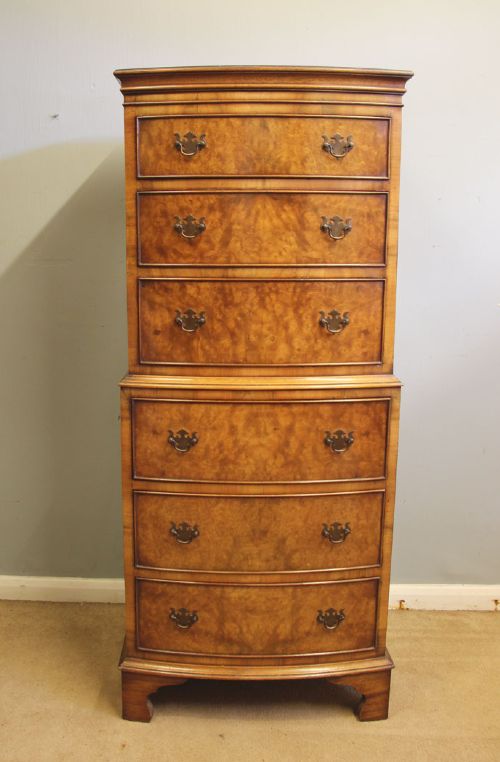
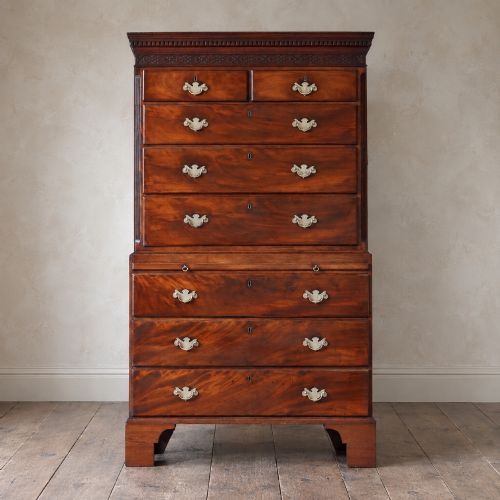
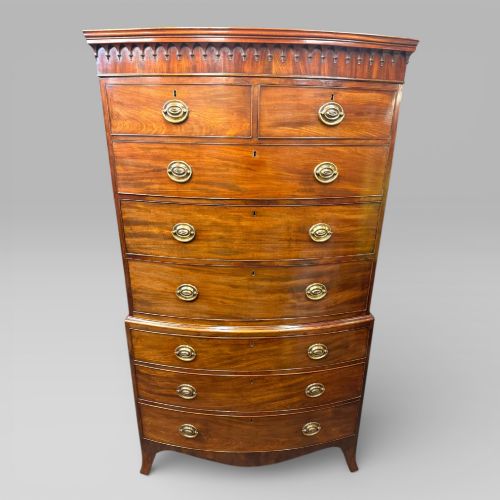
When you search for georgian tallboy furniture, you encounter pieces designed to maximise storage capacity through vertical stacking rather than a wider footprint. These tall forms typically combine a lower section of drawers with an upper chest, or present as a tall and narrow chest of drawers from the Georgian, Regency, and Queen Anne periods, alongside later revival interpretations.
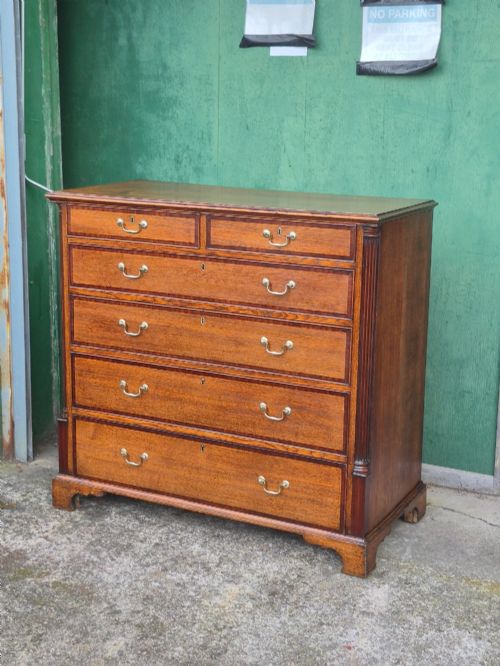
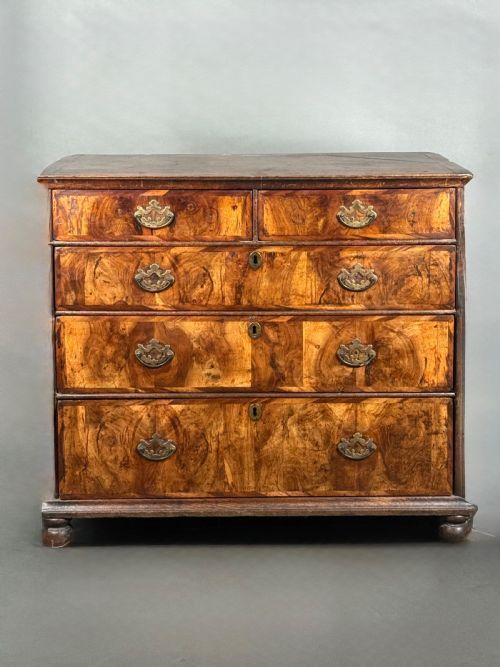
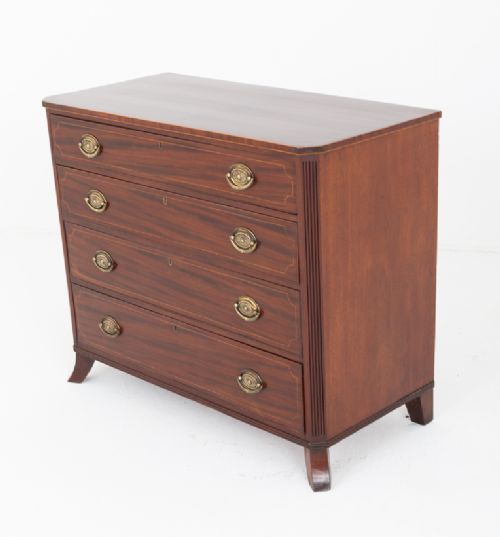
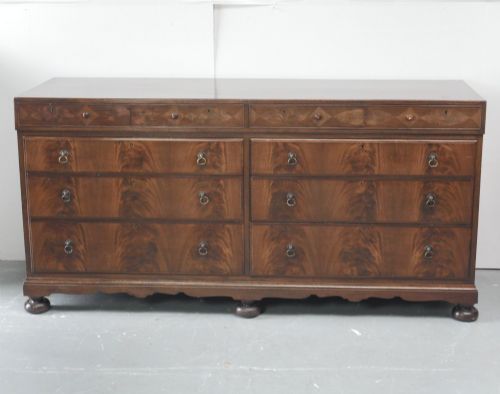
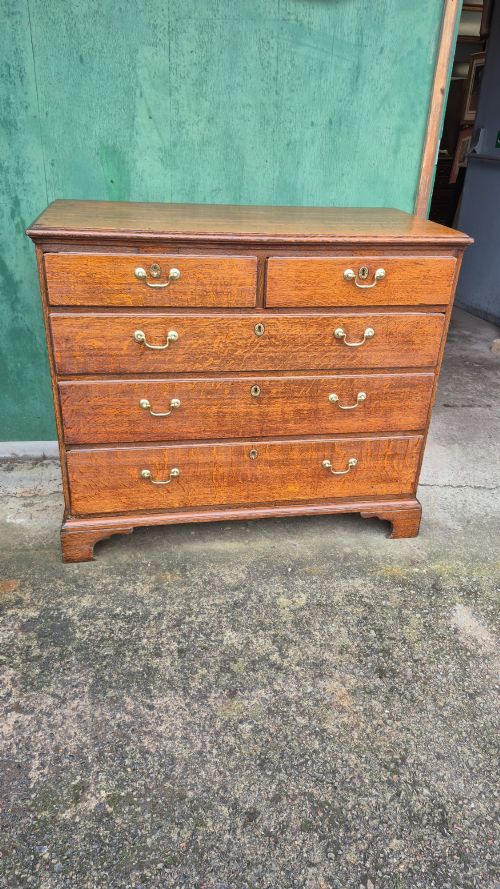
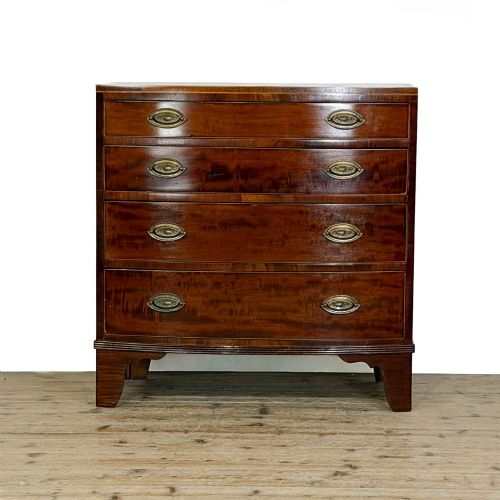
The inventory on this page contains chest on chest designs, chests on stands, and tall narrow chests of drawers. Alongside traditional mahogany and oak constructions, you will find figured walnut variants and pieces fitted with brushing slides or brass handles.
How they were made
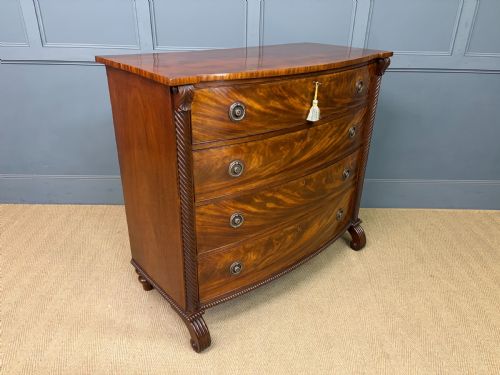
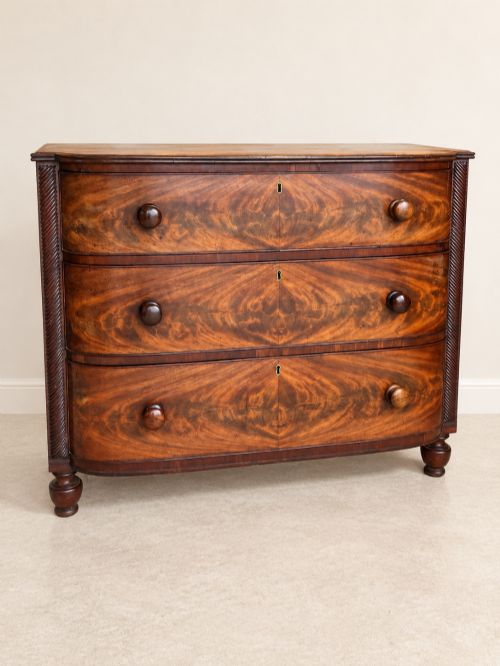
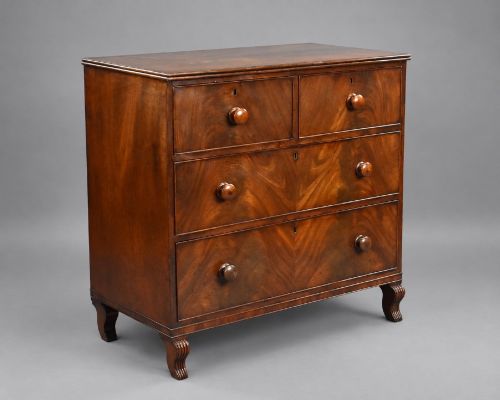
Cabinet makers built these pieces using solid timbers like oak and mahogany, alongside walnut and burr walnut veneers. Craftsmen applied flame mahogany veneer and crossbanding to enhance the visual grain of the wood on drawer fronts and top surfaces.
Hardware such as brass handles and escutcheons were cast and fitted to secure the drawers. Joinery relied on traditional methods to accommodate wood movement in large vertical carcases.
Some tallboys hide a pull-out brushing slide designed so gentlemen could dust their waistcoats before facing the morning.
What varies in quality
The grade of timber selection dictates the visual presence of a tallboy, with figured mahogany and burr walnut displaying richer grain patterns than plain oak or standard mahogany. The crispness of the crossbanding and the retention of original brass handles contribute to a piece's integrity.
Proportion and scale separate standard regional examples from finer metropolitan commissions. The execution of internal drawer construction and the survival of original surfaces define the standing of individual pieces.
Whytock and Reid
The Georgian Tallboy Furniture Glossary
- Tallboy
- A tall chest of drawers, often constructed as a chest on chest where one cabinet sits atop another to provide extensive vertical storage.
- Brushing slide
- A pull-out shelf integrated into the furniture frame, historically used as a writing surface or for brushing clothes.
- Crossbanding
- A decorative border of veneer laid perpendicular to the surrounding wood grain, frequently seen on drawer fronts and tabletops.
- Chest on stand
- A form where a drawer chest is raised on a separate table-like stand with legs, common in early periods.
- Figured mahogany
- Timber selected for its decorative grain patterns, including flame and curl figures that reflect light differently.
Georgian Tallboy Furniture: Frequently Asked Questions
What is georgian tallboy furniture?
Georgian tallboy furniture refers to stacked drawer chests designed for vertical storage during the eighteenth century and later revival eras. These pieces include chest on chest forms and tall narrow chests.
They provided substantial storage without occupying excessive floor space in domestic chambers. The category encompasses pieces built from oak, mahogany, and walnut.
How were tallboys used?
Tallboys served primarily as bedroom storage for clothing, linens, and personal items. The upper and lower sections allowed owners to separate different types of garments.
Integrated brushing slides provided a convenient pull-out surface for folding clothes or writing letters. This combination of storage and functional ledges made them versatile furniture items.
How do I live with a tallboy?
Living with a tallboy requires considering its height and depth within a room layout. Securing tall furniture to a wall prevents tipping and protects the historic carcase.
Maintenance involves regular dusting and occasional polishing to preserve timber surfaces. Placing the piece away from direct heat sources prevents veneer lifting and wood splitting.
How do I tell periods apart?
Early pieces from the Queen Anne and George I periods frequently utilise walnut with herringbone banding and distinct chest on stand configurations. Mid to late eighteenth-century examples lean towards figured mahogany with bracket feet and brass handles.
Later nineteenth-century Regency pieces and twentieth-century revivals adapt these proportions using flame mahogany veneer or oak. Examining the secondary timbers and construction methods clarifies the manufacturing era.