

Georgian Tall Clock
A georgian tall clock brings architectural presence and mechanical mastery into a room, measured out in steady, rhythmic ticks.
Georgian Tall Clock
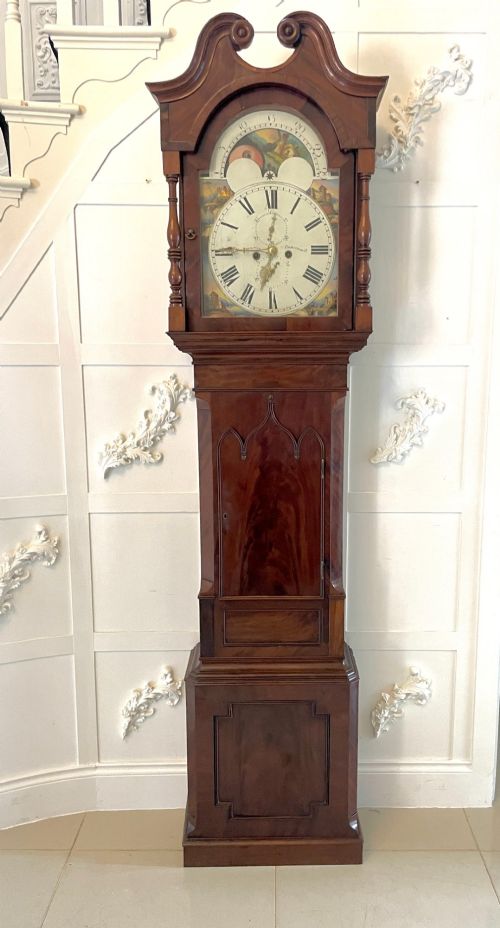
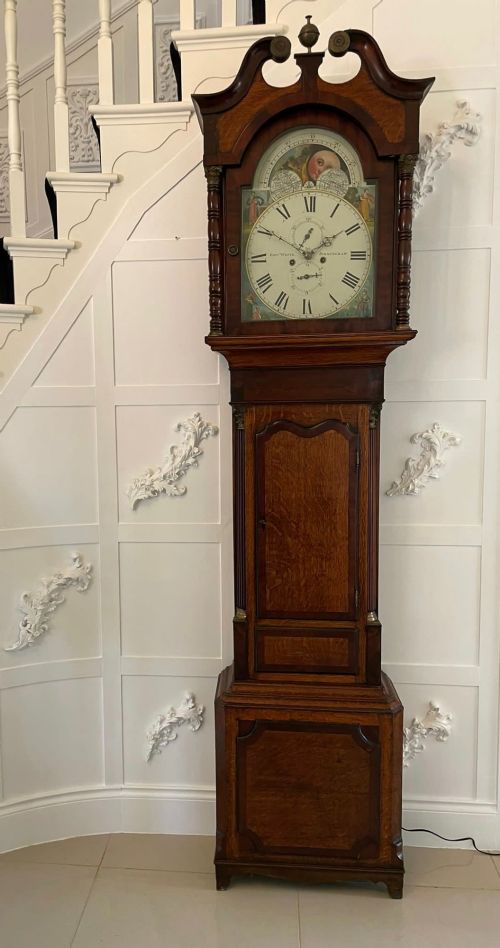
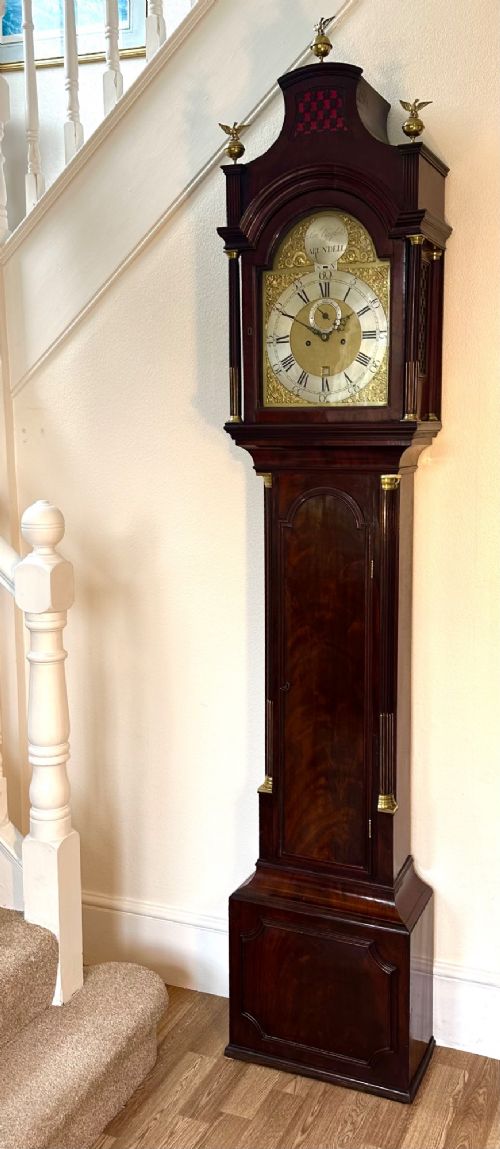
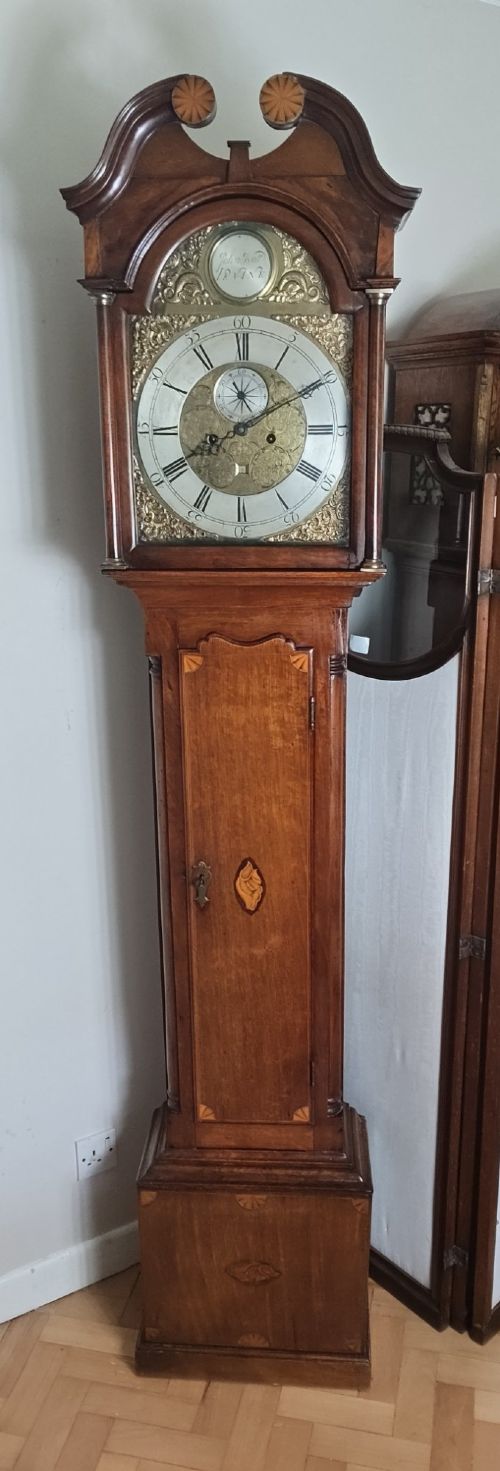
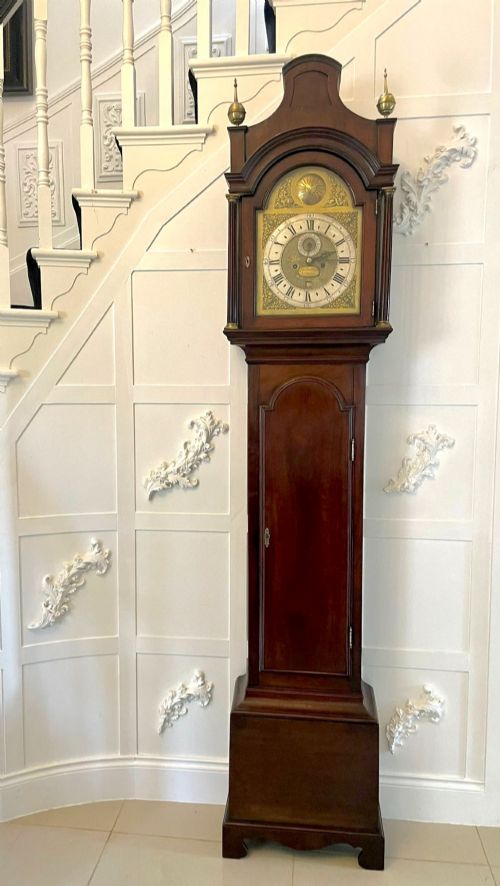
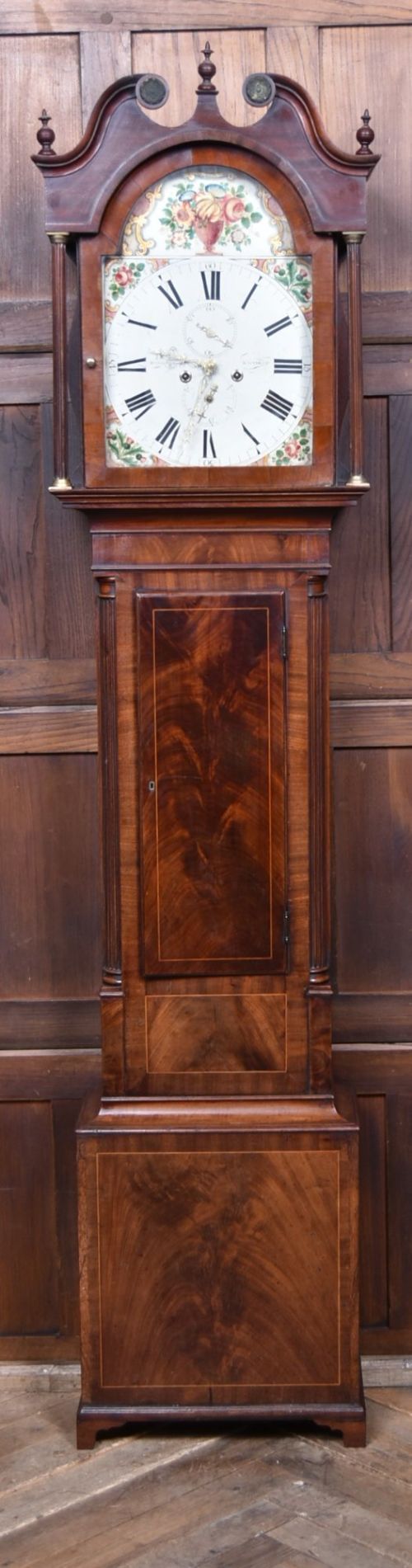
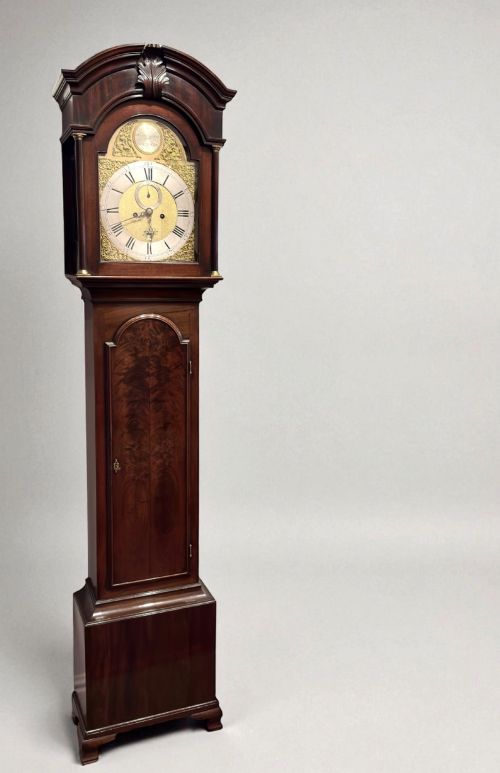
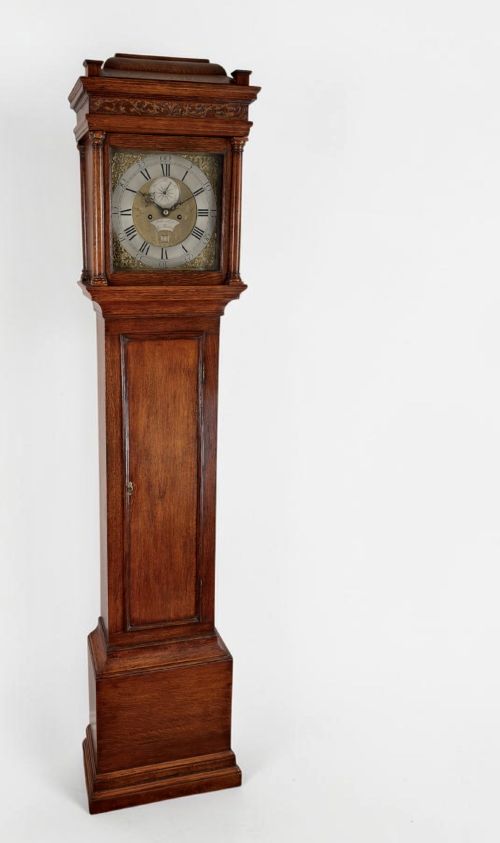
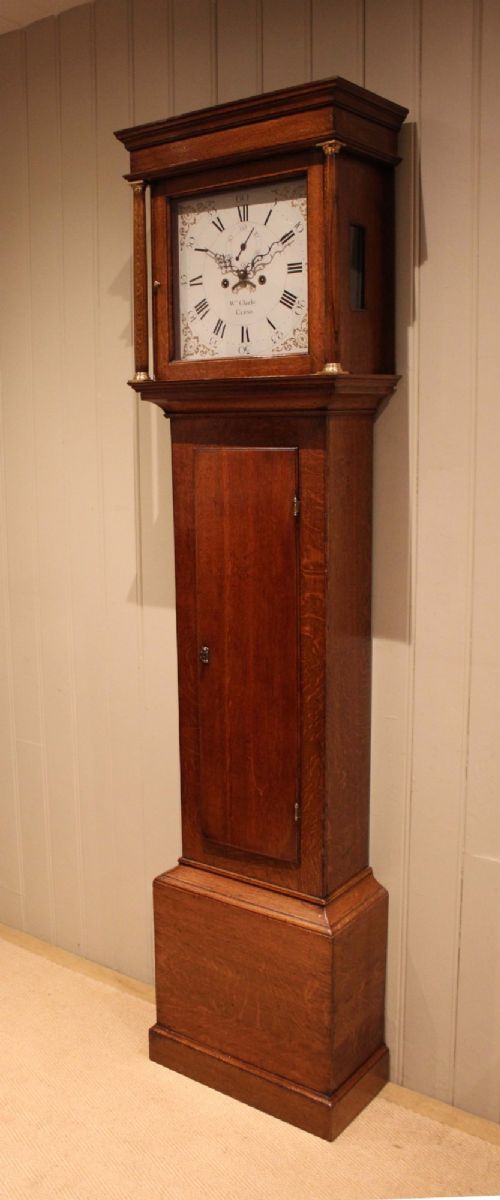
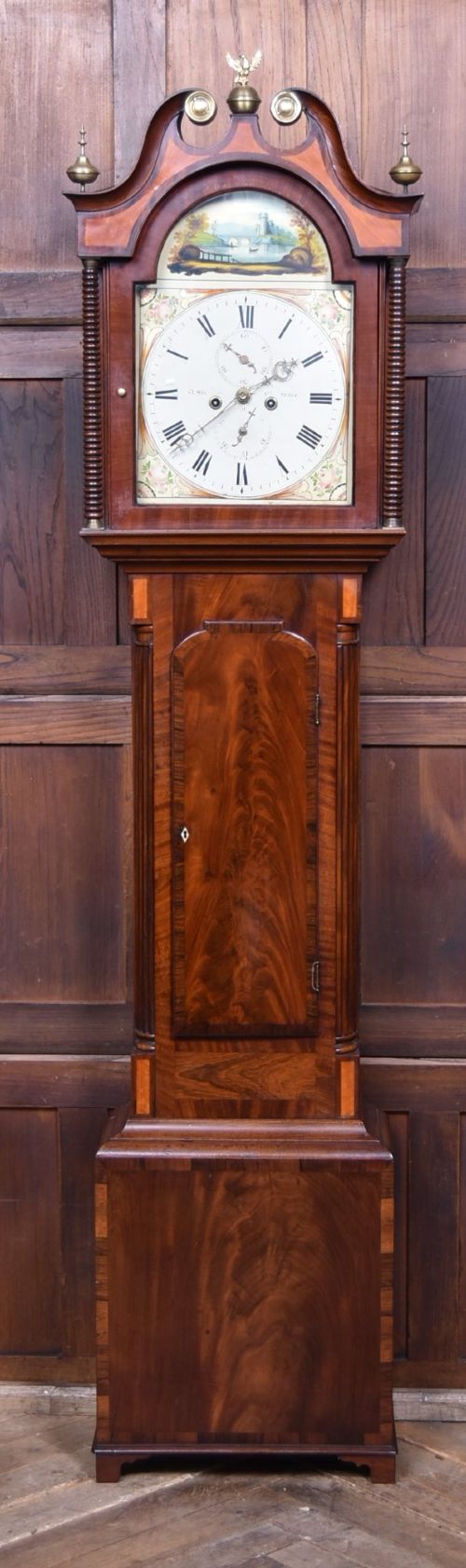
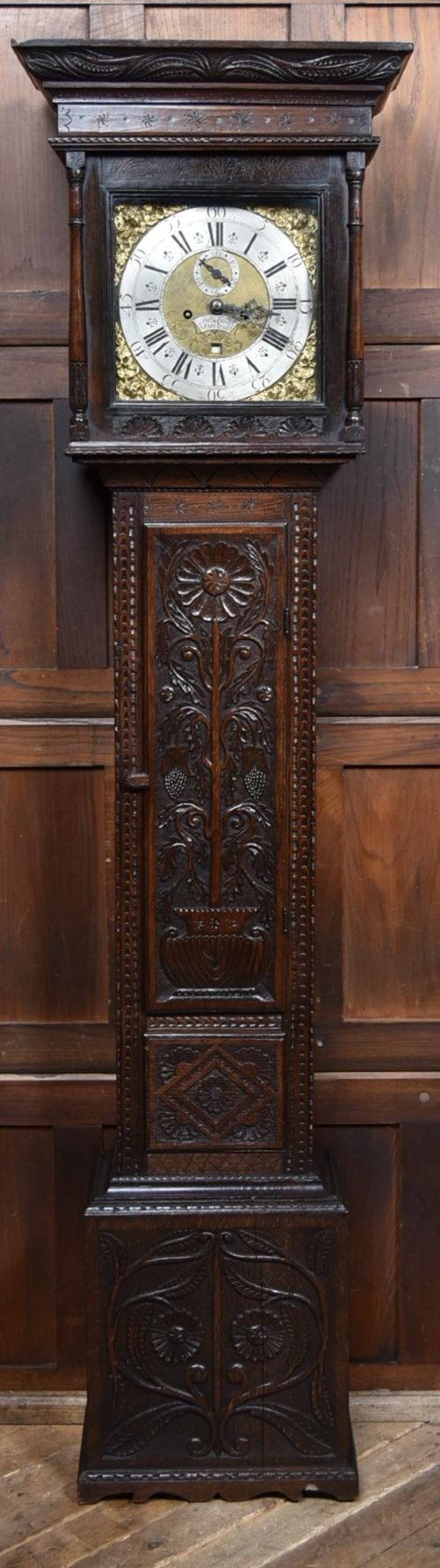
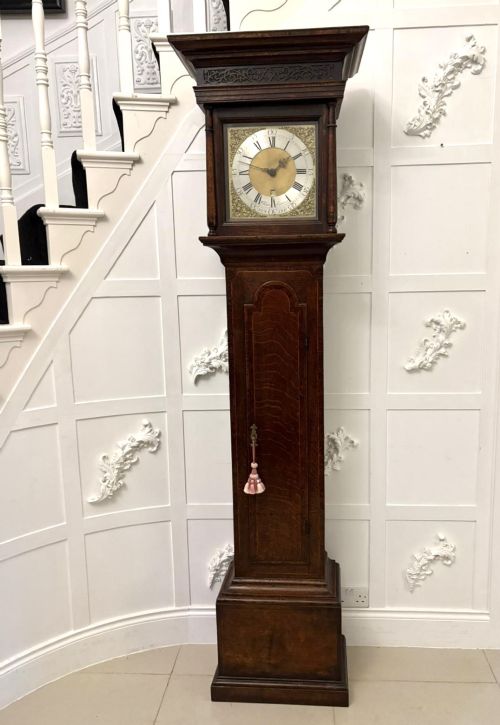
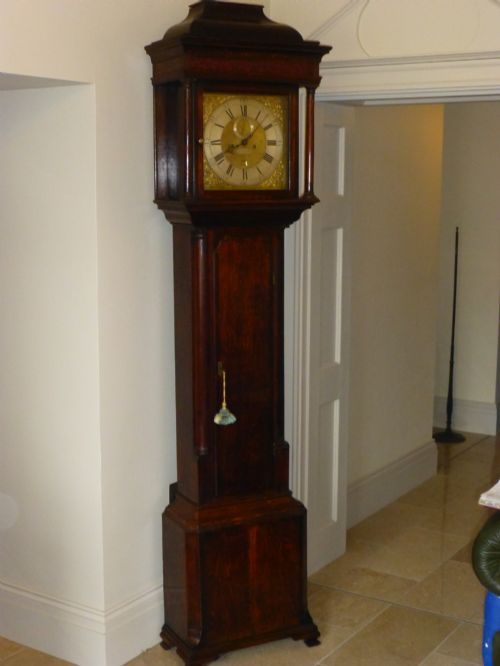
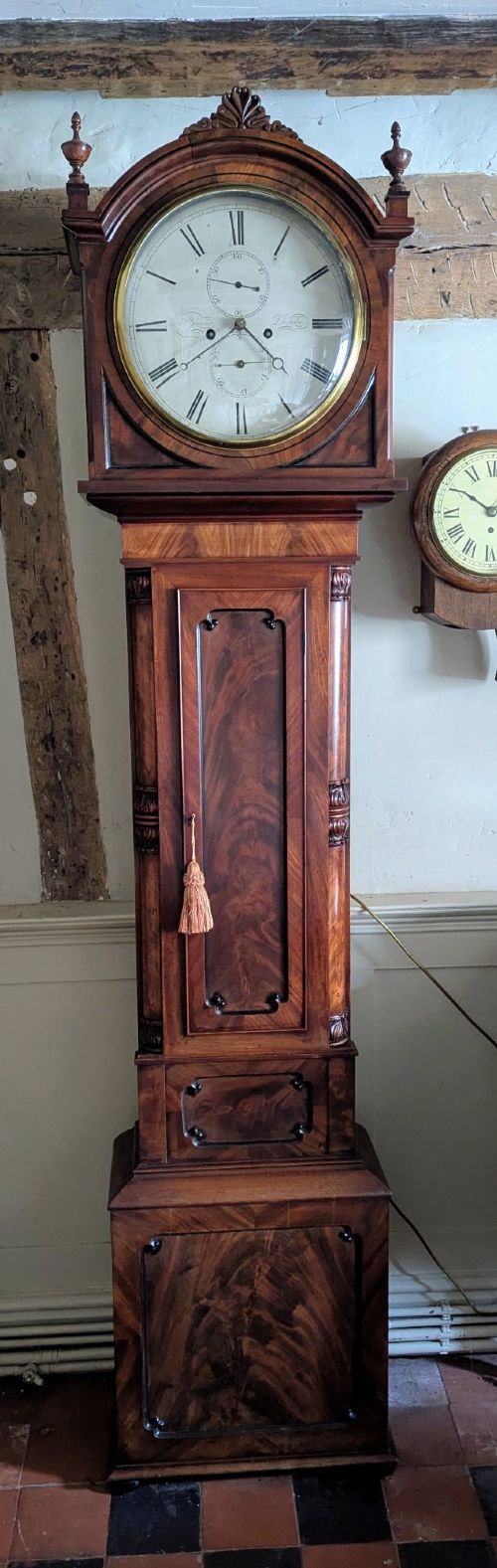
A georgian tall clock stands tall on the floor, housing an intricate weighted movement within a timber case that protects the pendulum. These vertical timepieces come primarily from the Georgian and George III eras, though later interpretations stretch into the nineteenth century.
Most examples found here span regional workshops across England, Scotland and Wales, executed in rich woods like mahogany and oak. Buyers encounter everything from simple domestic dial faces to elaborate models featuring moon rollers or striking mechanisms.
Materials and construction
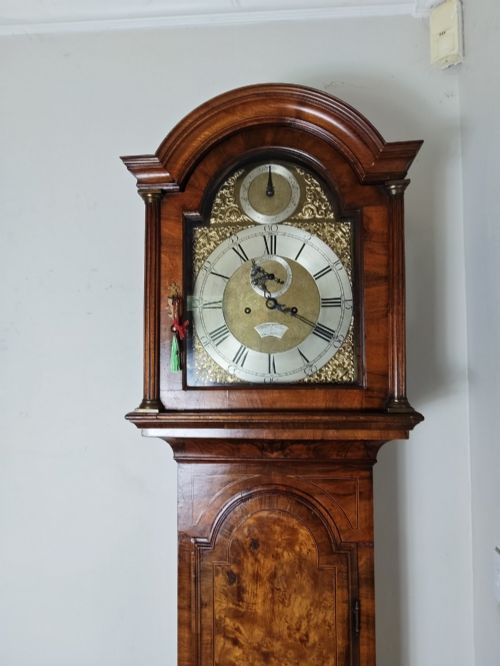
Cabinetmakers built the structural cases using dense hardwoods such as mahogany, oak and walnut, often accentuating the grain with burr veneers or decorative lacquer work. Glass protects the dial face, while brass and painted iron form the intricate backplates, dials and moving components.
Clockmakers fitted weight-driven 8 day or thirty-hour movements of brass and steel inside these enclosures, pairing them with metal dials featuring engraved or painted numerals. Regional makers signed their work directly onto the face, anchoring each piece to a specific town or city workshop.
One exceptional Welsh automaton model watches a painted ship rock continuously across stormy painted waves.
Judging the standard
Quality rests in the articulation of the timber case and the precision of the signed dial. A superior cabinet displays carefully selected mahogany or burr walnut figurework, with proportions that remain balanced from the hood down to the base plinth.
The sophistication of the internal movement further separates the tiers, distinguishing standard timekeepers from examples equipped with strike and silent functions, moon phases or musical cylinders.
Charles Shuckburgh·Hendrie Ogg·Gordon of Aberdeen·Lee of Great Marlow·D. Straiton·Jn° Smith·James Field·Richard Corless·Handley & Moore·William Jourdain·Windmills and Wightman·Wotton Under Edge·D Williams·Priory of Dundee·George Hallifax·Henry Weedon
The Georgian Tall Clock Glossary
- Longcase clock
- A tall freestanding pendulum clock enclosed in a wooden case designed to rest directly on the floor. These pieces are frequently referred to colloquially as grandfather clocks.
- Moon roller
- A mechanical display mounted on the dial that tracks the phases of the lunar cycle across a rotating painted disk. This complication required careful gear calculation by the maker.
- Grandmother clock
- A scaled-down version of the standard tall clock, typically produced in the twentieth century. It shares the same architectural silhouette while occupying less floor space.
- Strike and silent
- A mechanical function allowing the clock's striking train to be manually disengaged when quiet is desired. This feature indicates a more advanced and costly movement.
- Japanned
- A European imitation of Asian lacquerwork featuring raised motifs and painted scenes on a dark ground. The technique was widely utilised on eighteenth-century clock cases.
Georgian Tall Clock: Frequently Asked Questions
How do I wind a tall clock?
Wind the weights using the provided crank key every seven or eight days, depending on whether the movement is built for a weekly run. Turn the key steadily in the correct direction until the weights rise near the top of the case.
Take care not to overwind the mechanism, stopping the moment resistance increases at the end of the chain or cord.
Where should I place my clock?
Position the piece against an interior wall away from direct sunlight, central heating vents and draughty doorways. Wood and internal metal parts react poorly to sudden temperature swings and high humidity.
Ensure the floor beneath the base is completely level so the pendulum swings with an even, symmetrical beat.
What is the difference between oak and mahogany cases?
Oak cases typically hail from earlier eighteenth-century provincial workshops, displaying robust grain patterns and a warmer, rustic presence. Mahogany became the dominant timber later in the period, offering a smoother reddish-brown surface suited to finer formal interiors.
Both woods provide the structural rigidity necessary to support heavy brass movements and long swinging pendulums.