
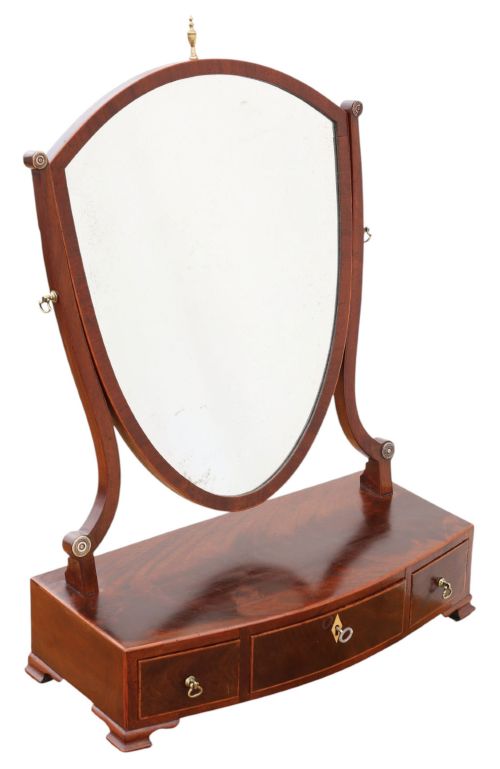
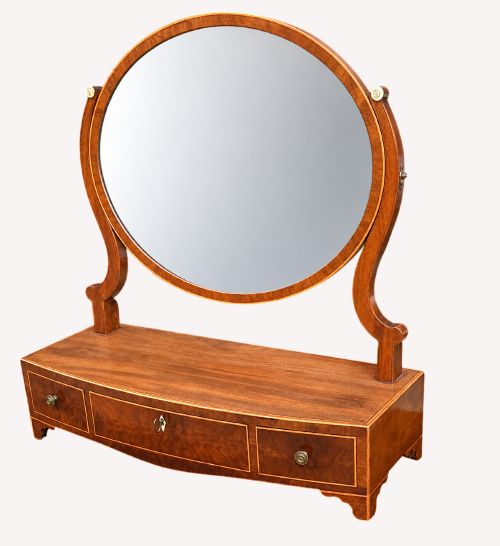
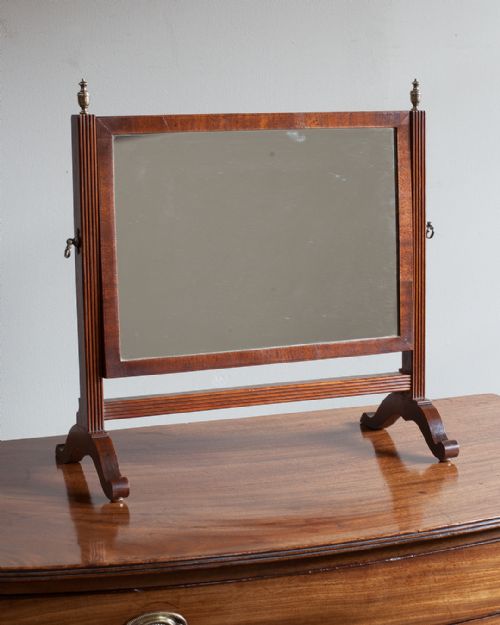
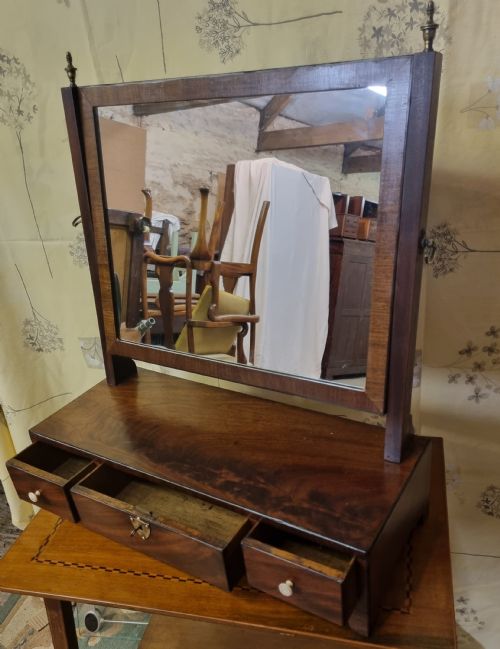
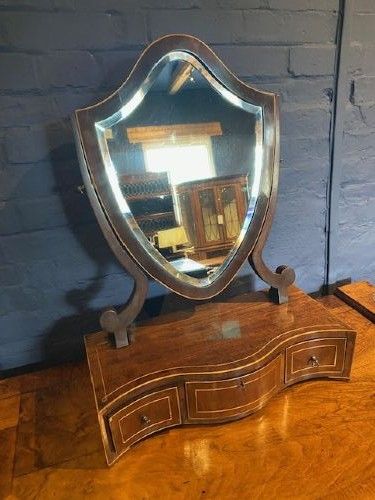
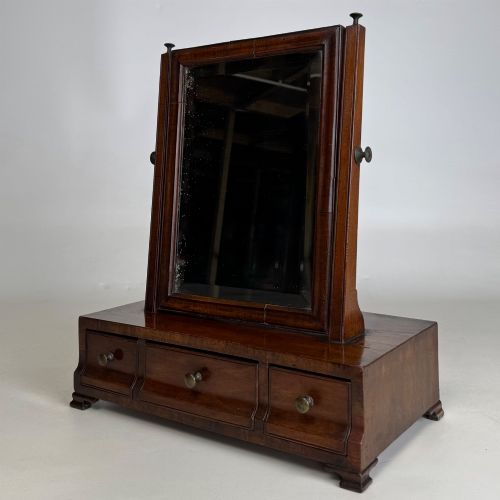
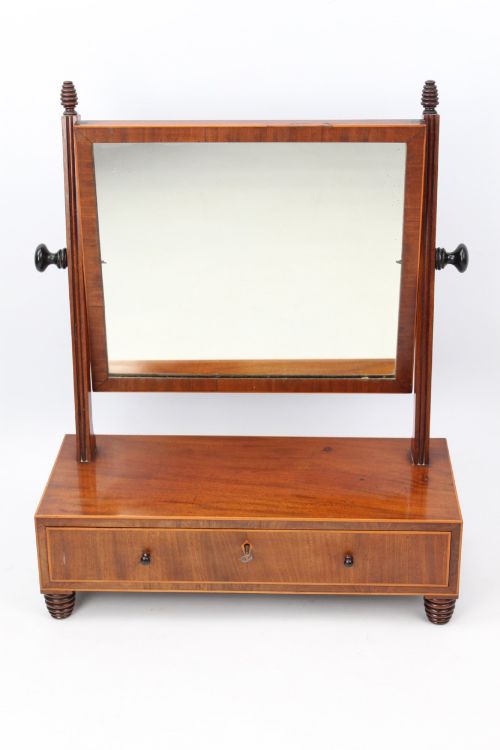
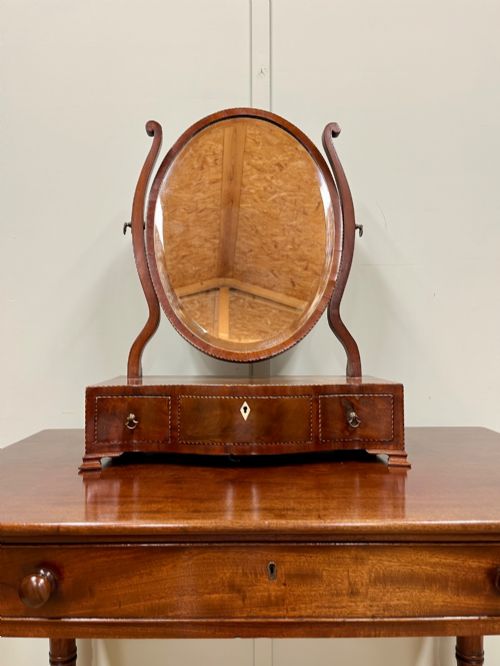
Georgian Tabletop Mirror
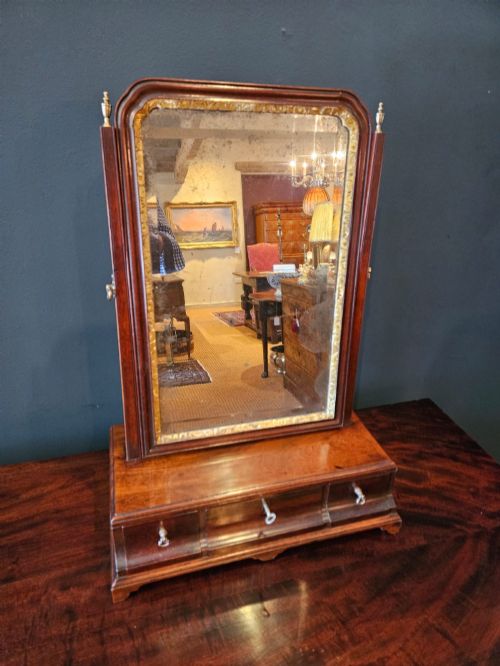
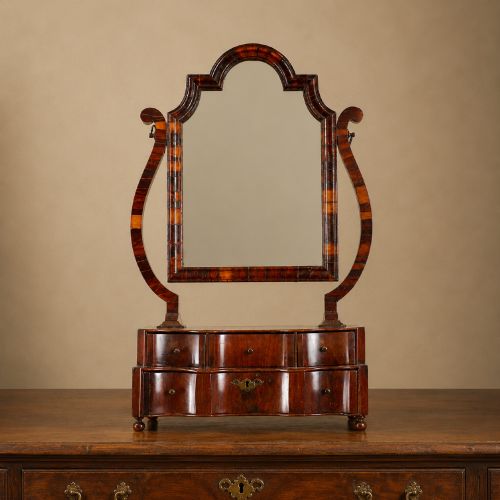
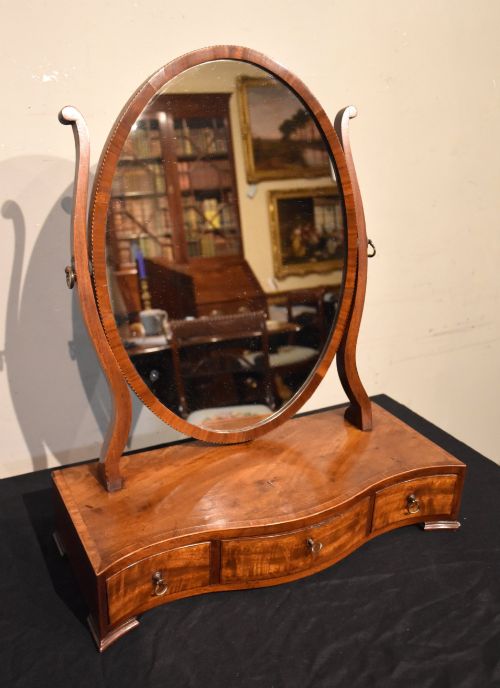
A georgian tabletop mirror is a small, portable glass designed for the dressing table, prized for rich timbers and traditional craftsmanship.
What they are
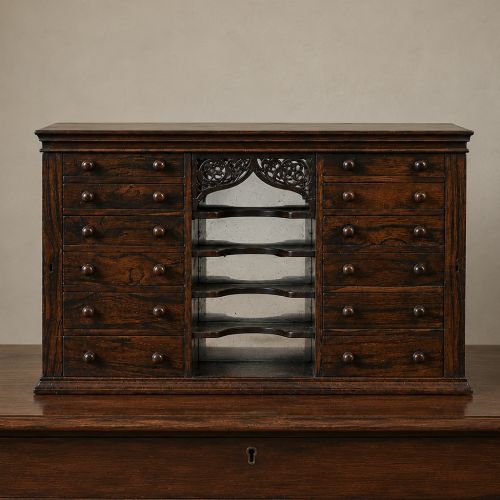
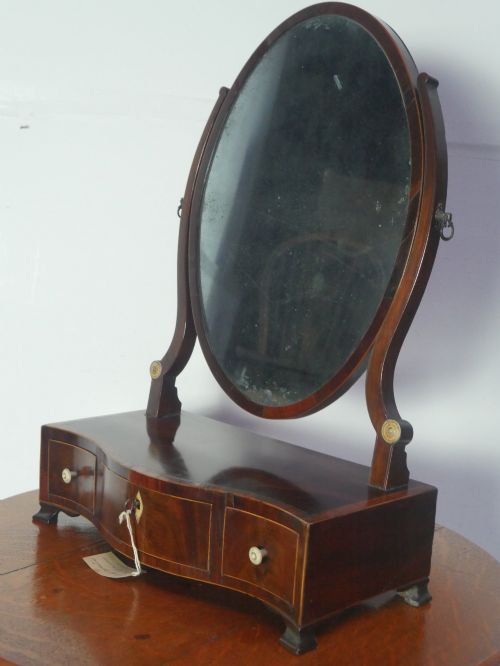
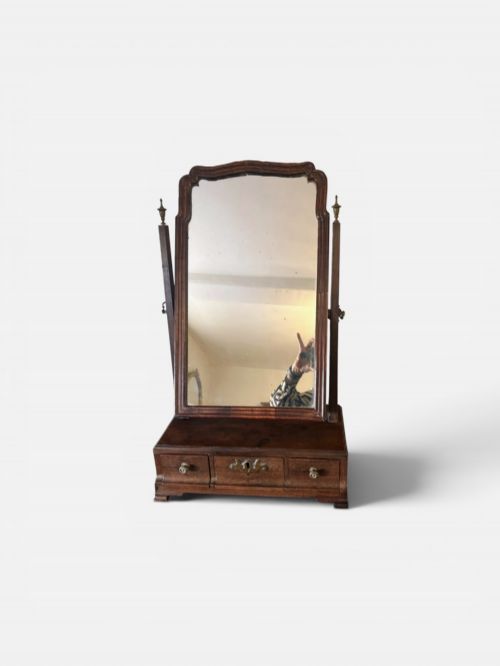
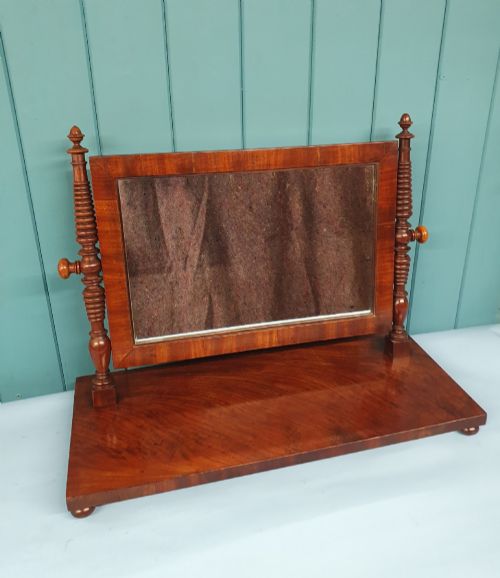
A georgian tabletop mirror sits on a chest or dressing table, providing a movable looking glass for daily grooming. These pieces range from simple rectangular frames to designs fitted with small drawers in the base.
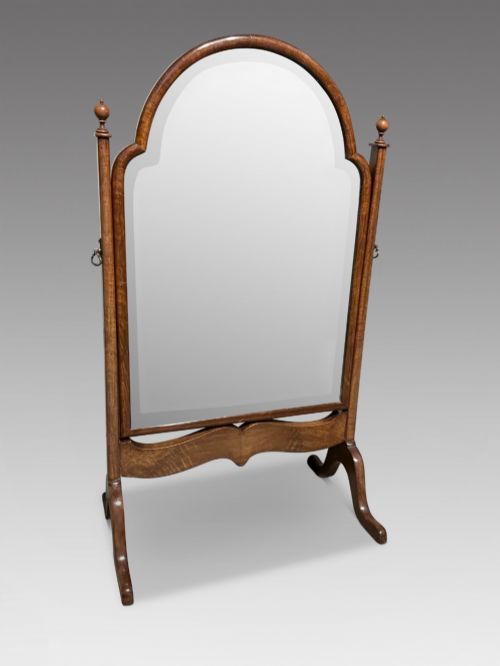
The selection on this page spans the eighteenth and nineteenth centuries, including items from the Georgian and Regency eras. Pieces reflect the prevailing tastes of their periods through distinct frame proportions and base configurations.
Makers produced these mirrors in forms often described as toilet mirrors or dressing mirrors. Walnut and mahogany dominate the examples seen here, frequently paired with original mirror glass.
How they were made
Cabinetmakers constructed these frames using timbers such as mahogany, walnut, yew, and burr walnut, sometimes applying walnut veneer over secondary woods. Timber selection dictated the grain pattern and overall visual weight of the stand.
Mirror glass sat within pivoting frames mounted on upright arms, allowing the user to tilt the reflection. Bases incorporated brass hardware for pivots and small drawer pulls, combining structural support with functional storage.
Retail Price Guide 2026
Typical UK retail prices for georgian tabletop mirror, calculated from the Sellingantiques database of over a million retail prices indexed since 2003. This retail price guide relies exclusively on Sellingantiques data; no external sources or auction records are used, so the figures do not describe the wider market.
Many a historical chin was inspected in these exact glasses before breakfast.
What varies in quality
Superior examples demonstrate refined timber selection, with carefully matched veneers and subtle grain movement across the principal surfaces. Poorer construction shows heavier framing and less attention to the continuity of wood figures.
The sophistication of the base proportion separates standard examples from finer ones. Fine craftsmanship appears in the dovetail joints of integrated drawers and the delicate turning of the support arms.
The Georgian Tabletop Mirror Glossary
- Toilet mirror
- A portable looking glass designed to stand on a dressing surface or table. This term appears frequently in period descriptions for these objects.
- Dressing mirror
- An alternative descriptor for a tabletop glass used during personal grooming. These pieces often incorporate small trinket drawers beneath the plate.
- Veneer
- A thin layer of fine wood applied over a secondary timber base to create a decorative surface. Walnut veneer is common on eighteenth-century examples.
- Regency
- An English design style spanning the early nineteenth century. Pieces from this period exhibit distinct neoclassical influences and clean structural lines.
Frequently Asked Questions
What is a georgian tabletop mirror used for?
These pieces served as movable looking glasses for shaving, hairstyling, and dressing in bedrooms and dressing rooms. Their compact size allowed placement on chests of drawers or dedicated dressing tables.
Today, they function similarly in domestic interiors while adding period character to a room. They require no permanent installation and can move easily between surfaces.
How do I distinguish between walnut and mahogany examples?
Walnut frames display a rich, warm brown tone with varied grain patterns and occasional figured movement. Mahogany pieces tend to show a deeper reddish-brown colour with a straight and consistent grain.
Both timbers were widely used across the eighteenth and early nineteenth centuries. The choice of wood often aligns with the prevailing fashion of the specific decade.
Did these mirrors always have drawers?
Not all examples include storage beneath the glass plate. Simpler tabletop mirrors consist only of the pivoting frame and upright support arms.
Pieces with base boxes provide small compartments for pins, jewellery, or cosmetics. The presence of drawers depends on the specific form and date of the piece.
How do I date a dressing mirror?
Dating relies on timber choice, frame profile, and construction techniques visible in the base and support arms. Georgian and Regency pieces show shifts from walnut to mahogany and variations in edge moulding.
Comparing the proportions of the mirror plate to the stand helps identify the period. Regional styles and secondary woods offer further clues to the date of manufacture.