

Georgian Table Toilet Mirror
When you search for a georgian table toilet mirror, you encounter a mahogany swing glass designed to sit upon a chest or dressing table for grooming.
Georgian Table Toilet Mirror
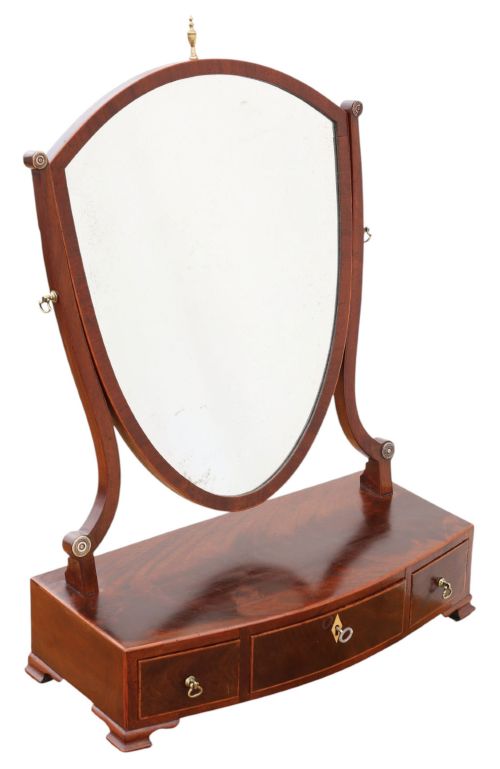
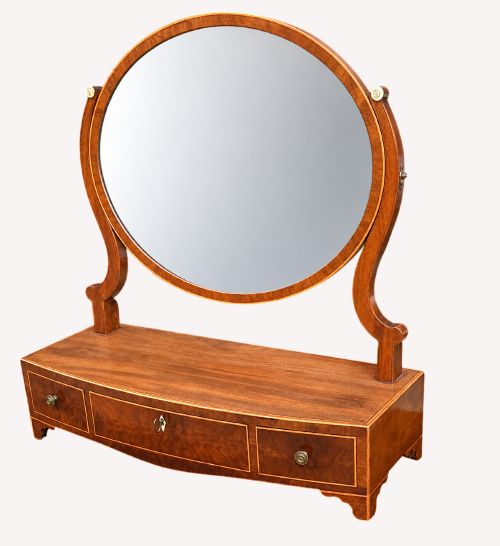
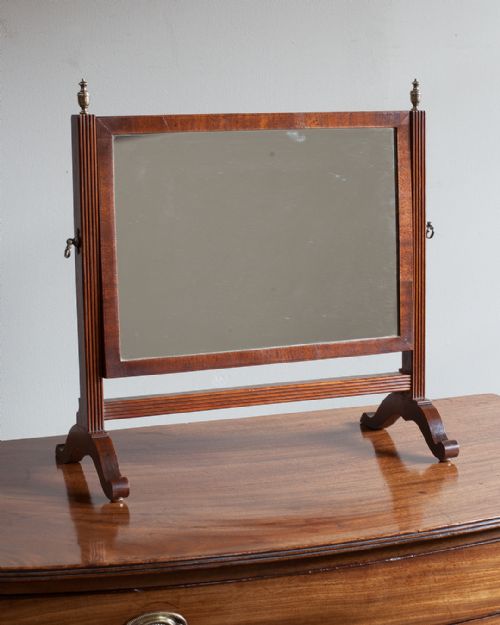
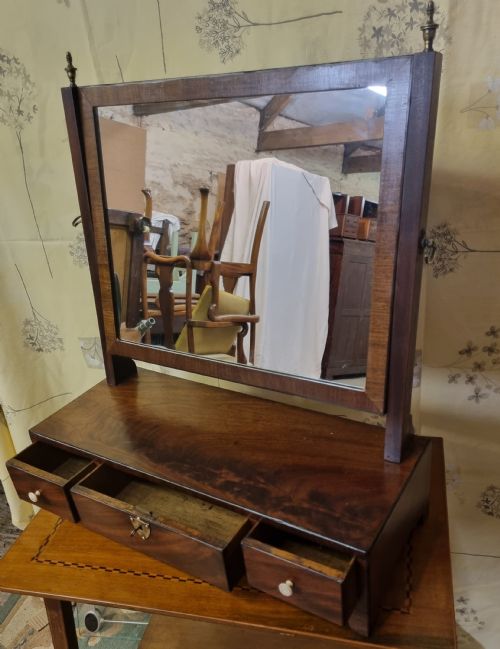
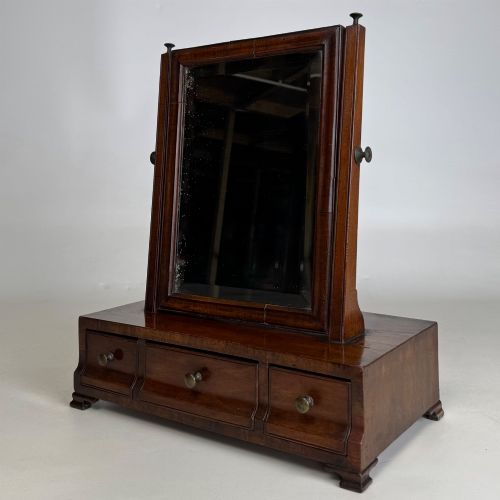
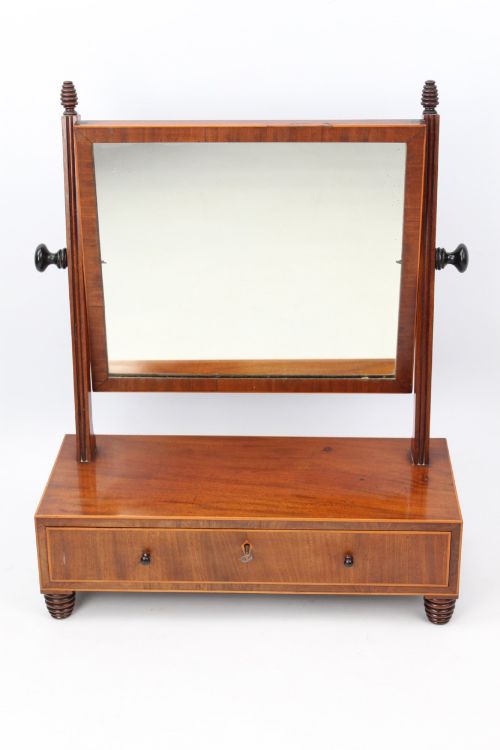
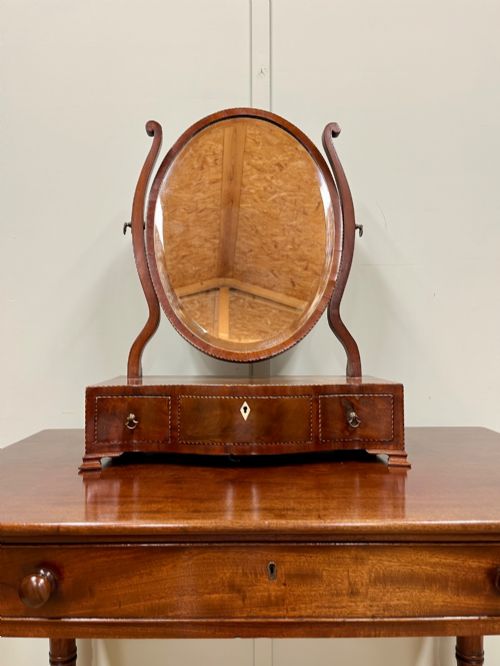
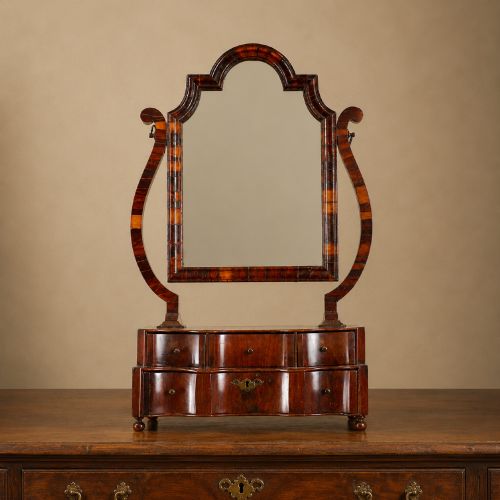
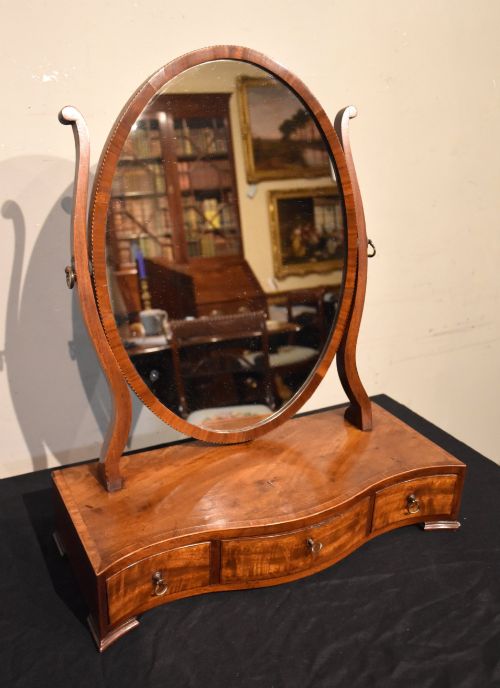
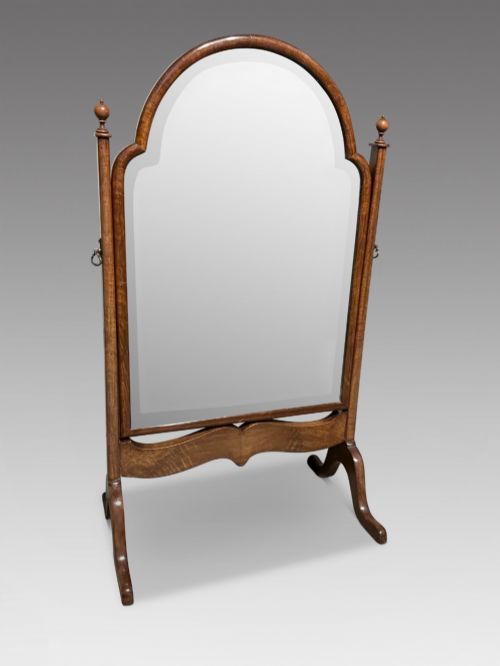
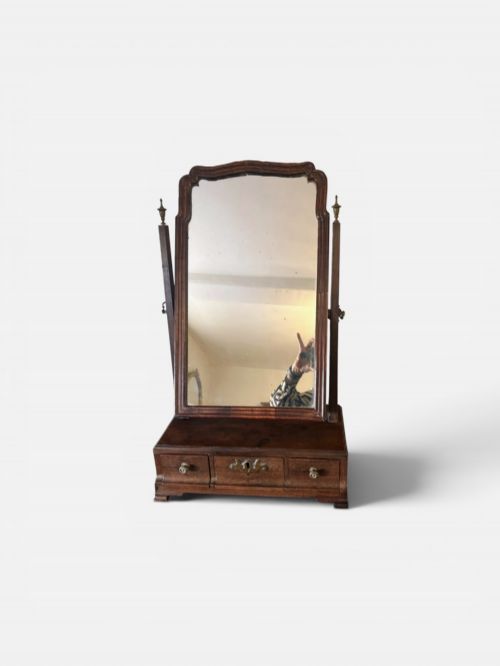
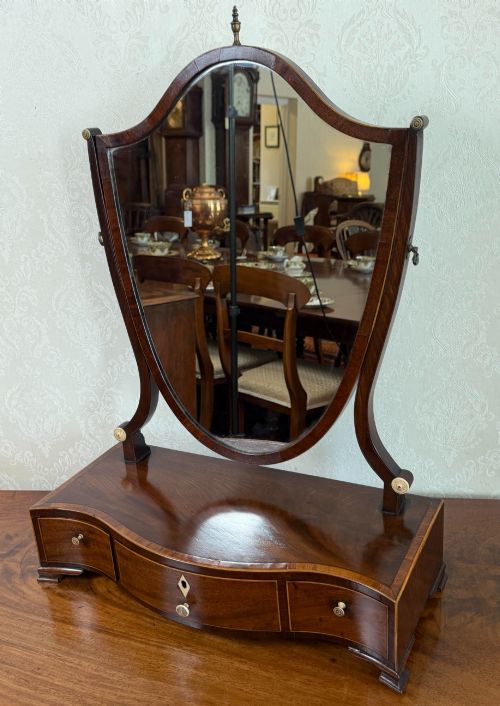
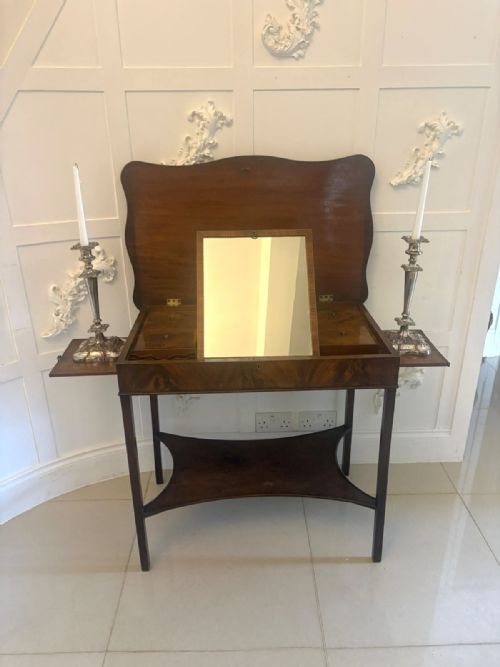
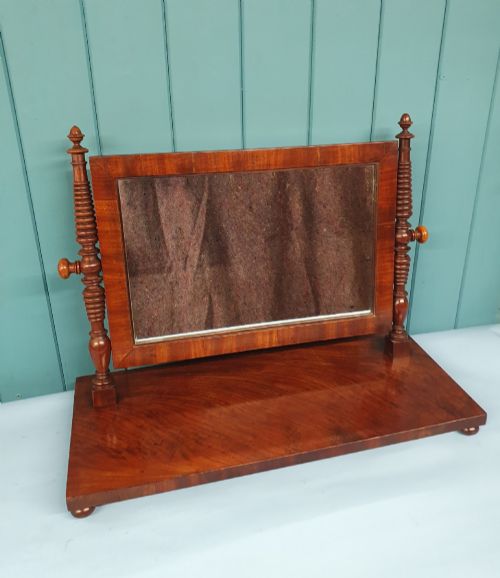
A georgian table toilet mirror is a portable dressing glass designed to sit on a chest, table, or sideboard for daily grooming. These pieces comprise an adjustable swing mirror plate mounted within upright frame arms, which stand upon a base box often fitted with small drawers.
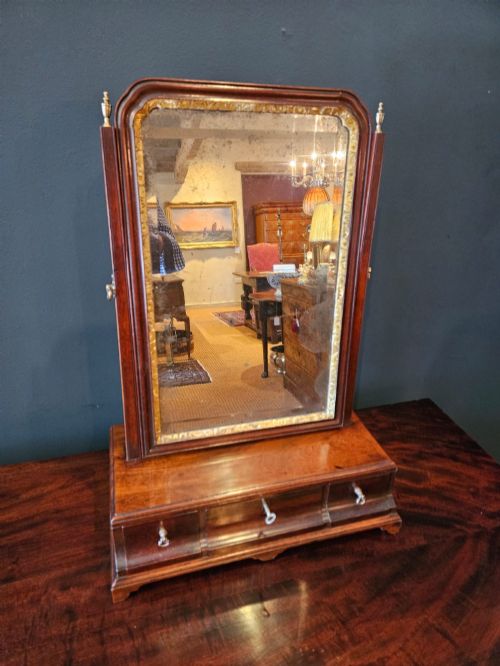
The versions most commonly met on this page date from the eighteenth and nineteenth centuries, spanning the Georgian and Regency periods. While mahogany forms the primary material, walnut and parcel-gilt variants also appear alongside later revival interpretations.
How They Were Made
Cabinet makers constructed these mirrors predominantly using solid mahogany and walnut timbers, frequently incorporating secondary woods like pine or oak for interior drawer linings. Artisans applied fine veneers, boxwood inlay, and crossbanding to decorate the base frames, whilst retaining the natural grain of the wood.
The moving components rely on brass screw pins or pivots inserted through the upright arms to hold the glass at the desired angle. Mirror plates themselves consist of silvered glass secured within moulded wooden frames, sometimes shaped into ovals, shields, or rectangles.
Compact campaign boxes equipped with hidden compartments remind us that grooming gear once travelled securely across continents.
What Varies in Quality
The refinement of the timber and the subtlety of the woodwork distinguish the finest examples from standard utility items. Superior pieces display carefully selected flame mahogany or figured walnut veneers, harmonious proportions, and finely dovetailed drawer construction.
Detailing in the mounts and hardware also separates the tiers of production. Original brass swing pins, delicate stringing, and well-executed serpentine or bow-fronted bases indicate a higher level of craftsmanship than plain, unadorned boxes.
The Georgian Table Toilet Mirror Glossary
- Swing mirror
- A glass plate mounted on pivots between two upright posts allowing it to tilt forward or backward. This mechanism enables the user to adjust the viewing angle during grooming.
- Toilet mirror
- A smaller dressing mirror designed to sit on a table or chest rather than stand on the floor. The term derives from the French word toilette, referring to the morning routine of dressing and grooming.
- Crossbanding
- A strip of veneer applied across the grain of the primary wood around the border of a panel or drawer front. This decorative technique creates a neat framing effect on the piece.
- Serpentine
- A front contour characterised by a convex curve flanked by two concave curves, or the reverse. This flowing shape demands precise woodworking skill in the construction of the base drawers.
- Parcel-gilt
- A finish where portions of a wooden object are highlighted with thin layers of gold leaf. It frequently appears on mid-eighteenth-century mouldings and edge details.
Georgian Table Toilet Mirror: Frequently Asked Questions
What is the difference between a toilet mirror and a dressing mirror?
In period terminology, toilet mirrors and dressing mirrors refer to the same tabletop form designed for personal grooming. Both sit upon a table or chest and feature an adjustable swing glass above a small storage base.
While the names are used interchangeably in historical records, individual pieces vary by shape, drawer arrangement, and base profile rather than functional category.
Where were these mirrors placed in a room?
These mirrors were positioned on top of chests of drawers, side tables, or dedicated dressing tables to catch the best light for shaving and hair styling. Because they were portable, owners moved them around the house as needed.
Their compact scale allowed them to sit securely on existing furniture without requiring dedicated floor space in the bedroom.
How do I date a mahogany swing mirror?
Dating relies on examining the timber, construction methods of the base drawers, and the overall outline of the frame plate. Earlier eighteenth-century examples often feature walnut or figured mahogany with shaped ogee brackets, whilst Regency pieces display crisper lines and sometimes brass inlay.
Secondary woods inside the drawers and the style of the brass pivot screws also provide reliable chronological clues for the collector.
Are the mirror plates usually original?
Many surviving pieces retain later mirror plates because silvered glass degrades over centuries of exposure to moisture and light. Replacement plates are a common feature in antique examples and do not necessarily diminish the decorative appeal of the woodwork.
When inspecting a piece, look at the backboards and the method of securing the glass to understand the history of the materials.