


Georgian Swivel Toilet Mirror
A georgian swivel toilet mirror brings compact elegance and functional reflection to a dresser, offering period charm in mahogany, walnut, and satinwood.
Georgian Swivel Toilet Mirror
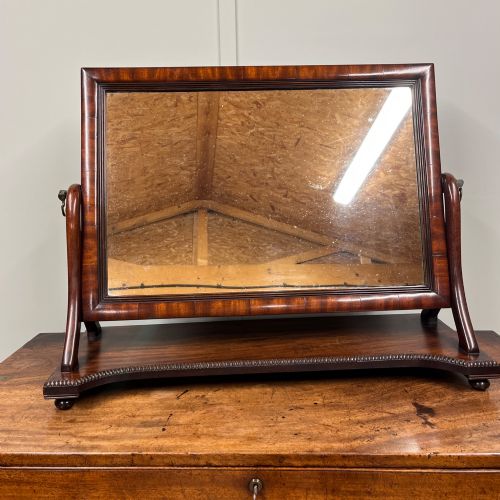
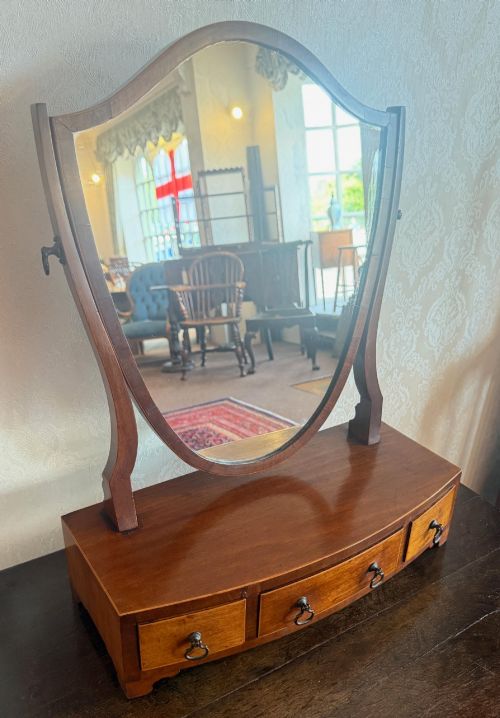
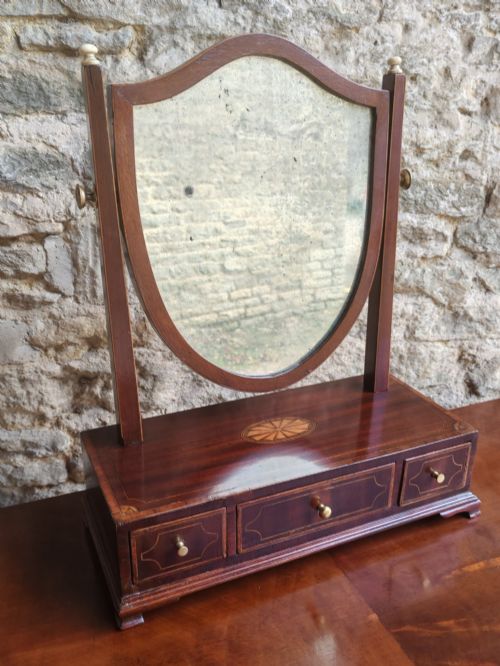
A georgian swivel toilet mirror is a tabletop glass set within a pivoting frame, designed to sit upon a chest or dressing table for grooming. These pieces date principally across the eighteenth and nineteenth centuries, spanning periods from George II through to the Regency and Victorian eras.
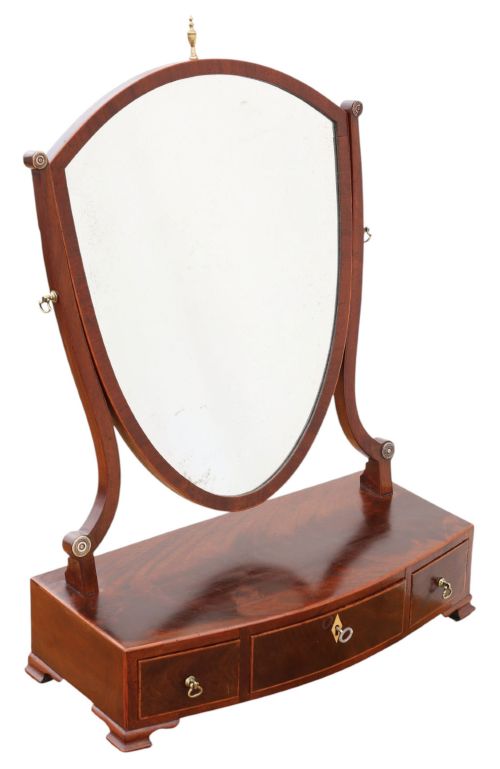
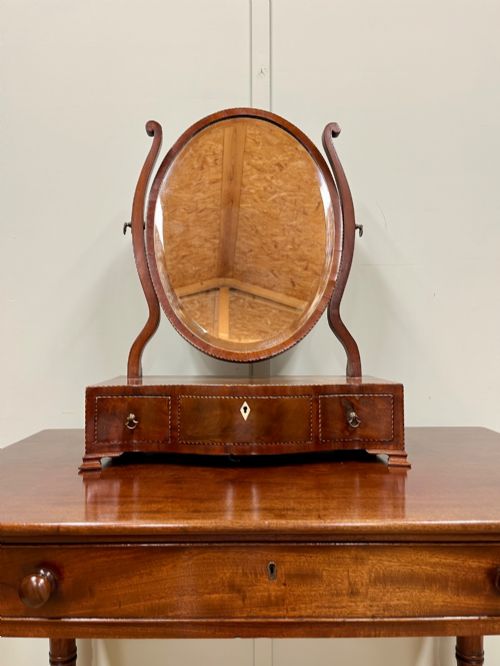
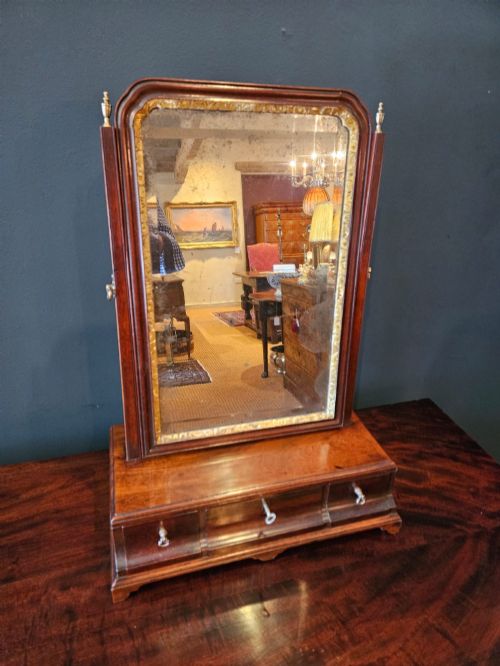
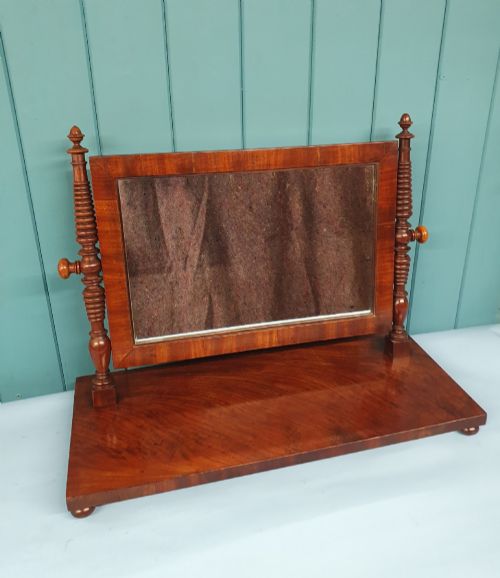
The most common formats found here feature rich mahogany frames, often incorporating shaped bases fitted with small drawers for trinkets. Styles range from shield-shaped and oval plates to rectangular glasses, sometimes enhanced by serpentine or bowfront contours.
Materials and construction methods
Makers utilised dense timbers such as mahogany and walnut, frequently selecting figured veneers to create rich surface patterns on the uprights and drawer fronts. Cabinet-makers applied decorative touches like wood inlay, ebony stringing, parcel-gilt accents, and satinwood panels.
The pivoting mechanism relies on brass screw pins or side arms secured to upright posts, allowing the glass to tilt at various angles. Many examples incorporate small box bases constructed with traditional dovetail joints to house multiple drawers.
Listings feature mahogany, walnut, and satinwood across periods from 1750 to the Edwardian era.
Distinctions in quality and execution
Quality rests upon the crispness of the cabinet work, the choice of timber figuring, and the delicacy of proportion between the glass frame and the supporting base. Superior pieces display finely cut dovetails, elegant serpentine or bowfront shapes, and well-cast brass hardware rather than utilitarian fastenings.
The presence of original mirror glass, secondary woods appropriate to the period, and sophisticated decorative details like inlaid banding elevate an example significantly. Lesser pieces may exhibit heavy-handed proportions, replacement hardware, or simplified box bases lacking drawers.
Gillows
The Georgian Swivel Toilet Mirror Glossary
- Shield-shaped
- A glass frame cut into the silhouette of a heraldic shield, popular during the eighteenth century. This profile gives the mirror an upright, tapered appearance.
- Serpentine
- A curved edge featuring a convex centre flanked by two concave curves, often seen on the base or drawer fronts of finer examples. It requires skilled woodworking to execute cleanly.
- Bowfront
- A convex curving front contour on the base cabinet that softens the rectangular block of the piece. This form provides extra depth for the central drawers.
- Parcel-gilt
- Partially gilded woodwork where gold leaf highlights specific carved details or mouldings against a dark timber background. It adds a subtle richness to the frame.
- Swing mirror
- A plate suspended between two upright posts on pivots, allowing the user to adjust the tilt angle. This fundamental mechanism defines the tabletop dressing glass.
Georgian Swivel Toilet Mirror: Frequently Asked Questions
What is a georgian swivel toilet mirror?
A georgian swivel toilet mirror is a small, pivoting tabletop dressing glass mounted on a wooden base with drawers.
Designed for personal grooming, these pieces sat atop larger tables or chests in bedrooms and dressing rooms during the eighteenth and nineteenth centuries.
Where were these mirrors placed?
These mirrors were positioned on dressing tables, chests of drawers, or dedicated washstands within private chambers.
Their compact tabletop footprint allowed owners to move them easily to areas with optimal natural daylight.
How do you date a swivel mirror?
Dating relies on examining the timber species, base proportions, drawer construction techniques, and the shape of the mirror plate.
Earlier eighteenth-century pieces often feature walnut or figured mahogany with serpentine bases, while later nineteenth-century versions show simpler rectangular or shield outlines.
Are the mirror plates original?
Many surviving pieces retain later replacement glass because original mirror plates frequently degraded or silvering failed over centuries of use.
Inspect the silver backing and glass thickness to determine if the plate is a later replacement.