


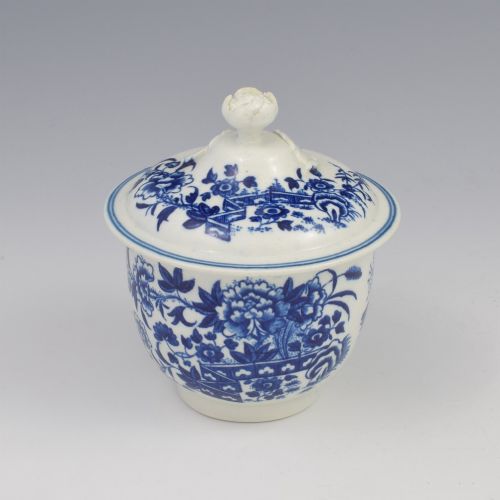
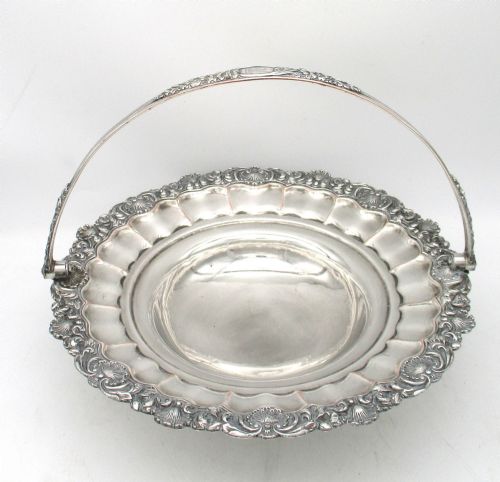


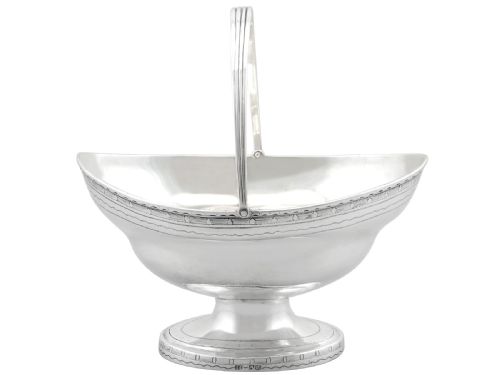

Georgian Sugar Bowl
A georgian sugar bowl holds the domestic history of tea and table service across the eighteenth and nineteenth centuries in silver, porcelain and glass.
Georgian Sugar Bowl
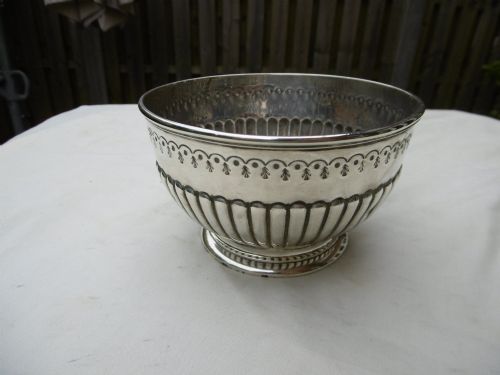
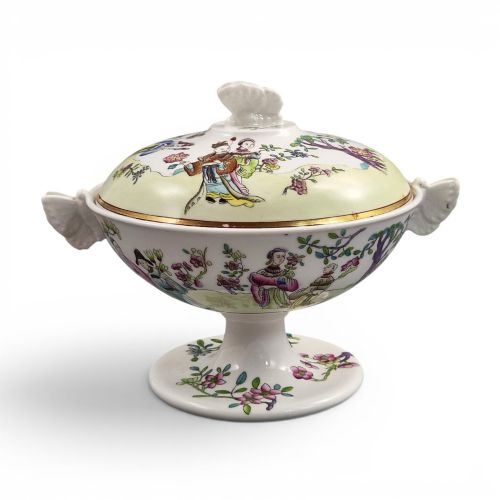
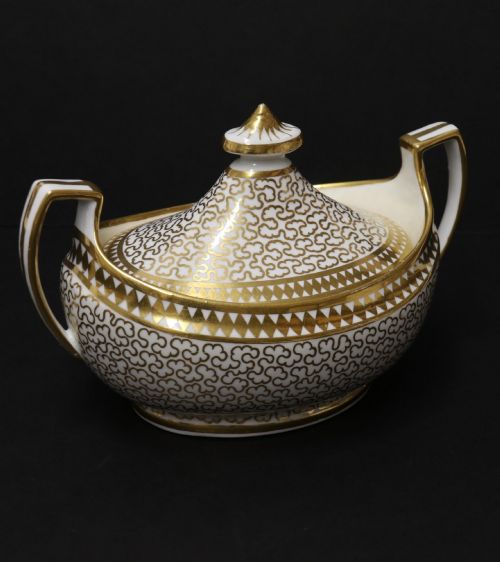
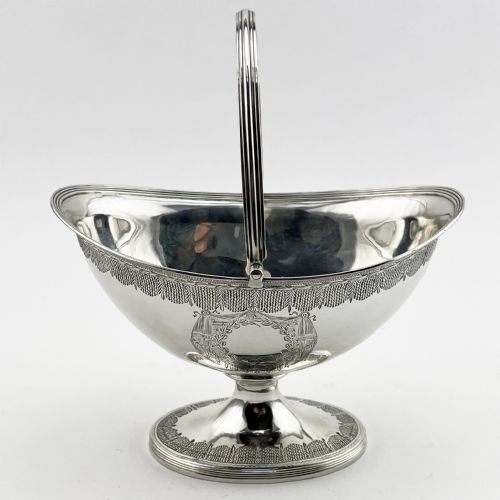
A georgian sugar bowl encompasses open basins, lidded sucriers, pierced baskets and swing-handled vessels designed to hold loaf or lump sugar on the dining table. The pieces span the eighteenth and nineteenth centuries, originating from English, Scottish and Irish workshops as well as prominent porcelain factories.
Silver sugar baskets and bowls frequently feature cast or pierced work, often paired with swing handles and blue glass liners. Porcelain sucriers appear with matching covers, sometimes alongside matching cream jugs or tea services.
Glass examples include hand-blown Bristol blue vessels, wrythened designs and pale amethyst pieces with acorn finials. Buyers also encounter Old Sheffield plated wirework baskets and ceramic forms from factories such as Spode, Worcester and Coalport.
Materials and Technique
Silver items are fashioned from sterling silver or Old Sheffield plate, utilising techniques such as piercing, casting, engraving and wirework construction. Silversmiths often shaped baskets with reticulated lattices and applied handles or crests.
Ceramic examples rely on porcelain, felspar porcelain and bone china bodies, decorated with hand-painted patterns, blue and white transfer printing, gilding and polychrome enamels. Lidded sucriers require precise throwing and moulding to ensure the cover fits the gallery of the bowl.
Glass vessels involve free-blowing and moulding, producing Bristol blue, opaline and crystal tablewares sometimes finished with gilding or applied glass trails.
Listings feature sterling silver, Old Sheffield plate, porcelain, felspar porcelain and glass across the eighteenth, nineteenth and early twentieth centuries.
Craftsmanship and Survival
The standard of a silver piece rests on the crispness of its piercing, the weight of the metal and the clarity of maker marks and hallmarks. Cast details, handle attachments and the integrity of any original blue glass liners separate standard domestic items from finer workshop output.
Porcelain quality is judged by the delicacy of the potting, the precision of the hand-painted or transfer-printed enamel decoration, and the survival of matching covers. Earlier factory periods, such as First Period Worcester or early Spode, display distinct glaze properties and refined paste bodies.
Glassware varies according to the depth of colour, the absence of heavy surface wear, and the presence of original elements like finials or matched cream jugs.
Aldridge and Green·Spode·Chamberlains Worcester·Henry Chawner·Fenton·Joseph Craddock·William Bond·Ridgway·John Kincard·Benjamin Smith·George Fox·Walter Brind·Worcester Barr Flight and Barr·Coalport
The Georgian Sugar Bowl Glossary
- Sucrier
- A covered sugar bowl or sugar box designed for the tea table. These ceramic or silver vessels often possess matching lids to keep the contents dry.
- Old Sheffield Plate
- A composite material made by fusing a thin sheet of silver to a thicker copper base. This technique was widely utilised before modern electroplating.
- Pierced Work
- A decorative technique where metal is cut through to create openwork lattices or geometric patterns. It is frequently seen on silver sugar baskets.
- Felspar Porcelain
- A hard, durable porcelain body developed by factories like Spode in the early nineteenth century. It permitted crisp moulding and stable glazing.
- Wrythen
- A spiral or twisted moulding pattern applied to glass or ceramics. This optical effect creates a swirling motion in the material.
Georgian Sugar Bowl: Frequently Asked Questions
What is the difference between a sugar bowl and a sucrier?
A sugar bowl generally refers to an open vessel used for serving, while a sucrier is a closed ceramic or porcelain container equipped with a matching lid.
Both forms served the same functional purpose on the tea table, though porcelain examples were more commonly called sucriers in nineteenth-century inventories.
How do I identify a silver sugar basket from the eighteenth century?
Eighteenth-century silver baskets usually feature hallmarks stamped directly onto the metal, indicating the assay office, date letter and maker's mark.
They frequently employ pierced lattice designs, cast swing handles, and require a fitted cobalt blue glass liner to contain loose sugar.
Did sugar bowls come with matching cream jugs?
Many ceramic and glass examples were produced as matched pairs with cream jugs for tea services. Silver sets also expanded into complete tea and coffee services over time.
Finding a surviving pair together indicates they were retained as a set by original owners.
What porcelain factories produced these sugar vessels?
English factories such as Worcester, Spode, Coalport and Ridgway manufactured porcelain sugar boxes and sucriers during the Georgian and Regency periods. Each factory utilised distinct porcelain paste recipes and enamel palettes.
Underglaze factory marks or pattern numbers often assist in identifying the specific manufacturer and date.