


Georgian Style Writing Bureau
A georgian style writing bureau is a fitted drop-front writing cabinet built for correspondence, offering hidden pigeonholes and useful surface area.
Georgian Style Writing Bureau
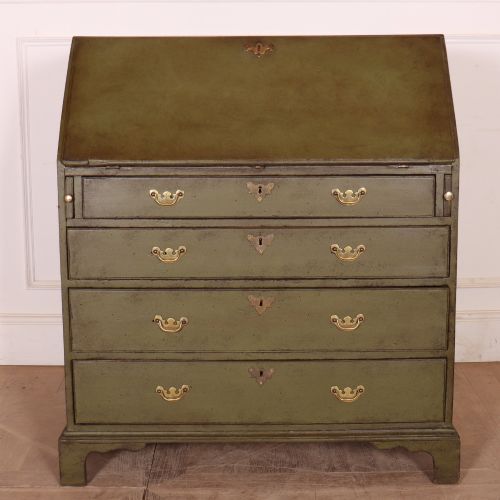
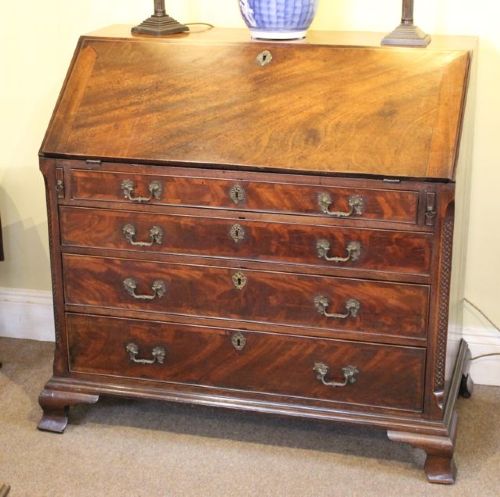
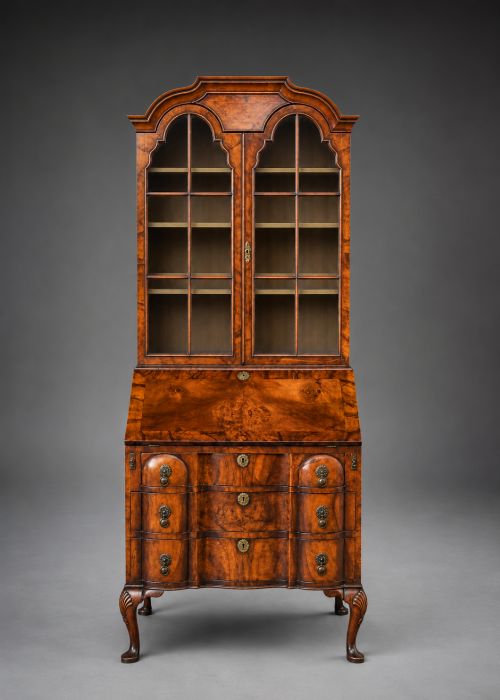
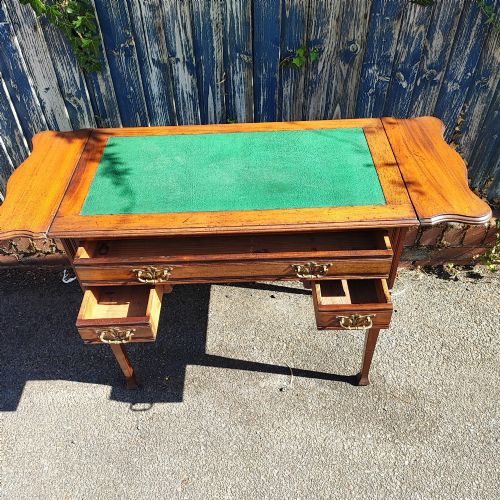
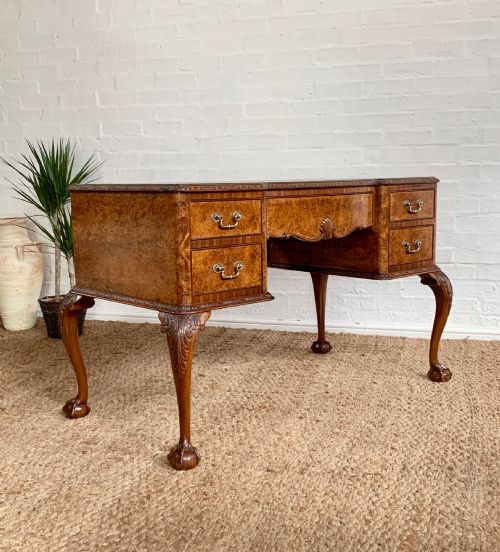
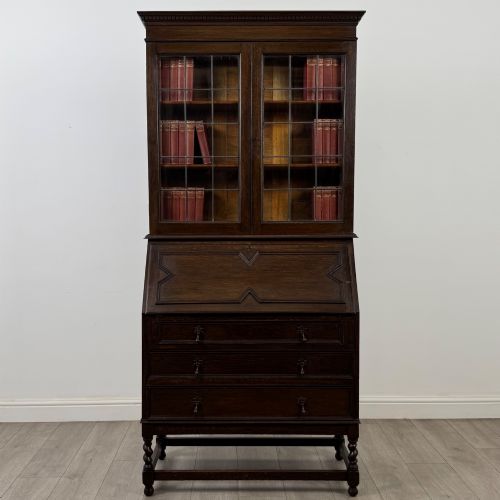
A georgian style writing bureau takes several forms across the evidence, appearing as fall-front desks, large bureau bookcases with glazed upper cabinets, and compact bureaux on stands. Pieces span the eighteenth century alongside later revival periods including Edwardian and nineteen-twenties interpretations.
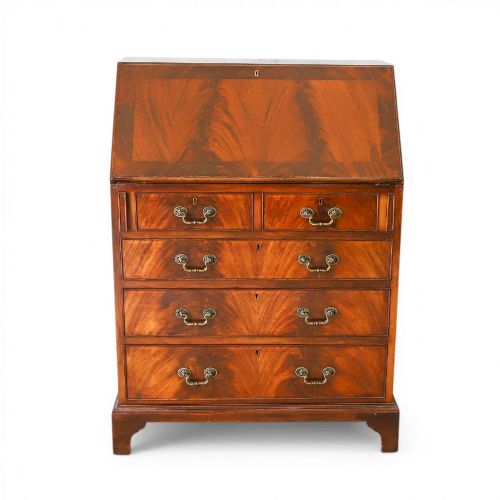
The most common examples on this page are mahogany and burr walnut fall-front desks that conceal internal compartment drawers and pigeonholes behind the sloping writing flap.
Design and execution
Quality rests upon the selection of timber veneers and the crispness of internal drawer carpentry, where well-chosen grain figures and fine dovetailing distinguish finer work from simpler production.
Proportion and decorative additions such as inlay, stringing, or marquetry elevate certain desks, whereas plainer carcases rely entirely on timber warmth and clean lines.
The listings span the eighteenth, nineteenth, and twentieth centuries, employing mahogany, burr walnut, oak, satinwood, and yew wood.
Tudor and Burrey·Maples of London
The Georgian Style Writing Bureau Glossary
- Bureau
- A writing cabinet featuring a sloping fall-front flap that drops down to form a writing surface. It encloses small drawers and pigeonholes.
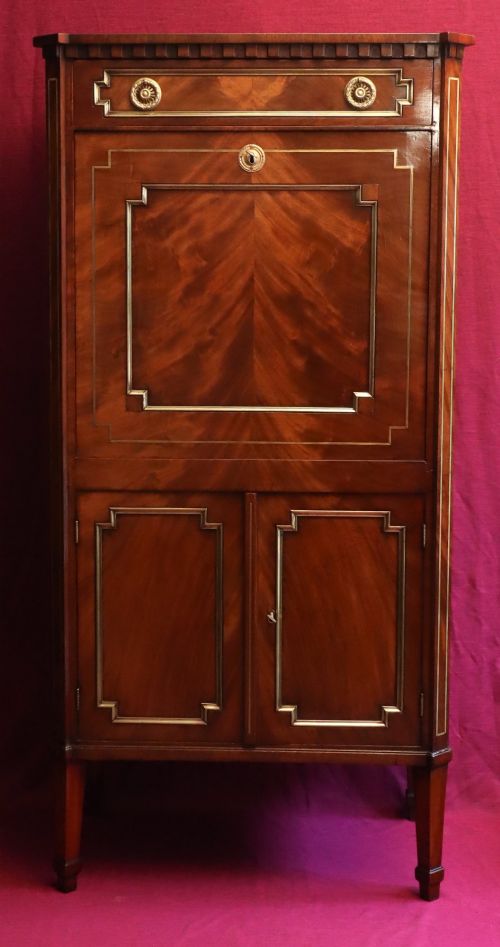
- Secretaire bookcase
- A tall cabinet combining a writing drawer or fall-front bureau section with enclosed upper shelving for books.
- Fall-front
- The hinged writing flap of a desk that pulls down into a horizontal position for writing. It conceals internal compartments when closed.
- Pigeonhole
- A small vertical compartment inside a desk used for sorting letters and papers. These sit above the main writing surface.
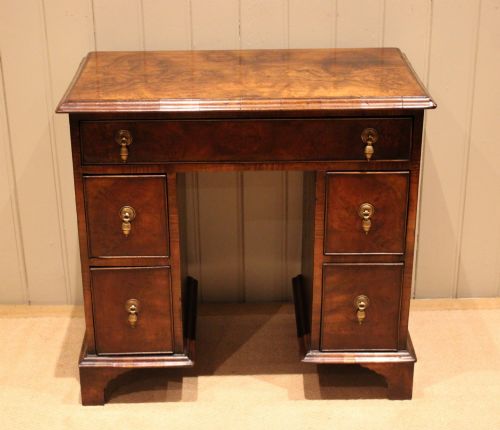
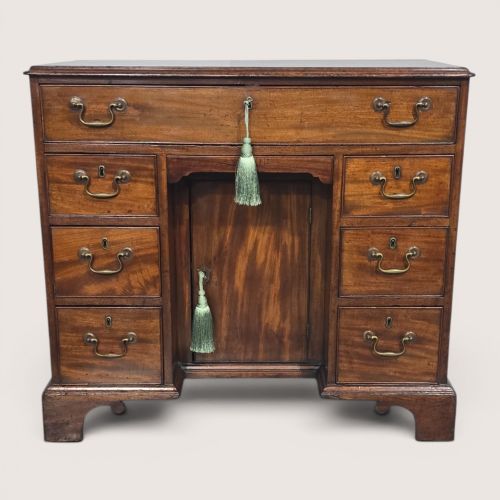
- Kneehole desk
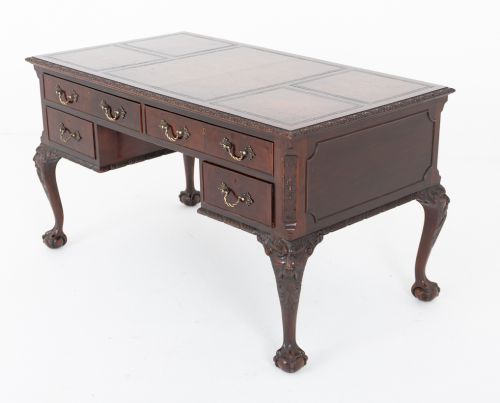
- A compact desk with a central recess for the sitter's legs, flanked by pedestals of small drawers. This form provides substantial storage beneath the top.
Georgian Style Writing Bureau: Frequently Asked Questions
How do I use a bureau desk?
Lower the hinged flap to reveal the internal pigeonholes and small drawers, creating a convenient fold-down writing ledge.
Close the fall-front when finished to conceal correspondence and keep your workspace tidy.
Are these desks from the eighteenth century?
Pieces originate from both the eighteenth century and later revival periods like the Edwardian era and nineteen-twenties.
Timbers, construction methods, and cabinet hardware help distinguish original eighteenth-century furniture from twentieth-century revivals.
What is a bureau bookcase?
A bureau bookcase combines a lower writing desk with an upper shelving cabinet enclosed by doors.
This tall hybrid piece offers both workspace and display storage for books or collections within a single footprint.
Where should I place a bureau in a room?
Position the bureau against a wall where the drop-front flap can open fully without blocking traffic.
Ensure adequate natural or task lighting nearby since the recessed writing surface sits beneath internal compartments.