


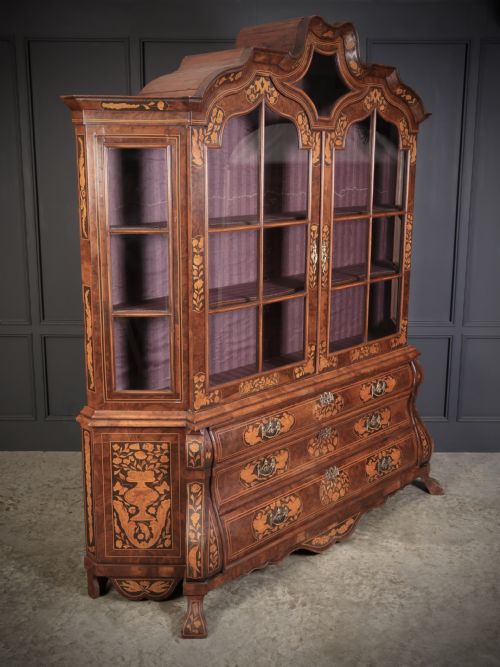


Continental Marquetry Bureau
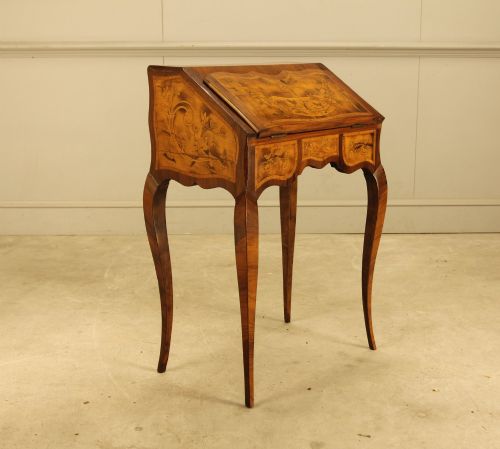
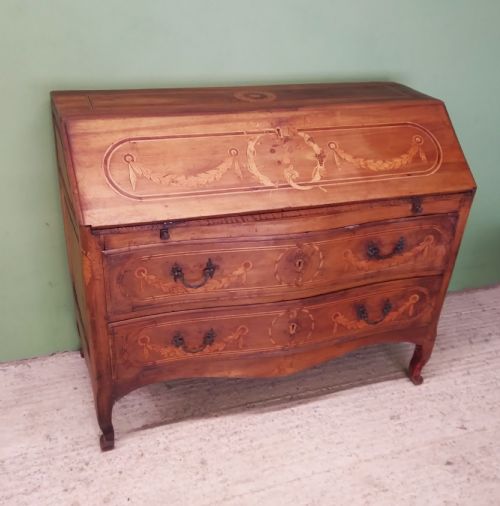
These continental marquetry bureau examples bring intricate timber inlay and practical writing slopes together, offering a stately addition to any room.
Continental Marquetry Bureau
A continental marquetry bureau combines a sloping writing flap with fitted interior compartments, resting upon drawers or a stand. These pieces emerge from traditions across the continent, spanning the seventeenth, eighteenth, and nineteenth centuries.
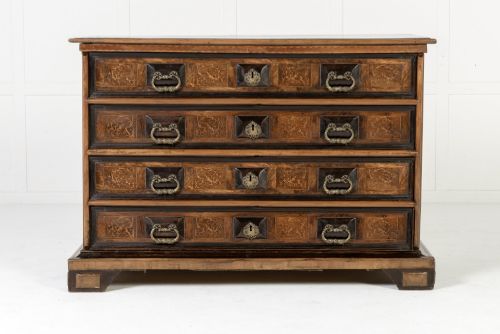
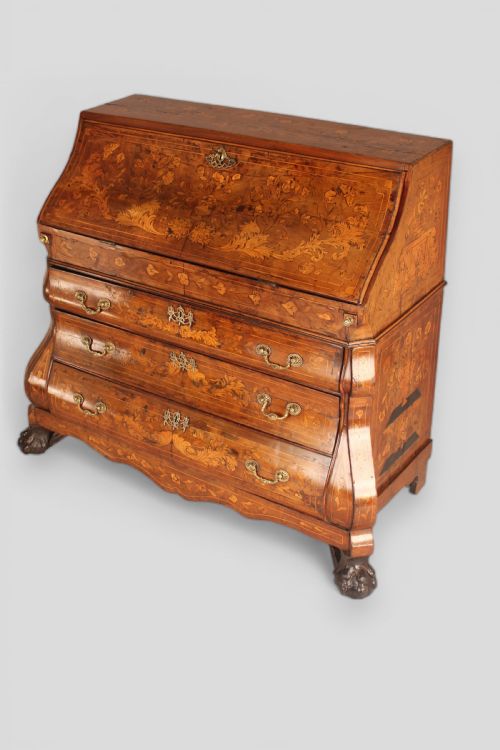
Buyers frequently encounter walnut as the primary timber, often paired with fruitwood inlay and metal or brass mounts. Pieces showcase varying profiles, including block fronted shapes and bombe contours.
How they were made
Cabinetmakers constructed these forms using solid timbers and veneers, predominantly employing walnut and fruitwood for both structural elements and decorative surfaces. Wood inlay and fruitwood inlay form intricate pictorial or geometric patterns across the exterior surfaces.
Metal and brass components provide structural reinforcement and decorative accents, particularly on key escutcheons, handles, and mounts. Skilled joinery aligns the shaped facades, such as bombe curves and block fronts, with precise internal compartments.
Listings feature walnut, fruitwood, and brass materials across eighteenth and nineteenth-century forms.
What varies in quality
The refinement of the timber inlay dictates much of the visual distinction, separating simple geometric patterns from elaborate pictorial marquetry. Precision in the shaping of bombe fronts and block fronted carcasses shows the joiner's mastery over timber and veneer.
The complexity of the interior arrangement, including secret drawers and revolving tabernacles, reflects the ambition of the original workshop. Preservation of the original brass mounts and structural integrity across centuries marks the higher tier of surviving examples.
The Continental Marquetry Bureau Glossary
- Marquetry
- Decorative veneer applied to furniture in patterns using wood, metal, or other materials. This technique creates detailed pictorial or abstract designs across the writing flap and drawer fronts.
- Bombe
- A bulging or outward-curving swell on the front and sides of a cabinet or bureau. This sculptural form demands advanced woodworking skill to maintain structural stability.
- Escritoire
- A small writing cabinet with a sloping lid or drop-front panel. It serves a similar function to a bureau but often emphasises a portable or compact tabletop format.
- Block front
- A furniture facade divided vertically into three sections, with the outer two projecting forward and the central section recessed. This architectural treatment adds depth and shadow to chest and bureau drawers.
- Tabernacle
- A central architectural niche or compartment within the interior fittings of a bureau bookcase. It often conceals smaller drawers or secret hiding places.
Continental Marquetry Bureau: Frequently Asked Questions
How do I use a continental marquetry bureau today?
These pieces function well as traditional writing desks in studies or living rooms, providing a solid sloping surface for correspondence and laptops.
The internal pigeonholes and drawers also offer practical storage for stationery, while the lower drawers keep larger items neatly concealed.
What styles are included in continental marquetry?
The category encompasses regional European aesthetics from the seventeenth through the nineteenth centuries, featuring Dutch Baroque, South German Baroque, and Italian Neoclassical designs.
Each style employs distinct carving depths, architectural silhouettes, and inlay motifs to reflect its geographic origin.
How do I care for walnut and fruitwood marquetry?
Keep the wood away from direct sunlight and steady temperature fluctuations to prevent the delicate veneer from drying or cracking.
Apply a traditional wax polish occasionally to nourish the timber and maintain the soft sheen of the inlaid surfaces.
How can I tell a bureau from a bureau bookcase?
A standard bureau consists of a base cabinet with a sloping writing flap and drawers below. A bureau bookcase incorporates an upper shelved cabinet section designed for storing books and displaying objects.