


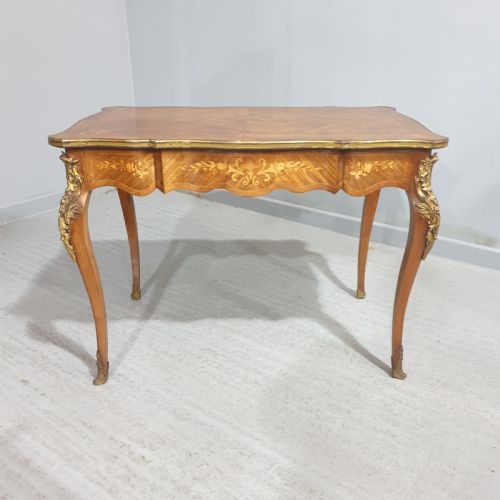


Warm Brown Marquetry Bureau
These pieces of warm brown marquetry bureau bring together intricate floral or pictorial veneers and practical writing spaces, offering both beauty and a dedicated writing surface for the home.
Warm Brown Marquetry Bureau
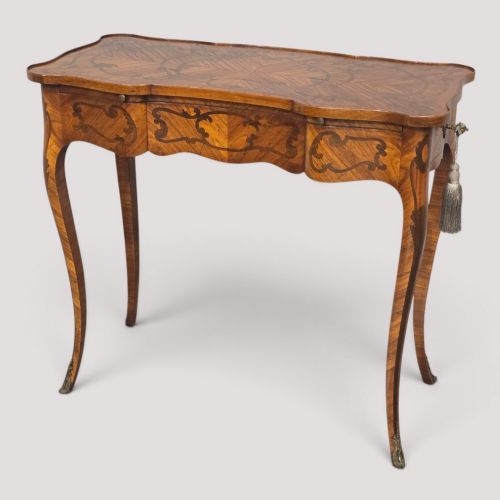
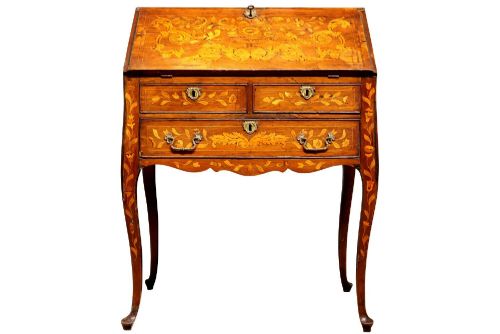
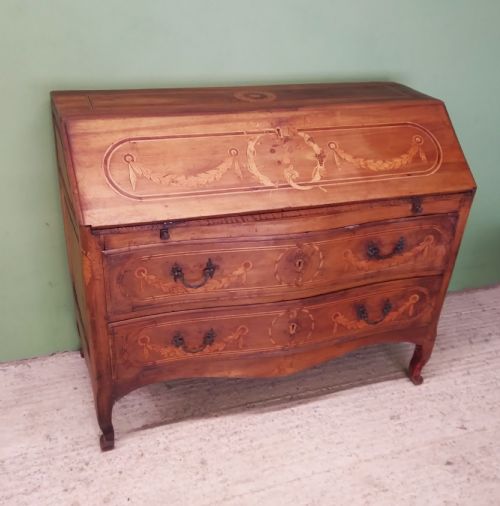
A warm brown marquetry bureau provides a functional writing surface combined with enclosed storage compartments, set within a wooden carcase decorated with patterned veneers. When you search for this phrase, you encounter writing desks, bureaux, and bonheur du jour forms that originate from various European traditions.
The pieces on this page span the eighteenth century, the nineteenth century, and the Edwardian era, showing influences ranging from Dutch Rococo to French Louis XV revival and Neoclassical styles. Walnut, fruitwood, and kingwood form the primary backgrounds for the contrasting lighter wood inlays.
You are most likely to meet French and Dutch iterations on this page, as continental makers dominated the production of elaborate floral and pictorial veneers during these periods. These desks range from compact ladies writing tables to substantial freestanding bureaux designed for grand reception rooms.
How they were made
Cabinetmakers constructed these pieces using solid foundational timbers like walnut or fruitwood, onto which they applied finely sliced marquetry veneer. This decorative skin typically depicts floral arrangements, foliage, or architectural scenes using contrasting woods such as satinwood.
Metal mounts in brass or ormolu frequently edge the writing surfaces, drawers, and cabriole legs of French examples, adding structural protection and decorative contrast to the warm brown tones of the wood. Glass occasionally appears in upper cabinets or writing compartments where specific desk styles demand it.
Periods represented span the eighteenth century, the nineteenth century, and the Edwardian era.
What varies in quality
The intricacy and precision of the veneer work separate the finer examples from simpler production, with master craftspeople utilising a wider variety of shaded woods to create depth and perspective in pictorial scenes. The choice of base timber also dictates quality, with dense hardwoods providing a more stable foundation than softer alternatives.
The refinement of the internal drawers, pigeonholes, and writing slopes determines the overall execution of the piece, alongside the quality of any cast brass or ormolu mounts. Finer desks maintain crisp lines in their marquetry patterns without excessive filler or lifting veneer edges across the curved surfaces.
The Warm Brown Marquetry Bureau Glossary
- Marquetry veneer
- Thin sheets of wood applied to a carcase in decorative patterns to form pictures or geometric designs. This technique relies on contrasting natural wood colours rather than paint.
- Bonheur du jour
- A small light ladies writing desk featuring a tiered superstructure with drawers and shelves above the main writing surface. This form gained popularity during the eighteenth century and saw revivals later.
- Ormolu
- Gilded bronze used for decorative mounts and furniture trimmings, particularly prominent on French desks. The application of gold gives the metal a rich, warm lustre.
- Bureau platt
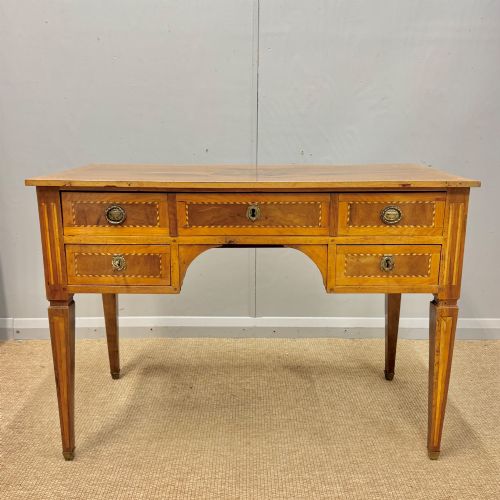
- A large flat-topped writing table, usually freestanding with drawers beneath the writing surface. These desks often feature elaborate veneer work across all visible sides.
Warm Brown Marquetry Bureau: Frequently Asked Questions
What is a bureau platt?
A bureau platt is a flat-topped freestanding writing table equipped with drawers beneath the main writing surface. These desks were designed to sit in the centre of a room rather than against a wall.
They typically display decorative marquetry across all sides, ensuring the piece looks finished from any angle in a study or drawing room.
How do Dutch and French styles differ?
Dutch marquetry bureaux frequently feature dense, exuberant floral arrangements executed in contrasting fruitwoods across substantial, blocky carcases. The craftsmanship emphasises rich botanical motifs that cover almost every exterior surface.
French pieces, such as those in the Louis XV style, tend to incorporate curved cabriole legs, ormolu mounts, and more restrained or pictorial marquetry. They often prioritise lightness of form and delicate structural lines.
Where should I place a marquetry desk?
Marquetry desks require placement out of direct sunlight to prevent the delicate stained and natural wood veneers from fading over time. Maintaining a stable room temperature helps protect the old timber and veneer from shrinking or warping.
Freestanding models look particularly striking when positioned away from walls where their detailed side and back veneers remain visible.
What woods were used for these desks?
Makers relied on walnut, fruitwood, and kingwood as primary background timbers for their warm brown tones. Satinwood and other lighter varieties provided the sharp contrast needed for intricate floral inlay work.
Brass and ormolu often supplemented these woods as decorative edging and mounts, while secondary structural timbers like oak or pine formed the interior framing.