


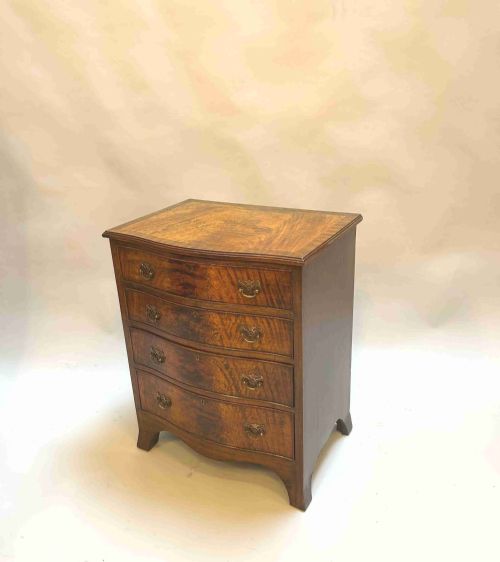
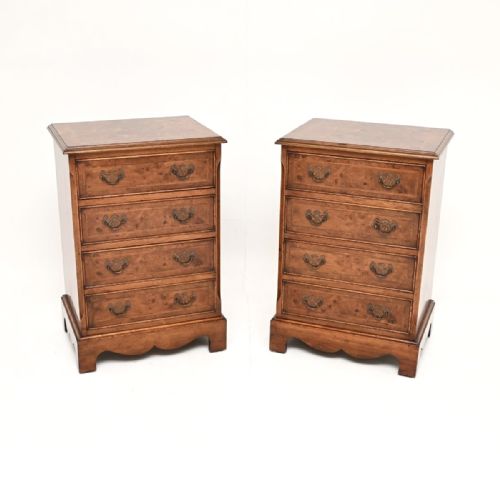
Georgian Style Walnut Drawers
Georgian style walnut drawers bring rich timber grain and classic proportions into a room, offering practical storage with distinct period character.
Georgian Style Walnut Drawers
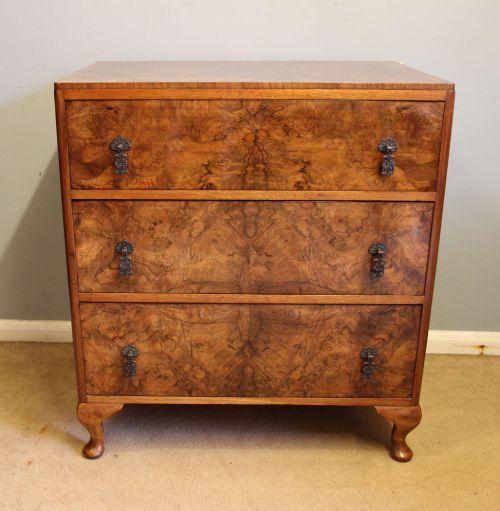
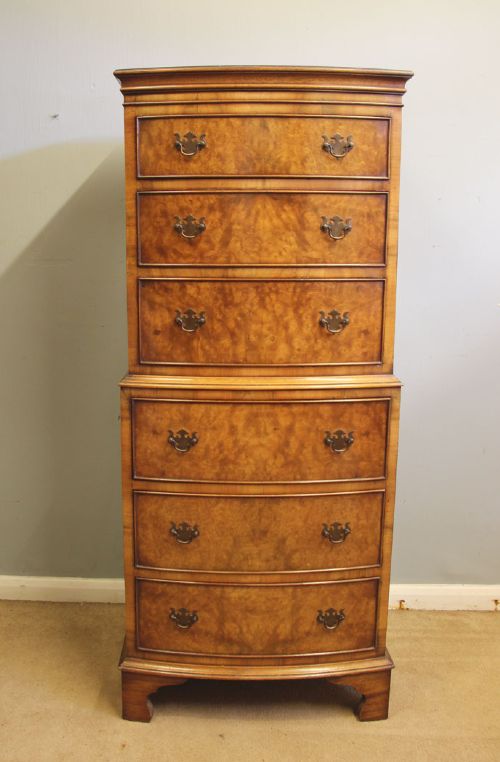
When searching for georgian style walnut drawers, buyers encounter pieces that span from the late nineteenth century through to the interwar period of the 1930s, alongside revivals in the Queen Anne and George II manner. These items range from compact bedside chests and bow fronts to grand tallboys and pedestals, heavily reflecting early revival movements rather than strict eighteenth-century originals.
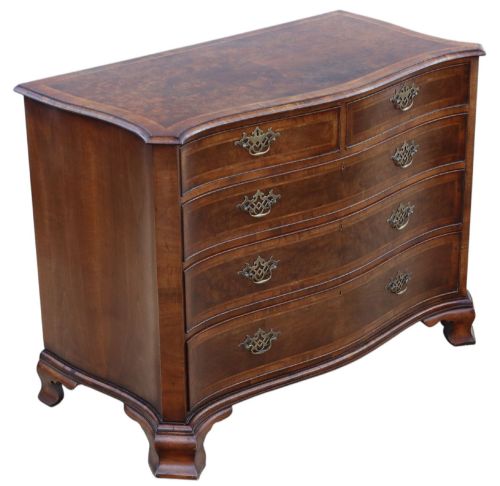
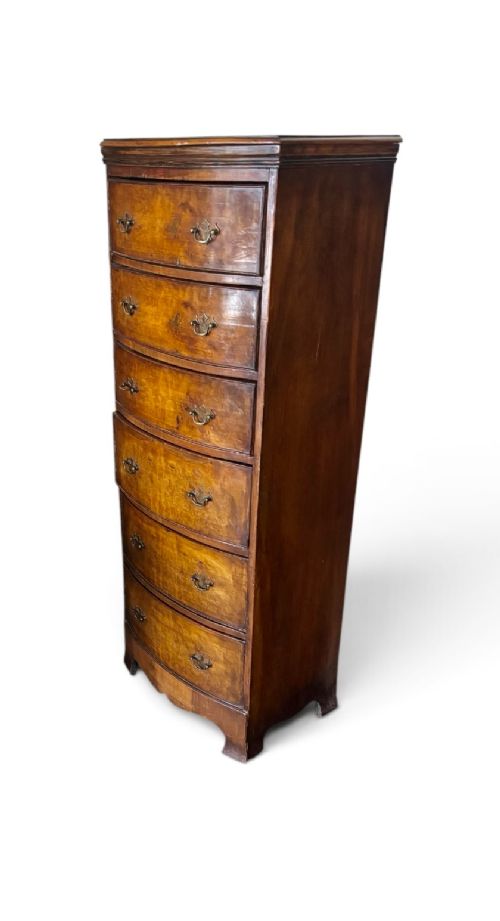
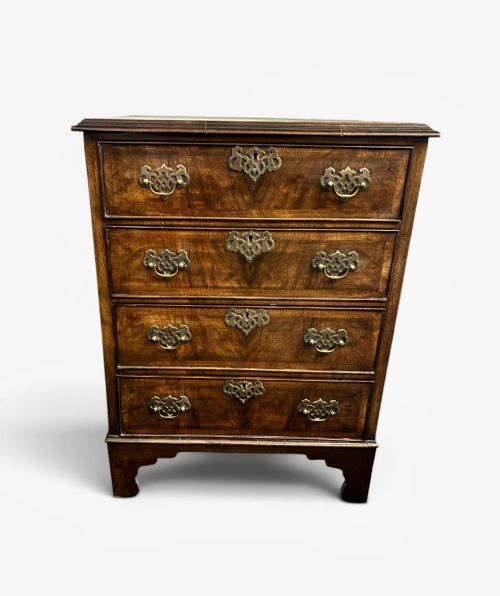
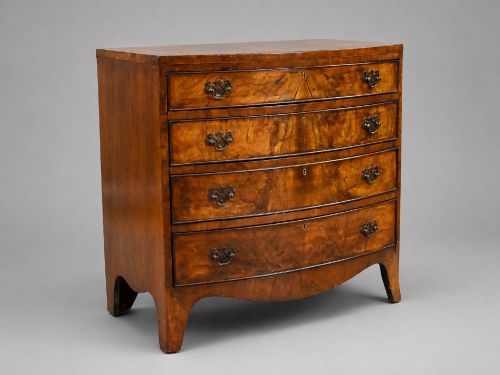
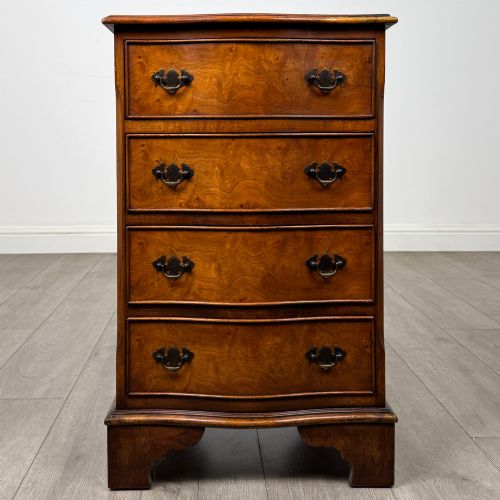
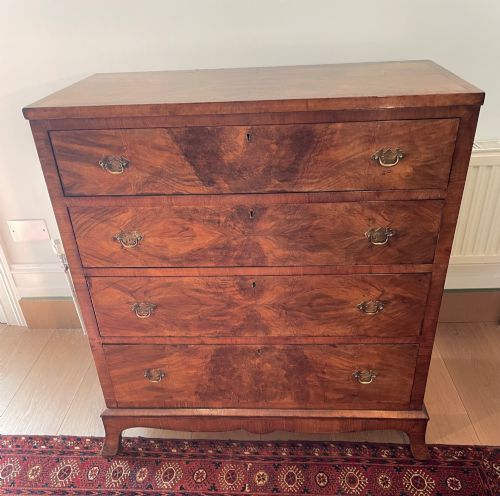
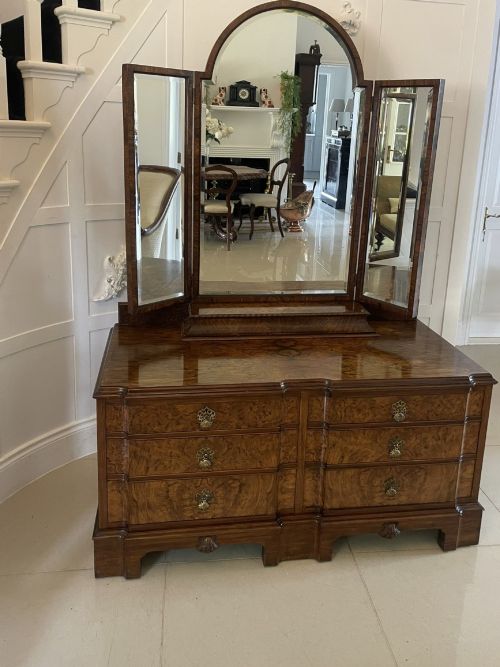
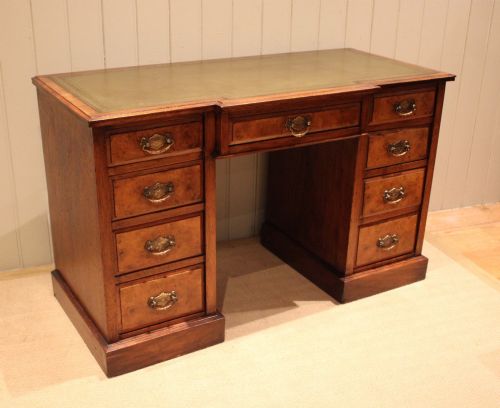
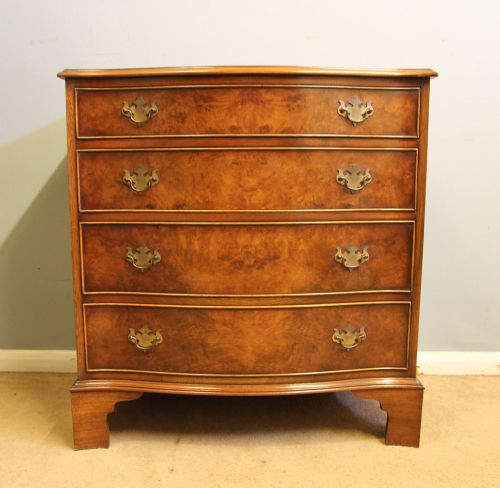
The most common form on this page is the chest of drawers in burr or figured walnut, often built with serpentine or bow fronts. Alongside standard drawer units, the selection includes writing desks, tallboys, and occasional side tables that adapt eighteenth-century vernacular for twentieth-century interiors.
How they were made
Cabinet makers relied on walnut, burr walnut veneer, and figured walnut laid over secondary timbers such as pine and oak to achieve decorative movement on flat and curved drawer fronts. Crossbanding frames the drawer perimeters, while brass handles and leather inserts add functional contrast.
Construction techniques include dovetail joints for drawer boxes and curved serpentine shaping on commodes and tallboys. Veneers are matched symmetrically across drawer banks to create striking grain patterns.
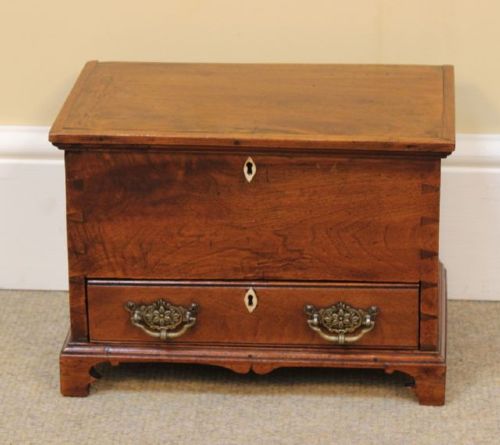
Miniature apprentice pieces appear alongside full-sized furnishings, offering tiny dovetailed drawers designed to test a young woodworker's skill.
What varies in quality
The distinction between tiers rests upon the selection and matching of the timber veneer, particularly the density and curl of the burr walnut used across the drawer faces. Superior examples demonstrate continuous grain patterns across multiple drawers and precise hand-cut crossbanding.
Hardware choice and internal secondary wood selection also separate standard production from exceptional work. Heavier brass fittings, clean oak drawer linings, and confident serpentine or bow front carving elevate the finished piece.
Heals of London
The Georgian Style Walnut Drawers Glossary
- Burr Walnut
- A figured timber harvested from walnut tree growths, prized for its swirling knot patterns. It is typically sliced into thin veneers for cabinet fronts.
- Tallboy
- A tall chest of drawers, often constructed in two stacked sections. This form maximises vertical storage space while maintaining a compact footprint.
- Serpentine
- A furniture front characterised by a wavy contour with a convex centre flanked by concave curves. This shape requires advanced cabinet-making skill.
- Crossbanding
- A decorative border technique where strips of veneer are laid perpendicular to the main grain. It frames the perimeter of drawer faces and table tops.
- Bachelors Chest
- A compact drawer unit featuring a fold-over top or slide used for writing. These versatile items served domestic study needs.
Georgian Style Walnut Drawers: Frequently Asked Questions
What is the difference between a tallboy and a chest on chest?
A tallboy typically refers to a tall single-carcase chest of drawers or a wardrobe-style unit. A chest on chest specifically describes a two-piece stacking chest.
Both forms offer generous vertical storage capacity while taking up minimal floor space in a bedroom or dressing room.
How do I care for walnut veneer furniture?
Walnut benefits from stable room temperatures away from direct sunlight and heat sources. Excessive light can fade the rich brown tones and dry out the timber.
Apply a traditional beeswax polish sparingly and buff with a soft cloth to maintain the natural lustre of the wood grain without building up heavy residue.
How do I identify burr walnut?
Burr walnut displays dense, swirling cluster patterns formed by knot growths on the tree. It contrasts sharply with straight-grained walnut.
Cabinet makers slice these formations into fine veneers to cover drawer fronts and table tops, creating rich optical movement across the surface.