



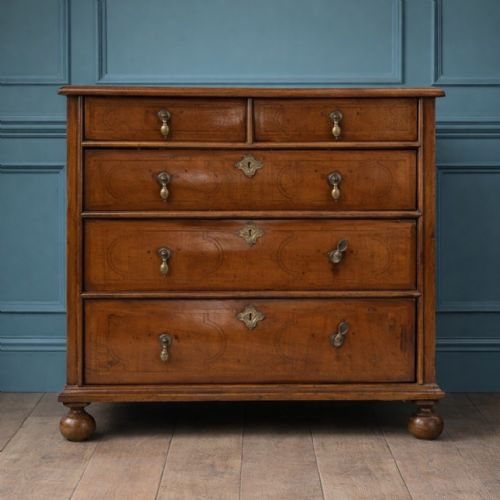


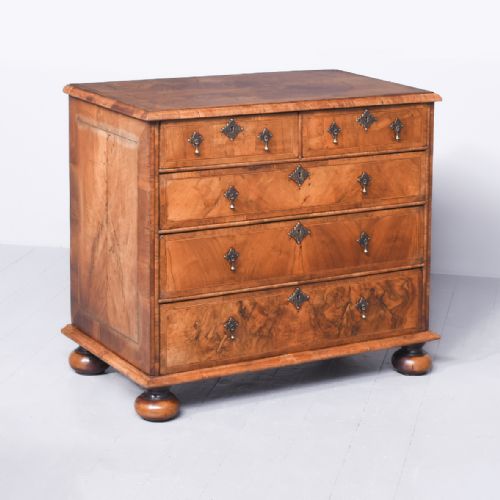

William Mary Inlaid Cabinet
A william mary inlaid cabinet brings magnificent marquetry and oyster veneers into a room, offering both history and practical storage.
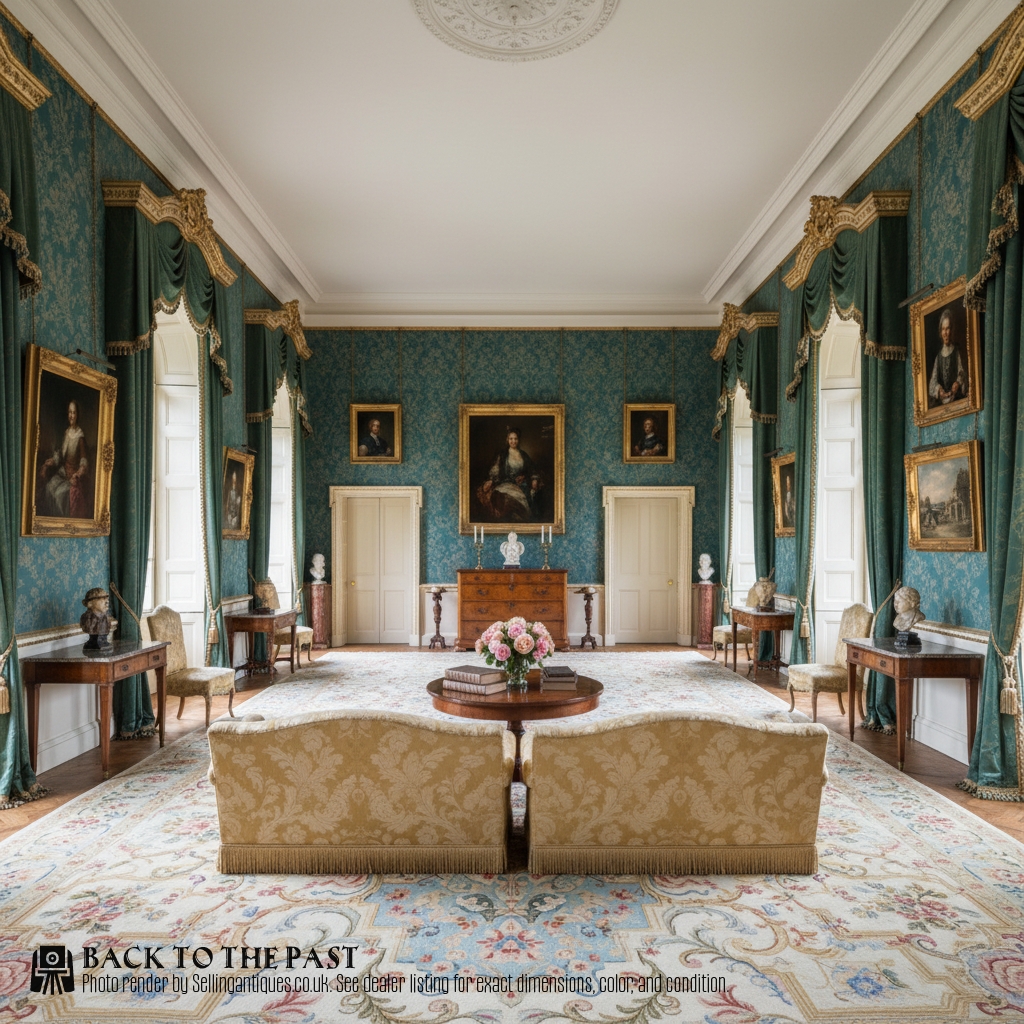
William Mary Inlaid Cabinet
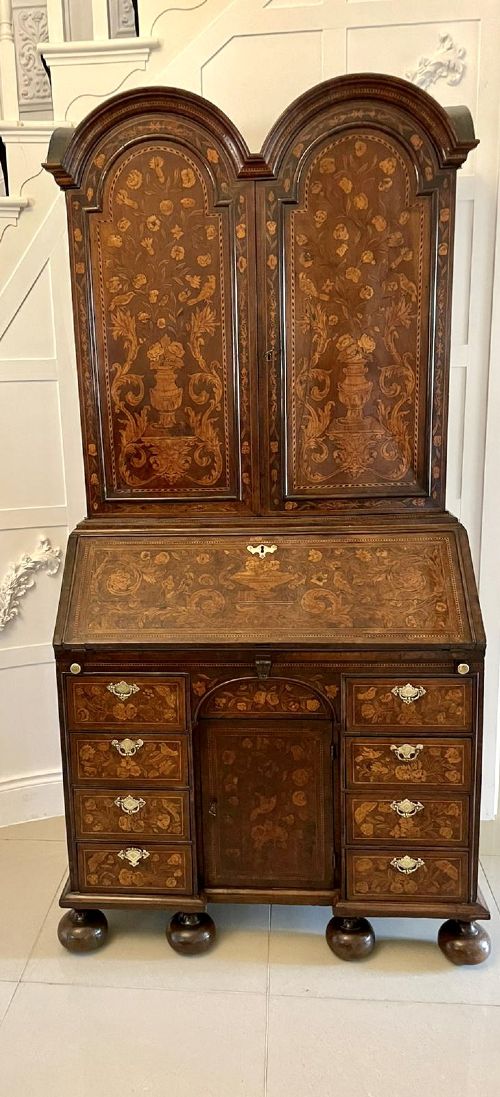
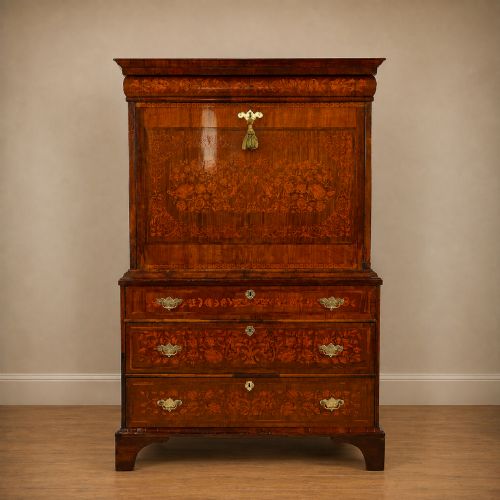
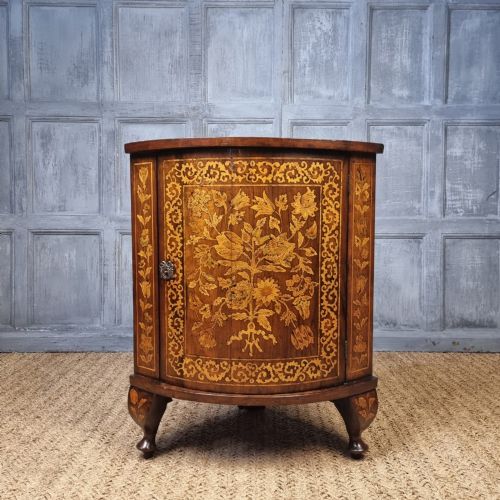
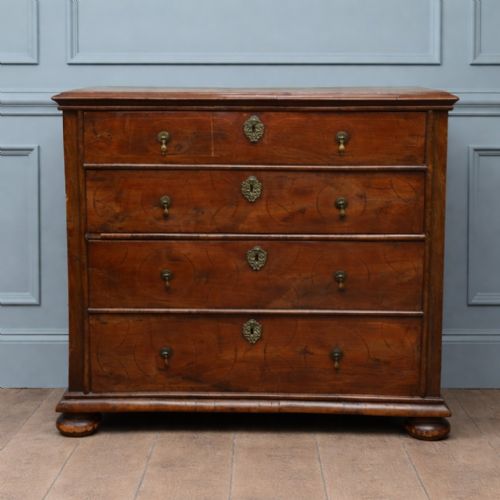
A william mary inlaid cabinet comprises sophisticated case furniture built during the late seventeenth and eighteenth centuries, including bureaus, chests of drawers, and cabinets on stands. These pieces showcase rich timber surfaces embellished with intricate floral, seaweed, or geometric marquetry patterns.
Most examples you will encounter span the seventeenth century through the Georgian period, often utilising walnut as a primary carcase material. Forms range from towering double dome bureau bookcases to floor-standing corner cupboards and low chests.
The aesthetic bridges seventeenth-century exuberance with eighteenth-century refinement, drawing on Dutch Baroque influences as well as later Georgian interpretations. Buyers seek these items for their exceptional surface decoration and architectural presence within a period interior.
How they were made
Cabinetmakers constructed the carcase using timbers such as oak and walnut, applying delicate veneers across the primary surfaces. Burr walnut, kingwood, and olive wood provided striking grain patterns for oyster veneering and panel construction.
Inlay and marquetry techniques utilised contrasting materials like boxwood and fruitwood to create detailed floral and linear designs. Craftsmen embedded these veneers meticulously into the groundwork, securing them with animal glues before hand-polishing the exterior.
Some seventeenth-century drawers retain traces of scented wood shavings inside, left behind by makers who clearly enjoyed their workshop aromas.
What varies in quality
The sophistication of the marquetry and the choice of veneer dictate the distinction between standard and exceptional pieces. Elaborate seaweed or floral marquetry combined with well-matched burr walnut demonstrates superior workshop execution.
Proportion, architectural integrity, and the retention of original brass hardware elevate certain bureaus and cabinets above others. The precision of the inlay work and the preservation of the polished timber surface determine the overall caliber of the object.
The William Mary Inlaid Cabinet Glossary
- Marquetry Inlay
- Decorative patterns formed by fitting contrasting veneers into a prepared background surface. This technique creates elaborate floral, geometric, or pictorial designs across drawer fronts and top panels.
- Oyster Veneer
- Cross-section slices of small branches arranged in circular or repeating patterns resembling oyster shells. Cabinetmakers utilised this method extensively on late seventeenth-century surfaces.
- Bureau Bookcase
- A slant-front writing desk combined with an upper shelving or cabinet section enclosed by doors. Double dome variants represent particularly ambitious forms from the period.
- Parquetry
- Geometric mosaic woodwork arranged in regular patterns such as cubes or hexagons. It provides a striking contrast to freeform floral marquetry.
- Cabinet on Stand
- A raised storage compartment supported by a distinct framework of legs and stretchers. This form lifts the decorated case off the floor to display the timber work.
William Mary Inlaid Cabinet: Frequently Asked Questions
How do I identify a seventeenth century piece?
Look for construction traits such as oak drawer linings, hand-cut dovetails, and specific timber choices like walnut and olive. The presence of oyster veneers and intricate marquetry typically points toward this earlier era.
Examine the secondary woods and overall cabinet architecture to confirm the period. Later nineteenth-century interpretations often display different internal construction methods.
Where should I place a bureau bookcase?
These tall pieces require a stable wall with sufficient vertical clearance, particularly double dome variants that command visual space. Position them away from direct sunlight and heat sources to protect the delicate walnut veneers.
Ensure the room humidity remains stable to prevent timber movement and cracking in the antique carcase.
How do I care for walnut veneer?
Maintain a stable indoor climate and apply traditional beeswax periodically to nourish the historic timber surface. Avoid modern liquid polishes that can penetrate old finishes and damage the veneer.
Dust gently with a dry, soft cloth and protect the top surfaces from moisture and heavy objects.