

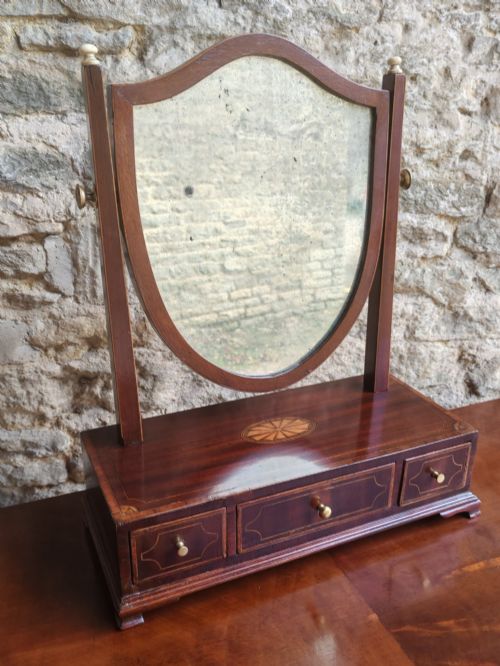


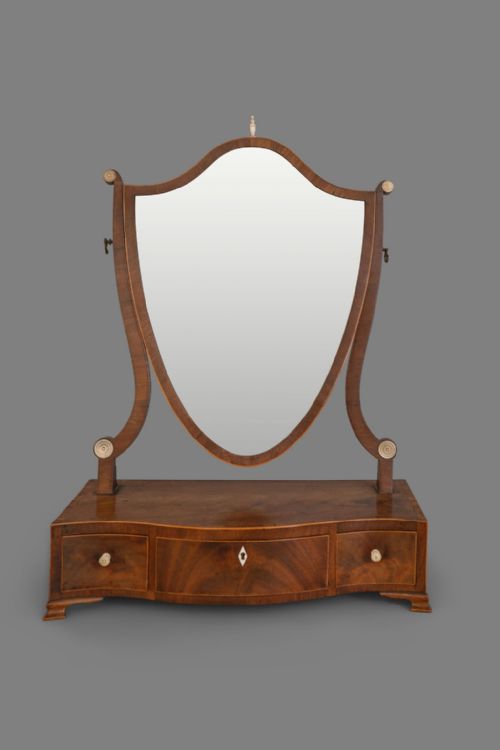

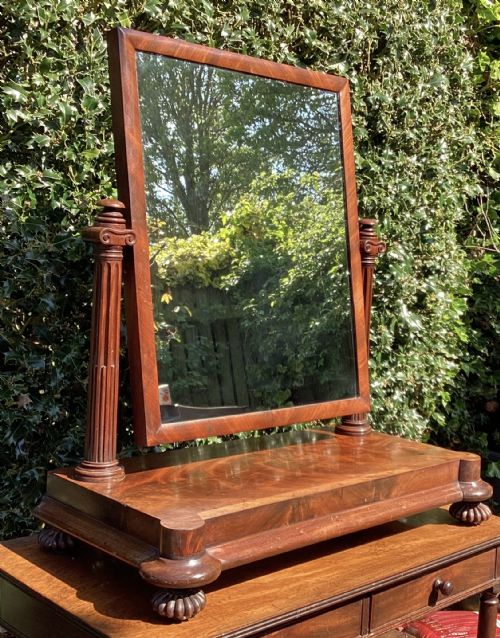

Georgian Style Swing Mirror
These georgian style swing mirror pieces bring functional elegance to a dressing table, offering adjustable glass framed in rich woods like mahogany and satinwood.
Georgian Style Swing Mirror
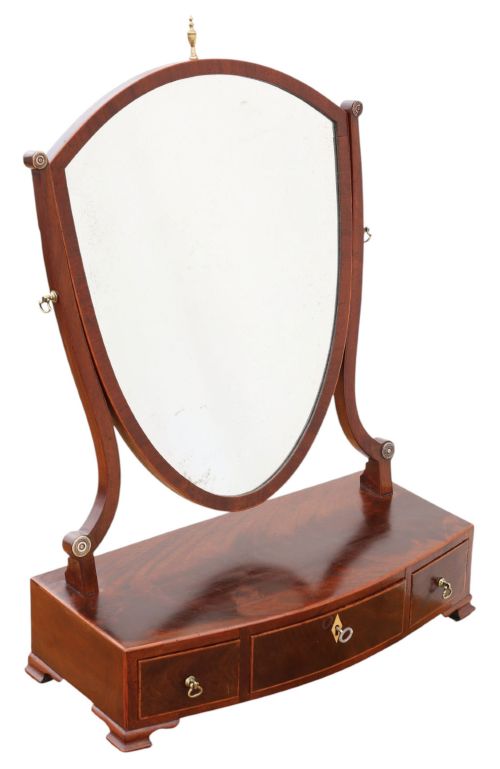
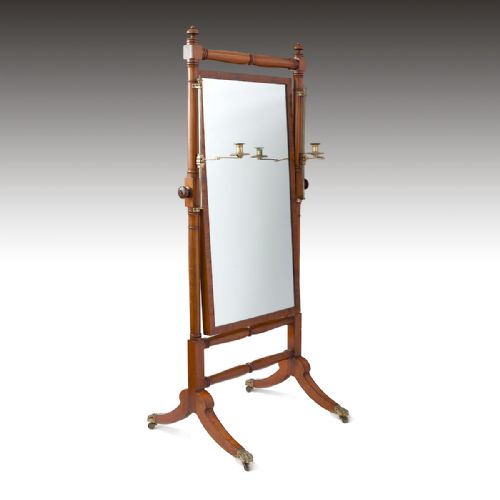
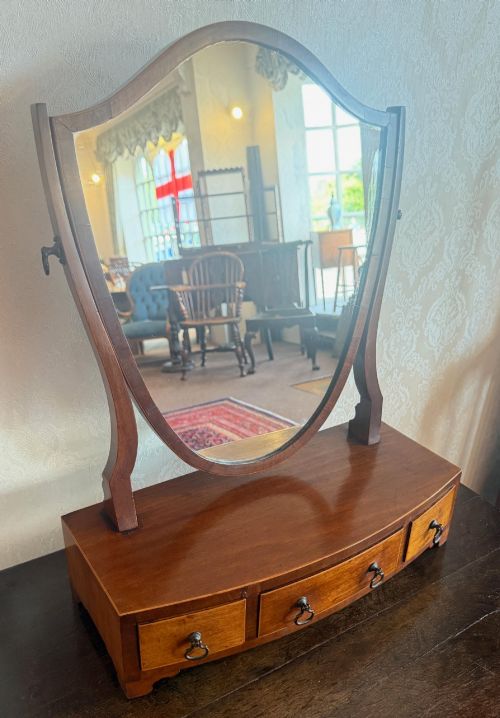
When you search for a georgian style swing mirror, you encounter a selection of dressing table mirrors, toilet mirrors, and larger cheval mirrors spanning the eighteenth, nineteenth, and early twentieth centuries. These pivoting glasses were designed for personal grooming on a chest of drawers or directly on a dressing table.
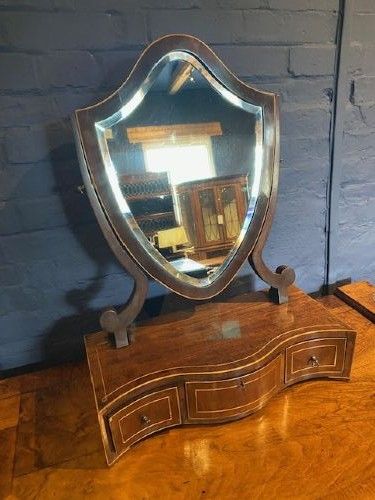
The pieces on this page heavily feature mahogany frames, often incorporating shield shapes, serpentine bases, and delicate satinwood inlay. You will also find walnut, painted surfaces, and occasional brass accents typical of George III, Regency, and Sheraton designs.
Smaller tabletop versions dominate the selection, though larger cheval mirrors designed to stand on the floor appear as well. The overarching aesthetic relies on proportion, warm wood tones, and practical tilting mechanisms that angle the mirror glass.
Materials and construction
Cabinetmakers constructed the frames using solid mahogany, walnut, and satinwood, frequently applying fine stringing and marquetry inlay to enhance the primary wood surfaces. The timber was selected for grain pattern and depth of colour before being shaped into rectangular, shield, or serpentine outlines.
The mirrors utilise pivoted side screws mounted on upright supports, allowing the glass to tilt smoothly within its frame. Backboards are typically constructed from secondary softwoods or oak, holding the mirror plate securely in place behind the glass.
Materials recorded across the current selection include brass, bone, satinwood inlay, walnut, and mirrored glass.
Distinctions in quality
Quality reveals itself in the crispness of the woodwork, the subtlety of the satinwood inlay, and the retention of original brass hardware. Finer examples display meticulous attention to proportion, particularly in the curves of shield frames and the joinery of the drawer boxes beneath.
The presence of original mirror glass with natural ageing differentiates a piece, as does the integrity of the pivoting mechanism. Weight distribution and stable construction without excessive structural replacement mark the distinction between standard workshop production and superior cabinet work.
Gillow
The Georgian Style Swing Mirror Glossary
- Cheval mirror
- A large standing mirror mounted on a freestanding frame with four legs, allowing the glass to swing fully between vertical uprights. These taller mirrors were designed for full-length viewing in bedrooms and dressing rooms.
- Toilet mirror
- A smaller dressing table mirror designed to sit on top of a chest of drawers or vanity table, frequently incorporating small drawers in the base. They were essential daily accessories for grooming in eighteenth and nineteenth-century interiors.
- Shield shape
- A mirror plate and frame cut into the contour of a heraldic shield, popular during the late eighteenth century. This silhouette softens the rigidity of rectangular mirrors on dressing tables.
- Serpentine
- A front edge or frame outline curved in a wave pattern, convex in the centre and concave at the sides. It demands high skill from the cabinetmaker to execute cleanly in solid mahogany.
- Marquetry
- Decorative woodwork where pieces of different coloured veneers are fitted into a ground material to form intricate patterns. Dutch makers frequently applied floral and figurative designs to dressing mirrors using this technique.
Georgian Style Swing Mirror: Frequently Asked Questions
Where should a swing mirror be placed?
Tabletop versions sit securely on top of a dressing table, chest of drawers, or sideboard where personal grooming takes place. Larger cheval mirrors stand independently on the floor against a bedroom wall.
Ensure the surface is level and capable of supporting the weight of the frame. Position the piece near a natural light source to make the best use of the tilting glass.
How do I adjust the mirror angle?
Most pieces use threaded brass side screws or wooden pegs inserted through the upright supports into the mirror frame. Turning these pivots loosens or tightens the grip on the mirror.
Support the glass with one hand while adjusting the tension to prevent sudden slipping. Tighten the fittings once the desired angle is reached.
Are the mirror plates original?
Many older dressing mirrors retain their original glass, which often exhibits light foxing, minor speckling, and gentle distortion. These natural signs of age confirm the long history of the piece.
Replacement glass is common due to the fragile nature of old mirrors. Inspect the silvering and backing to understand how much of the piece remains in its historic state.
How do I clean the wood and glass?
Dust the mahogany or satinwood frame regularly with a dry, soft cloth to prevent buildup. Avoid harsh chemical polishes that can damage historic finishes.
Clean the mirror glass sparingly using a mild glass cleaner applied to a cloth rather than sprayed directly onto the surface. This prevents moisture from seeping behind the old frame edges.