






Shield Shape Dressing Mirror
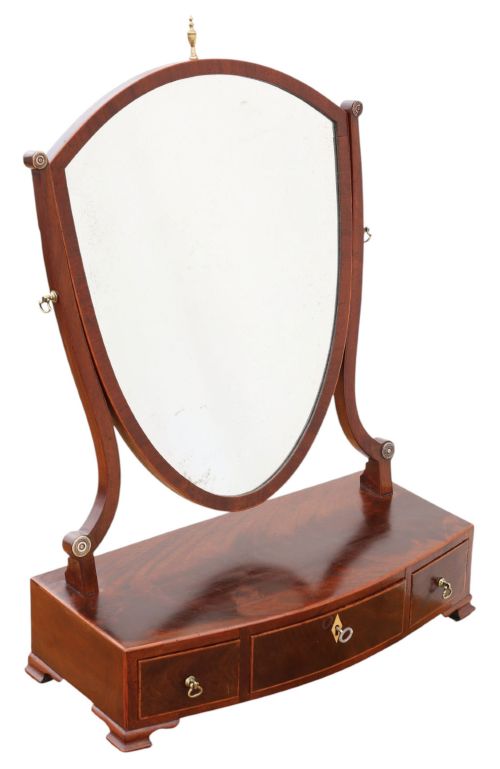
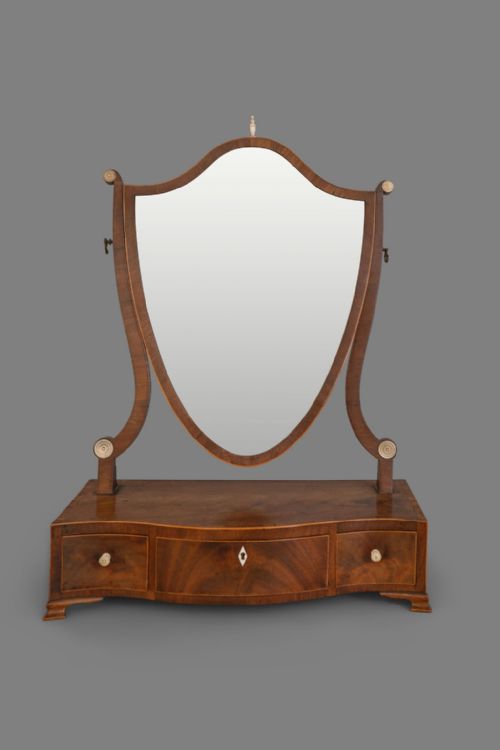
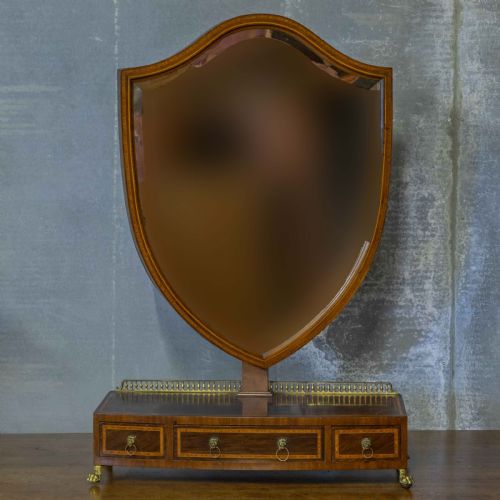
A shield shape dressing mirror offers a tilting glass mounted on a box base, bringing Georgian and Edwardian proportion to a dressing table.
Shield Shape Dressing Mirror
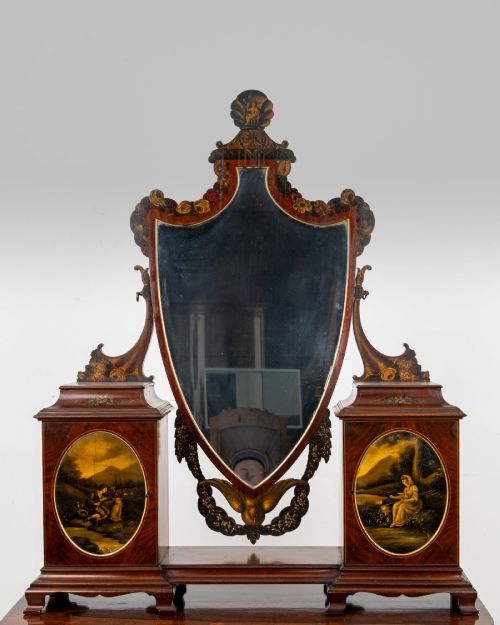
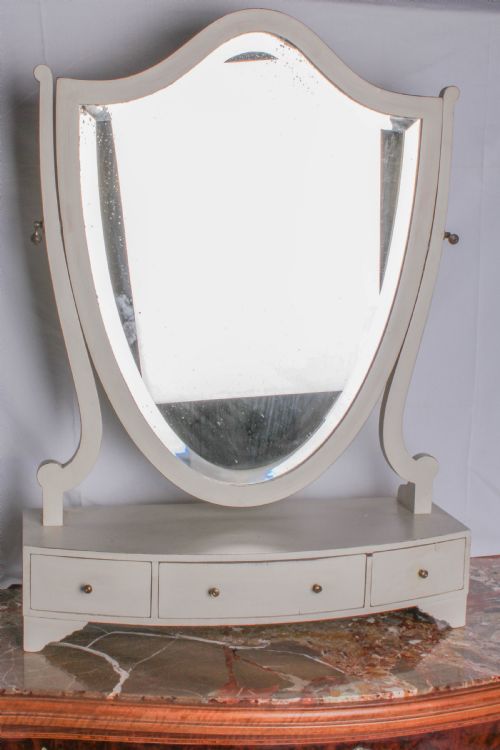
A shield shape dressing mirror sits on tables or stands, designed to tilt for personal grooming in bedrooms and dressing rooms. The form spans Georgian, Victorian, and Edwardian periods, appearing in mahogany, satinwood, and painted wood.
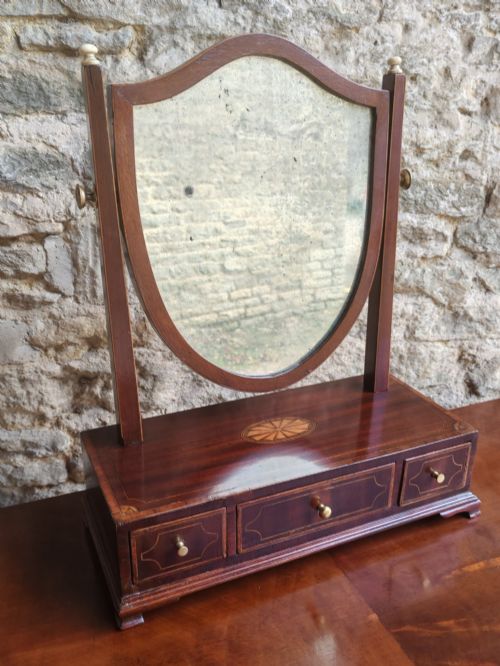
Most examples found here date from the eighteenth century to around nineteen hundred, taking the form of toilet mirrors, dressing table mirrors, and table top cheval mirrors with small jewellery drawers beneath the glass frame.
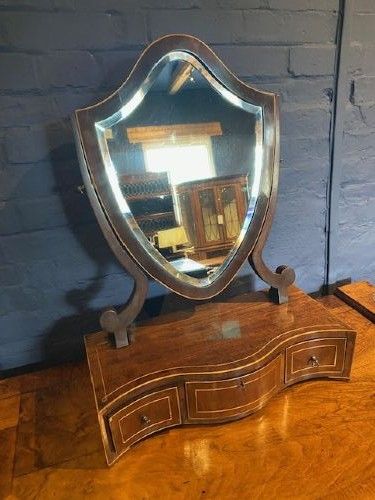
Makers shaped the glass into a distinct pointed shield outline, supporting it on upright arms attached to a serpentine or straight box base fitted with brass hardware.
Materials and construction methods
Cabinet makers utilised solid mahogany and satinwood, frequently applying boxwood stringing and decorative inlay to the base and upright supports. Painted wood surfaces also appear among Edwardian examples.
Original mirror glass sits within thin wooden frames, held by brass pivot screws that allow the plate to tilt forward or backward on its upright posts.
Several mirrors include miniature drawers lined for secret letters and stray pins.
Distinctions in craftsmanship
Quality rests in the harmony of the proportions between the shield frame and the underlying box base, alongside the crispness of any inlaid boxwood stringing. Finer pieces display careful selection of mahogany grain across the curved surfaces.
The integration of the brass hardware and the stability of the pivoting mechanism indicate the level of care taken by the original maker.
The Shield Shape Dressing Mirror Glossary
- Shield shape
- A mirror frame curved at the sides and tapering to a point at the top, resembling a heraldic shield. This silhouette defines the classic dressing table glass of the Georgian period.
- Toilet mirror
- A smaller mirror designed to stand upon a dressing table or chest of drawers rather than resting on the floor. These pieces often incorporate small drawers in the base for trinkets.
- Serpentine
- A front outline that curves outward in the centre and inward at the sides, creating a gentle wave effect. It adds considerable elegance to the wooden base of a dressing glass.
- Stringing
- A thin inlay of contrasting wood, such as boxwood, embedded into the surface of mahogany to create decorative borders. It is a hallmark of refined cabinet work.
- Cheval mirror
- A full length or table top dressing glass supported by a freestanding frame with four legs or feet. The term derives from the French word for horse.
Shield Shape Dressing Mirror: Frequently Asked Questions
Where did people place these mirrors?
These mirrors stood on top of dressing tables, chest of drawers, or dedicated washstands within bedrooms and dressing rooms.
They provided a movable reflection for shaving, hair styling, and adjusting neckwear before the widespread use of fitted wardrobe glass.
How do I date a dressing mirror?
Dating relies on observing the timber species, the style of the inlay, and the construction of the base drawers. Georgian pieces often feature serpentine mahogany bases, whilst Edwardian examples may show lighter satinwood or painted finishes.
The shape of the brass pivot screws and the thickness of the mirror glass frame also offer clear indications of the period of manufacture.
Are the mirror plates original?
Many mirrors retain their original glass, which can display slight foxing, minor silver loss, or subtle distortion due to age. Replacements occurred frequently over the centuries when old glass deteriorated.
Examining the silvering from the reverse and checking how the glass sits within the wooden rebate helps determine its age relative to the frame.
How do I care for my mirror?
Keep the wood nourished with appropriate wax polish applied sparingly, avoiding modern spray polishes that contain silicones. Ensure the brass pivot screws remain correctly adjusted so the frame tilts without straining the wooden upright arms.
Position the piece away from direct sunlight and strong heat sources to protect the polished mahogany and prevent the veneer from drying out.