
Tabletop Toilet Glass Mirror
These tabletop toilet glass mirrors sit upon a dressing table to tilt and reflect, bringing period timber and pivoting glass to the daily routine.
Tabletop Toilet Glass Mirror
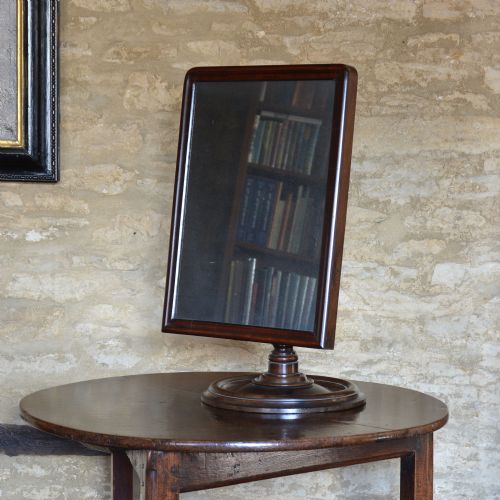
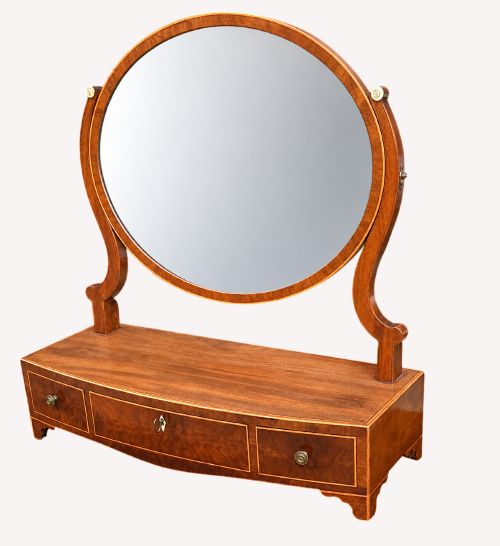
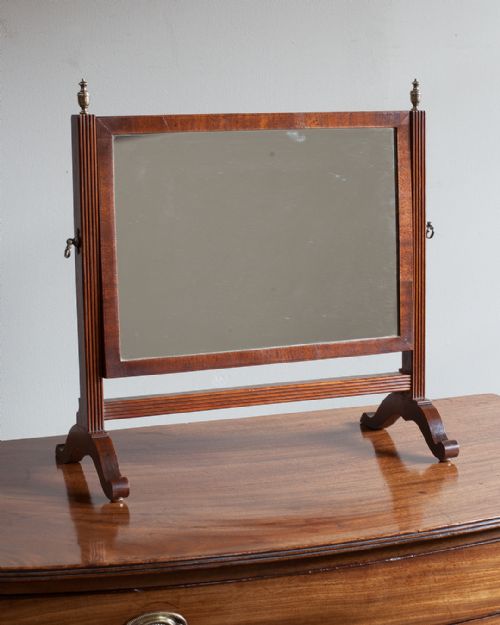
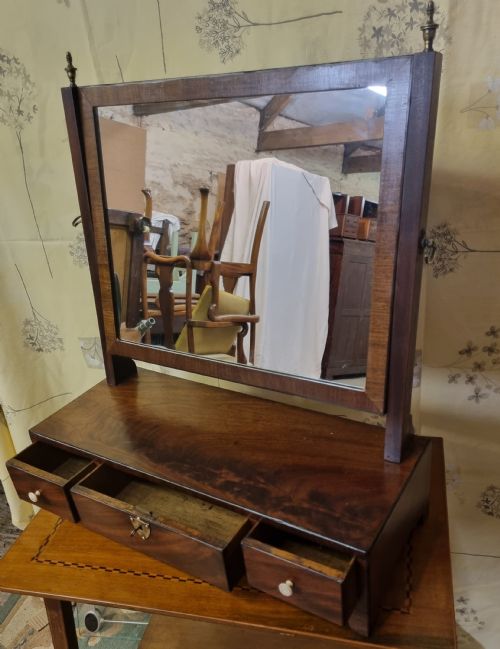
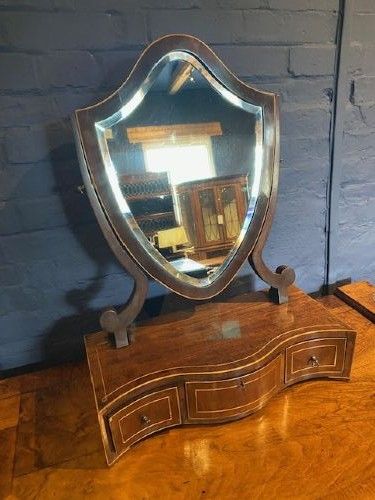
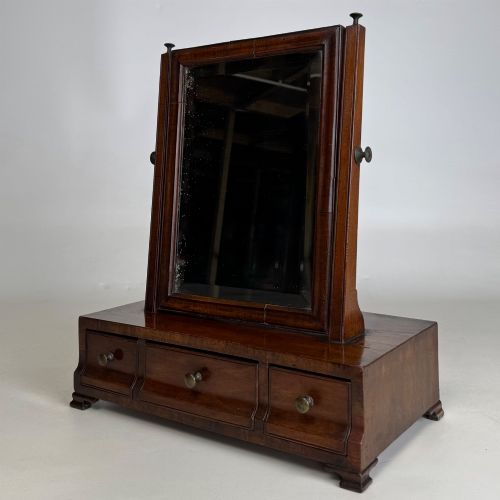
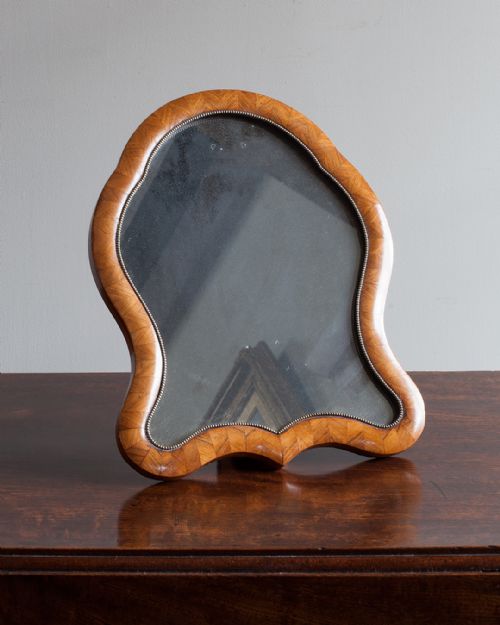
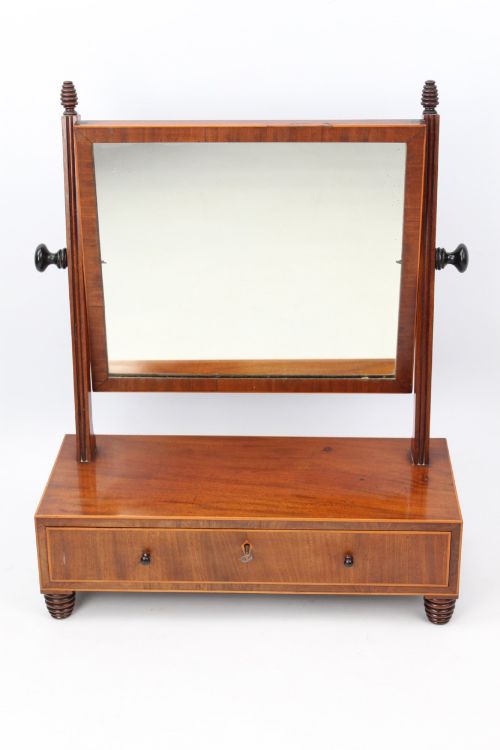
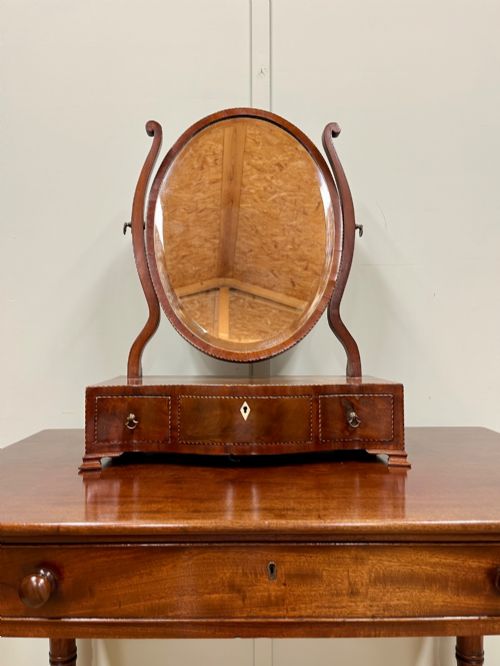
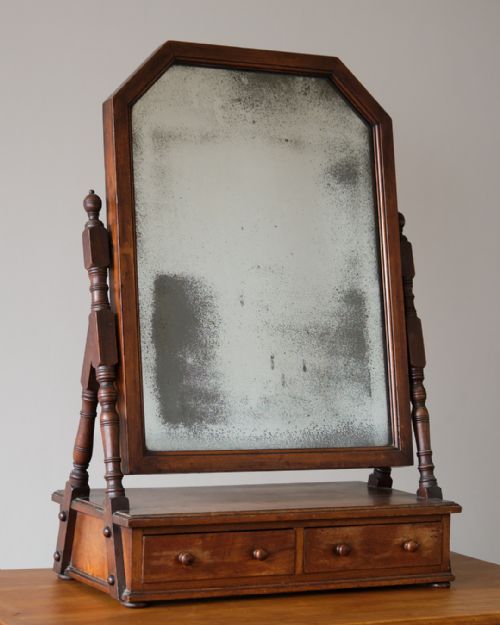
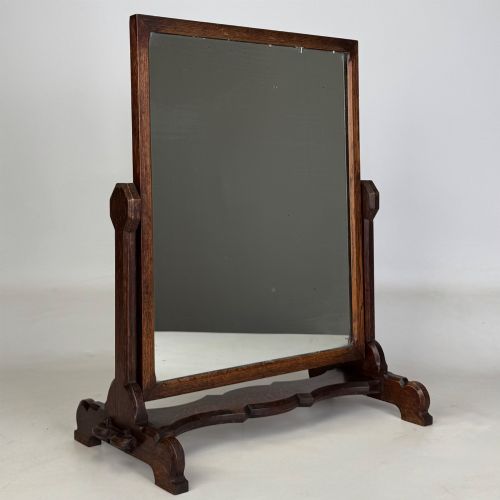
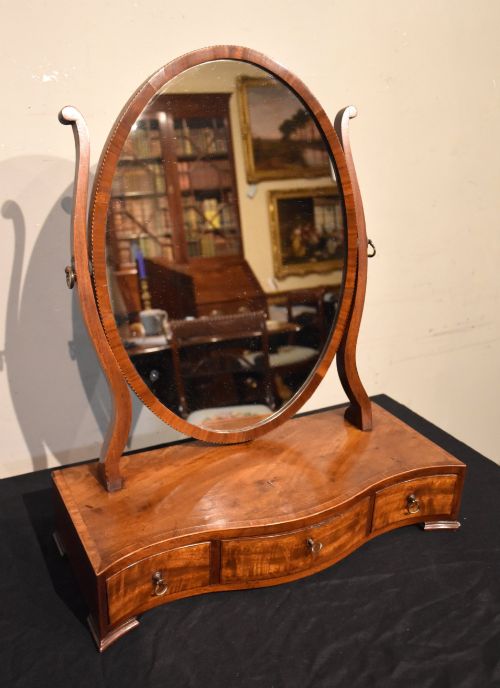
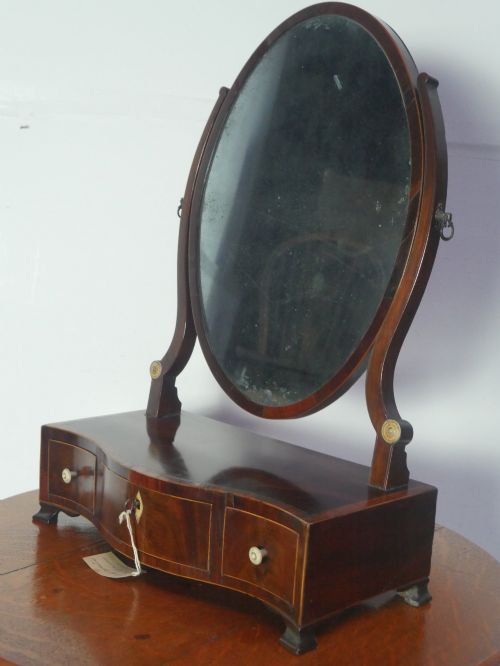
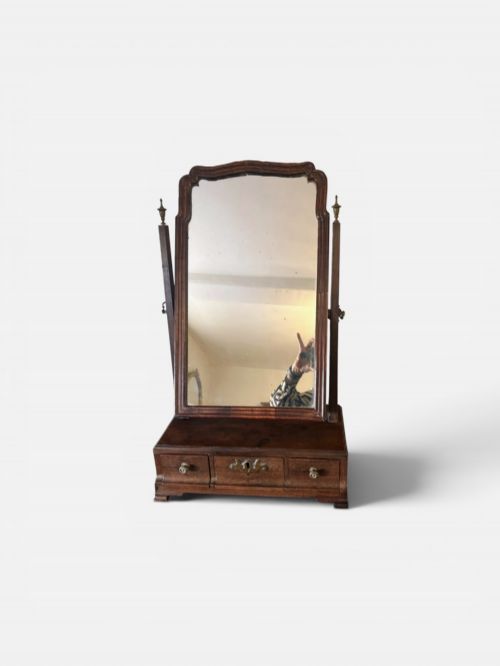
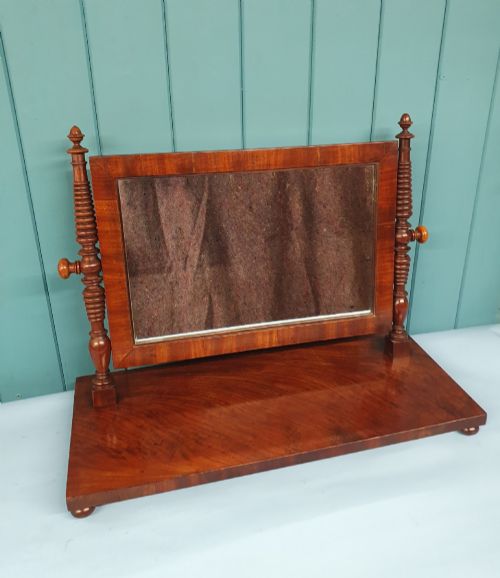
A tabletop toilet glass mirror is a pivoting glass plate mounted in a wooden frame that stands upon a base, often fitted with small drawers for keeping trinkets. When you examine a tabletop toilet glass mirror, you encounter forms that span the Georgian, Regency and Victorian eras, alongside earlier walnut examples.
Materials and construction methods
Cabinetmakers constructed these pieces primarily from solid and veneered timbers such as mahogany, walnut and satinwood, frequently employing boxwood inlay and crossbanding to decorate the surfaces. Mirror glass sits within adjustable frames held by brass pivots, allowing the user to tilt the reflection.
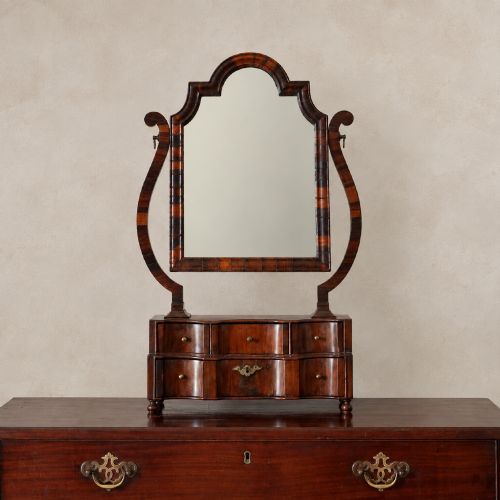
Many examples incorporate fitted bases containing small storage drawers, sometimes shaped in a serpentine front or finished with Dutch marquetry patterns. Secondary woods and traditional joinery secure the frames, while bronze or brass hardware fastens the pivoting elements.
Several mirrors include hidden bureau fitments or tiny trinket drawers, proving our ancestors had secret stashes long before modern security boxes.
Evaluating craftsmanship and condition
Quality rests upon the selection of figured timber veneers, the crispness of any boxwood inlay, and the proportion of the upright support arms to the base. Finer examples display meticulous dovetailing within the drawer boxes and retain their original mirror glass and brass hardware.
Subtleties in edge moulding, the symmetry of serpentine drawer fronts, and the depth of the cabinetwork distinguish standard pieces from superior workshops. The integration of bureau fitments or intricate marquetry further elevates the sophistication of individual specimens.
Heal & Sons
The Tabletop Toilet Glass Mirror Glossary
- Swing mirror
- A looking glass hung on pivots between two upright posts so the angle of reflection adjusts freely. This forms the central mechanism of every tabletop toilet glass mirror.
- Crossbanding
- A narrow strip of veneer laid across the grain of the primary surface to form a decorative border. Makers often applied this technique around the edges of mirror frames and drawer fronts.
- Serpentine
- A curved line that bends outward in the middle and inward at the sides. This contour frequently shapes the drawer sections beneath the glass.
- Cheval mirror
- A full-length looking glass supported on a freestanding frame with four legs. Tabletop versions adapt this pivoting principle for smaller desk or dresser use.
- Marquetry
- Inlays of different woods forming pictorial or decorative patterns across a surface. Dutch examples on this page utilise this technique extensively.
Tabletop Toilet Glass Mirror: Frequently Asked Questions
What is a tabletop toilet glass mirror?
It is a small adjustable looking glass designed to rest on a table or chest of drawers for personal grooming. The plate pivots between vertical arms.
These pieces typically include a small box base with drawers to hold jewellery or pins while offering a movable reflection.
How do I date a mahogany dressing mirror?
Dating relies on timber choice, foot style, drawer construction, and the overall proportions of the frame. Earlier pieces often use walnut or figured mahogany with simple box bases.
Later Victorian and Edwardian examples introduce cast bronze elements, lighter satinwood, or distinct Arts and Crafts influences.
Were these mirrors meant for men or women?
Historical toilet and shaving mirrors served anyone needing a close reflection for grooming, styling hair, or shaving. Eighteenth-century examples frequently cite shaving functions.
The inclusion of small drawers suggests they held personal accessories used daily by both gentlemen and ladies.
How do I maintain an antique swing mirror?
Keep the wood nourished with appropriate wax and avoid placing the piece in direct sunlight or damp environments. Check the brass pivots periodically to ensure they support the weight without straining the frame.
Cleaning should involve soft dry cloths on both the timber and the antique glass to preserve the original surfaces.