
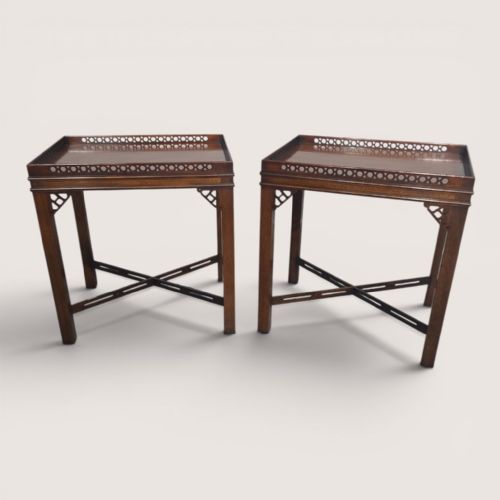

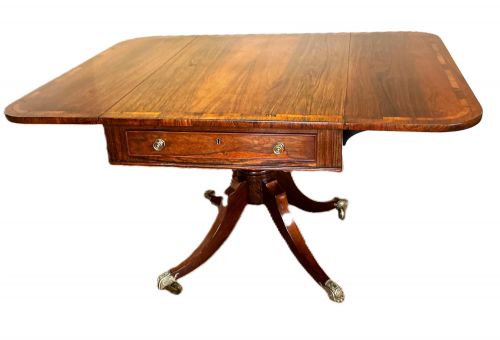

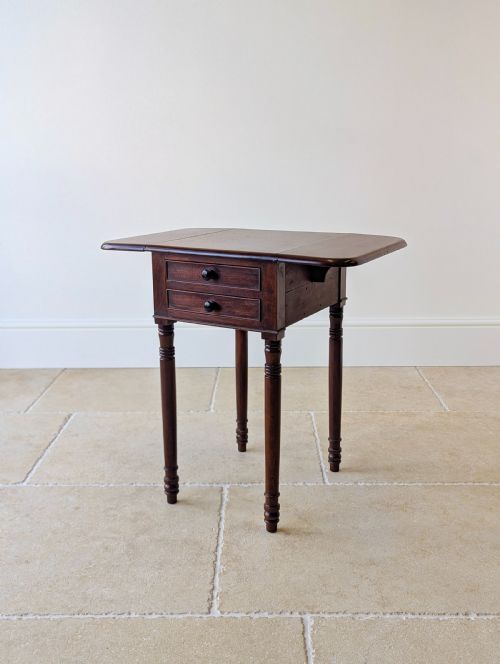


Georgian Style Sofa Table
A georgian style sofa table brings double-flap elegance and central stretchers into a room, offering adaptable surface space with distinct historical character.
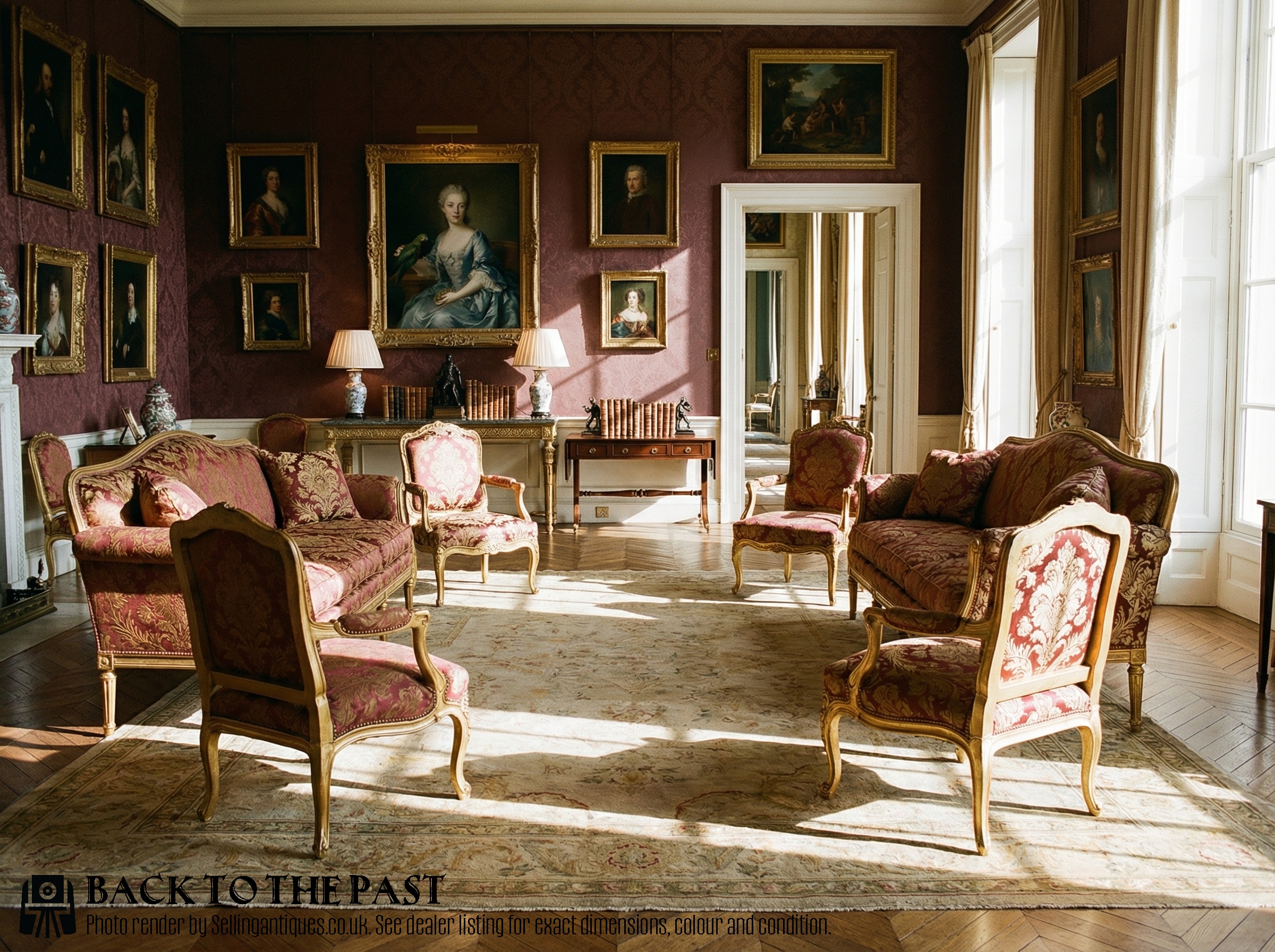
Georgian Style Sofa Table
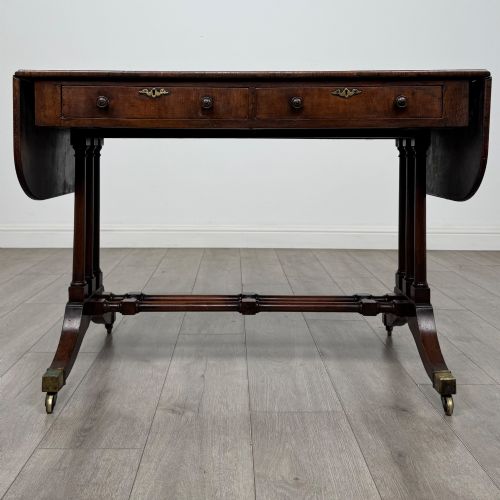
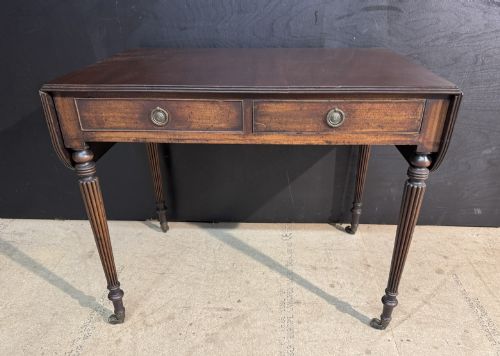
A georgian style sofa table typically presents as a rectangular drop-leaf table designed originally to stand before a sofa, featuring distinctive drop flaps supported by rule joints and frequently fitted with drawers. Buyers searching this phrase encounter examples originating from the Georgian period itself alongside later revivals from the nineteenth and early twentieth centuries, including Edwardian and 1930s interpretations.
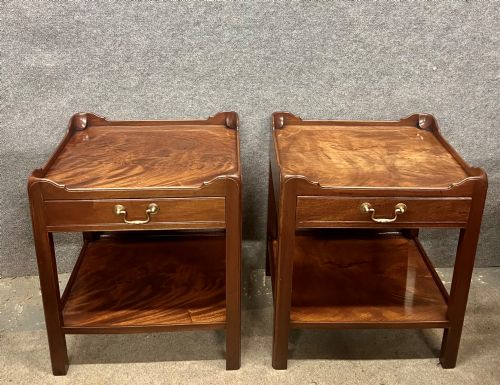
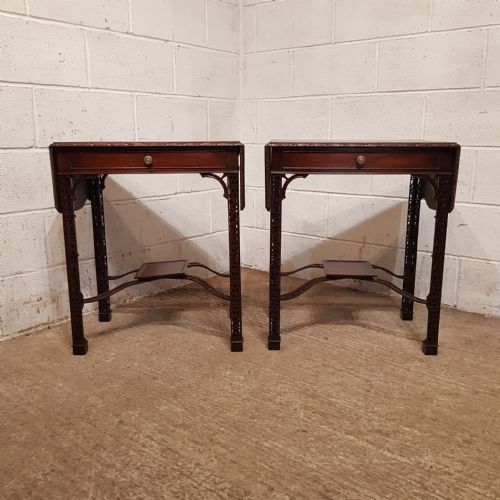
The form encompasses related variations such as Pembroke tables, console tables, and library tables constructed in mahogany, burr walnut, and satinwood. Many pieces display revival characteristics associated with Chippendale or Regency tastes, incorporating crossbanding, stringing, and brass castors upon twin-pillar or trestle supports.

Assessing quality in construction and finish
Quality reveals itself in the selection of timber figures, where richly grained burr walnut or figured mahogany veneer is matched symmetrically across table tops and drawer fronts. The crispness of inlaid satinwood banding and the integrity of the underlying joinery distinguish finer workshop output from simpler production.
Hardware weight and movement reliability also indicate standard, as solid brass castors and smoothly operating drawer mechanisms demonstrate careful assembly. The execution of carved details, such as reeded legs or shaped friezes, reflects the maker's proficiency across both authentic period examples and later revivals.
Georgian Style Sofa Table Retail Price Guide 2026
Typical asking prices for georgian style sofa table among the pieces listed under this phrase on Sellingantiques today, from the lower quarter to the upper quarter. They describe what is for sale here now, not the wider market.
Some nineteenth-century work tables managed to conceal sewing compartments beneath drop leaves while doubling as occasional writing desks for the parlour.

Willmington and Cope
The Georgian Style Sofa Table Glossary
- Drop leaf
- A table featuring hinged flaps on either side that can be raised to extend the surface area or lowered when space is restricted. These flaps are traditionally joined to the fixed top using a rule joint.
- Satinwood
- A durable, hard timber yielding a lustrous, golden-yellow grain often utilised for decorative veneers and contrasting inlay work. It appears frequently in Sheraton and Regency pieces.
- Crossbanding
- A decorative border of veneer laid around the perimeter of a table top or drawer front with the grain running perpendicular to the central panel. This technique frames the primary wood figure.
- Pembroke table
- A small, versatile table with hinged leaves on the sides, typically incorporating one or more small drawers. It was designed for occasional writing or needlework use.
- Rule joint
- A specialised moulding joint connecting a table top to its drop flap, leaving a small rounded gap that conceals the hinge mechanism. It provides a neat, finished appearance when the leaf is raised or lowered.
Georgian Style Sofa Table: Frequently Asked Questions
What is a sofa table used for?
A sofa table serves as a versatile surface originally positioned behind a sofa for lighting, books, or decorative objects. The drop leaves allow the table to expand when extra surface area is required.
Modern interiors utilise these pieces as slim console tables in hallways, compact writing desks, or freestanding accent tables within living spaces.
How do I date a sofa table?
Dating relies on examining timber characteristics, construction methods, and secondary woods used within drawer linings. Georgian pieces exhibit hand-cut dovetails and native timber framing, while twentieth-century revivals often show machine precision.
Style indicators such as Regency brass inlay, Victorian proportions, or Edwardian satinwood banding provide further chronological markers.
Are these tables solid wood?
Construction typically combines solid timber frames with selected veneers applied to stable panel cores to prevent warping. Mahogany and walnut appear as both solid structural elements and figured veneer surfaces.
Inlays incorporate contrasting woods like satinwood and ebony, while secondary framing woods inside drawers often consist of oak or pine.
How do I care for a mahogany table?
Maintain the finish by dusting regularly with a soft, dry cloth and avoiding placement near direct heat sources or strong sunlight. Periodic application of quality beeswax preserves the moisture and lustre of the timber.
Protect surfaces from moisture and heat by utilising coasters and placemats during daily use.