




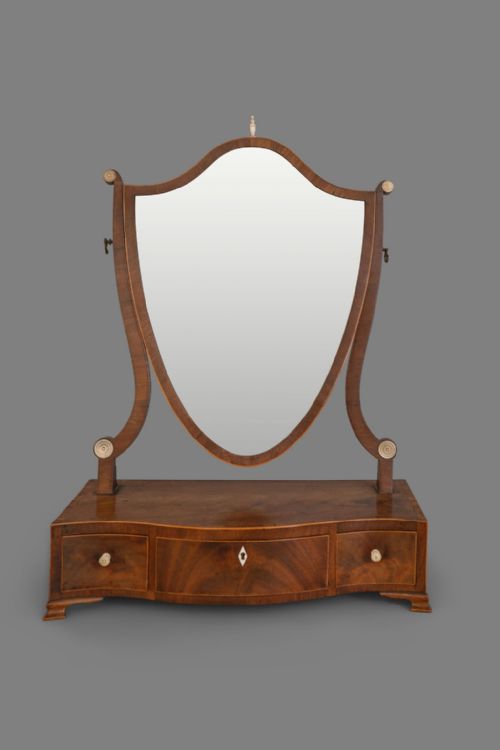
Georgian Style Dressing Glass
A georgian style dressing glass brings period elegance to a room, offering both practical reflection and traditional craftsmanship in mahogany or walnut.
Georgian Style Dressing Glass
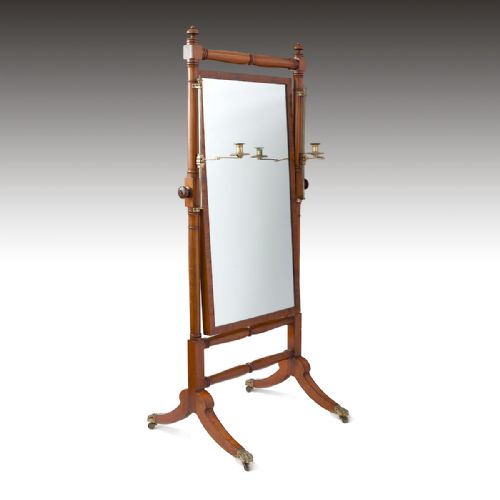
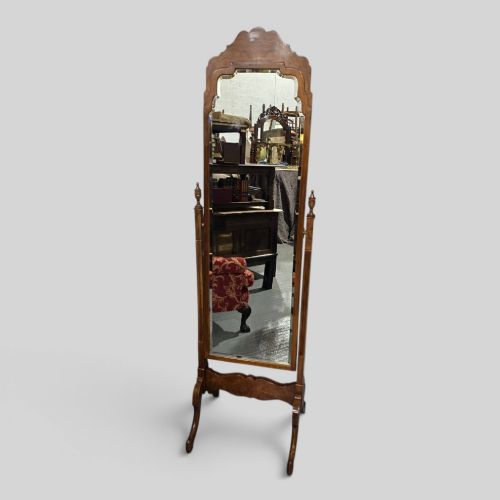
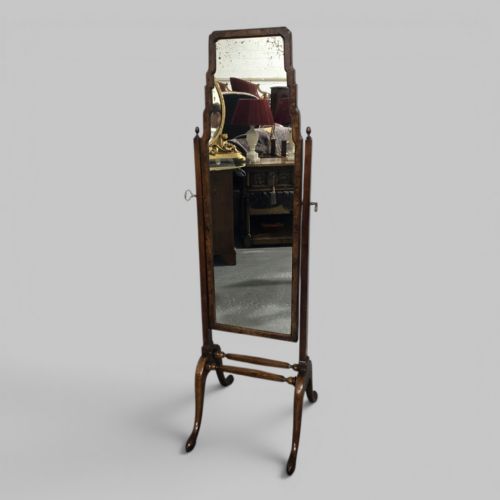
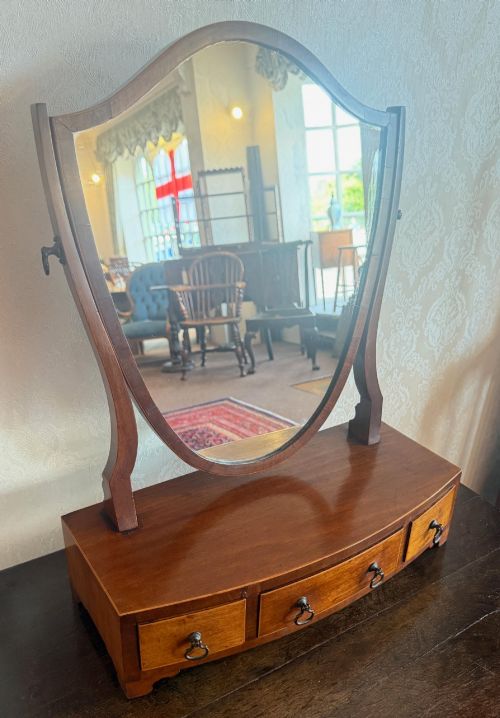
A georgian style dressing glass encompasses table-standing toilet mirrors and larger floor-standing cheval glasses designed for personal grooming. These pieces originate from various periods including the Georgian era, the Regency period, and later revival styles up to the twentieth century. The selection includes mahogany and walnut frames, frequently featuring inlaid satinwood or marquetry details.
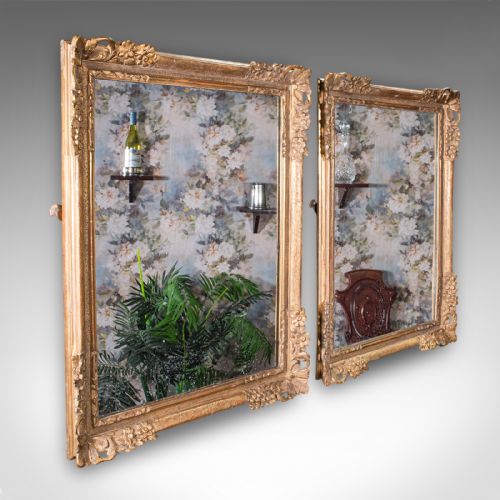
Buyers most commonly encounter mahogany table mirrors and larger freestanding cheval swing mirrors across these listings. Forms range from simple serpentine toilet mirrors to grand country house examples and giltwood wall mirrors adapted for dressing purposes. The inventory spans standard domestic items to elaborate inlaid pieces with subtle decorative flourishes.
How they were made
Cabinetmakers utilised dense timbers such as mahogany, walnut, and satinwood, often applying contrasting veneers and intricate marquetry inlay. Frames house original or replacement mirror glass held securely within pivoting stands or wall-mounting brackets. Brass hardware, including adjustable screw knobs and candle sconces on select examples, completes the construction.
Joinery techniques relied on traditional mortise and tenon joints to support the weight of the swivelling mirror frame. Giltwood variations display carved wooden mouldings finished with gold leaf or similar metallic applications. Surfaces received hand-rubbed polish to protect the timber and accentuate the natural grain patterns.
Listings feature items from the Georgian, Regency, and Victorian periods alongside later twentieth-century interpretations.
What varies in quality
The sophistication of the timber selection and veneer work largely determines the standing of a georgian style dressing glass. Finely figured mahogany and detailed satinwood marquetry indicate higher craftsmanship than plain or later constructed alternatives. Proportional harmony between the frame, the supporting uprights, and the base feet reveals the skill of the original maker.
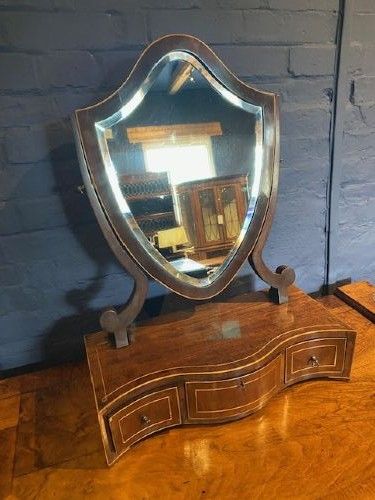
The integrity of the pivoting mechanism and the retention of period brass fittings contribute significantly to overall worth. Subtle decorative elements, such as serpentine shaping to the base drawers or delicate string inlay, separate standard utility pieces from more ambitious workshop productions.
Gillow
The Georgian Style Dressing Glass Glossary
- Cheval mirror
- A large freestanding floor mirror that swings within a vertical frame. This form allows the user to view their entire outfit from head to toe.
- Toilet mirror
- A smaller tabletop mirror designed to sit upon a dressing chest or washstand. These pieces often incorporate small drawers in the base for personal items.
- Marquetry
- Decorative veneer work formed by fitting together small pieces of different coloured wood to create pictorial designs. Cabinetmakers applied this technique to drawer fronts and tabletops.
- Serpentine
- A curved shape consisting of a convex centre flanked by two concave sweeps. This flowing line appears frequently on the base blocks of dressing mirrors.
- Satinwood
- A pale, hard timber with a natural sheen, utilised extensively for inlay and banding on late eighteenth and nineteenth-century furniture.
Georgian Style Dressing Glass: Frequently Asked Questions
What is a dressing glass?
A dressing glass is a moveable mirror used for grooming, typically placed on top of a table or manufactured as a freestanding floor unit.
These pieces became popular additions to bedrooms and dressing rooms during the eighteenth and nineteenth centuries, serving both functional and decorative purposes.
How do I date a dressing mirror?
Dating relies on observing timber choices, construction methods, and stylistic cues such as bracket feet, shield shapes, or marquetry patterns.
Earlier examples often feature solid mahogany construction and hand-bevelled mirror plates, while later revival pieces display twentieth-century manufacturing traits.
Where should I place a cheval mirror?
A cheval mirror requires adequate floor space and good natural light to function effectively as a dressing aid in a bedroom or dressing room.
Because the frame swivels, ensure there is sufficient clearance around the base to tilt the glass without obstruction.
What is the difference between a toilet mirror and a cheval mirror?
A toilet mirror is compact and sits upon existing furniture like a chest of drawers, whereas a cheval mirror is a tall, independent floor-standing piece.
Both styles utilise pivoting frames, but they serve different spatial requirements within a room.