
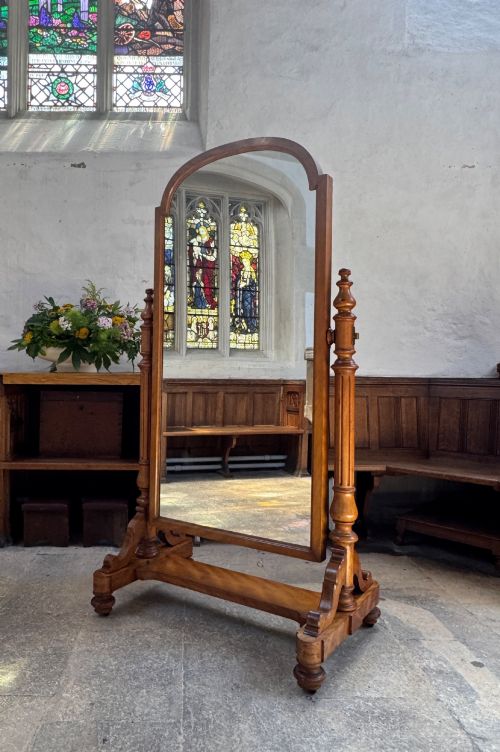


Satinwood Full Length Mirror
These satinwood full length mirror examples combine pale timber and adjustable stands to bring light and practical elegance into a bedroom.
Satinwood Full Length Mirror
A satinwood full length mirror appears primarily as a cheval mirror designed for freestanding placement in a bedroom or dressing room. These pieces provide a complete reflection while standing upright on a supportive frame.
The selections on this page span the Victorian and Edwardian periods, alongside turn of the century examples. Alongside principal pieces in satinwood, related variations incorporate satin birch and mahogany.
Makers produced these mirrors in forms ranging from tall hall mirrors to freestanding robing mirrors on stands. Such objects served practical dressing functions while functioning as decorative furniture.
How they were made
Craftsmen utilised timbers such as satinwood and mahogany as primary foundations for the frames and stands. Inlay work and marquetry often decorated the surfaces, adding visual contrast to the pale wood.
Functional elements incorporated brass for adjustable pivot mechanisms and fittings. Glass panes, including bevelled edges, provided the reflective surface held within the wooden structure.
Current listings feature Victorian and Edwardian pieces, incorporating materials such as satinwood, mahogany, brass, and bevelled glass.
What varies in quality
Quality rests upon the selection of timber veneers and the precision of the marquetry inlay work. Finer examples display balanced proportions and sophisticated decorative detailing across the frame.
Construction methods determine the stability of the freestanding stand and the smooth operation of any brass pivot hardware. Superior pieces maintain robust joinery that supports the full height of the glass.
The Satinwood Full Length Mirror Glossary
- Cheval mirror
- A freestanding full length mirror mounted on a frame with pivoting side supports. This design allows the glass to tilt to different angles.
- Marquetry
- Decorative woodwork where pieces of veneer are fitted together to form pictorial patterns on the surface. It appears on several Edwardian and Victorian frames.
- Satinwood
- A hard, durable timber with a natural golden sheen and satin-like texture. It serves as a principal surface material for high-status furniture.
- Bevelled glass
- A mirror glass pane with edges cut and polished at an angle. This technique creates a framed border effect around the reflection.
Satinwood Full Length Mirror: Frequently Asked Questions
What is a cheval mirror?
A cheval mirror is a freestanding full length mirror that hangs in a vertical frame. The design relies on side pivots so the glass can tilt.
These pieces sit directly on the floor rather than hanging on a wall. They function as dressing furniture in bedrooms and hallways.
How do I date a mirror?
Dating relies on observing the timber species, construction joints, and decorative styles. Periods range from the Victorian era to the Edwardian period and the early twentieth century.
Secondary woods and hardware fittings also offer clues to the workshop origins. Comparing the form against known historical styles helps narrow the timeframe.
Where should I place it?
These mirrors suit bedrooms, dressing rooms, and large hallways where full length reflections are useful. Their freestanding design means they require floor space rather than wall support.
Positioning them near natural light sources helps brighten the surrounding room. Ensure the floor is level so the pivoting frame operates smoothly.
What materials are used?
Construction involves timber frames holding glass panes, often supported by brass hardware. Satinwood and mahogany form the primary wood structures.
Some pieces incorporate alternate timbers such as satin birch or oak. Inlay and marquetry details add decorative surface patterns.