
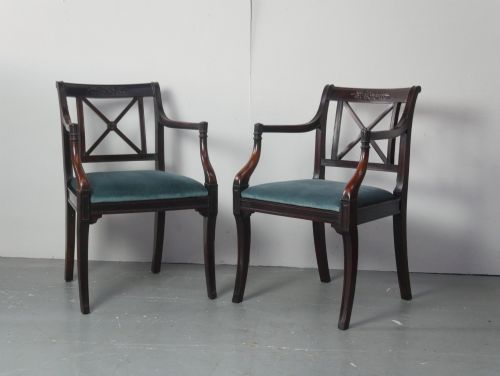
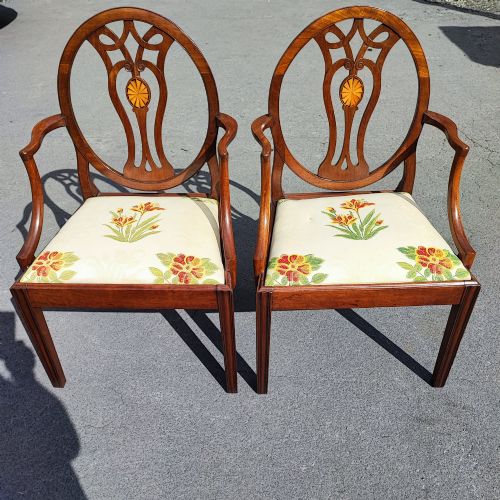
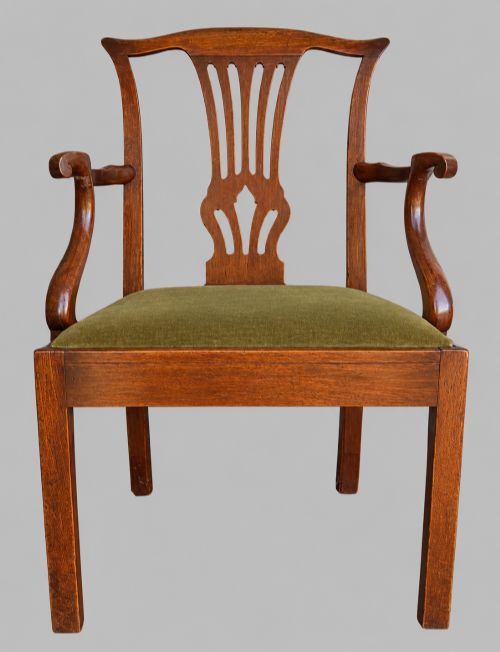
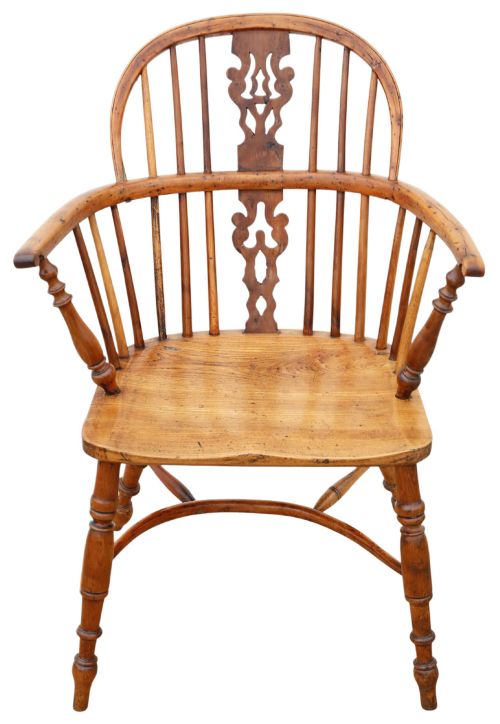
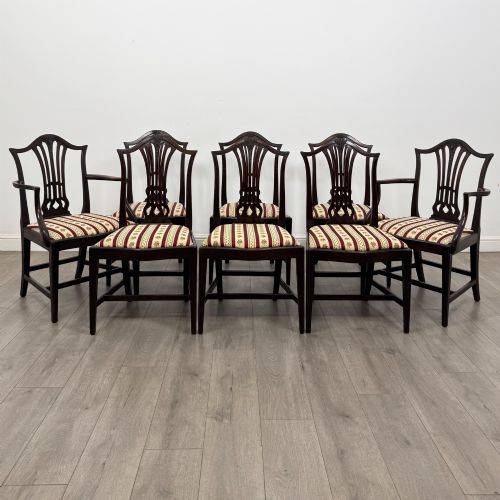

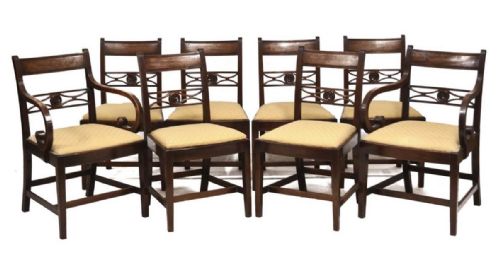
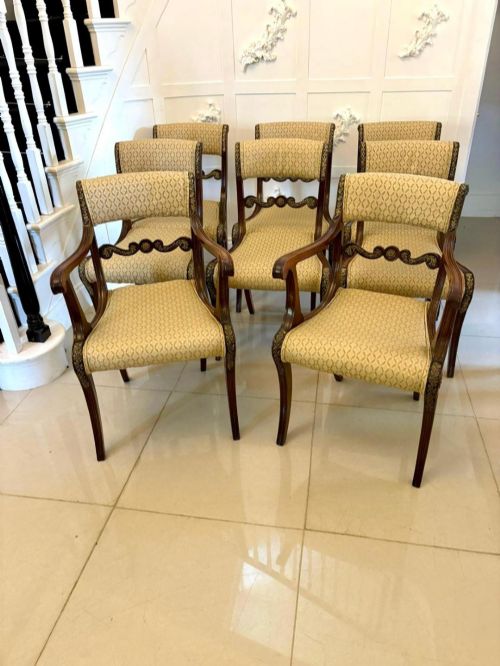
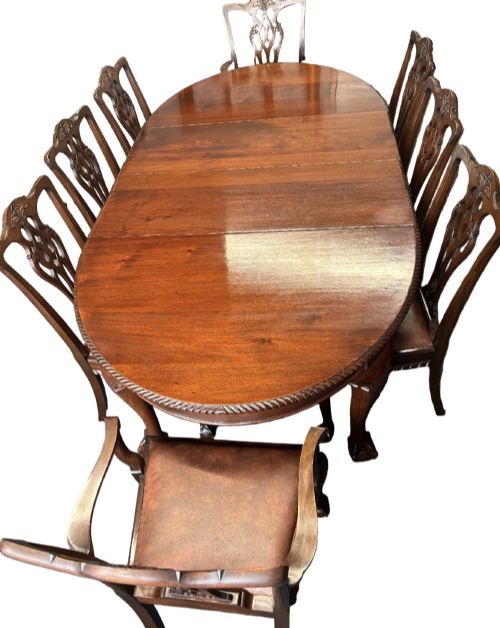
Georgian Style Carver
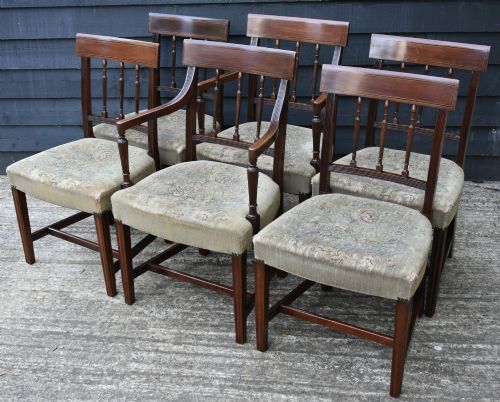
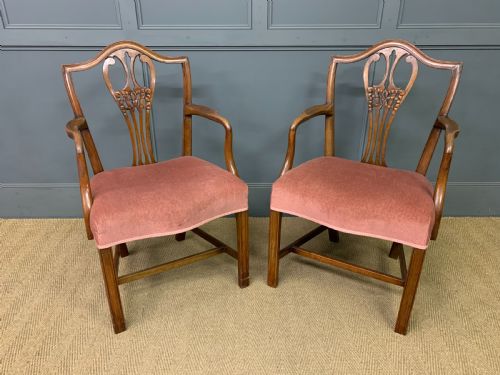
When you search for a georgian style carver, you are looking at single elbow chairs and dining armchairs rooted in eighteenth-century proportions.
Georgian Style Carver
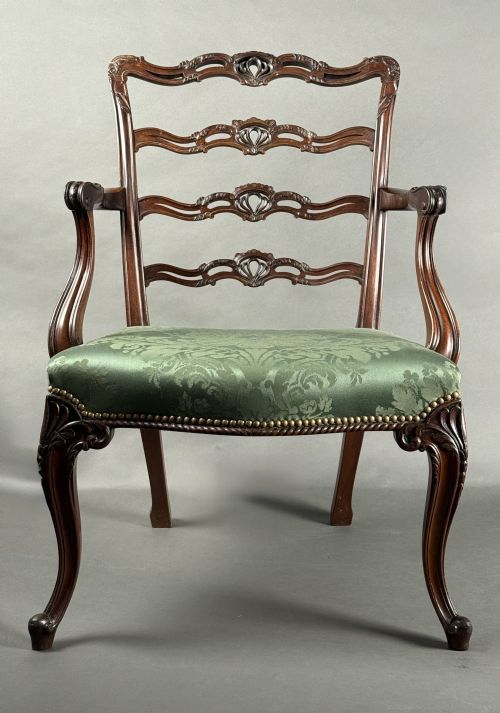
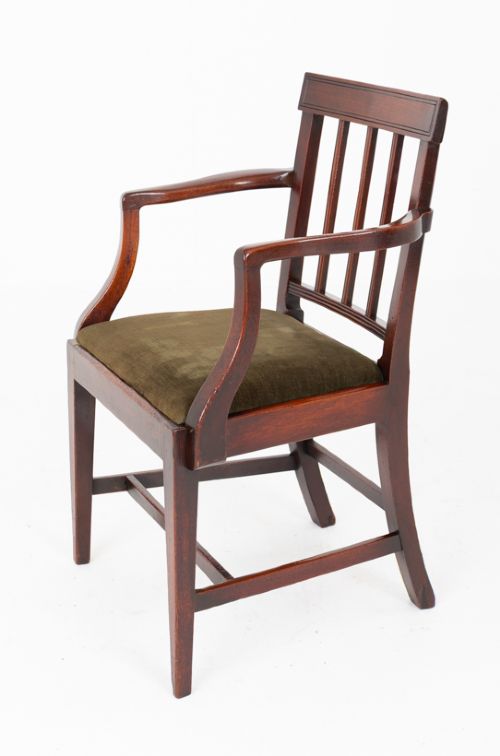
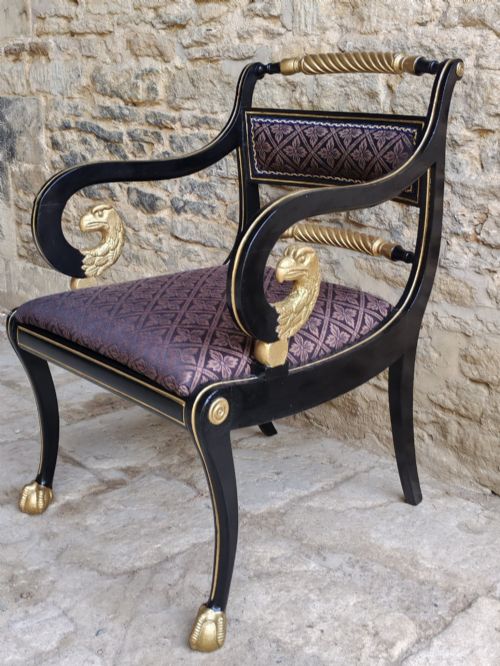
A georgian style carver is an armchair designed for the head of a dining table, a library, or a desk, featuring distinct arm supports set back from the front edge of the seat. The examples on this page span from original eighteenth-century pieces made during the George III period to later nineteenth-century revivals and early twentieth-century interpretations.
You will encounter pieces in solid mahogany, walnut, fruitwood, ash, and elm, often taking the form of Chippendale, Hepplewhite, or Sheraton designs. They serve as functional seating that carries classical architectural motifs like shield backs, pierced splats, and cabriole or square tapered legs.
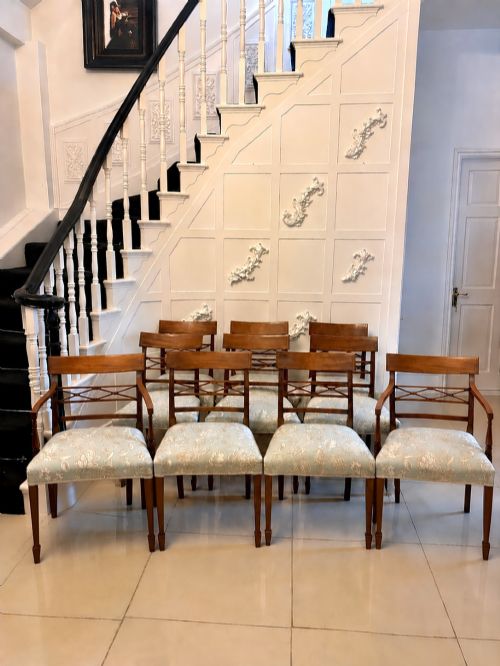
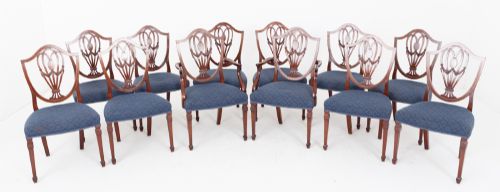
Many listings pair these armchairs with matching dining sets or present them individually as library, desk, or morning room seats. Their enduring appeal lies in the generous proportions of the arms and the craftsmanship of the carved or upholstered backrests.
How they were made
Cabinetmakers constructed these frames primarily from dense hardwoods like mahogany and walnut, alongside regional timbers such as elm, ash, and fruitwood for country vernacular pieces. Joinery relied on precise tenons and mortises to bear the weight placed on the open arms.
Carving was executed by hand directly into the solid timber of the top rail, splat, or knees, utilising styles derived from ribbon-back, lattice, or shield-back patterns. Seats were traditionally drop-in frames webbed and stuffed with natural materials before being covered in leather, fabric, or tapestry upholstery.
Georgian Style Carver Retail Price Guide 2026
Typical asking prices for georgian style carver among the pieces listed under this phrase on Sellingantiques today, from the lower quarter to the upper quarter. They describe what is for sale here now, not the wider market.
Listings feature pieces spanning the eighteenth, nineteenth, and early twentieth centuries, utilising mahogany, walnut, oak, and fruitwood alongside upholstered seats.
What varies in quality
The distinction between standard examples and exhibition pieces rests in the crispness of the hand-carving and the selection of the timber grain. Superior chairs display deep, undercut relief work on the splats and knuckles, whereas lesser pieces rely on shallow surface moulding or plain turnings.
Structural integrity also dictates quality, seen in whether the arm supports are securely integrated into the seat rail rather than merely pinned. Original components, minimal timber replacement, and balanced proportions across the legs and crest rail separate ordinary production from workshop masterpieces.
Waring & Gillow
The Georgian Style Carver Glossary
- Carver
- An armchair designed with open sides to accommodate the formal clothing of the eighteenth century, usually made to sit at the head of a dining table. It shares the decorative vocabulary of the matching single chairs in a set.
- Elbow chair
- An alternative term for an armchair, highlighting the supportive armrests designed for resting elbows during long dining or reading sessions. These pieces frequently double as desk or library seats.
- Splatt
- The vertical wooden strip running up the centre of a chair back, connecting the crest rail to the seat. In georgian designs, this element is often pierced, carved, or shaped into urn and ladder forms.
- Shield back
- A chair back shaped like an inverted shield, popularised by designers like Hepplewhite in the late eighteenth century. This silhouette provides a canvas for delicate painted decoration or carved drapery motifs.
- Ball and claw foot
- A carved furniture foot depicting a bird's talon gripping a ball, commonly found on mahogany Chippendale style pieces. It requires considerable skill from the carver to achieve realistic tension and texture.
Georgian Style Carver: Frequently Asked Questions
How do I date a carver chair?
Dating these chairs involves examining the timber species, joinery methods, and stylistic cues present in the backrest and legs. Eighteenth-century originals often exhibit hand-cut pegs and denser, aged mahogany or walnut patination.
Revival pieces from the nineteenth and early twentieth centuries may show machine-sawn elements or cleaner internal secondary woods. Comparing the carved motifs against known period patterns helps distinguish an authentic antique from a later homage.
Were carvers used only for dining?
While frequently paired with dining tables, these armchairs served multiple purposes in historic homes as library, office, and bedroom seating. Their supportive arms made them ideal for writing desks or morning rooms.
Many listings describe them as desk chairs or elbow chairs due to this multi-purpose domestic history. They bring formal elegance to smaller spaces where a full set of chairs is not required.
How do I care for antique wood chairs?
Caring for antique wood involves keeping the pieces away from direct heat sources and sudden humidity changes to prevent the timber from splitting. Regular dusting with a soft cloth maintains the natural lustre of the finish.
Avoid modern silicone polishes, opting instead for traditional beeswax applied sparingly to nourish old mahogany or walnut. Checking the underside joints periodically ensures that the historic glue and tenons remain secure.