

Georgian Stick Back Armchair
A georgian stick back armchair is a country seating form built for daily use, combining sturdy regional timbers with practical spindle backs.
Georgian Stick Back Armchair
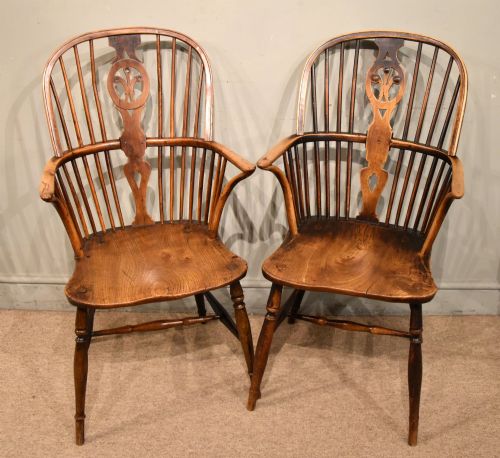
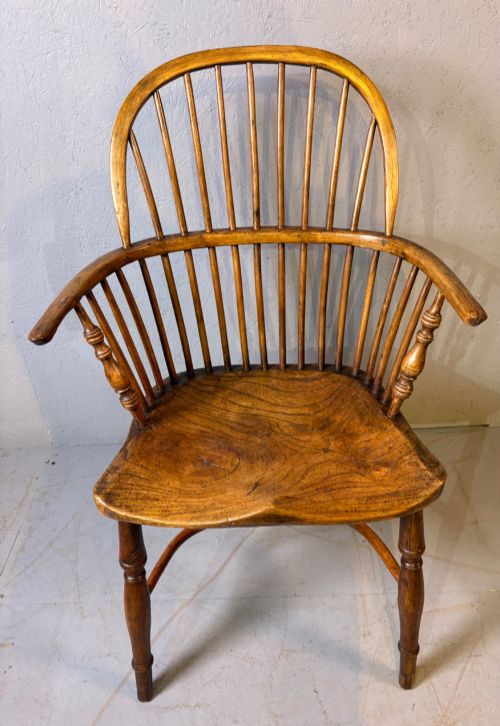
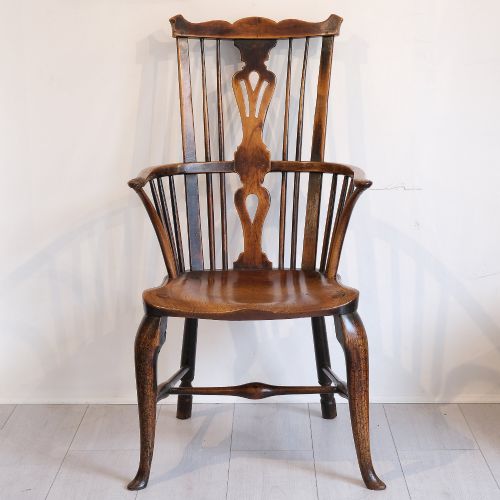
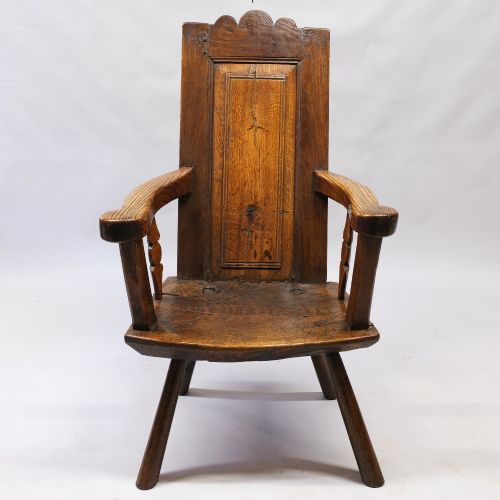
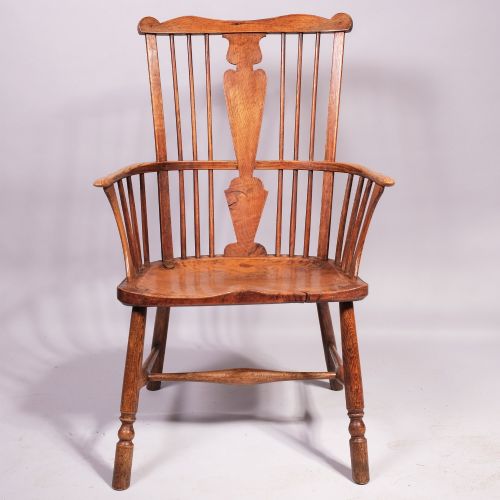
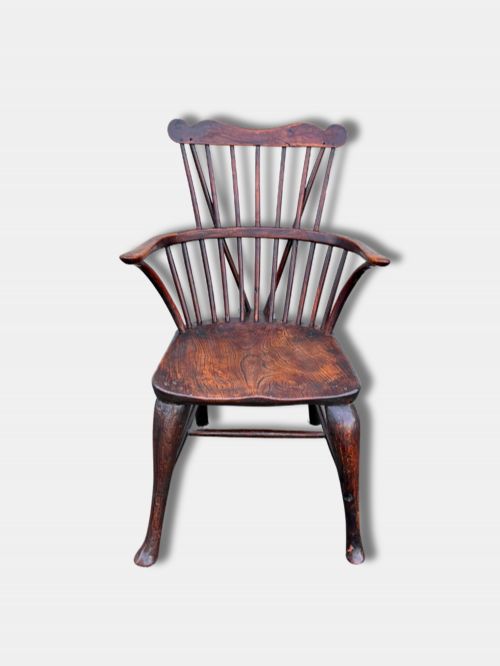
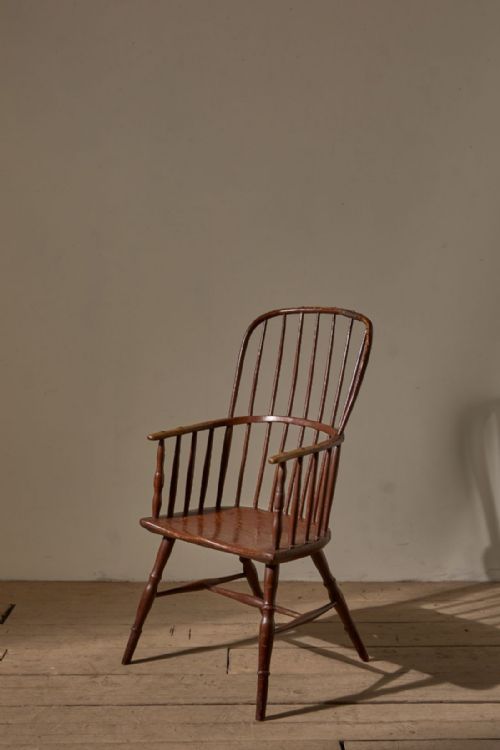
A georgian stick back armchair is a traditional country seat defined by a solid wooden saddle-shaped seat, a bentwood hoop or comb comb-back structure, and upright spindles. These chairs originate from various English and Welsh regions, spanning the eighteenth and nineteenth centuries.
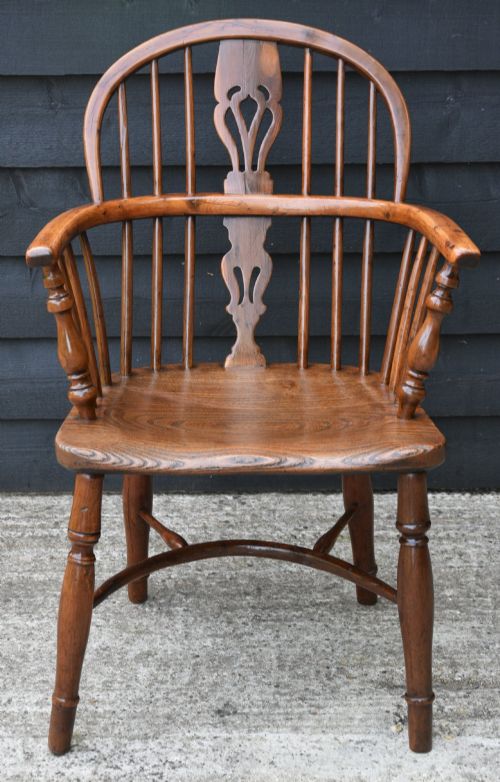
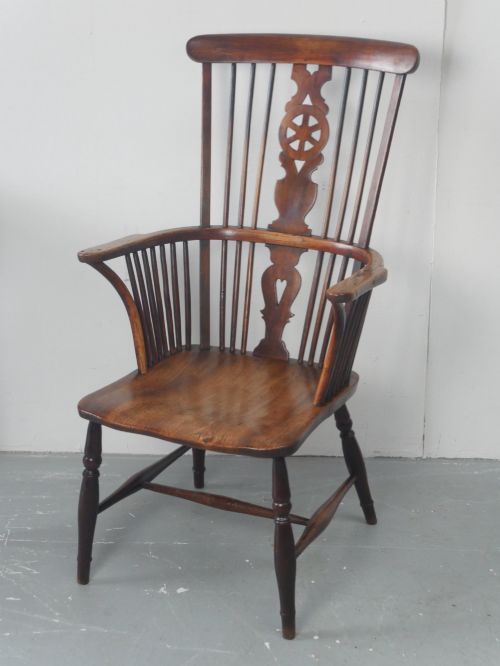
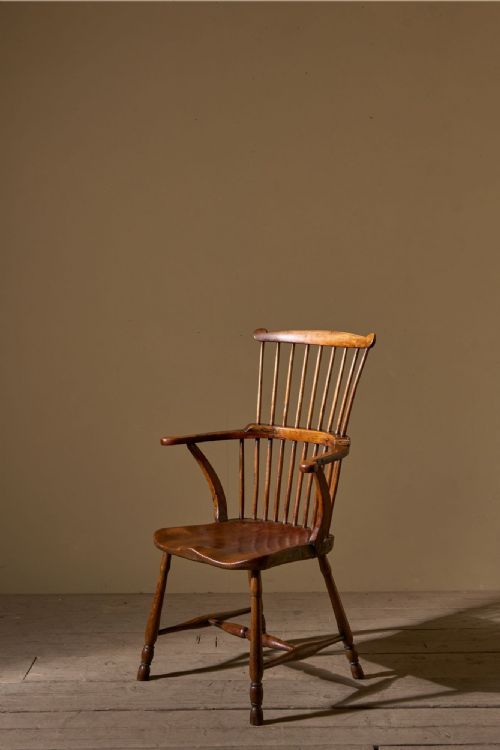
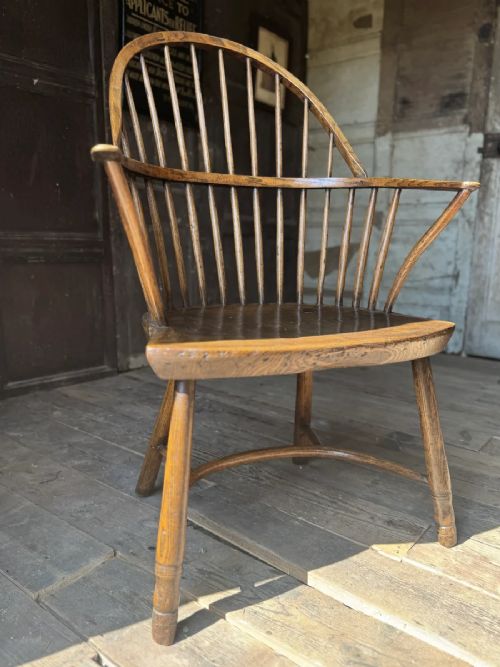
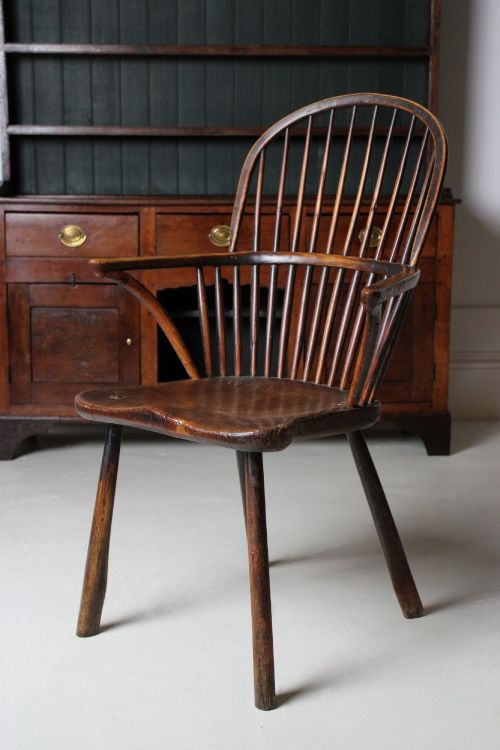
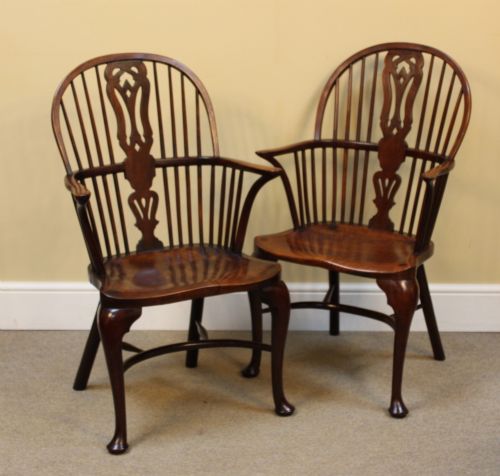
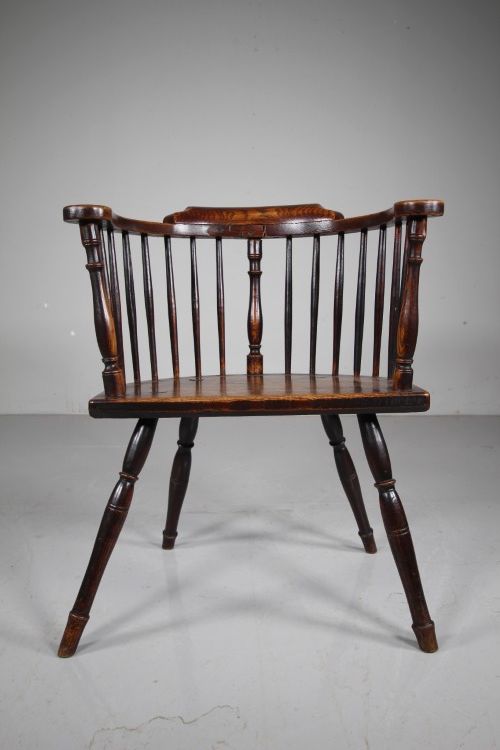
The versions met most frequently on this page include comb backs, hoop backs, and low-back designs. Makers built these forms using local regional traditions, resulting in distinctive variations from the Thames Valley, West Country, and Wales.
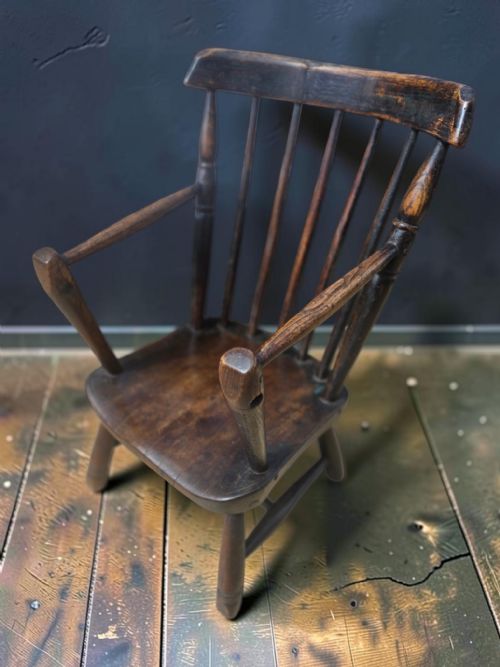
Makers also produced smaller child examples alongside standard adult armchairs. The primary materials and regional vernacular styles determine the character of each individual piece.
Materials and construction
Makers selected native timbers for specific structural properties, combining elm for resilient, anti-split seats with ash for flexible steam-bent hoops and spindles. Yew and fruitwood appeared frequently for their rich grain patterns and durability.
Constructors turned legs and stretchers on a pole lathe, mortising them directly into the heavy plank seat. Spindles were shaved by hand with a drawknife to fit tightly into drilled holes across the comb or hoop.
Listings feature regional variations from the Thames Valley, West Country, and Wales, utilising native elm, ash, and yew.
The markers of quality
Quality rests in the balance of proportions and the fluidity of the spindle turning. A well-balanced armchair displays harmonious integration between the bentwood back and the sculpted elm seat.
The integrity of the timber selection and the presence of an honest, untouched surface finish elevate an example. Heavy repairs or replaced undercarriage components alter the original integrity of the construction.
John Brand of Sleaford·Gabbitass of Worksop
The Georgian Stick Back Armchair Glossary
- Comb back
- A chair back featuring a horizontal crest rail supported by vertical spindles, resembling the teeth of a comb. This regional form provides a sturdy upper support.
- Hoop back
- A continuous bentwood bow forming the arms and back of the chair in a single curved line. This construction distributes weight evenly down to the seat.
- Crinoline stretcher
- An arched undercarriage stretcher linking the legs of a Windsor chair for added stability. The metal or wooden bow curves outwards toward the front.
- Vernacular
- Objects made by regional craftsmen following local traditions rather than formal London pattern books. These pieces reflect the available materials and practical needs of the district.
- Patina
- The surface sheen and colour developed by old wood through decades of handling, wax, and exposure. This gradual ageing process distinguishes older surfaces from modern finishes.
Georgian Stick Back Armchair: Frequently Asked Questions
How do I identify a Georgian stick back armchair?
Examine the construction methods, noting hand-turned spindles, wedged tenons passing through the seat, and regional timber combinations like ash and elm.
Check for period characteristics such as saddle seats, crinoline stretchers, and an absence of machine-cut components.
Were these chairs used at dining tables?
These armchairs served primarily as heavy-duty seating for farmhouses, cottages, and provincial homes rather than formal dining sets. Their robust construction suited daily tasks in kitchens and parlours.
Single armchairs often stood by the hearth or served as the head of a household table.
How should I care for old elm and ash?
Maintain stable indoor humidity levels away from direct heat sources to prevent the timber from splitting or warping. Natural beeswax applied sparingly helps preserve the surface.
Avoid modern liquid polishes that can build up a sticky residue over the historic timber.
What is the difference between a comb back and a hoop back?
A comb back incorporates a distinct horizontal top rail supported by vertical spindles rising from the arms or seat. This design offers a flat or gently arched upper crest.
A hoop back utilises a continuous bentwood rail that forms both the arms and the upper back loop in one flowing curve.